
Finding the right RTX 5080 laptop for 1440p high-refresh gaming is trickier than it sounds. These machines can push serious frame rates, but not every panel keeps up — a 16-inch or 18-inch screen with a 240Hz to 300Hz QHD+ display is what actually lets the GPU stretch its legs, whether you’re playing competitively or just want G-SYNC-smooth single-player sessions. Add in the fact that prices range from under $2,800 to well over $4,200, and the differences between a $2,798 Vector 16 HX and a $4,264 Alienware 18 Area-51 start to matter a lot.
We’ve rounded up eight machines and companion displays that make sense together, because the best laptop is only as good as the screen you’re staring at — and for some buyers, pairing a 240Hz laptop with a dedicated 300Hz or 320Hz external monitor is the smarter play. Below you’ll find our quick-picks table, detailed breakdowns of each option, and a buying guide covering the specs that actually move the needle for 1440p high-refresh gaming heading into 2026.
As an Amazon Associate we earn from qualifying purchases at no extra cost to you.


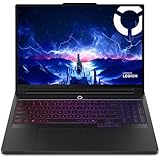


Top 3 picks at a glance
Quick Picks
| Product | Best for | Price |
|---|---|---|
| MSI Vector 16 HX AI 16″ 240Hz QHD+ (A2XWIG-058US) | Best overall value | $2,798.88 |
| ASUS TUF Gaming VG27AQM5A 27″ 1440p 300Hz Monitor | Best external monitor pairing | $269.99 |
| HP OMEN Max 240Hz RTX 5080 Laptop | Best for heavy multitaskers | $2,799 |
| Acer Nitro KG271U F3bmiipx 27″ 320Hz Monitor | Best budget high-refresh monitor | $199.99 |
| Lenovo Legion Pro 7i Gen 10 OLED | Best display quality | $3,589 |
| Alienware 18 Area-51 WQXGA 300Hz | Best big-screen desktop replacement | $4,264 |
| MSI Vector 16 HX 64GB/4TB Bundle | Best for creators and storage hogs | $2,879 |
| ASUS ROG Strix G18 (2025) 240Hz 2.5K | Best 18-inch blend of size and value | $3,899 |
How We Picked
We focused on three things: a genuine RTX 5080 GPU (not a cut-down variant), a QHD-class (2560×1440 or 2560×1600) panel with at least a 240Hz refresh rate, and a cooling chassis that can sustain the GPU’s full power draw over long sessions. We also included two standalone 1440p high-refresh monitors — at $199.99 and $269.99, they’re cheap ways to turn a laptop into a full high-refresh desktop setup. Configurations with 32GB of DDR5 and a 2TB NVMe SSD are the baseline we’d recommend; we flagged options with 64GB and 4TB where the upgrade is worth the money. Prices listed are as-published at the time of writing and fluctuate frequently on machines in this class, so treat them as ranges rather than fixed points.
The 8 Best Picks
1. MSI Vector 16 HX AI 16″ 240Hz QHD+ Gaming Laptop (A2XWIG-058US)
This is the configuration most 1440p high-refresh buyers should start with. You get an Intel Core Ultra 9-275HX, an RTX 5080, 32GB of DDR5, and a 2TB NVMe SSD behind a 16-inch 240Hz QHD+ panel, plus Thunderbolt 5 and Wi-Fi 7 — modern connectivity that matters if you’ll ever drive an external display at high refresh rates. Windows 11 Pro is a nice bonus for remote-work users.
- Thunderbolt 5 and Wi-Fi 7 future-proof the port selection
- 2TB SSD and 32GB DDR5 out of the box
- Cosmo Gray chassis won’t suit anyone wanting RGB flair
Skip it if you want OLED contrast — this is an IPS-class panel — or if you need more than 32GB of RAM for content creation.
2. ASUS TUF Gaming VG27AQM5A 27″ 1440p 300Hz G-SYNC Monitor
Pair this with any laptop above and you’ve got a genuine desktop-class high-refresh rig. The 27-inch 1440p panel runs at 300Hz with G-SYNC support, which smooths out frame-time variance when your RTX 5080 dips below the panel’s ceiling. At $269.99, it’s one of the least expensive ways to add a certified 300Hz experience to your setup, and the 27-inch size gives you noticeably more screen real estate than any 16-inch laptop panel.
- 300Hz refresh with G-SYNC variable refresh rate
- Aggressive price for the spec sheet
- You’ll need a laptop with Thunderbolt 5 or a fast USB-C/DP output to drive it at full refresh
Skip it if you game exclusively away from a desk — a laptop’s built-in panel is the whole point there.
3. HP OMEN Max 240Hz Ryzen AI 9 HX 375 RTX 5080 Gaming Laptop
The OMEN Max is the only machine here pairing an RTX 5080 with AMD’s Ryzen AI 9 HX 375 instead of an Intel chip, and it backs that up with 64GB of DDR5 and a 2TB SSD — the most RAM at this price by a wide margin. The 240Hz display matches the MSI’s refresh rate, making it a strong pick for competitive players who also run background apps: streaming, Discord, browser tabs, and recording software all eat memory fast.
- 64GB of DDR5 for heavy multitasking and streaming
- Efficient Ryzen AI 9 HX 375 platform
- Only 2TB of storage despite the generous RAM allocation
Skip it if your game library alone will blow past 2TB and you’d rather not open the chassis to add an SSD.
4. Acer Nitro KG271U F3bmiipx 27″ QHD 320Hz IPS Monitor
At $199.99, this is the value play of the entire roundup. The KG271U offers a 27-inch 2560×1440 IPS panel running at 320Hz — a higher refresh rate than any laptop screen on this list — for less than a tenth the price of the laptops it complements. If your RTX 5080 laptop spends most of its life docked at a desk, this monitor delivers a genuinely competitive-tier experience for arcade-shooter and esports titles where every millisecond of latency counts.
- 320Hz refresh rate at an entry-level price
- IPS panel for solid viewing angles and color
- No premium features like HDMI 2.1 bandwidth headroom beyond what’s needed at 1440p
Skip it if you want OLED blacks or HDR performance for cinematic single-player gaming — buy the Legion’s OLED panel instead.
5. Lenovo Legion Pro 7i Gen 10 with RTX 5080 and OLED
The Legion Pro 7i Gen 10 is the pick for buyers who care about image quality as much as frame rate. The Core Ultra 9 and RTX 5080 deliver the horsepower, but the OLED panel is the headline: per-pixel illumination means perfect blacks, near-instant response times, and contrast no IPS laptop display can touch. At $3,589 it commands a premium over the Vector and OMEN Max, and that premium buys a visibly better picture in dark games and movies.
- OLED display with true blacks and fast pixel response
- Legion chassis with a strong cooling and build reputation
- Roughly $800 more than similarly specced IPS machines
Skip it if your budget is hard-capped near $2,800 or if you leave static UI elements on screen for hours daily and worry about panel wear.
6. Alienware 18 Area-51 WQXGA 300Hz Gaming Laptop
The Area-51 is a desktop replacement in the truest sense: an 18-inch WQXGA (2560×1600) panel running at 300Hz with a 3ms response time, a Core Ultra 9 275HX, an RTX 5080, 32GB of dual-channel DDR5, and a 2TB SSD. It’s the highest-refresh big-screen laptop here and one of the few ways to get a 300Hz experience built in. The tradeoff is weight and price — this is not a machine you commute with, and at $4,264 it costs significantly more than the 16-inch competition.
- 18-inch WQXGA 300Hz, 3ms display — the fastest big built-in panel here
- Includes an FHD IR camera for Windows Hello
- Heavy, bulky, and the most expensive laptop in this roundup
Skip it if portability matters at all — the ROG Strix G18 or Vector 16 covers the same spec territory for far less.
7. MSI Vector 16 HX RTX 5080 64GB/4TB Bundle
This is the Vector 16 HX formula dialed up: the same 16-inch QHD+ 240Hz display and Core Ultra 9 275HX, but with 64GB of DDR5 and a 4TB SSD, plus an RGB backlit keyboard and a bundled PCO notebook fold radiator to help with thermals during long sessions. At $2,879, it costs only about $80 more than the base Vector while doubling both memory and storage — arguably the best dollars-per-spec ratio in the roundup for creators who game.
- 64GB RAM and 4TB SSD for roughly $80 over the base config
- Included fold radiator helps sustain boost clocks
- Bundle accessories vary; verify what ships in the box before buying
Skip it if 32GB and 2TB are plenty and you’d rather pocket the difference toward a monitor.
8. ASUS ROG Strix G18 (2025) Gaming Laptop
The Strix G18 splits the difference between the 16-inch machines and the 18-inch Alienware. You get an 18-inch ROG Nebula display at 2.5K resolution and 240Hz, an Intel Ultra 9 275HX reaching up to 5.4GHz, an RTX 5080 with 16GB of GDDR7, 32GB of DDR5, a 2TB SSD, Wi-Fi 7, and Windows 11 Pro. At $3,899 it’s a meaningful step up from the Vector, but noticeably cheaper than the Area-51 while offering the same 18-inch screen class.
- 18-inch 2.5K 240Hz Nebula display with strong motion clarity
- Wi-Fi 7 and Windows 11 Pro in a big-screen chassis
- $1,100 more than the MSI Vector 16 HX with the same core specs and a slower panel
Skip it if you won’t use the extra screen size — the 16-inch options deliver the same gaming performance for less.
Buying Guide
Panel: Refresh Rate, Resolution, and Panel Type
For 1440p-class high-refresh gaming, prioritize the panel as much as the GPU. A 240Hz QHD+ screen is the sweet spot — enough headroom for an RTX 5080 to flex in esports titles while staying sharp at 16 to 18 inches. Anything from 240Hz to 320Hz works; beyond that, diminishing returns set in for most players. OLED panels (like the Legion’s) offer unmatched contrast and response times, while IPS panels are brighter and immune to burn-in concerns. G-SYNC or VRR support matters more on external monitors, where frame-time smoothing is most visible.
GPU Power, Cooling, and Sustained Performance
Two laptops with the same RTX 5080 can perform very differently depending on how much wattage the chassis allows the GPU to draw and how well its cooling sustains it. Bigger bodies — the 18-inch Area-51 and Strix G18 — generally move more air and hold boost clocks longer. The Intel Core Ultra 9-275HX appears in most of our picks and is the platform to look for on the Intel side; the Ryzen AI 9 HX 375 in the OMEN Max is the strong AMD alternative. If you game in long sessions, accessories like the bundled fold radiator in the MSI bundle can help, and a laptop stand improves airflow for any model.
Memory, Storage, and Connectivity
Treat 32GB of DDR5 and a 2TB NVMe SSD as the floor in 2026 — modern games routinely exceed 100GB installs, and background apps eat memory quickly. The 64GB/4TB configurations here (OMEN Max, MSI bundle) are worth the premium if you stream, edit video, or keep large libraries installed. On connectivity, Thunderbolt 5 (on the MSI Vector) is the standout: it drives high-refresh external displays over a single cable, which matters if you plan to pair your laptop with a 300Hz or 320Hz desktop monitor. Wi-Fi 7 is standard on the better configs and worth having for low-latency cloud gaming and fast local transfers.
Our Verdict
For most buyers, the MSI Vector 16 HX AI (A2XWIG-058US) at $2,798.88 is the right call: a full-power RTX 5080, Core Ultra 9-275HX, 32GB of DDR5, 2TB of storage, and a 240Hz QHD+ panel with Thunderbolt 5 — nothing here feels like a compromise at the price. If you can stretch, the MSI bundle at $2,879 doubles RAM and storage for trivially more money and is our value sleeper. OLED loyalists should pick the Legion Pro 7i Gen 10, desk-bound buyers with a big budget should consider the 18-inch Alienware Area-51 or ROG Strix G18, and if your laptop mostly lives at a desk, adding the $199.99 Acer KG271U gets you a 320Hz experience no built-in panel matches.
FAQ
Is 240Hz enough for 1440p gaming with an RTX 5080?
Yes. A 240Hz QHD+ panel is well matched to RTX 5080 performance: the GPU can saturate it in esports titles and push high frame rates in AAA games with upscaling. Panels running 300Hz to 320Hz (Alienware, Acer, ASUS TUF) add headroom, but most players won’t perceive a difference past 240Hz outside competitive play.
Should I buy a laptop with 32GB or 64GB of RAM?
For pure gaming, 32GB is sufficient today. Choose 64GB — the OMEN Max or the MSI Vector bundle — if you stream, run VMs, edit 4K video, or keep dozens of browser tabs and Discord open alongside your games. The roughly $80 premium on the MSI bundle makes it an easy call if you’re on the fence.
Can I use an external 1440p high-refresh monitor with these laptops?
Absolutely, and we recommend it for desk setups. Use Thunderbolt 5 or a full-size DisplayPort output to drive a 300Hz or 320Hz monitor like the ASUS TUF VG27AQM5A or Acer KG271U at native refresh. Check that your laptop’s port supports the bandwidth — Thunderbolt 5 on the Vector handles it with room to spare.
16-inch or 18-inch: which should I buy?
Buy 16-inch (MSI Vector, HP OMEN Max, Legion Pro 7i) if you ever carry the laptop; they deliver the same RTX 5080 performance in a more portable, cheaper package. Buy 18-inch (Alienware Area-51, ROG Strix G18) if the machine stays on a desk and you want the biggest, fastest built-in panel — up to 300Hz — and the strongest sustained cooling.
Related guides
- Alienware 16 Aurora RTX 5070 Review: Display, Portability and Configuration Gaps
- Lenovo Legion Pro 7i Gen 10 Review: 64GB RAM and Dual-SSD Configuration
- MSI Katana 15.6-inch RTX 5050 Review: Configuration Strengths and Upgrade Unknowns
- ASUS ROG Strix SCAR 16 G635LX-XS97 Review: Display Ambition, Upgrade Questions


