
You bought a 14 inch gaming laptop because you wanted power you can actually carry — to a dorm, a coffee shop, a client’s office, or just from desk to couch. Then you went shopping for an RTX 5070 refresh and discovered the category has blurred: some “14 inch” listings are actually 14.5 or 15 inch panels, some RTX 5070 machines ship in 16 inch chassis, and prices swing from roughly $1,500 to nearly $3,000 for hardware that looks identical on a spec sheet. Sorting the genuinely portable from the merely compact is the whole problem.
We compared and ranked eight RTX 5070-class laptops across the portable gaming spectrum, from a 14.5 inch Predator that sips power efficiently to OLED stunner machines from HP and ASUS, plus two 16 inch value plays for buyers who can give up an inch or two of portability to save serious money. Below you’ll find quick picks, individual reviews, a buying guide covering displays, wattage, and thermals, and answers to the questions we hear most.
As an Amazon Associate we earn from qualifying purchases at no extra cost to you.


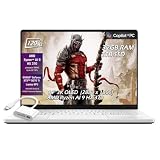


Top 3 picks at a glance
Lenovo Legion 5 15IRX10 15.1" WQXGA OLED, Gaming Laptop, Intel Core i9...Check priceQuick Picks
| Product | Best for | Price |
|---|---|---|
| Acer Predator Helios Neo 14 (PHN14-71-906J) | Best overall 14 inch value | $1,899.99 |
| Lenovo Legion 5 15IRX10 | Best for high-refresh esports | $2,399 |
| HP Omen Transcend 14 | Best OLED display | $2,499 |
| Razer Blade 14 (2025) | Best premium build | $2,499.99 |
| ASUS ROG Zephyrus G14 (2TB, RTX 5070 Ti) | Best for storage-heavy creators | $2,985.95 |
| GIGABYTE Gaming A16 | Best budget RTX 5070 | $1,521.92 |
| GIGABYTE AERO X16 | Best lightweight all-rounder | $1,699 |
| ASUS ROG Zephyrus G14 (1TB, RTX 5070 Ti) | Best compact powerhouse | $2,819.95 |
How We Picked
We focused on machines pairing NVIDIA’s RTX 5070 or 5070 Ti with genuinely portable chassis, prioritizing panel quality (WQXGA and 3K OLED, high refresh rates, G-SYNC), memory configurations of 32GB, and modern connectivity like WiFi 7 and Thunderbolt. We compared listed specifications, AI throughput figures such as the 798 AI TOPS rating on Ultra 9 285H machines, and real-world pricing across the $1,500–$3,000 range. We penalized configurations that charge flagship prices for cut-down storage, and we rewarded machines that balance wattage, cooling, and chassis weight rather than chasing spec-sheet numbers alone.
The 8 Best Picks
1. Acer Predator Helios Neo 14 (PHN14-71-906J) — Best Overall Value
The Helios Neo 14 is the closest thing to the ideal 14 inch gaming laptop on this list: a 14.5 inch WQXGA matte display running 165Hz with G-SYNC, an Intel Core Ultra 9 285H pushing 798 AI TOPS alongside the RTX 5070, 32GB of RAM, and a full 1TB SSD — all at $1,899.99, hundreds less than equally specced rivals. The matte finish kills glare in bright rooms, and 165Hz is the sweet spot for competitive play at this resolution.
- 165Hz G-SYNC matte WQXGA panel is excellent for fast esports titles
- Strong configuration for the price: 32GB RAM and 1TB SSD standard
- The 14.5 inch panel and chassis are slightly larger than true 14 inch rivals
Skip it if you need OLED contrast for cinematic single-player games or media work — the HP and ASUS OLED options below serve that better.
2. Lenovo Legion 5 15IRX10 — Best for High-Refresh Esports
Yes, this is a 15.1 inch machine, but it earns its place: the WQXGA OLED panel, desktop-class Intel Core i9-14900HX at 1.6GHz base, RTX 5070 with 8GB of GDDR7, 32GB of DDR5, and a 1TB NVMe SSD make it a genuine desktop replacement that’s still luggable. Gigabit LAN plus 2×2 WiFi 7 makes it the pick for anyone who games where connection stability matters. At $2,399 it sits mid-pack on price with top-tier HX-series muscle.
- i9-14900HX delivers sustained multi-threaded performance for gaming plus streaming
- Wired Gigabit LAN and WiFi 7 for lag-free competitive play
- At 15.1 inches, it’s noticeably less portable than the true 14 inch options
Skip it if carrying weight daily is your priority — the Blade 14 or Zephyrus G14 are meaningfully smaller.
3. HP Omen Transcend 14 — Best OLED Display
The Omen Transcend 14 pairs the same Core Ultra 9 285H (798 AI TOPS) and RTX 5070 as our top pick with a gorgeous 14 inch 3K OLED running 120Hz, covering 100% DCI-P3 with HDR at 500 nits. That’s a creator-grade panel in a gaming chassis, and it’s the machine we’d hand to someone whose week splits between gaming and color-critical photo or video work. Thunderbolt, an RGB backlit keyboard, and Windows 11 round out a polished package at $2,499.
- 3K OLED with 100% DCI-P3 and 500-nit HDR is superb for media and creation
- Thunderbolt connectivity for docks and external GPUs/storage
- 512GB SSD fills fast with modern game installs
Skip it if you install large libraries locally and don’t want to manage external storage — the 1TB options are better suited.
4. Razer Blade 14 (2025) — Best Premium Build
Razer’s Blade 14 remains the benchmark for a premium compact gaming laptop: a CNC aluminum unibody that looks at home in a boardroom, an RTX 5070, 32GB of DDR5, and a 1TB SSD for $2,499.99. Nothing else here feels this tightly engineered in the hand, and the black finish resists fingerprints far better than you’d expect. You’re paying a real premium for design and build quality over raw specification value, and for many buyers that’s exactly the point.
- Best-in-class aluminum unibody build and understated design
- Balanced 32GB/1TB configuration with no weak links
- You pay a design premium — similar specs cost $600 less elsewhere on this list
Skip it if maximum specification per dollar is your goal; the Helios Neo 14 or GIGABYTE options win that fight decisively.
5. ASUS ROG Zephyrus G14 (2TB, RTX 5070 Ti) — Best for Storage-Heavy Creators
This top-spec Zephyrus G14 combines a 3K OLED 120Hz panel, AMD’s Ryzen AI 9 HX 370, an RTX 5070 Ti with 12GB of VRAM, 32GB of LPDDR5X, and a 2TB SSD in Platinum White, bundled with a USB hub. It’s the most powerful machine here and the one for creators juggling large project files alongside a game library. At $2,985.95 it’s the priciest pick, and the 5070 Ti’s extra VRAM is genuinely useful for AI tooling and high-resolution textures.
- RTX 5070 Ti with 12GB VRAM plus a 2TB SSD — no compromises on capacity
- 3K OLED 120Hz display in a genuinely compact 14 inch chassis
- The most expensive option on this list by a wide margin
Skip it if your budget tops out near $2,500 — the 1TB variant below delivers nearly the same experience for less.
6. GIGABYTE Gaming A16 — Best Budget RTX 5070
At $1,521.92, the Gaming A16 is the affordable entry into RTX 5070 territory on this list, pairing an Intel i7-13620H with the GPU in a 16 inch chassis. You give up the OLED panels, the AI-branded Ultra processors, and some of the premium touches — but the graphics horsepower for 1440p gaming is the same silicon as laptops costing $1,000 more. If your budget is hard-capped and portability is secondary, this is the rational buy.
- Cheapest RTX 5070 laptop here by roughly $180–$1,460
- i7-13620H is a capable gaming CPU for the price bracket
- 16 inch chassis and budget-tier build make it the least portable pick
Skip it if you want a 14 inch machine or OLED image quality — this is a desk-first value play.
7. GIGABYTE AERO X16 — Best Lightweight All-Rounder
The AERO X16 swaps Intel for AMD’s efficient Ryzen AI 7 350 alongside the RTX 5070 in a 16 inch body, at $1,699. GIGABYTE’s AERO line targets creators first, and this configuration doubles as a capable gaming machine for well under $2,000. It’s the sensible middle path: more modern platform than the Gaming A16, notably cheaper than the OLED flagships, and light enough for regular carrying.
- Excellent price-to-performance with a current-gen Ryzen AI platform
- Creator-oriented design that doesn’t scream “gamer” in meetings
- No OLED option and a 16 inch footprint
Skip it if display quality is your top priority — the OLED machines here are in a different league.
8. ASUS ROG Zephyrus G14 (1TB, RTX 5070 Ti) — Best Compact Powerhouse
This is the Zephyrus G14 most people should buy: the same 3K OLED 120Hz panel, Ryzen AI 9 HX 370, 32GB of RAM, RTX 5070 Ti with 12GB of VRAM, WiFi 7, and Platinum White finish as the 2TB model, with a 1TB SSD, for $2,819.95 — a $166 saving. You keep the upgrade path of adding external or secondary storage later while getting identical performance and that superb OLED panel in a 14 inch chassis that remains the class benchmark for portability.
- RTX 5070 Ti performance in ASUS’s best compact chassis
- $166 cheaper than the otherwise identical 2TB configuration
- Still expensive, and 1TB will need supplementing over time
Skip it if you’re budget-limited to the Helios Neo 14’s price range — you’ll trade the 5070 Ti and OLED for real savings.
Buying Guide
Display: OLED vs. High-Refresh IPS
The split on this list is between 120Hz OLED panels (HP Omen, both Zephyrus G14s, the Legion 5) offering perfect blacks, 100% DCI-P3 coverage, and HDR — and higher-refresh LCD panels like the Helios Neo 14’s 165Hz WQXGA with G-SYNC. Competitive players who prioritize motion clarity and frame rates should lean toward 165Hz; anyone splitting time between games and media or creative work should pay for OLED. Matte finishes, like the Acer’s, matter more than buyers expect in bright rooms.
GPU Wattage, VRAM, and Thermals
Same GPU, different laptop, different performance: an RTX 5070 in a thin 14 inch chassis runs at lower wattage than in a thicker 15 or 16 inch machine, which directly affects frame rates. The 5070 Ti’s 12GB of VRAM (versus 8GB on the standard 5070) matters increasingly at 1440p+ resolutions and for AI and creative workloads. Compact machines run warmer and louder under sustained load — that’s physics, not a defect — so check cooling design if you game for long sessions on your lap or in quiet spaces.
Price Bands and What They Buy
Under $1,700 gets you a full RTX 5070 with an older or more efficient CPU (GIGABYTE’s two entries). $1,850–$2,400 is the sweet spot: current-gen Ultra 9 or i9 CPUs, 32GB RAM, 1TB SSDs, and premium panels. Above $2,500 you’re buying OLED, the 5070 Ti’s extra VRAM, larger storage, or premium build quality — often all four. Decide which of those you actually need before spending $2,800+, because the spec-per-dollar curve flattens sharply past $2,400.
Our Verdict
For most buyers hunting a genuine 14 inch RTX 5070 laptop, the Acer Predator Helios Neo 14 is the pick: a 165Hz G-SYNC WQXGA matte panel, Core Ultra 9 285H, 32GB of RAM, and a 1TB SSD at $1,899.99 undercuts comparable machines by hundreds. If display quality outranks frame rate, the HP Omen Transcend 14’s 3K OLED is worth the extra $600. Budget-constrained buyers should grab the GIGABYTE Gaming A16 at $1,521.92, and anyone wanting maximum portable power — and with the budget for it — should choose the 1TB Zephyrus G14 with its RTX 5070 Ti at $2,819.95. Any of these will still feel fast well into 2026 and beyond.
FAQ
Is the RTX 5070 good for 1440p gaming in a 14 inch laptop?
Yes. The RTX 5070 is well matched to WQXGA (2560×1600) panels like those on the Helios Neo 14 and Legion 5, and 3K OLED panels scale cleanly. Expect to use DLSS in demanding modern titles; esports titles run at high refresh rates natively. Remember that thinner chassis run the GPU at lower wattage, so a 16 inch machine may sustain higher clocks in the same game.
RTX 5070 vs. RTX 5070 Ti — is the upgrade worth it?
On this list, the 5070 Ti appears only in the ASUS Zephyrus G14 configurations, where it brings 12GB of VRAM versus 8GB. That matters for high-resolution texture packs, AI and creative applications, and future-proofing. It’s worth it if you create content or keep laptops for four-plus years; for pure gaming at these panel resolutions, the standard 5070 machines deliver most of the experience for hundreds less.
Is 512GB of storage enough for gaming?
Increasingly, no. Modern AAA games routinely install at 100GB or more, and a 512GB drive fills after a handful of titles plus Windows. The HP Omen Transcend 14’s 512GB SSD is its main compromise. Prefer 1TB configurations like the Helios Neo 14, Blade 14, and Legion 5, or budget for fast external Thunderbolt or USB4 storage if you choose the Omen.
Do I need 32GB of RAM in a gaming laptop?
Every machine on this list ships with 32GB, and that’s the right amount going forward. Sixteen gigabytes still works for games alone, but modern titles, browser tabs, Discord, and background apps comfortably exceed 16GB. Since nearly every pick here includes 32GB standard, treat anything less as a reason to keep shopping rather than a way to save money.


