
As an Amazon Associate we earn from qualifying purchases at no extra cost to you.



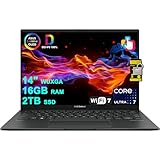


Choosing a laptop for color-critical work used to be simple: buy the biggest screen, trust the spec sheet, and hope for the best. Then OLED changed the math. When your edit suite is a spare bedroom with one window and a desk lamp, the deep blacks and per-pixel emission of an OLED panel are the difference between grading confidently and second-guessing every shadow. We’ve spent time with today’s OLED creator machines — from the 15.6-inch 4K workhorse class to the new wave of 14-inch Lumina OLED ultraportables — to find which ones actually hold up when you’re pushing saturation sliders at midnight.
The problem is that “OLED” alone doesn’t guarantee accuracy. You need full DCI-P3 coverage, enough brightness (ideally 500 nits with HDR support) to judge highlights, and a calibration story that makes sense for your workflow. It also matters whether you’re editing photo libraries at a kitchen table or cutting 4K timelines with external drives. Below, we’ve compared and ranked the eight best creator laptops with OLED — plus two supporting tools — that make color-accurate editing practical in a real, imperfect room.
Top 3 picks at a glance
msi Creator 15 Professional Laptop: 15.6" UHD OLED 4K DCI-P3 100% Display,...Check priceASUS Zenbook 14 Creator Laptop 14" WUXGA Lumina OLED Touch (500nits HDR,...Check priceASUS ProArt PA34VCNV 34 Inch 1440p Ultrawide Professional Monitor for MacCheck priceQuick Picks
| Product | Best for | Price |
|---|---|---|
| MSI Creator 15 (A11UE-491) | Best overall for 4K grading | $1,799 |
| ASUS Zenbook 14 Creator (1TB SSD) | Best balance of price and storage | $1,359 |
| ASUS ProArt PA34VCNV Ultrawide Monitor | Best desktop companion display | $599 |
| ASUS Zenbook 14 Creator (512GB SSD, Professional) | Best budget OLED creator pick | $1,259 |
| ASUS Zenbook 14 Creator (2TB SSD) | Best for large media libraries | $1,539 |
| ASUS Zenbook 14 Creator (512GB SSD, Professional, alt config) | Best value alternative | $1,259 |
| Datacolor SpyderPro | Best calibration tool | $269 |
| ASUS Zenbook 14 Creator (512GB SSD, Work config) | Best when on sale | Check current price |
How We Picked
We focused on machines with true OLED panels and verifiable DCI-P3 coverage, because that’s the color space most photo and video work actually references. Brightness mattered too: we prioritized panels rated at 500 nits with HDR support, which gives you enough headroom to edit in a bright room without washing out highlights.
Beyond the display, we weighed the whole editing experience — CPU core counts for timeline scrubbing and exports, RAM for large PSDs and stacked layers, and SSD capacity since 4K footage eats storage fast. Thunderbolt 4 and modern connectivity counted heavily, as did Windows 11 support for current creative software. We also included supporting gear — a professional ultrawide monitor and a hardware calibrator — because an accurate laptop screen is only half of a trustworthy color workflow.
The 8 Best Picks
1. MSI Creator 15 Professional Laptop — Best Overall for 4K Grading
If your work lives in 4K video, the MSI Creator 15 is the most complete package here. Its 15.6-inch UHD OLED (3840 x 2160) covers 100% of the DCI-P3 gamut, and that extra screen real estate makes timeline editing far more comfortable than on 14-inch panels. The Intel Core i7-11800H and NVIDIA GeForce RTX 3060 handle GPU-accelerated effects and rendering, while 16GB of RAM and a 512GB NVMe SSD cover mainstream projects. Thunderbolt 4 means fast external storage is one cable away.
- True 4K OLED with 100% DCI-P3 — ideal for full-resolution grading
- RTX 3060 graphics accelerate rendering and GPU-dependent effects
- 512GB fills quickly with 4K projects; plan on external storage
Skip it if you travel constantly — a 15.6-inch creator machine is noticeably heavier than a 14-inch ultraportable, and portability matters more than pixel count for some workflows.
2. ASUS Zenbook 14 Creator (1TB SSD) — Best Balance of Price and Storage
This is the configuration most editors should buy. The 14-inch WUXGA Lumina OLED touch display delivers 500 nits of HDR-capable brightness with 100% DCI-P3 coverage, which is genuinely excellent for the price. Intel’s 16-core Ultra 7 255H (with up to 13 TOPS of AI throughput) keeps exports moving, and Windows 11 plus Intel Core Ultra platform support keeps the software side current. The step up to a 1TB SSD is the sweet spot: enough room for active projects without immediately needing a drive.
- 1TB SSD removes the storage anxiety of the 512GB base config
- 500-nit HDR OLED with full DCI-P3 at a mid-range price
- Integrated graphics won’t match a discrete RTX GPU for heavy 3D work
Skip this one only if you archive massive 4K libraries locally — the 2TB model below serves that need better.
3. ASUS ProArt PA34VCNV 34″ Ultrawide Monitor — Best Desktop Companion
Not a laptop, but an essential part of a serious color workflow. The ProArt PA34VCNV is a 34-inch 1440p ultrawide designed for professional use and fully compatible with Mac, so it slots neatly beside whichever OLED laptop you choose. An ultrawide gives you room for a full timeline plus scopes or panels side by side, and ASUS’s ProArt line is built around color fidelity for exactly this kind of work. At $599, it’s the least expensive way to upgrade your editing desk without replacing your laptop.
- 34-inch 1440p ultrawide for timeline-plus-tools layouts
- Mac-compatible and built for professional color work
- 1440p resolution is lower pixel density than a 4K laptop panel
Skip it if you edit exclusively on the go with no docked desk setup — this only earns its money when plugged in.
4. ASUS Zenbook 14 Creator (512GB, Professional) — Best Budget OLED Creator Pick
At $1,259, this is the most affordable way into a genuinely color-accurate OLED editing machine. You get the same 14-inch WUXGA Lumina OLED touch panel — 100% DCI-P3, 500 nits HDR — plus the 16-core Intel Ultra 7 255H and 16GB of RAM. Nothing about the display is compromised to hit this price; the only concession is the 512GB SSD, which you’ll manage with external drives or disciplined archiving.
- Full-featured OLED panel and 16-core CPU at the lowest price here
- Light 14-inch chassis suits photographers on the move
- 512GB SSD means budgeting for external storage almost immediately
Skip it if you shoot video in anything above 1080p regularly — storage will be your bottleneck within weeks.
5. ASUS Zenbook 14 Creator (2TB SSD) — Best for Large Media Libraries
For editors who keep entire client archives or multi-terabyte 4K projects local, the 2TB configuration is worth the step up to $1,539. Everything else matches the rest of the Zenbook 14 Creator line: the 500-nit HDR WUXGA OLED touch display with 100% DCI-P3, the 16-core Ultra 7 255H, and 16GB of RAM on Windows 11. Two terabytes means you can hold several substantial video projects plus a photo library without constantly shuffling files to external drives.
- 2TB SSD comfortably handles 4K projects and archives
- Identical color-accurate OLED panel to cheaper configs
- Highest-priced laptop configuration in this roundup
Skip it if you already work off a fast Thunderbolt or USB-C SSD — you can add storage later for less than the upgrade costs here.
6. ASUS Zenbook 14 Creator (512GB, Professional, Alt Config) — Best Value Alternative
Functionally, this configuration matches pick #4: the same 14-inch WUXGA Lumina OLED touch panel with 100% DCI-P3 coverage and 500-nit HDR brightness, the same 16-core Intel Ultra 7 255H, 16GB of RAM, and a 512GB SSD on Windows 11. It appears in listings as a separate Professional configuration at the same $1,259 price, which matters for availability — if one sells out, check the other before paying more elsewhere.
- Identical color-critical OLED hardware at the same $1,259 price
- A second buying channel for a frequently out-of-stock config
- Listing overlap can be confusing when comparing retailers
Skip it if the first 512GB configuration is in stock — there’s no functional reason to choose between the two.
7. Datacolor SpyderPro Monitor Calibrator — Best Calibration Tool
Every OLED drifts over time, and if color accuracy is the whole point of this purchase, a hardware calibrator is non-negotiable. The SpyderPro measures your laptop’s panel and builds a corrected profile, so the DCI-P3 coverage on the spec sheet translates into trustworthy color on your actual screen, in your actual lighting. It also profiles external monitors, so it pairs naturally with the ProArt ultrawide above. At $269, it costs less than one client reshoot caused by a misjudged color grade.
- Profiles both laptop panels and external displays
- Turns factory specs into verified, repeatable accuracy
- Only worth it if you actually edit color-critical work regularly
Skip it if you’re a casual shooter whose images live on Instagram — factory calibration is close enough for that.
8. ASUS Zenbook 14 Creator (512GB, Work Config) — Best When On Sale
This is a third Zenbook 14 Creator listing with identical hardware: the 14-inch WUXGA Lumina OLED touch screen (100% DCI-P3, 500 nits HDR), Intel’s 16-core Ultra 7 255H, 16GB of RAM, and 512GB of storage on Windows 11. Its price fluctuates — sometimes it dips below the $1,259 Professional configurations, sometimes it doesn’t. Savvy buyers should check all three 512GB listings before purchasing, because the hardware is the same and the discounts are not.
- Same proven OLED creator hardware, sometimes at a discount
- Worth watching during sale events before paying list price
- Inconsistent pricing makes it hard to know if you got a deal
Skip it if it’s currently priced above the two Professional 512GB configurations — buy the cheaper one instead.
Buying Guide
Display: Resolution, Brightness, and Gamut
For color-accurate editing, prioritize in this order: gamut coverage first (100% DCI-P3 is the baseline for professional work), then brightness (500 nits lets you judge HDR highlights and edit in bright rooms), then resolution. The Zenbook 14’s 14-inch WUXGA (1920 x 1200) panel is sharp enough for most editing; the MSI’s 15.6-inch 4K panel matters most if you grade full-resolution video without scaling. OLED’s per-pixel lighting means true blacks and near-infinite contrast, which is why it outperforms IPS for shadow work — but pair it with a calibrator for guaranteed accuracy.
Performance: CPU, RAM, and Graphics
Intel’s 16-core Ultra 7 255H is a strong editing engine, with up to 13 TOPS of AI acceleration for features like AI masking and upscaling in current creative apps. 16GB of RAM is the practical minimum for Photoshop and Lightroom workflows with large files; video editors working with 4K multicam should plan for more or keep timelines lean. For GPU-dependent work — GPU-accelerated effects, 3D, heavy exports — the MSI’s RTX 3060 is the only discrete option in this roundup and justifies its price for video-first creators.
Storage and Connectivity
512GB fills fast: a single hour of 4K footage can consume 100GB or more. If you shoot video, buy the 1TB or 2TB Zenbook configs or budget $100–$200 for a fast external NVMe drive from day one. Thunderbolt 4 on the MSI Creator 15 is the gold standard here, delivering 40Gbps for external SSDs and dual 4K monitors. The Zenbook’s USB-C handles docking and external storage well, but check speeds on any drive you buy — editing directly off slow external storage ruins the timeline experience.
Our Verdict
For most creators, the ASUS Zenbook 14 Creator with the 1TB SSD ($1,359) is the smartest buy: a genuinely color-accurate 500-nit HDR OLED with full DCI-P3 coverage, a fast 16-core Ultra 7 processor, and enough storage for real projects at a mid-range price. Video-first editors who need 4K on-screen resolution and discrete GPU muscle should step up to the MSI Creator 15 at $1,799. Budget-conscious buyers can start with the $1,259 512GB configuration and add external storage. Whichever you choose, add the Datacolor SpyderPro ($269) — a calibrated panel is what turns “100% DCI-P3 on paper” into color you can actually trust.
FAQ
Is OLED really better than IPS for photo and video editing?
Yes, for contrast-critical work. OLED pixels emit their own light, so black is truly black and contrast is effectively unlimited, making shadow detail far easier to judge. Combined with 100% DCI-P3 coverage — as on every display in this roundup — OLED gives you a more faithful canvas than most IPS panels at comparable prices. The trade-offs are lower full-screen brightness than premium mini-LED and potential burn-in with static UI elements over years of use.
Do I need 4K resolution on my editing laptop?
Not necessarily. The Zenbook 14’s WUXGA (1920 x 1200) panel is plenty sharp at 14 inches for photo retouching and standard video editing. The MSI Creator 15’s 4K OLED is most valuable if you grade full-resolution 4K footage natively, want extra desktop space for panels and timelines, or deliver to 4K and want pixel-level inspection. For most workflows, prioritize gamut coverage and brightness over resolution.
Is 16GB of RAM enough for creative work?
For photo editing — even large, layered Photoshop files — 16GB is workable and standard on every laptop here. It’s tight for 4K video editing with effects-heavy timelines, where 32GB makes scrubbing and exporting noticeably smoother. If video is your primary work, either plan to keep projects lean and proxies manageable, or choose a machine whose memory can be upgraded later.
Do I really need a monitor calibrator?
If clients pay for color accuracy, yes. Factory calibration on panels like these is good but not perfect, and it drifts over months of use. A tool like the Datacolor SpyderPro ($269) measures your actual screen and builds a corrected profile, ensuring what you see matches what your printer, client’s display, or streaming platform shows. For casual social media work, factory calibration is generally close enough.
Related guides
- Alienware 16 Aurora RTX 5070 Review: Display, Portability and Configuration Gaps
- Lenovo Legion Pro 7i Gen 10 Review: 64GB RAM and Dual-SSD Configuration
- MSI Katana 15.6-inch RTX 5050 Review: Configuration Strengths and Upgrade Unknowns
- ASUS ROG Strix SCAR 16 G635LX-XS97 Review: Display Ambition, Upgrade Questions


