
Shopping for an RTX 5080 laptop is not like shopping for most laptop components, because the same GPU chip can behave like two completely different graphics cards depending on the machine it ships in. NVIDIA sets a wide power envelope for the RTX 5080 mobile GPU, and manufacturers pick a spot inside that range based on cooling capacity, chassis thickness, and battery design. That single decision — total graphics power, or TGP — can swing real-world frame rates by 20% or more between two laptops with identical GPU names on the box.
Most buyers get this wrong in one of three ways. First, they assume all RTX 5080 laptops perform the same, then discover that a thin-and-light running the GPU at 85W is substantially slower than a 17-inch desktop replacement running it at 150W plus a boost. Second, they chase maximum wattage in a chassis that throttles under sustained load because the cooling system can’t actually hold that power for long sessions. Third, they ignore the CPU and cooling budget entirely, not realizing that a power-hungry CPU can eat into the shared thermal headroom and drag GPU clocks down with it. This guide walks through how to read TGP specs, match wattage to your resolution and use case, and spot the laptops that actually deliver their advertised power.
As an Amazon Associate we earn from qualifying purchases at no extra cost to you.


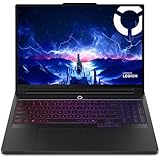
Top 3 picks at a glance
Decide These 3 Things First
1. Your target resolution and refresh rate. TGP matters most when you’re pushing high frame rates at QHD (2560×1600) or QHD+. If you’re gaming at 1440p and want to saturate a 240Hz panel, you want a 150W-plus configuration. If you mostly play at lower settings or use DLSS, the performance gap between a 100W and 175W RTX 5080 narrows considerably, and you can prioritize portability instead.
2. Sustained load versus burst performance. Some laptops post impressive 3D Mark scores but throttle after 20 minutes of gaming. Ask whether the chassis is designed to hold its rated TGP indefinitely. Thick 16- and 18-inch machines with vapor chamber cooling generally hold power better than 14- to 16-inch thin designs, which may ramp down after the fans and heat pipes saturate.
3. Total system power budget. The GPU doesn’t live alone. A laptop with an Intel Core Ultra 9-275HX or Ryzen AI 9 HX 375 can draw 55W or more from the CPU under combined loads. Check whether the manufacturer publishes a combined CPU+GPU wattage figure (often called “total system power” or TDP mode) and whether that mode requires the proprietary power adapter to be plugged in. On battery, most gaming laptops cap the GPU far below its rated TGP regardless of spec sheet claims.
TGP Ranges and What They Mean
The RTX 5080 mobile GPU operates across a configurable power range of roughly 80W to 150W, with Dynamic Boost allowing up to around 175W in higher-tier configurations when the power headroom exists. Here’s how those tiers translate:
- 80–100W: Found in thin chassis around 0.7–0.9 inches thick. Expect frame rates closer to a well-cooled RTX 5070 Ti in some titles. Fine for 1440p at 60–100 fps with DLSS, not ideal for competitive 240Hz gaming.
- 105–125W: The mainstream sweet spot for 16-inch machines. Delivers strong QHD+ performance while keeping fan noise and surface temperatures manageable. Most 2026-generation mid-range RTX 5080 laptops land here.
- 140–175W (with Dynamic Boost): Desktop-replacement territory. The Razer Blade 18 and MSI Vector 16 HX class of machines target this range, extracting the full performance the silicon offers. Expect chassis weights of 5.5 to 7+ pounds and power bricks of 330W to 400W.
One caution: a laptop advertising 175W total power draw is not the same as one advertising a 150W TGP with 25W Dynamic Boost. Look for the graphics-specific wattage figure in the detailed specs, not just marketing copy on the product page.
Chassis Size, Cooling, and Sustained Performance
Wattage on paper means nothing without the cooling to sustain it. As a rule of thumb, holding 150W+ of GPU power along with a 45–55W CPU requires at least two fans, four or more heat pipes, and either a vapor chamber or generously thick heat sink fins. Machines in this class typically measure 0.9 to 1.1 inches thick and weigh 6 to 7.5 pounds — the 18-inch Razer Blade class runs toward the heavier end of that range, while 16-inch models like the HP OMEN Max and Lenovo Legion Pro 7i sit slightly lower.
Thin laptops that offer a high TGP setting often achieve it only in a dedicated “Performance” or “Turbo” fan profile that pushes noise above 55 dB and raises palm-rest temperatures past 110°F. If you game with headphones and use a stand, that’s livable. If you use the laptop on your lap or in a quiet room, a machine configured at a steady 115–130W may be the better real-world choice even if its peak benchmark numbers are lower.
CPU Pairing and Shared Power Budget
High-wattage HX-class CPUs like the Intel Core Ultra 9-275HX (24 cores) or AMD Ryzen AI 9 HX 375 (12 cores, 55W-class) are excellent for streaming, compiling, and simulation work, but they compete with the GPU for thermal and power headroom in combined loads. If your priority is pure gaming frame rates, a CPU limited to 45–55W maximum won’t bottleneck an RTX 5080 at QHD — and it frees cooling capacity for the GPU. If you run productivity workloads alongside gaming, the HX chips justify their heat. The MSI Vector 16 HX with the Ultra 9-275HX and the HP OMEN Max with the Ryzen AI 9 HX 375 both represent the HX route; verify that the laptop lets you cap CPU wattage in its control software if you want to prioritize GPU clocks.
Display: Matching the Panel to the Wattage
A 175W RTX 5080 paired with a 165Hz panel wastes headroom in most esports titles, while a 100W configuration can’t consistently drive a 240Hz QHD+ panel in demanding games. Match tiers: 100–120W configurations pair well with 165Hz displays, while 140W-plus configurations can justify 240Hz QHD+ panels like the one on the OMEN Max and Vector 16 HX. OLED options, such as the panel in the Lenovo Legion Pro 7i Gen 10, deliver superior contrast and response times; confirm the OLED’s refresh rate (typically 240Hz in this class) matches your TGP tier so neither component is bottlenecking the other.
Price Tiers and What You Get
Budget tier ($2,400–$2,900): Expect 105–140W TGP configurations, 32GB DDR5, 1–2TB storage, and high-refresh IPS panels. The HP OMEN Max (currently $2,799 with 64GB RAM and a 2TB SSD) and MSI Vector 16 HX ($2,798.88 with 32GB and 2TB) show how aggressive this tier has become — these are not compromised machines, just slightly lower-clocked or more conservatively cooled than flagships.
Mid-premium tier ($3,000–$3,800): This is where display quality jumps. The Lenovo Legion Pro 7i Gen 10 at $3,589 pairs the RTX 5080 with an OLED panel and typically a full 150W-plus power target, better build materials, and a more refined cooling solution. You pay roughly $700–$900 over budget tier for the panel and chassis rather than raw GPU performance.
Flagship tier ($4,000+): The Razer Blade 18 at $4,499.99 represents the top of the range: an 18-inch chassis engineered to hold maximum TGP, 32GB of memory, premium CNC aluminum construction, and the best sustained-performance tuning available. You’re paying for consistency under load and build quality — a $2,800 machine may match its average frame rates, but it won’t match its thermal consistency in hour-long sessions.
Spec Checklist
| Spec | Budget ($2,400–$2,900) | Mid ($3,000–$3,800) | Premium ($4,000+) |
|---|---|---|---|
| GPU TGP | 105–140W | 140–175W | 150–175W sustained |
| CPU | HX-class, 45–55W cap | HX-class (Ultra 9 275HX / Ryzen AI 9 HX 375) | Flagship HX, tuned power sharing |
| RAM | 32GB DDR5-5600 | 32–64GB DDR5-5600+ | 32–64GB DDR5-6000+ |
| Storage | 1–2TB PCIe 4.0 NVMe | 2TB PCIe 4.0 NVMe | 2TB+ PCIe 4.0/5.0 NVMe |
| Display | 16″ QHD+ IPS, 165–240Hz, ~300 nits | 16″ QHD+ IPS/OLED, 240Hz, ~400–500 nits | 18″ QHD+ mini-LED/OLED-class, 240Hz+, 500+ nits |
| Cooling | 2 fans, 3–4 heat pipes | 2 fans, vapor chamber or 5+ pipes | Vapor chamber, metal fins, liquid-metal option |
| Power adapter | 280–330W | 330–380W | 380–400W+ |
| Weight | 5.5–6.5 lbs | 6–7 lbs | 6.5–7.5 lbs |
| Ports | USB4/Thunderbolt 4, HDMI 2.1, 2.5GbE | Thunderbolt 5 emerging, HDMI 2.1, 2.5GbE | Thunderbolt 5, HDMI 2.1, 2.5GbE, SD reader |
Red Flags
- No TGP listed anywhere. If a product page only says “RTX 5080” without a wattage figure, assume the conservative end of the range. Email the manufacturer or check the detailed spec PDF before buying.
- Peak power only achievable on benchmark profiles. Some laptops hit rated TGP in a “Turbo” mode that’s unusably loud and then quietly drop to 90–100W in balanced mode. Look for reviews that measure sustained clocks, not just peak scores.
- High TGP with a weak power adapter. A 175W GPU target on a 280W adapter means the system will pull from the battery or cap performance under combined CPU+GPU load. Match the adapter tier from the table above.
- Shared heat pipes between CPU and GPU. Budget cooling designs that share dissipation capacity between both chips often force the GPU to shed 15–20W whenever the CPU spins up.
- “Up to” wattage language without conditions. “Up to 175W” may apply only for short Dynamic Boost bursts. Sustained TGP is the number that determines your frame rates in long sessions.
FAQ
Does a higher TGP always mean better gaming performance?
Usually, yes — but with diminishing returns. Going from 85W to 125W on an RTX 5080 typically yields a large jump in average frame rates. Going from 140W to 175W yields a smaller gain, often 5–10% depending on the title and resolution. Above roughly 140W, cooling quality and sustained clock stability matter more than the last 20–30W on paper.
Can I change the TGP on my RTX 5080 laptop?
Within limits. Most gaming laptops ship with manufacturer control software (fan and power profiles) that toggles between preset power modes, and NVIDIA’s Dynamic Boost handles minute-to-minute redistribution between CPU and GPU. Third-party tools can sometimes adjust power limits, but you can’t exceed the chassis’s designed ceiling — a 100W machine can’t be tuned into a 175W machine, because the cooling hardware is the limiting factor.
How much does TGP matter if I use DLSS and frame generation?
It matters less. DLSS upscaling and multi-frame generation reduce the GPU’s native workload, which narrows the gap between power tiers, especially at 1440p and below. If your library leans on these features, a 110–125W configuration at a $600–$1,000 discount is often the smarter buy. If you play competitive shooters at native resolution chasing 200+ fps, pay for the higher wattage.
Is an 18-inch RTX 5080 laptop worth it over a 16-inch?
If you rarely travel with it, yes. The extra chassis volume — an 18-inch machine like the Razer Blade 18 measures roughly 15.7 x 11 inches and weighs 6.8-plus pounds versus 5.5–6.5 for most 16-inch models — allows larger heat sinks and fans that hold maximum TGP indefinitely, plus room for bigger batteries and better speakers. Expect to pay a $1,000–$1,700 premium over equivalently specced 16-inch machines. If you carry your laptop weekly, a well-cooled 16-inch at 140–150W is the better balance.
Related guides
- Alienware 16 Aurora RTX 5070 Review: Display, Portability and Configuration Gaps
- Lenovo Legion Pro 7i Gen 10 Review: 64GB RAM and Dual-SSD Configuration
- MSI Katana 15.6-inch RTX 5050 Review: Configuration Strengths and Upgrade Unknowns
- ASUS ROG Strix SCAR 16 G635LX-XS97 Review: Display Ambition, Upgrade Questions


