
As an Amazon Associate we earn from qualifying purchases at no extra cost to you.
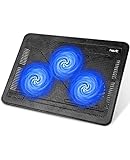
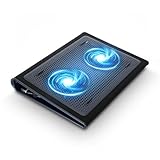


Looking at a laptop cooling pad, most people grab the cheapest one with the flashiest lights or the highest fan count and call it a day. That’s a mistake. A cooling pad’s job is simple—move air across your laptop’s intake vents—but the difference between a pad that drops your chassis temperatures a meaningful 5-10°C and one that just hums under a hot laptop comes down to a handful of factors: vent alignment, fan placement, CFM (airflow), and whether the pad actually fits your machine. Buy wrong, and you’ve spent $30 on a plastic wedge that does nothing.
This guide breaks down what actually matters when evaluating airflow in a cooling pad, from fan specs to build quality, so you can match the right pad to your laptop and your budget.
Top 3 picks at a glance
Decide These 3 Things First
Before comparing any specs, answer these three questions. They’ll narrow your options faster than any feature list.
1. Where are your laptop’s intake vents? Flip your laptop over. Most draw cool air through grilles on the bottom—often toward the front edge or in the center—and exhaust hot air out the back or sides. A cooling pad only works when its fans line up with those intake grilles. A laptop with a single center intake needs a pad with a center-mounted fan; a gaming laptop with multiple intakes spread across the bottom benefits from a wide multi-fan array. If the fans don’t align with the grilles, airflow numbers are irrelevant.
2. How big and heavy is your laptop? Cooling pads are rated by supported screen size, but weight matters just as much. Most pads support up to 17 inches, but a padded fabric lap desk style pad might sag or bow under anything over 6 pounds. Check the pad’s stated weight limit and compare it to your laptop—ultrabooks run 2.5-3.5 pounds, while 17-inch gaming laptops can hit 6-7 pounds.
3. How will you use it—desk or lap? Rigid plastic pads with metal mesh surfaces are best on a desk. Soft neoprene lap desks (like the Targus style) are designed for couch and bed use but typically move less air because the fan sits under fabric. If your laptop throttles under load, prioritize airflow; if it just gets uncomfortably warm on your legs, a lap-focused pad is fine.
Size and Fit: Match the Pad to Your Laptop
Size is the most common buying mistake. A pad that’s too small leaves intake grilles uncovered; one that’s comically large wastes desk space and can block side ports.
- 12-14 inch laptops: Look for pads with a surface around 13-15 inches wide. Slim pads in the 0.9-1.2 inch thickness range keep your typing angle reasonable.
- 15.6 inch laptops: The sweet spot for most pads. A surface of roughly 14.5-16.5 inches wide and 10.5-11.5 inches deep covers the typical 14 x 9.5 inch laptop footprint with room to spare. The havit HV-F2056, for example, fits 15.6-17 inch machines on a surface of about 16 x 11.8 inches.
- 17 inch and larger: Check both dimensions and weight rating. A 17-inch gaming laptop can measure 15.5+ inches wide; you want at least an inch of overhang tolerance on each side. Pads like the ChillCore A21 stretch to 19.3 inch support, which matters if you run a 18-19 inch desktop-replacement.
Also check the anti-slip stops or lips at the front edge. On angled pads raised 4-8 degrees, a shallow or missing lip lets heavier laptops slide forward. Look for a front lip at least 0.4 inches tall, or adjustable stops.
Fan Airflow: The Spec That Actually Matters
This is the heart of the decision. Manufacturers love quoting fan counts, but fan count alone tells you little. Here’s how to read the numbers:
CFM (cubic feet per minute) is the honest measure of airflow. Unfortunately, many budget brands omit it. When it’s listed, single large fans (140-160mm) typically move 30-75 CFM, while small 80mm fans move roughly 10-20 CFM each. This is why one big fan can outperform five tiny ones. If CFM isn’t published, treat fan size as a proxy: larger diameter fans moving at lower RPM deliver more airflow at less noise.
Fan size and placement beat fan count. A pad with a single 160mm center fan is often the better choice for a laptop with a central intake, while clusters of small fans suit laptops with widely spaced grilles. The TECKNET slim cooler, for instance, uses a compact single-fan layout aimed at 12-17 inch laptops, prioritizing portability over raw airflow.
RPM range and adjustability. Good pads offer a dial or step control, typically spanning 700-2,500 RPM. You want enough range to run quiet (under ~1,200 RPM) for browsing and loud for gaming sessions. Pads with a fixed single speed force you to choose between noise and cooling at all times.
Noise: Expect 15-25 dB at low settings and 25-40 dB at maximum. Anything quoted above 45 dB will be audible over game audio or calls.
Power draw: Most pads pull 0.5-2.5W via USB, negligible for battery life, but multi-fan RGB models can hit 3-5W. If your laptop has only one USB-A port, a pad with a passthrough port (like the ChillCore’s dual USB ports) is practically mandatory.
Material and Construction
The surface material affects both airflow and durability:
- Metal mesh over plastic frame: The standard for performance pads. Mesh presents minimal resistance to airflow and lets the fan’s output reach the laptop evenly. Look for steel or aluminum mesh; hairline wire mesh flexes and rattles over time.
- ABS plastic with cutouts: Cheaper and fine for small fans, but solid plastic sections between cutouts block airflow. Check that open area covers most of the surface.
- Neoprene/fabric lap desks: Comfortable and heat-insulating for your legs, but the fabric dampens airflow. These work best for laptops with mild heat, not throttling gaming machines.
Frame construction matters too. A pad with adjustable height should use a metal hinge or sturdy plastic ratchet—flimsy flip-out stands are the first thing to break. Weight is a rough quality signal: rigid performance pads typically weigh 1.3-2.2 pounds; a “performance” pad under a pound is usually thin plastic that vibrates.
Comfort and Ergonomics vs. Raw Performance
The best cooling pad is one you’ll actually keep on your desk. Two ergonomic factors to weigh:
Tilt and height settings. A slight angle (4-8 degrees) improves typing ergonomics and adds clearance under the laptop. Multi-height pads with 5-8 positions (the ChillCore offers 8) let you match the angle to your chair and desk. If you use an external keyboard, higher angles are comfortable; if you type on the laptop itself, keep the rise under 2 inches at the back or your wrists will suffer.
Surface feel. Mesh surfaces are fine for most laptops, but if you rest your palms on the deck edge, check for rounded edges on the mesh frame. Hard plastic edges with sharp mold lines are a genuine annoyance during long sessions.
If maximum cooling is your goal, remember that pad tilt slightly reduces fan-to-vent contact on some designs—negligible in practice, but it’s why well-designed pads angle the fan housing, not just the frame.
Price Tiers: What Your Money Buys
- Budget ($20-30): Expect 1-2 fans, fixed or single-adjust height, plastic construction, and no RGB. Examples in this range include the havit HV-F2056 ($27.99) and TECKNET slim cooler ($26.75). These are genuinely adequate for ultrabooks and general use—don’t assume you need to spend more.
- Mid-range ($30-45): Dual fans, adjustable height, better materials, USB passthrough. The Targus AWE55US lap mat ($32.20) fits here, as does the ChillCore A21 ($34.98) with its 9-fan array, 8 height positions, and lighting.
- Premium ($45-100+): Larger diameter fans with published CFM, aluminum construction, stepless speed control, and in some cases active cooling combined with raised stands. Justified mainly for high-wattage gaming laptops that throttle on stock cooling.
For most buyers, the $25-35 tier is the value sweet spot. Spending more buys comfort and refinement more than raw temperature drops.
Spec Checklist
| Spec | Budget ($20-30) | Mid ($30-45) | Premium ($45+) |
|---|---|---|---|
| Fan configuration | 1-2 small fans (80-110mm) | 2 large fans or 4-6 small | 2-4 large fans (140mm+), published CFM |
| Speed control | Fixed or single dial | Dial or 1-step switch | Stepless dial, 700-2,500 RPM |
| Noise | 25-40 dB | 20-35 dB | 15-30 dB at typical use |
| Height adjustment | None or 1 position | 2-5 positions | 5-8 positions |
| Surface | ABS plastic cutouts | Metal mesh | Aluminum mesh/panel |
| USB | Single port, no passthrough | Passthrough port | 2 ports, low draw under 2.5W |
| Max laptop size | 15.6-17 in | 17 in | 17-19.3 in |
Red Flags
- No CFM, no fan size, no RPM listed. If a listing only says “ultra-quiet powerful cooling,” the manufacturer is hiding weak specs.
- Fan count as the headline feature. Nine tiny fans sound impressive but often move less air than two 125mm fans. Check fan diameter first.
- Exposed RGB as the main selling point. Lighting adds power draw and cost but zero airflow. Fine if you want it, irrelevant if you don’t.
- No laptop size or weight rating. Vague “fits all laptops” claims usually mean the pad flexes under heavier machines.
- Fixed single fan speed. You’ll be stuck with the noise around the clock.
- Completely solid surface with one offset cutout. A fan blasting against solid plastic cools nothing.
- Warranty under 12 months. Fans are the failure point; reputable brands back them for at least a year.
FAQ
Do laptop cooling pads actually work?
Yes, but modestly. When fans align with your laptop’s intake vents, a good pad can lower external chassis temperatures noticeably and reduce internal temps by several degrees under sustained load. Results vary widely by laptop design; laptops with bottom intakes benefit most, while laptops that draw all air from the keyboard deck see little gain. A cooling pad complements—not replaces—clean internal fans and fresh thermal paste.
Is one big fan better than multiple small fans?
Usually, for raw airflow. Large-diameter fans move more air at lower RPM, which means less noise per CFM. Multiple small fans are better when your laptop has several intake grilles spread across its underside, since a single large fan can’t cover all of them. Match the layout to your vents, not the marketing.
How many watts does a cooling pad use, and will it drain my battery?
Most pads draw between 0.5W and 2.5W over USB; RGB multi-fan models can reach 3-5W. At even the high end, that’s a small fraction of a laptop’s typical 45-100W power draw, so battery impact is minor—expect a few percent at most during unplugged use. Choose a pad with a passthrough USB port so you don’t lose a port while it’s plugged in.
What’s a realistic budget for a good cooling pad?
For a standard 13-16 inch laptop used for everyday work, $25-30 buys a perfectly capable pad. For 17 inch or gaming laptops, or if you want adjustable height and quieter operation, plan on $30-45. Above that, you’re paying for aluminum construction, published airflow specs, and refinement—worthwhile only if your machine genuinely throttles under load.
Related guides
- Alienware 16 Aurora RTX 5070 Review: Display, Portability and Configuration Gaps
- Lenovo Legion Pro 7i Gen 10 Review: 64GB RAM and Dual-SSD Configuration
- MSI Katana 15.6-inch RTX 5050 Review: Configuration Strengths and Upgrade Unknowns
- ASUS ROG Strix SCAR 16 G635LX-XS97 Review: Display Ambition, Upgrade Questions


