
A dock that suddenly stops detecting an external monitor can turn a simple desk setup into a frustrating cycle of unplugging cables, restarting the laptop, and wondering whether the monitor, dock, or computer has failed. Troubleshooting in the wrong order can make matters worse: repeatedly hot-plugging a loose cable can damage a port, installing the wrong driver can create display conflicts, and using an underpowered charger may cause the dock to disconnect whenever the laptop draws more power.
The good news is that most dock-and-monitor problems come down to power, cable routing, input selection, display settings, or outdated software. Work through the checks below in order, starting with the simplest physical fixes before moving to drivers and hardware replacement.
As an Amazon Associate we earn from qualifying purchases at no extra cost to you.

What You Need
| Item | Why | Optional? |
|---|---|---|
| Laptop power adapter | Provides enough power for the laptop and dock during testing. | No |
| Dock power supply | Many docks will not run external displays reliably without their dedicated adapter. | No |
| Known-good HDMI, DisplayPort, or USB-C video cable | Helps rule out a damaged, low-specification, or loose display cable. | No |
| Second monitor or TV | Lets you determine whether the original monitor is the problem. | Yes |
| USB-C cable rated for video/data | Some USB-C charging cables cannot carry video or dock data. | Yes |
| Small flashlight or compressed air | Useful for checking ports for lint, bent contacts, or debris. | Yes |
Step-by-Step
1. Confirm that the laptop supports external video output through the dock connection (5 minutes)
Before changing settings, check the connection type between the laptop and dock. A USB-C-shaped port does not automatically support video. For a USB-C dock to send a monitor signal, the laptop usually needs USB-C DisplayPort Alt Mode, Thunderbolt, USB4, or a dock that uses DisplayLink software.
Look for a lightning-bolt icon near the laptop port for Thunderbolt, or a DisplayPort-style “D” icon for video-capable USB-C. If the laptop has only a standard USB-A port, it will need a USB graphics adapter or a DisplayLink-compatible dock rather than a basic USB-C dock.
Also check the dock’s stated display limits. Some compact docks can drive one 4K monitor at 60 Hz but may only support dual displays at lower resolutions. A larger DisplayLink model, such as the WAVLINK Pro Docking Station with five-display capability and 100W power delivery, is designed for more complex multi-monitor setups but requires its driver. At roughly $300, it makes more sense for a permanent workstation than a single portable screen.
2. Perform a full power reset of the monitor, dock, and laptop (8 minutes)
Turn off the monitor. Disconnect the monitor cable from the dock, unplug the dock from the laptop, and remove power from the dock. Shut down the laptop completely rather than simply closing its lid.
Wait at least 30 seconds. Then reconnect in this order:
- Plug the dock’s power adapter into a wall outlet.
- Connect the monitor to the dock.
- Turn on the monitor.
- Connect the dock to the laptop.
- Start the laptop.
This sequence allows the dock to establish power and identify the monitor before the operating system loads. If the dock has a power button, use it. Avoid testing with the dock powered only by the laptop unless the manufacturer specifically says that bus-powered display operation is supported.
3. Check the monitor input and cable path (5 minutes)
Use the monitor’s physical menu button to select the correct input: HDMI 1, HDMI 2, DisplayPort, USB-C, or another labeled option. Many monitors do not switch inputs automatically, especially if more than one cable is attached.
Next, inspect the entire cable path. Make sure the monitor is connected to a video output on the dock, not a USB-C data port or charging-only port. On docks with multiple USB-C ports, only one may support display output. Push HDMI and DisplayPort plugs in firmly; a connector that looks inserted may still be partially loose.
If possible, replace the cable with a known-good one. For 4K at 60 Hz, use a certified HDMI 2.0-or-better cable or a DisplayPort 1.2-or-better cable. Shorter cables, generally 3 to 6 feet, are often easier to troubleshoot than long cables routed through cable-management channels.
4. Test the monitor directly with the laptop (10 minutes)
Disconnect the dock and connect the monitor directly to the laptop using a compatible video cable or USB-C connection. If the monitor works directly from the laptop, the screen is probably fine and the issue is likely the dock, dock cable, dock power supply, or dock software.
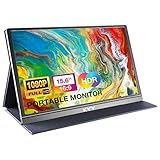
If the monitor still does not work when connected directly, test it with another device such as a second laptop, streaming box, or game console. Also try a different input on the monitor. A portable display is especially useful for this step because it is easy to move between devices. For example, a 15.6-inch 1080p portable screen such as the KYY Portable Monitor can serve as a lightweight troubleshooting display as well as a travel second screen; models in this category commonly cost about $60 to $130, with this KYY option listed at $69.99.
5. Make the operating system detect the display manually (5 minutes)
On Windows, go to Settings > System > Display. Under Multiple displays, select Detect. If the monitor appears, choose whether to duplicate or extend the display. For most desk setups, select Extend these displays.
Press Windows + P and choose Extend if Windows is set to “PC screen only.” You can also press Windows + Ctrl + Shift + B to reset the graphics driver; the screen may blink and make a short sound.
On a Mac, open System Settings > Displays. Hold the Option key if needed to reveal a Detect Displays button. Confirm that the monitor is not set to mirror another display when you expect it to extend the desktop. Keep in mind that some Mac models have native limits on the number of external displays they support, even when the dock has several video ports.
6. Update graphics, dock, and DisplayLink software (15 to 25 minutes)
Restart the laptop after checking for system updates. Then update the graphics driver through the laptop manufacturer’s support software or the graphics manufacturer’s official utility. Outdated Intel, AMD, or NVIDIA drivers can prevent the computer from recognizing a dock after an operating-system update.
If your dock uses DisplayLink technology, install or update the DisplayLink driver, then restart again. This is essential for many multi-display docks. On macOS, you may also need to approve screen-recording or display permissions for the DisplayLink Manager app before external displays will work.
Check the dock maker’s support page for firmware updates, but do not interrupt power during a firmware update. In 2026, it is still wise to download firmware only from the dock manufacturer, not from generic driver-download sites.
7. Reduce the display load and reconnect one screen at a time (10 minutes)
If the dock detects one monitor but not two or more, disconnect every display except one. Set that monitor to 1920 × 1080 at 60 Hz, then reconnect additional screens one at a time. High resolutions, high refresh rates, and multiple displays can exceed the dock’s bandwidth limits.
For example, a dock may handle one 4K monitor at 60 Hz but require two connected monitors to run at 4K 30 Hz or 1080p 60 Hz. If a display works at 60 Hz but disappears at 120 Hz or 144 Hz, the limitation is usually the dock, cable, or host laptop—not necessarily a defective monitor.
Mistakes to Avoid
- Using a charge-only USB-C cable: It may power a device but cannot transfer video or data.
- Plugging the dock into an underpowered charger: A 45W charger may be insufficient for a laptop that expects 65W, 90W, or 100W plus dock accessories.
- Assuming every dock port supports video: Read the small labels beside each USB-C and HDMI port.
- Changing several variables at once: Swap one cable, setting, or device at a time so you can identify the actual cause.
- Forcing a connector: If USB-C, HDMI, or DisplayPort does not seat easily, stop and inspect the port.
- Ignoring laptop display limits: A dock cannot always bypass a computer’s native external-monitor restrictions without DisplayLink support.
How Often
You should not need to troubleshoot a healthy dock regularly. Check cables and port connections every three to six months, especially on a desk where cables are frequently moved. Update the operating system, graphics driver, and dock software when you notice display issues after an update or when the dock manufacturer releases a fix relevant to your model.
If you travel with a dock or portable monitor, inspect the USB-C connector and cable before each trip. Repeated bending near the connector is a common cause of intermittent video detection.
When to Call a Pro or Replace
Consider professional help if the laptop’s USB-C or Thunderbolt port feels loose, becomes unusually hot, shows visible damage, or disconnects multiple known-good devices. A repair technician can check for port damage, motherboard issues, or power-delivery faults.
Replace the dock if it fails with more than one laptop, more than one monitor, and more than one tested cable after a power reset and software update. Replacement is also sensible if its power supply is missing, its video requirements no longer match your workstation, or it cannot deliver enough charging power for the laptop. For a basic one-monitor setup, a dependable USB-C dock often costs about $80 to $180; multi-monitor, high-bandwidth models can run from about $200 to $350 or more.
FAQ
Why does my dock charge my laptop but not detect the monitor?
Charging and video use different capabilities. The USB-C connection may be supplying power while the cable, port, or laptop lacks video support. Confirm that the laptop port supports DisplayPort Alt Mode, Thunderbolt, USB4, or the appropriate DisplayLink driver.
Why does the external monitor work when connected directly but not through the dock?
This usually points to the dock, its power adapter, its upstream USB-C cable, or the dock’s driver and firmware. Test another video output on the dock and make sure the dock is connected to wall power.
Can an HDMI splitter fix a dock that does not detect a monitor?
Usually no. A basic HDMI splitter duplicates one image to two screens; it does not add a separate extended desktop. It may also add another possible point of failure. Use a dock designed for the number of independent displays you need.
Why does my monitor disconnect when I close my laptop lid?
Your laptop may be going to sleep when the lid closes. Change the power setting so closing the lid does nothing while the laptop is plugged in, then test again. Keep the dock powered and make sure the laptop’s charger or dock provides adequate wattage.
Related guides
- Alienware 16 Aurora RTX 5070 Review: Display, Portability and Configuration Gaps
- Lenovo Legion Pro 7i Gen 10 Review: 64GB RAM and Dual-SSD Configuration
- MSI Katana 15.6-inch RTX 5050 Review: Configuration Strengths and Upgrade Unknowns
- ASUS ROG Strix SCAR 16 G635LX-XS97 Review: Display Ambition, Upgrade Questions


