Our Top Picks


Top 3 picks at a glance
Best Closet Drawer Dividers for Organized Dressers: What to Choose
The best closet drawer dividers for organized dressers are adjustable spring-loaded panels for deep, frequently used drawers; low-profile inserts for socks and underwear; and modular bins when you need flexible compartments without pressing against drawer walls. Before buying, measure the drawer’s usable interior, match divider height to the clothing, and check how the ends grip.
A divider that fits the drawer but sits too low may let folded shirts slump over it. One that is too tall can catch fabric or interfere with a drawer’s frame. The right choice depends on the drawer and what you plan to store—not just the number of compartments in the package.
As an Amazon Associate we earn from qualifying purchases at no extra cost to you.



Match the Divider to Your Drawer
| Drawer and contents | Useful divider spec | Why it fits |
|---|---|---|
| Shallow drawer, socks or underwear | About 2–4 in. high; modular bins or low inserts | Creates small zones without wasting vertical space. |
| Medium drawer, folded T-shirts | About 4–6 in. high; adjustable panels with padded ends | Helps stacks stay separated while leaving room to lift garments out. |
| Deep drawer, jeans or sweaters | About 6–8 in. high; sturdy, firmly gripping panels | Better supports bulky stacks that can push low dividers aside. |
| Narrow drawer, accessories | Short modular bins or a fitted tray | Small compartments use the limited width more efficiently than full-length panels. |
These heights are practical starting ranges, not universal standards. Check the drawer’s internal height and any rails, hinges, or lips that could obstruct a divider.
Measure Before You Buy
Measure the drawer’s usable interior—not its outside dimensions—in three places: width at the front, middle, and back, plus depth along both sides. Older dressers can taper or be slightly out of square. Use the smallest width and depth when choosing a wall-to-wall divider; a panel sized for the widest point may not fit elsewhere.
For example, suppose a drawer measures 23.5 inches wide at the front, 23 inches in the middle, and 22.75 inches at the back. If the divider’s adjustment range ends at 23 inches, it may fit in the middle but bind near the back. Choose an organizer whose working range includes the narrowest measurement, then allow a little clearance so it can be installed without forcing the drawer walls outward.
Also measure height from the drawer floor to the lowest obstruction. If the usable height is 5.5 inches, a divider taller than that may hit the drawer frame or catch when the drawer opens. For folded clothes, a divider that reaches roughly two-thirds to nearly the full height of the stack often separates items without making them awkward to remove.
Adjustable Panels, Fixed Inserts, or Bins?
Adjustable spring-loaded panels
These extend between opposing drawer walls and stay in place through spring tension. They are a strong choice for long sections, changing clothing layouts, or keeping stacks of shirts and jeans apart. Check the stated adjustment range and make sure your drawer’s narrowest measurement falls within it. Tension alone can be less reliable on slick or delicate drawer surfaces, so look for broad, soft end pads.
Fixed or modular inserts
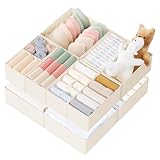
Fixed trays and modular bins work well in shallow drawers, especially for small items. They do not need to press against the drawer walls, which can be helpful in fragile or unusually shaped furniture. Their limitation is wasted space if the compartments do not match the drawer dimensions or your folded items.
Fabric organizers
Soft-sided organizers are gentle on clothes and easy to move, but their walls may bow under heavier garments. Choose a model with reinforced sides or use it for lightweight items rather than dense stacks. If the drawer is much wider than the organizer, leave less-used items outside the compartments instead of letting the organizer slide around.
Material and Grip: Details That Matter in Daily Use
- Wood or bamboo: Rigid and visually suited to many dressers. Smooth, finished edges are less likely to snag fabric; check that the panel is not so heavy that it becomes awkward to reposition.
- Plastic: Lightweight and easy to wipe clean. Thin panels can flex, so look for enough thickness and a stable base if they will hold bulky clothes.
- Metal: Can provide a slim, firm wall, but exposed edges or joints may catch knits. Prefer rounded or covered edges for clothing drawers.
- Fabric: Soft and simple to rearrange. Reinforced sides help the compartments keep their shape as you remove items.
Grip is as important as material. Soft rubber or foam pads spread pressure across the drawer wall and reduce slipping; narrow, hard contact points may leave marks or shift during use. On a smooth drawer, install a tension divider firmly but do not overextend it. If it moves when you pull out clothing, reposition it against solid side walls, reduce the load in the adjacent stack, or switch to a freestanding bin that does not rely on wall friction.
Choose by Situation
| If your drawer is… | Start with… | Check before committing |
|---|---|---|
| Deep and full of heavy clothes | Tall, rigid adjustable panels | Height clearance, broad end pads, and the adjustment range. |
| Shallow and filled with small items | Low modular bins or a fitted tray | That compartments fit the item sizes without blocking the drawer. |
| Uneven or delicate inside | Freestanding fabric bins or modular inserts | Whether the organizer stays put without pressing on the walls. |
| Wide, with several clothing stacks | Two or more adjustable panels | How the panels divide the width and whether stacks can be lifted out. |
| Frequently rearranged | Lightweight adjustable panels or modular bins | Whether adjustments are easy to make without tools. |
Set Up Dividers So They Stay Useful
- Empty the drawer. Remove items so you can see the floor and side walls, and spot rails or uneven areas.
- Group clothing by type and size. Estimate how much space each group needs before fixing dividers in place. Reserve extra room for bulky sweaters or jeans.
- Install a trial layout. Place dividers without overloading either side, then open and close the drawer several times. This checks for catching, movement, and interference.
- Adjust the compartments to the clothes. Leave enough space to lift an item out without pulling neighboring stacks apart. A compartment that is packed tightly can undo the organization it was meant to create.
- Recheck after a few days. If a panel has shifted, improve its contact with the drawer walls or reduce the pressure from adjacent stacks. If a low wall lets garments fall over, use a taller divider rather than adding more items.
Common Buying Mistakes to Avoid
Do not choose by advertised maximum length alone: a drawer can be narrower in one spot, and some organizers need a minimum extension to remain stable. Avoid tall panels in shallow drawers, where they can obstruct the frame. For delicate clothing, inspect edge finish and contact pads; for heavy stacks, prioritize rigidity and secure grip over a large number of compartments.
For most dressers, a practical starting setup is one or two adjustable, padded panels for folded clothes and low modular bins for small items. Confirm the dimensions against the actual drawer, then choose a height that separates the contents without making them hard to reach. That combination is usually more useful than buying a large set of dividers that does not match the way the drawer is used.
Frequently asked questions
Can drawer dividers leave marks or damage the drawer?
They can if they use narrow, hard contact points or are overextended against smooth or delicate surfaces. Soft rubber or foam pads spread pressure and reduce slipping. Install tension dividers firmly without forcing them outward, and choose freestanding bins or modular inserts when the furniture is fragile or unusually shaped.
How do I know whether a spring-loaded divider will fit?
Compare the divider’s stated adjustment range with the drawer’s narrowest interior width. Measure at the front, middle, and back because an older dresser may taper or be slightly out of square. Allow a little clearance so the divider can be installed without forcing the drawer walls outward or binding near the back.
What should I do if the drawer is wider than the organizer?
Use the organizer for the items that need compartments and leave less-used items outside the compartments rather than allowing the organizer to slide around. For a wide drawer containing several clothing stacks, consider two or more adjustable panels, then check that the stacks can still be lifted out easily.
How much space should I leave around folded clothes?
Leave enough room to lift each item out without pulling neighboring stacks apart. Reserve extra space for bulky sweaters or jeans, and avoid packing a compartment tightly. Before fixing the dividers in place, group clothing by type and size and estimate how much room each group needs.
What should I check after installing the dividers?
Open and close the drawer several times to check for catching, movement, and interference. Recheck the arrangement after a few days. If a panel has shifted, improve its contact with the drawer walls or reduce pressure from adjacent stacks. If garments fall over a low wall, replace it with a taller divider.