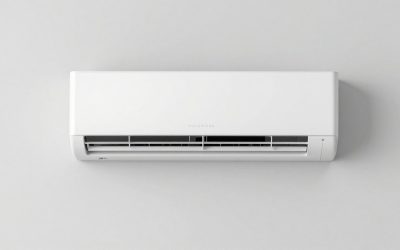
To reliably run dual air conditioners in an RV you need a 3000W to 3500W high-wattage solar array, a 48V lithium battery bank of at least 10kWh to 15kWh, and a 3000VA to 5000VA low-frequency inverter with surge capacity for compressor startups, because two 13.5K-15K BTU rooftop ACs will draw 2800W-3400W continuously and surge much higher at startup.
As an Amazon Associate we earn from qualifying purchases at no extra cost to you.


Our Top Picks
 iHooToo 12V DC RV Rooftop Air Conditioner withFits Open 14in x14in30 x 29 x 6 inches64 poundsCheck on Amazon


Top 3 picks at a glance
How Much Power Dual RV Air Conditioners Actually Need
Most RVs with dual AC use either two 13,500 BTU units or two 15,000 BTU units. A 13.5K unit typically draws 1,300W-1,500W running, a 15K unit draws 1,500W-1,800W running. On a hot day with both compressors active, your continuous load is not 1500W, it is double plus your other loads.
Startup surge is the failure point for undersized systems. A standard rooftop AC without a soft starter can pull 45-60 amps for 1-2 seconds on 120V AC. That is a 5,000W+ surge per unit. With two units trying to start, a 3000W inverter will fault immediately even if it can handle the running wattage.
Worked Power Budget Calculation for Dual 15K ACs
Here is a realistic power budget for a 35-40 foot fifth wheel or Class A with dual AC in summer:
- AC Unit 1 (15K BTU): 1,600W running x 7 hours runtime = 11,200Wh
- AC Unit 2 (15K BTU): 1,600W running x 7 hours runtime = 11,200Wh
- Other loads (residential fridge, lights, water pump, inverter idle, Starlink/router): ~250W average x 24 hours = 6,000Wh
- Total daily consumption: ~28,400Wh (28.4 kWh)
- With inverter efficiency loss (90-93% efficient): ~31,000Wh needed from batteries/solar
A 2000W solar array in the Southwest US averages 5.5 peak sun hours in summer. 2000W x 5.5 hours x 0.75 system losses = 8,250Wh per day. That covers less than one AC unit for a full day. This is why you cannot run dual AC on solar alone in real time. You run them from a large battery bank that solar replenishes, and you use shore power or generator assist for extended cloudy periods or overnight.
| Configuration | Continuous Draw | Surge (Without Soft Starter) | Surge (With Soft Starter) | Daily Energy (8h Mixed Runtime) |
|---|---|---|---|---|
| Dual 13.5K BTU | 2,600W – 3,000W | 9,000W – 11,000W | 3,600W – 4,200W | 20 – 24 kWh |
| Dual 15K BTU | 3,000W – 3,600W | 10,000W – 13,000W | 4,200W – 5,000W | 24 – 28.8 kWh |
| One 15K + One 13.5K | 2,800W – 3,300W | 9,500W – 12,000W | 3,900W – 4,600W | 22 – 26.4 kWh |
Installing a soft starter like a Micro-Air EasyStart or SoftStartRV on each AC is non-negotiable for an inverter system. It reduces locked-rotor startup amps by 65-75%, which lets a 3000VA Victron MultiPlus-II 2x120V or similar low-frequency inverter start each unit sequentially without tripping.
Inverter and Electrical System Sizing
Do not size your inverter for running watts alone. Size it for sequential startup.
- Minimum viable inverter: 3000VA / 2400W continuous (e.g., Victron MultiPlus-II 3000 2x120V) with soft starters on both ACs. You must set the inverter to start one AC, wait 3-5 minutes, then start the second. This works for dual 13.5K units but is at its limit for dual 15K.
- Recommended inverter: 5000VA / 4000W continuous (e.g., Victron MultiPlus-II 5000, EG4 6000XP, or Sol-Ark 5K). This handles dual 15K units with soft starters and leaves headroom for microwave or other loads without load-shedding.
- Voltage: A 48V battery system is strongly preferred over 12V for dual AC. At 3000W load, a 12V system pulls ~275A after inefficiency, requiring 4/0 cabling and creating massive heat. A 48V system pulls ~68A for the same power, allowing smaller wires and cooler operation.
For a 50-amp RV with dual AC, use a split-phase inverter or two inverters in parallel that can provide 120/240V or dual 120V legs. The Victron MultiPlus-II 2x120V is popular because it passes through both legs on shore power and inverts on a single leg correctly, avoiding the need to rewire the breaker panel.
Battery Bank: How Long You Can Actually Run Dual AC
Solar recharges the bank, but battery capacity determines runtime after sunset. Lithium iron phosphate (LiFePO4) is the only practical chemistry due to weight, depth of discharge, and cycle life.
| Battery Bank Size (Usable) | Example Configuration | Runtime for Dual 15K (3,200W Load) | Runtime for Single 15K (1,600W Load) |
|---|---|---|---|
| 5.1 kWh | One 48V 100Ah server rack battery | ~1.4 hours | ~2.9 hours |
| 10.2 kWh | Two 48V 100Ah (e.g., EG4 LifePower4 x2 or SOK 48V x2) | ~2.9 hours | ~5.8 hours |
| 15.3 kWh | Three 48V 100Ah | ~4.3 hours | ~8.7 hours |
| 20.4 kWh | Four 48V 100Ah / Two 48V 200Ah | ~5.8 hours | ~11.6 hours |
Runtime calculation: Runtime = (Usable Wh x 0.90 inverter efficiency) / Load Watts. We use 90% to account for inverter conversion, wiring, and battery BMS overhead. To run dual AC from 8 PM to 6 AM (10 hours) with cycling compressors at ~60% duty cycle (~1920W average), you need roughly 21 kWh usable. Most full-time off-grid setups targeting dual AC overnight use 15kWh as a practical minimum and accept running one unit overnight on thermostat.
Roof Space and Weight Limits: The Real Constraint
A high-wattage residential panel in 2026 is 400W-580W. Older 100W-200W RV panels are too inefficient for dual AC goals.
- High-wattage panels: A 550W panel (e.g., REC Alpha Pure-R, Longi Hi-MO 6, Canadian Solar HiKu6) measures roughly 89 x 45 inches and weighs 46-52 lbs. Four panels = 2,200W, needs ~110 sq ft and weighs ~200 lbs.
- Typical RV roof usable space: A 35-foot Class A or fifth wheel has 180-260 sq ft of usable flat roof after accounting for AC shrouds, vents, antennas, and slide toppers. You can usually fit 4 to 6 high-wattage panels without major obstructions.
- Weight: Roof load limits are rarely published, but most manufacturers advise keeping added roof weight under 300-400 lbs including racking. Six 550W panels plus aluminum racking is 320-380 lbs. This is feasible but requires proper mounting into trusses, not just luan and membrane.
If your roof is crowded, consider 400W-450W panels with smaller footprints. Three 450W panels (1,350W) will not run dual AC continuously but will significantly extend battery runtime and handle one AC during peak sun if paired with a large battery bank.
High Wattage System Configurations That Work for Dual AC
1. Maximum Roof System (3000W-3300W)
Six 550W residential panels in 3S2P configuration feeding a 48V MPPT system. Requires two charge controllers (e.g., Victron SmartSolar 250/100 + 150/85) or one high-amperage controller like an EG4 MPPT. This is the class of system that can produce 14-17 kWh per day in summer and recover a 15-20 kWh bank by the next evening. Usually $5,500-$8,500 for panels, racking, controllers, and wiring before batteries and inverter.
2. Practical Dual AC System (2200W-2400W)
Four 550W-600W panels on the roof plus a 48V 15kWh battery bank and 5000VA inverter. This balances weight and cost. It will run one AC all day on solar + battery and can run dual AC for 3-4 hours in the afternoon peak. Many owners pair this with a soft-start equipped dual AC and a thermostat strategy: run both to cool down to 72F, then maintain with one unit.
3. Compact High-Efficiency System (1800W-2000W)
Four 450W panels or five 400W panels. Best for shorter Class C or 30-foot trailers where roof space is limited. This is not a true dual-AC solar system but a large single-AC system with dual-AC capability for short periods using stored battery energy. You will still need generator or shore power to recharge after a night of dual AC use.
Decision Matrix: Which System Fits Your Situation
| Your Situation | Recommended Solar Wattage | Battery + Inverter | Strategy |
|---|---|---|---|
| Full-time off-grid in Arizona/Texas summer, need dual AC 8+ hours/day | 3000W+ (6x 500W+) | 20kWh+ 48V, 5000VA inverter, soft starters on both ACs | Solar extends runtime, but plan on daily generator/shore top-up |
| Weekend boondocking, want dual AC for afternoon + one AC overnight | 2200W-2600W (4-5x 550W) | 10-15kWh 48V, 3000-5000VA inverter | Pre-cool on both, sleep on one AC with thermostat at 75F |
| Limited roof space (under 120 sq ft usable) | 1600W-2000W (4x 400-500W) | 10kWh 48V, 3000VA inverter | Single AC primary, second AC only on shore/generator |
| 50A RV that stays at parks, wants solar for bill offset | 2000W-3000W | 10kWh, hybrid inverter with solar-assist | Run ACs on shore power, solar reduces shore draw and powers DC loads |
Installation Priorities People Get Wrong
Tilt kits add 15-25% winter yield but are often left flat for wind resistance while driving. Flat-mounted panels lose little in summer when AC demand is highest, so fixed flat racking is acceptable if you size the array for flat performance.
Wire your array for higher voltage (80-150V per string) to reduce current and allow smaller gauge wire from roof to controller, but stay under your charge controller’s VOC limit with temperature correction. In cold mornings, VOC rises. A 3S string of 49V VOC panels is 147V at 77F but can exceed 160V at 32F, which will damage a 150V controller.
Place batteries inside conditioned space, not in an unvented exterior bay in the sun. LiFePO4 capacity drops and BMS will disconnect below 32F for charging and above 130F. An RV battery bay can exceed 120F in summer.
Frequently asked questions
Do both air conditioners need soft starters?
Yes, installing a soft starter on each air conditioner is described as non-negotiable for an inverter system. Soft starters reduce locked-rotor startup amps by 65-75%, helping a low-frequency inverter start the units sequentially without tripping. Without soft starters, startup surge can reach 5,000W+ per unit, and two units starting together can overload a 3000W inverter.
Can a 2000W solar array run both RV air conditioners continuously?
No, a 2000W array cannot run both air conditioners continuously from solar alone. With 5.5 peak sun hours and 0.75 system losses, it produces about 8,250Wh per day. Dual 15K air conditioners can consume 24-28.8 kWh over 8 hours, so a large battery bank, shore power, or a generator is needed for extended operation.
Why is 48V preferred over 12V for a dual-AC system?
A 48V system is preferred because it carries much less current at the same power. At a 3000W load, a 12V system draws about 275A after inefficiency, while a 48V system draws about 68A. The lower current allows smaller wires and cooler operation, whereas the 12V setup requires 4/0 cabling and creates substantial heat.
How should the two air conditioners be started on an inverter?
Start one air conditioner first, wait 3-5 minutes, and then start the second. Sequential startup reduces the chance that both compressor surges will overload the inverter. The article says this approach works for dual 13.5K units with a 3000VA inverter and is near the limit for dual 15K units, even when both have soft starters.
What roof mounting detail matters most for a large solar array?
The panels should be mounted into the RV roof trusses rather than only into luan and membrane. Six 550W panels plus aluminum racking can weigh 320-380 lbs, so structural attachment matters. Roof space is also limited by AC shrouds, vents, antennas, and slide toppers. Fixed flat racking is acceptable when summer production is the priority.