
Choosing from the best computer drawing machines means sorting through wildly different categories: inexpensive pen tablets that pair with a monitor, standalone tablets with built-in screens that need no computer at all, and everything in between. A buyer solving for “I want to draw digitally without spending a fortune” has fundamentally different needs from someone who demands a full laminated display with shortcut keys for production work.
What separates a worthwhile purchase from a frustrating one usually comes down to three things: active drawing area (a 6×4-inch slate feels cramped for sketching faces), pressure sensitivity depth (the gap between 1024 and 8192 levels is immediately visible in line quality), and whether the device requires a separate computer. Below, we compared published specifications, current prices, and owner feedback on all eight machines to help you match the right category to your workflow.
As an Amazon Associate we earn from qualifying purchases at no extra cost to you.




Top 3 picks at a glance
Quick Picks
| Product | Best for | Price |
|---|---|---|
| XPPen StarG640 | Absolute beginners on a tight budget | $29.99 |
| UGEE M708 | Students needing more canvas space cheaply | $41.95 |
| PicassoTab X11 | Drawing on the go with no computer | $219.95 |
| XPPen Artist 13.3 Pro | Semi-pro artists wanting a display tablet | $211 |
| HUION Inspiroy H1060P | Writers and illustrators who need hot keys | $43.99 |
| Wacom Intuos Small | Entry-level users who value software bundles | $39.95 |
| 12-Inch Standalone Drawing Tablet | Travelers wanting a large standalone screen | $214.99 |
| Yoturetoys AI Drawing Projector | Young children learning to draw | $69.99 |
How We Picked
We filtered these machines on four criteria: active drawing area relative to price, pressure sensitivity level (the industry standard now ranges from 4096 to 16384), whether a separate computer is required, and the breadth of OS or software support mentioned in published specs. Owner feedback pointed us toward real-world concerns like pen tilt recognition reliability and whether bundled software licenses are perpetual or trial-based.
The 8 Best Computer Drawing Machines in 2026
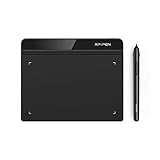
XPPen StarG640
This is the machine to start with when you have never used a pen tablet and want to learn basic hand-eye coordination without a financial commitment. The battery-free stylus means no charging interruptions, and compatibility with Mac, Windows, and Chromebook covers virtually every student or hobbyist laptop. Owners praise the compact footprint for dorm desks and coffee shops. The 6×4-inch active area is the main drawback — it constrains detailed work and can feel cramped for larger gestures.
- Pro: Under $30 with no ongoing costs for batteries or software
- Pro: Wide OS compatibility including Chromebook, rare at this price
- Con: Small active area limits line smoothness for bigger compositions
Skip it if you already know you need more than casual sketching or if you draw on a desktop monitor.
UGEE M708
The M708 targets students who find 6×4 slates too small but cannot justify spending over $50. Its 10×6-inch drawing surface gives noticeably more room for figure work and perspective sketches. Owners frequently mention the build quality feeling sturdy for the price tier. The main trade-off is that it pairs with the computer rather than operating independently, so you need a monitor nearby. Some reviewers note the pen does not offer tilt recognition, which matters if you shade with angled strokes.
- Pro: Generous 10×6 active area at under $45
- Pro: Solid build with a comfortable pen grip reported by owners
- Con: No tilt support, limiting natural shading for intermediate users
Pass if you need tilt or want a standalone experience.
PicassoTab X11
This 11-inch standalone tablet eliminates the need for a computer entirely, making it ideal for travel sketching, field illustration, or anyone who wants to draw on a couch without a laptop tethered to a desk. Published specs describe it as a self-contained unit, and owners confirm it boots quickly and handles layered drawing apps. The concern at $219.95 is whether the software ecosystem is as broad as what you get on a full desktop with Photoshop or Clip Studio Paint. Display resolution and color accuracy are also unspecified in the listing, which is a meaningful gap for serious work.
- Pro: Fully standalone — no computer, no cables, no setup
- Pro: 11-inch screen gives comfortable canvas space in a portable form
- Con: Display specs (resolution, color gamut) are not published, making it hard to evaluate for color-critical work
Skip if you need confirmed color-accuracy specs or a large app library.
XPPen Artist 13.3 Pro
At $211, this display tablet undercuts most branded 13-inch screens while offering a full-laminated panel that reduces parallax between your pen tip and the line on screen. The 16K pressure sensitivity figure is among the highest listed in this roundup, and the built-in shortcut keys reduce keyboard dependency. Owners highlight the portability for a display-class device. The drawback is that it still requires a host computer, so the total setup cost climbs once you factor in the machine it connects to.
- Pro: Full-laminated display minimizes parallax for a natural drawing feel
- Pro: 16K pressure levels and shortcut keys approach pro-tier usability
- Con: Requires a separate computer, adding to total system cost
Pass if you want an all-in-one unit or do not already own a capable laptop.
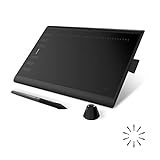
HUION Inspiroy H1060P
This pen tablet stands out in its price range by offering 12 programmable hot keys on the left side plus 16 additional keys mapped to the stylus barrel, giving writers and comic artists a workflow advantage over simpler slates. The 10×6.25-inch active area matches the UGEE’s generosity. Owners appreciate the shortcut layout for switching brushes quickly. The con is that HUION’s software occasionally shows driver quirks on newer macOS versions, something to verify before purchasing on a Mac.
- Pro: 12+16 hot keys for efficient workflow without touching the keyboard
- Pro: Large 10×6.25-inch area at under $45 keeps gestures fluid
- Con: Driver compatibility on the latest macOS builds has been reported as inconsistent by some owners
Skip if you run a bleeding-edge macOS version and cannot tolerate driver updates.
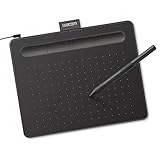
Wacom Intuos Small
The Intuos Small trades raw size for Wacom’s long-standing software bundle, which typically includes a licensed copy of Corel Painter Essentials or a similar package. For beginners, that bundled software removes the friction of hunting for a drawing application. The pen is recognized for its low activation force, meaning lighter hand pressure registers cleanly. The 6×4-inch active area is small for the $39.95 price, and the wireless adapter may be sold separately depending on the listing variant, so check before ordering.
- Pro: Bundled professional software adds value no other tablet at this price includes
- Pro: Extremely low activation force on the pen for comfortable long sessions
- Con: Smallest active area among the $40 tier; wireless option may cost extra
Skip if workspace size matters more to you than software extras.
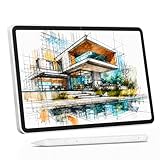
12-Inch Standalone Drawing Tablet No Computer Needed
With a 12-inch screen and a 4096-level stylus, this unit offers more real estate than the PicassoTab X11 at a similar price. Its pitch is straightforward: a large portable canvas for artists who draw in transit or prefer not to carry a laptop. Owners mention the screen brightness is usable outdoors, though published color specs remain vague. The 4096-level sensitivity is the lowest figure in this list among standalone devices, which means less subtle gradation in soft media compared to higher-end options.
- Pro: 12-inch screen is the largest standalone canvas here at $214.99
- Pro: Portable, battery-powered design for true anywhere drawing
- Con: 4096 pressure levels trail the 16K figure seen in display-class competitors
Pass if you need the highest possible sensitivity depth for fine-art reproduction.
Yoturetoys AI Drawing Projector
Not a tablet in the traditional sense, this projector for ages 5 to 12 uses AI-guided templates to help young children learn proportions and line control before they ever touch a digital canvas. As a birthday gift it fills a niche none of the other seven machines address. Parents report that kids stay engaged longer than with passive toys. The limitation is obvious: it is not a computer drawing machine you will grow into or use for original creative work beyond tracing exercises.
- Pro: Introduces young children to drawing fundamentals through guided projection
- Pro: Gift-ready at $69.99 with no technical setup required
- Con: Cannot produce original digital artwork; purely an educational toy
Skip entirely if you are an adult buyer or need any digital output.
Buying Guide
Active Area: Match Size to Your Art Style
A 6×4-inch slate works for portrait miniatures and tight line work but forces exaggerated zooming for landscapes or full-body figures. If your compositions span wider scenes, prioritize 10-inch-plus areas. For standalone screens, 11 to 12 inches gives a comfortable canvas without adding bulk. The relationship between active area and price is steeply curved under $50 — moving from 6×4 to 10×6 typically adds $10 to $15, which is the best value-per-square-inch in the category.
Standalone vs. Tethered: Decide Before You Compare Specs
Standalone tablets like the PicassoTab X11 and the 12-Inch unit run drawing apps locally and sync later. This eliminates setup friction but locks you into whatever OS and app library the manufacturer provides. Tethered tablets (StarG640, M708, H1060P, Intuos Small, Artist 13.3 Pro) give you access to full desktop software — Photoshop, Clip Studio Paint, GIMP — but require a computer nearby. For students, tethered is cheaper overall; for travelers, standalone wins on convenience.
Pressure Sensitivity and Tilt: What Owners Actually Notice
The jump from 1024 to 4096 levels is perceptible in brush taper. The further jump to 8192 or 16384 levels benefits fine-art shading and calligraphic strokes most. Tilt recognition, however, is a binary feature: either the pen supports it or it does not, and no amount of sensitivity levels replaces a genuine tilt angle. If you shade with angled strokes, confirm tilt support in the spec sheet before buying a budget pen tablet.
Our Verdict
Top pick: The XPPen Artist 13.3 Pro delivers the most usable drawing experience for a working artist at $211, combining a full-laminated screen, 16K pressure levels, and shortcut keys that rival devices costing twice as much.
Budget pick: The UGEE M708 at $41.95 gives you nearly double the canvas of the StarG640 for just $12 more, making it the clearest value in the pen-tablet tier.
Conditional winner: If you never draw at a desk, the PicassoTab X11 or the 12-Inch standalone should be your pick regardless of the specs on display tablets, because the friction of carrying a laptop outweighs marginal sensitivity gains.
FAQ
Can I use a pen tablet without a computer?
Only if you buy a standalone model like the PicassoTab X11 or the 12-Inch unit, which have their own processors and screens. Traditional pen tablets require a host computer running drawing software.
Is 4096-level pressure sensitivity enough for professional work?
It is workable for most illustration and comic line art, but artists doing fine-art digital painting or calligraphic work will notice the difference at 8192 levels or higher. For casual sketching and graphic design, 4096 is perfectly adequate.
Do I need a display tablet or is a pen tablet sufficient?
A pen tablet is sufficient once you build hand-eye coordination over a few weeks. Display tablets reduce the mental mapping step because you draw directly on the image, which speeds up detailed work but adds $150 or more to the cost.
Are these machines compatible with Chromebooks?
The XPPen StarG640 explicitly lists Chromebook support. Most pen tablets connect via USB and follow standard HID protocols, so many will work with Chrome OS, but only the StarG640 confirms it in published specs at this price tier.
Related guides
- Alienware 16 Aurora RTX 5070 Review: Display, Portability and Configuration Gaps
- Lenovo Legion Pro 7i Gen 10 Review: 64GB RAM and Dual-SSD Configuration
- MSI Katana 15.6-inch RTX 5050 Review: Configuration Strengths and Upgrade Unknowns
- ASUS ROG Strix SCAR 16 G635LX-XS97 Review: Display Ambition, Upgrade Questions


