Our Top Picks
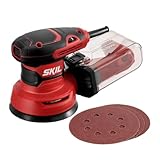
 SKIL 5” Random Orbital Sander with Cyclonic Dust5 inches7.87 x 4.8 x 5.51 inches3.44 PoundsCheck on Amazon


Top 3 picks at a glance

Best Drywall Sanders for Smooth, Fast Finishes
The best drywall sanders for most large rooms are the Mirka LEROS for low-fatigue control, the Festool PLANEX LHS 2 225 EQ for premium dust extraction and finish quality, and the DEWALT DWE7800 for a practical corded balance of reach, power, and cost.
A drywall sander is not judged by motor power alone. The important differences appear when you sand ceilings for an hour, move across large walls, connect a vacuum, or try to remove joint-compound ridges without creating waves. The comparison below focuses on sanding power, dust control, head movement, pole reach, weight, and handling rather than headline specifications.
As an Amazon Associate we earn from qualifying purchases at no extra cost to you.


Quick comparison of the best drywall sanders
| Model | Drive type | Disc size | Key strength | Best use | Typical market range |
|---|---|---|---|---|---|
| Mirka LEROS | Corded, brushless | 9 inches | Very light, highly flexible head | Ceilings, long sessions, professional finishing | Usually $900–$1,300 for the tool |
| Festool PLANEX LHS 2 225 EQ | Corded | 8.9 inches | Excellent extraction and integrated work light | Large rooms and premium finish work | Usually $1,100–$1,600 for the tool |
| DEWALT DWE7800 | Corded | 9 inches | Strong all-around performance and reach | Contractors and renovation projects | Usually $500–$800 |
| Makita DSL800 | 18V cordless | 8.9 inches | Cord-free mobility | Stairs, occupied homes, and small-to-medium rooms | Usually $450–$700 as a tool |
| Porter-Cable 7800 | Corded | 8.75 inches | Simple, proven design and lower cost | Occasional drywall work | Usually $300–$500 |
Prices vary by kit contents, vacuum accessories, and whether batteries are included. A compatible dust extractor can add several hundred dollars, but it has a greater effect on real-world cleanliness than a small difference in motor power.
Head-to-head: which drywall sander is best for your job?
Best overall for ceilings: Mirka LEROS
The Mirka LEROS stands out because its sanding head moves with unusually little resistance. The flexible head can follow a ceiling or wall without forcing the operator to fight the pole, while the relatively low tool weight reduces shoulder and neck fatigue.
That flexibility is particularly useful when sanding across taped joints. A rigid head tends to dig at one edge when the pole angle changes; a freely articulating head stays flatter and makes it easier to use consistent pressure. The tradeoff is that a flexible head rewards a light touch. Pressing hard can make the pad tilt and leave an uneven finish.
Choose the LEROS if you sand several rooms at a time, spend substantial time overhead, or value control more than the lowest purchase price. It is less compelling for a single small repair where a manual sanding block or compact random-orbit sander may be sufficient.
Best dust extraction and visibility: Festool PLANEX LHS 2 225 EQ
The Festool PLANEX LHS 2 225 EQ is designed as a complete system rather than just a motor and sanding disc. Its integrated lighting helps reveal shallow ridges and low spots that may disappear under ordinary room lighting. That can prevent the common mistake of stopping too early and discovering defects after primer is applied.
Its dust extraction is one of its strongest advantages when paired with an appropriate extractor and fine-dust filter. Good extraction keeps the abrasive from loading as quickly, preserves visibility, and reduces the layer of compound dust that otherwise settles across floors and furniture.
The PLANEX makes the most sense for finishers, remodeling contractors, and anyone working in occupied spaces. Its system cost is high, and the tool is more investment than most occasional DIY users need.
Best practical corded choice: DEWALT DWE7800
The DEWALT DWE7800 offers the straightforward advantages of a corded drywall sander: continuous power, no battery changes, and enough reach for standard residential ceilings. Its variable-speed control lets you use a lower setting for delicate final passes and more aggressive sanding for visible ridges.
It is a strong choice when productivity matters but a premium low-weight system does not fit the budget. The head and pole arrangement are capable, though the operator may notice more fatigue than with the lightest professional designs during extended overhead work.
Best cordless option: Makita DSL800
The Makita DSL800 is valuable when a power cord would constantly snag on scaffolding, stairs, doorways, or installed cabinetry. Cordless mobility also makes it easier to move between rooms without repeatedly repositioning an extension cord and vacuum hose.
The limitation is runtime. Large ceilings can consume multiple batteries, especially at higher speeds or when sanding heavy ridges. A cordless model is most attractive if you already own compatible high-capacity batteries and can charge or rotate packs during the job.
Best for occasional users: Porter-Cable 7800
The Porter-Cable 7800 is a simpler corded design that avoids the cost of advanced lighting, brushless motors, or highly articulated mechanisms. It can produce a smooth result when the operator maintains even pressure and uses suitable abrasive discs.
Its lower price does not eliminate the need for dust extraction. In fact, a basic sander connected to a good extractor will usually outperform a more expensive sander used without effective dust control.
Decision matrix: match the sander to the room
| Your situation | Priority | Best direction | Why |
|---|---|---|---|
| Several ceilings or whole-house renovation | Low fatigue and reliable extraction | Mirka LEROS or Festool PLANEX | Flexible handling and better long-session comfort |
| Large empty rooms with fresh compound | Continuous power and speed | DEWALT DWE7800 or similar corded class | No battery interruptions and good reach |
| Occupied home or furnished rooms | Dust containment and visibility | Festool PLANEX system | Extraction and lighting help protect the finished space |
| Stairs, small rooms, and frequent relocation | Mobility | Makita DSL800 | No power cord across the work area |
| One renovation or occasional repairs | Value | Porter-Cable 7800 or a midrange corded model | Lower cost with adequate capability |
What specifications matter in practice?
Sanding power and speed control
More power helps remove ridges and hardened compound, but maximum speed is rarely the best setting for the final pass. Start around the middle of the speed range. Increase speed only when the abrasive is not cutting efficiently, and reduce it if the disc leaves circular scratches, heats the compound, or pulls at a soft joint.
For a typical three-pass workflow, use a medium-grit disc for leveling, a finer disc for blending, and light pressure for the final pass. A commonly useful progression is 120 grit, then 180 grit, with 220 grit reserved for visible edges or a particularly refined finish. The exact grit depends on the compound and abrasive manufacturer.
Dust extraction
Use a vacuum hose that matches the sander’s dust port and choose a separator or extractor designed for fine mineral dust. Empty the collection system before airflow drops. A full filter can make a powerful sander behave like a weak one, while poor airflow allows dust to escape and causes the disc to clog.
As a practical target, use an extractor capable of roughly 100–150 cubic feet per minute at the tool for a single drywall sander, while checking the manufacturer’s requirements. Hose length, bends, and a clogged filter reduce actual airflow at the sanding head.
Head flexibility and control
Flexible heads reduce edge digging, but they do not correct poor technique. Keep the pad nearly flat, guide the tool with both hands, and let the abrasive do the cutting. Do not lean your body weight into the pole. On ceilings, a slightly shorter pole often gives better control than maximum extension.
Pole reach and weight
Long reach reduces ladder movement but increases leverage against your shoulders. For a 9-foot ceiling, a sander with approximately 4 to 6 feet of usable extension is usually easier to control than a fully extended pole. For 10- to 12-foot ceilings, the extra reach becomes more valuable, but use a stable platform rather than stretching sideways.
Consider the complete working weight: sander, abrasive disc, hose, and cord or battery. A tool that weighs 9 pounds can feel substantially heavier when the hose pulls backward and the pole is held overhead.
A simple productivity calculation before you buy
Suppose a room has two 12-by-15-foot ceilings and four walls totaling 540 square feet after subtracting doors and windows. At an effective sanding rate of 35 square feet per minute, one leveling pass takes about:
540 ÷ 35 = 15.4 minutes
Three passes would be about 46 minutes of active sanding, but repositioning, changing discs, checking the surface, and handling the hose can easily double the elapsed time. If the job lasts 90 minutes and the cordless sander averages 20 minutes of useful work per high-capacity battery, plan on at least five battery-equivalents rather than assuming one or two packs will be enough.
This is why corded sanders are usually better for uninterrupted whole-room work, while cordless sanders are better when movement and access matter more than maximum daily output.
How to get a smoother finish with any model
- Let the compound dry fully: soft compound clogs abrasive and can tear at joint edges.
- Check with side lighting: place a work light at a shallow angle to expose ridges and depressions.
- Start with moderate speed: increase only when the disc is cutting too slowly.
- Use overlapping passes: overlap each stroke by roughly one-third of the sanding-head diameter to avoid stripes.
- Keep moving: stopping in one place creates a low spot, especially with coarse abrasive.
- Change clogged discs: a fresh disc often removes more material than increasing motor speed.
- Vacuum before inspection: dust can hide scratches and make a surface appear smoother than it is.
Frequently asked questions
Can a drywall sander replace manual sanding for every repair?
No. A drywall sander is most useful for large rooms, several ceilings, or whole-house renovation work. For a single small repair, a manual sanding block or compact random-orbit sander may be sufficient. The article also emphasizes that even a less expensive sander can produce a smooth result when the operator uses even pressure, suitable abrasive discs, and effective dust extraction.
What abrasive grit should I use for drywall sanding?
A commonly useful progression is 120 grit for leveling, followed by 180 grit for blending, with 220 grit reserved for visible edges or a particularly refined finish. The exact choice depends on the compound and abrasive manufacturer. Use light pressure during the final pass, and reduce the speed if the disc leaves circular scratches, heats the compound, or pulls at a soft joint.
How can I control dust while sanding drywall?
Connect the sander to a vacuum hose that matches its dust port and use a separator or extractor designed for fine mineral dust. Empty the collection system before airflow drops, because a full filter can make a powerful sander behave like a weak one. Poor airflow also allows dust to escape and can cause the sanding disc to clog.
Should I use the longest pole setting when sanding a ceiling?
Not necessarily. For a 9-foot ceiling, approximately 4 to 6 feet of usable extension is usually easier to control than a fully extended pole. On ceilings, a slightly shorter pole can improve control. For 10- to 12-foot ceilings, extra reach becomes more valuable, but use a stable platform rather than stretching sideways.
What technique helps prevent uneven drywall sanding?
Keep the sanding pad nearly flat, guide the tool with both hands, and let the abrasive do the cutting instead of leaning your body weight into the pole. Flexible heads reduce edge digging but do not correct poor technique. Pressing hard can make the pad tilt and leave an uneven finish, so use consistent, light pressure during finishing passes.
Final verdict
Choose the Mirka LEROS when low fatigue and flexible control are the deciding factors. Choose the Festool PLANEX LHS 2 225 EQ when extraction, integrated visibility, and a complete professional system justify the cost. The DEWALT DWE7800 is the strongest practical corded choice for many contractors, while the Makita DSL800 is the better fit for mobile work. For occasional drywall projects, the Porter-Cable 7800 provides a simpler route to a smooth finish—provided it is paired with effective dust extraction and careful technique.