Our Top Picks

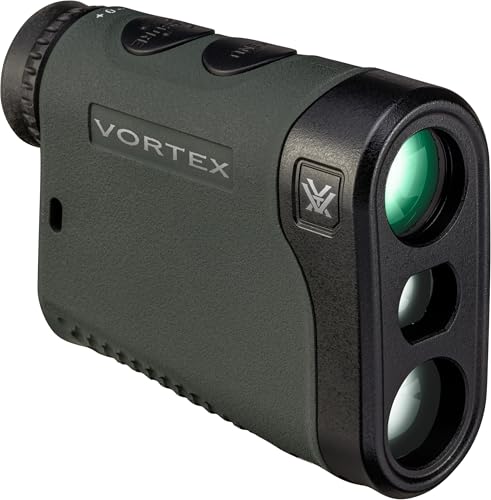


Top 3 picks at a glance

Best Laser Rangefinders for Hunting and Golf
The best laser rangefinders depend on what you need to measure: choose a hunting model with strong long-range performance, a clear display, and useful target-priority modes; choose a golf model with slope compensation, flag-lock confirmation, and a compact form; or choose a general-purpose unit if you need versatility more than specialized features. Nikon, Leupold, Bushnell, and Vortex offer established options, but advertised maximum range is not the same as dependable range on a small target in real conditions.
Quick comparison
| Model | Best fit | Advertised maximum range | Magnification | Slope and display notes |
|---|---|---|---|---|
| Vortex Razor HD 4000 | Long-range hunting and general outdoor use | Up to 4,000 yards, depending on target | 7× | Angle-compensated distance modes; choose display settings to suit light and eyesight |
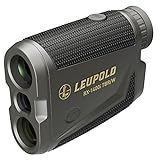
| Leupold RX-1400i TBR/W | Hunting in mixed terrain | Up to 1,400 yards, depending on target | 5× | True Ballistic Range and selectable red OLED display |
| Nikon COOLSHOT PROII STABILIZED | Golf, especially when hand shake makes flag acquisition difficult | Up to 1,200 yards, depending on target | 6× | Slope-adjusted distance, stabilization, and visual flag-lock confirmation |
| Bushnell Tour V6 Shift | Golf with a removable slope function | Up to 1,300 yards, depending on target | 6× | Slope mode can be switched off for tournament play; PinSeeker helps identify the flag |
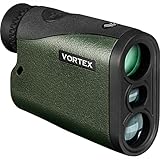
| Vortex Crossfire HD 1400 | Value-oriented hunting and outdoor use | Up to 1,400 yards, depending on target | 5× | Angle-compensated mode; straightforward format for mixed use |
Maximum-range figures are manufacturer ratings, not a promise that a small deer, flagstick, or dark object can be ranged that far. Target size, color, reflectivity, weather, and how steadily you hold the device all affect results. Model features and bundled accessories can also vary by market or product revision, so check the current manufacturer specification before buying.
As an Amazon Associate we earn from qualifying purchases at no extra cost to you.

Which rangefinder fits your use?
For hunting: Vortex Razor HD 4000
Choose the Razor HD 4000 if you routinely range distant terrain, need to compare targets at different distances, or want more headroom than a basic hunting unit provides. Its high maximum-range rating is most relevant for large, reflective targets in favorable conditions; it should not be read as a dependable distance for ranging an animal at the same number. For a shot decision, prioritize a repeatable reading on the actual target and a clear view of the terrain over the headline maximum.
Its 7× magnification can make distant targets easier to identify, though higher magnification also magnifies hand movement. If you mostly hunt in timber or at moderate distances, a less expensive 5× model may be easier to use quickly and may leave more budget for binoculars or other essentials.
For hunting in varied terrain: Leupold RX-1400i TBR/W
The RX-1400i TBR/W is a practical choice when angle-compensated distance and a visible display matter more than extreme advertised reach. True Ballistic Range (TBR) estimates a horizontal-equivalent distance for an uphill or downhill shot; it is not a substitute for knowing your ammunition’s trajectory or making a safe shot decision. The selectable red OLED display can be easier to see against dark backgrounds than a black LCD, but display visibility still depends on ambient light and the selected brightness.
For golf: Nikon COOLSHOT PROII STABILIZED
The COOLSHOT PROII STABILIZED addresses a common golf frustration: holding the device steady enough to isolate the flag rather than trees behind it. Stabilization helps steady the view, while its flag-lock feedback gives an additional cue that the rangefinder has acquired the pin. Slope-adjusted readings help with club selection on elevation changes, but check course and competition rules: slope use is commonly prohibited in competitions unless the device’s slope function is disabled and the rules permit the rangefinder itself.
For golf with a simple slope switch: Bushnell Tour V6 Shift
The Tour V6 Shift is a strong fit if you want a familiar golf-focused layout and the option to disable slope. PinSeeker-style target identification can help distinguish a flag from objects beyond it. That feature is useful, not infallible: scan the pin from a slightly different angle or compare a second reading when the background is cluttered or the initial distance seems implausible.
For lower-cost versatility: Vortex Crossfire HD 1400
The Crossfire HD 1400 is worth considering if you want a hunting-oriented rangefinder for field use without paying for a premium long-range platform. Its 5× magnification is a sensible compromise for quick handheld ranging. It can also serve for general outdoor distance checks, but it lacks the golf-specific convenience features—such as flag-lock feedback—that make pin acquisition faster on a course.
How to compare the specs that matter
- Practical range: Look for performance on the targets you actually use, not just the largest maximum-range number. Trees, rocks, and reflective signs are generally easier to range than a small, dark animal or thin flagstick.
- Accuracy and repeatability: A stated measurement resolution is not the same as guaranteed field accuracy. Take two or three readings on a stationary target; consistent results matter more than a single unusually long reading.
- Magnification: Five- or six-power optics are often a good handheld balance. Seven power can help at distance, but makes shake more noticeable. Stabilization can be especially useful for golf or long-range observation.
- Slope features: Golf slope gives an adjusted playing distance, while hunting angle compensation may provide horizontal distance or a trajectory-oriented equivalent. These are decision aids, not measured straight-line distance and not a replacement for a ballistic solution.
- Display clarity: Red OLED displays can stand out in some low-light or dark-background conditions; black LCD displays can be comfortable in bright conditions. Check that brightness is adjustable and that the reticle is readable against both light and dark targets.
- Weather resistance: Water resistance helps with rain and damp hands, but it does not mean the device is waterproof for immersion. Confirm the model’s exact rating and follow its care instructions, particularly around battery and charging compartments.
Match the rangefinder to the situation
| Your situation | What to prioritize | Good starting point |
|---|---|---|
| Golf on hilly courses | Slope compensation, clear flag-lock cue, easy slope disable | Bushnell Tour V6 Shift or Nikon COOLSHOT PROII STABILIZED |
| Golf with shaky hands | View stabilization and reliable pin confirmation | Nikon COOLSHOT PROII STABILIZED |
| Hunting in open country | Long-range headroom, angle compensation, readable display | Vortex Razor HD 4000 |
| Hunting in mixed terrain | Useful ballistic or horizontal-distance modes and manageable size | Leupold RX-1400i TBR/W |
| One device for occasional outdoor use | Simple operation, reasonable range, weather resistance | Vortex Crossfire HD 1400 |
A field check that reveals more than the spec sheet
Before relying on a new rangefinder, check it on a known distance in conditions similar to your intended use. For example, if a marked range or measured course gives you a target at 200 yards, take three readings from your normal handheld position. If the results cluster near 200 yards, the unit is behaving consistently in that setup. Repeat on a dark, narrow target and a larger, brighter one: the difference shows how much your real-world range depends on target type.
For a steep shot, compare the displayed line-of-sight distance with the device’s angle-compensated output. If the target is 200 yards away at a 30-degree angle, the horizontal component is approximately 200 × cos(30°), or about 173 yards. That geometric estimate explains why an uphill or downhill shot can have a shorter horizontal distance than the laser’s direct line-of-sight reading. Use the device’s displayed mode and your own established ballistic data; don’t treat this simple calculation as a complete firing solution.
Price and final recommendation
As a broad market guide, basic rangefinders often fall around $100–$250, capable golf and hunting models around $250–$500, and premium stabilization or long-range units can cost more. Prices vary with model generation, promotions, and included accessories. Spend extra when a feature solves a real problem—such as stabilization for shaky pin acquisition or a better display for your lighting—not simply for the largest advertised range.
For golf, start with the Bushnell Tour V6 Shift if you want a switchable slope function, or the Nikon COOLSHOT PROII STABILIZED if steadier flag acquisition is your priority. For hunting, choose the Leupold RX-1400i TBR/W for practical angle-aware field use, the Crossfire HD 1400 for value, or the Razor HD 4000 when long-range capability is central. The best laser rangefinders are the ones that give you a readable, repeatable measurement on the target you actually need to range.
Frequently asked questions
Can a rangefinder’s maximum range tell me how far away it can measure a deer or a flag?
No—the advertised maximum range is not a dependable range for every target. Target size, color, reflectivity, weather, and how steadily you hold the device affect results. A small, dark animal or a thin flagstick can be harder to range than a large, reflective target. Prioritize a repeatable reading on the target you actually need to measure.
What should I do if a golf rangefinder gives a surprising distance?
Take another reading, ideally after scanning the flag from a slightly different angle. Flag-lock and target-identification features can help, but they are not infallible, especially with a cluttered background. Comparing readings can help you spot an implausible result before relying on it.
Does an angle-compensated distance replace ballistic information for hunting?
No. Hunting angle compensation can provide a horizontal distance or a trajectory-oriented equivalent, but it does not replace knowing your ammunition’s trajectory or making a safe shot decision. Treat the displayed distance as a decision aid and use your established ballistic data.
Can I use a golf rangefinder’s slope feature in a competition?
Check the course and competition rules before using slope. Slope use is commonly prohibited in competitions unless the device’s slope function is disabled and the rules permit the rangefinder itself. A model with a slope-off option does not by itself guarantee that its use is allowed.
Does water resistance mean I can submerge a rangefinder?
No. Water resistance helps in rain and with damp hands, but it does not mean the device is waterproof for immersion. Check the model’s exact rating and follow its care instructions, particularly around battery and charging compartments.