The best lightweight camping cots for adults are the Therm-a-Rest UltraLite Cot for minimum pack weight, the Helinox Cot One Convertible for the best balance of portability and stability, and a wider cot such as the REI Co-op Kingdom Cot 3 for campers who value bed-like comfort over a small load.
A cot keeps you off cold, damp, uneven ground, but it adds another piece of equipment to your sleep system. The right choice depends less on the word “lightweight” than on the combination of packed weight, usable sleeping area, load rating, mattress fit, and how much effort you want to spend assembling it.
As an Amazon Associate we earn from qualifying purchases at no extra cost to you.
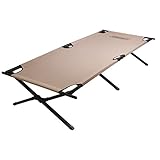

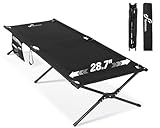

Our Top Picks
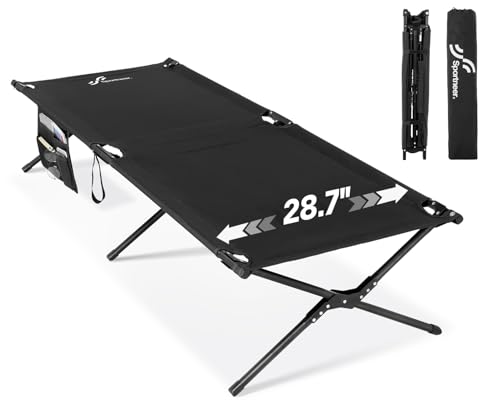 Sportneer Camping Cot: 78.3"x28.7"x14.6" Comfort Cot Bed for28.7" x 78.3" x 14.6"78.3 x 28.7 x 14.6 Inches13.8 poundsCheck on Amazon


Top 3 picks at a glance
Quick comparison of lightweight adult camping cots
| Model | Approx. packed weight | Unfolded dimensions | Weight limit | Frame and deck | Best suited to |
|---|---|---|---|---|---|
| Therm-a-Rest UltraLite Cot | About 1.4 kg / 3 lb | About 196 × 61 × 10 cm | About 147 kg / 325 lb | Aluminum poles and lightweight fabric | Backpacking and low-weight travel |
| Helinox Cot One Convertible | About 2.3–2.7 kg / 5–6 lb | About 190 × 68 × 16 cm | About 145 kg / 320 lb | Aluminum alloy frame and tensioned fabric | Frequent campers wanting easy packing and strong support |
| REI Co-op Kingdom Cot 3 | About 3.7 kg / 8 lb | About 213 × 76 × 51 cm | About 136 kg / 300 lb | Steel frame and padded fabric surface | Car camping and taller sleepers |
| Standard compact steel cot class | About 3–5 kg / 6.5–11 lb | About 190–205 × 65–75 × 15–45 cm | About 125–150 kg / 275–330 lb | Steel or aluminum tubes with polyester fabric | Budget-conscious car campers |
Dimensions and weights can vary by generation, included carry bag, and optional leg extensions, so check the current manufacturer specification before buying. The table is most useful as a comparison of product classes: ultralight cots save pack space, while wide steel cots provide a more stable, furniture-like sleep surface.
Best choices by camping situation
| Your situation | Most suitable choice | Why | What you give up |
|---|---|---|---|
| Carrying the cot in a backpack | Therm-a-Rest UltraLite Cot | Roughly 1.4 kg and a compact pole-based pack size | Narrower bed and more careful assembly |
| Mixed backpacking and car camping | Helinox Cot One Convertible | Good weight-to-stability ratio and a rigid, elevated platform | More expensive and heavier than a backpacking cot |
| Tall adult or restless sleeper | REI Co-op Kingdom Cot 3 or similar wide cot | Long, wide sleeping surface and less edge anxiety | Too bulky for most backpacking trips |
| Using a thick rectangular air mattress | Wide, low-profile cot with a flat deck | Better mattress contact and less overhang | Greater packed volume and weight |
| Frequent setup in cold or wet weather | Simple folding aluminum or steel cot | Fewer loose poles and less time handling small parts | Usually heavier than a modular ultralight design |
Head-to-head: what matters beyond the scale
Therm-a-Rest UltraLite Cot: the weight winner
The UltraLite Cot is the logical choice when every kilogram matters. Its pole-and-fabric construction packs far smaller than a conventional folding cot and is light enough to consider for backpacking. The trade-off is a relatively narrow sleeping platform and a lower profile than a full-height camp bed.
It works best with a narrow or regular-width sleeping pad. A wide mattress can hang over the edges, shifting when you turn. Setup is also more deliberate: the frame must be aligned correctly and the fabric tensioned evenly. This is not difficult, but it rewards practicing at home rather than learning beside the tent in the dark.
Helinox Cot One Convertible: the balanced option
The Cot One Convertible adds roughly a kilogram compared with an ultralight cot, but the aluminum frame and tensioned deck feel more substantial. Its approximately 68 cm width is more forgiving for adult sleepers, and the legs distribute load well on firm ground. Optional leg extensions can raise the cot, although they add weight and may reduce stability on soft terrain.
The cot is compatible with sleeping pads placed directly on top. A pad is still useful because the fabric deck is not intended to replace insulation. Use a pad that is no wider than the deck unless you are comfortable with some overhang. A low-to-medium-height air pad is generally more stable than a very tall mattress.
REI Co-op Kingdom Cot 3: the comfort and space choice
The Kingdom Cot 3 belongs in a different category from backpacking cots. At around 3.7 kg, it is reasonable for car camping but unnecessarily heavy for a long carry. Its longer and wider platform suits tall campers, side sleepers, and anyone who dislikes the enclosed feeling of a narrow cot.
The higher frame makes getting in and out easier, but it also raises the center of gravity. Place the feet on level ground and avoid using a tall air mattress unless the manufacturer specifically supports that combination. A thick mattress on a high cot can feel unstable when sitting on the edge.
Mattress compatibility: calculate before you buy
A cot is not automatically compatible with every camping mattress. Compare the mattress’s actual inflated width and length with the cot’s sleeping surface, not merely the advertised “regular” or “large” label.
For example, suppose a cot has a 68 cm wide deck and your air mattress is 76 cm wide. The overhang is:
(76 − 68) ÷ 2 = 4 cm per side.
Four centimetres may be manageable if the mattress has a grippy underside and the cot has raised edges, but it can become annoying if the mattress slides during the night. A 10 cm overhang on each side is a poor match, particularly on a narrow cot.
- Foam pads: Usually the easiest match because they cannot roll off as easily and add insulation beneath the body.
- Self-inflating pads: A good compromise, provided their width does not exceed the deck substantially.
- Thick air mattresses: Check for sliding, edge overhang, and total sleeping height. Tall mattresses magnify movement.
- Double-width mattresses: Generally unsuitable for a single cot unless the cot is specifically designed as a wide platform.
Frame materials and stability
Aluminum keeps weight down and resists corrosion, making it the preferred material for backpacking cots. It can flex more than steel, so the quality of the joints, leg geometry, and fabric tension matters.
Steel usually costs less and can feel exceptionally rigid, but it adds substantial weight. Steel folding cots are often better for vehicles, cabins, hunting camps, and guest use than for trails.
Stability comes from more than the frame. A cot with narrow feet can sink into soil, while a high cot can rock if one leg is on a slope. Before lying down, press each corner and check that all feet contact the ground. On soft soil, place broad, rigid pads under the feet; avoid improvised slippery objects that can make the frame slide.
Setup effort and longevity
Folding cots generally open quickly but may require considerable force to lock the final joint. Pole-based cots pack lighter but involve more pieces and depend on correct tension. If you camp in rain or cold, a design with fewer small components is often worth the extra few hundred grams.
- Clear stones and sticks from the intended footprint.
- Assemble the frame without forcing misaligned joints.
- Lock every leg or end bar before applying body weight.
- Check that the fabric is evenly tensioned rather than twisted.
- Add the pad, then sit near the center first to test stability.
Never exceed the stated weight limit. Include clothing, sleeping bags, and movement in your judgment: a camper near the limit should choose a cot with a generous margin rather than treating the rating as a target.
How much should you spend?
Basic compact cots commonly cost about $50–$120, mid-range aluminum or hybrid designs about $120–$220, and premium ultralight or highly engineered cots about $220–$350. Spending more usually buys lower packed weight, better joints, replaceable components, or a more refined setup—not necessarily a softer sleeping surface.
For most adults, the Helinox Cot One Convertible is the strongest all-purpose recommendation if the cot will travel by car and occasionally on foot. Choose the Therm-a-Rest UltraLite Cot when carrying weight is the primary constraint. Choose a wide steel or hybrid cot such as the REI Co-op Kingdom Cot 3 when comfort, length, and easy entry matter more than a compact pack.
Frequently asked questions
Do I still need a sleeping pad on a camping cot?
Yes, a sleeping pad is still useful because a cot’s fabric deck does not replace insulation. Foam pads are usually the easiest match because they cannot roll off as easily and add insulation beneath the body. Self-inflating pads can also work well, while thick air mattresses require checking for sliding, edge overhang, and excessive sleeping height.
Which cot is best for a tall adult?
A longer, wider cot such as the REI Co-op Kingdom Cot 3 is the better choice for a tall adult. Its platform is about 213 × 76 cm, making it more suitable for tall campers, side sleepers, and people who dislike narrow sleeping surfaces. The trade-off is greater packed weight and bulk than a backpacking cot.
Can I use a tall air mattress on a cot?
You should be cautious with a tall air mattress, especially on a high cot. A thick mattress raises the overall sleeping height and can make the setup feel unstable when sitting on the edge. On a lower cot, check for sliding and overhang first; a low-to-medium-height air pad is generally more stable than a very tall mattress.
How can I stop cot legs from sinking into soft ground?
Place broad, rigid pads under the cot feet when the ground is soft. Before lying down, press each corner and confirm that every foot contacts the ground. Avoid slippery improvised objects, which can make the frame slide, and do not place the cot on a slope if you can avoid it. Level ground improves stability.
What should I practice before taking a pole-based cot camping?
Practice assembling it at home, particularly if it uses poles and tensioned fabric. Align the frame correctly, tension the fabric evenly, and avoid forcing joints that are misaligned. Pole-based designs pack lighter but involve more pieces, so practicing helps you avoid learning the setup beside the tent in darkness, rain, or cold.