
Choosing thermal paste for a high-end laptop is less about finding the biggest conductivity number on a product label and more about matching the compound to a thin, heat-dense device. Gaming laptops and mobile workstations may push 45 to 175 watts through compact CPU and GPU packages, while their cooling systems use short heat pipes, vapor chambers, tiny contact areas, and tightly spaced components.
The most common mistakes are buying far more paste than the job requires, treating a claimed W/mK rating as a guaranteed temperature reduction, and assuming desktop overclocking paste is automatically ideal for a laptop. Some buyers also overlook pump-out, application thickness, electrical safety, and the condition of the laptop’s thermal pads. A premium compound cannot compensate for a warped heatsink, a clogged fan, or a thermal pad that is too thick.
As an Amazon Associate we earn from qualifying purchases at no extra cost to you.


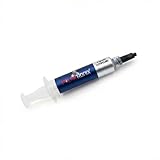
This guide explains how to choose thermal paste for high end laptop use, whether you are repasting a current machine or planning maintenance for a 2026 gaming laptop.
Top 3 picks at a glance
Decide These 3 Things First
- Check the manufacturer’s thermal design. Confirm whether the laptop uses conventional paste, liquid metal, or a phase-change material. Do not replace liquid metal with ordinary paste and expect equivalent results.
- Decide whether you need one service or several. A single CPU-and-GPU repaste generally uses less than 1 gram, but 2 to 4 grams is more practical if you expect mistakes, future maintenance, or multiple systems.
- Set a realistic performance goal. Paste is intended to improve contact between the chip and heatsink. It will not turn a 90-watt laptop into a desktop-class cooling system. Prioritize sustained temperature stability, appropriate viscosity, and durability over marketing claims.
Size and Amount
For most high-end laptops, package size matters more than many buyers expect. A CPU and GPU repaste may require approximately 0.2 to 0.6 grams in total, depending on die size and application method. A 1-gram syringe is therefore enough for one careful service, with little left over for later use.
A 2- to 4-gram syringe is a better value for a first-time repair because it allows for cleaning and reapplication. It is also useful when the laptop has a large GPU die or when you maintain more than one computer. An 8-gram package, such as the ARCTIC MX-6 8 g, makes sense for repeated repairs, a small repair business, or several consoles and desktop systems. It is unnecessary for a single laptop unless the price per gram is attractive and the compound will be used before it dries out.
Check the nozzle and syringe design as well. A narrow nozzle helps dispense a controlled line or small dot, while a wide opening can release too much paste. Store an opened syringe with its cap tightly secured and follow the manufacturer’s storage guidance.
Material and Electrical Safety
For most laptop owners, a conventional silicone- or carbon-based thermal paste is the safest choice. Look for wording such as non-conductive and, ideally, non-corrosive. These properties reduce the risk of a short circuit if a small amount spreads beyond the CPU or GPU package.
Liquid metal is a separate category. It can offer very high thermal performance, but it is electrically conductive and may react with aluminum. It also requires careful masking, precise application, and a heatsink made from compatible material. Unless the laptop was designed for liquid metal or you have substantial repair experience, do not use it as a casual upgrade.
Thermal pads and paste are not interchangeable. Pads are used around memory chips, voltage-regulation components, and other areas where a specific gap must be filled. Replacing a pad with paste can leave an air gap or allow the heatsink to sit unevenly. Record pad thickness before removal and replace it with the same thickness unless the service documentation specifies otherwise.
Construction and Viscosity
A laptop needs paste that can spread across a relatively small die without requiring excessive mounting pressure. Viscosity is not always published in a standardized unit, but the practical question is whether the compound is easy to dispense and remains in place after the heatsink is tightened.
Very thin pastes spread easily but may migrate or separate under repeated heating and cooling. Extremely thick compounds can be difficult to spread and may leave uncovered areas if you use too little. A medium-to-high-viscosity paste is often a sensible compromise for a laptop CPU or GPU.
Construction also includes the compound’s resistance to pump-out. Pump-out occurs when thermal expansion and contraction gradually push paste away from the hottest part of the chip. This matters in thin laptops because the heatsink is frequently exposed to rapid temperature changes. A compound marketed for long durability or demanding applications may be preferable to a paste selected solely for its initial conductivity claim.
Cooling Performance and Application
Thermal conductivity is commonly listed in watts per meter-kelvin, or W/mK. Consumer products in this category may advertise figures from roughly 5 to 14 W/mK or higher. Treat these numbers as a comparison point, not a guaranteed laptop temperature result. Testing methods vary, and the paste layer is only one part of the thermal path.
The heatsink’s contact pressure, fan speed, ambient temperature, dust buildup, power limits, and application thickness can affect results more than a small difference between two conventional compounds. A paste labeled 12.8 W/mK, for example, is not automatically twice as effective as one labeled 6 W/mK.
Before applying new paste, remove the heatsink and clean both surfaces with high-purity isopropyl alcohol, preferably 90% or higher. Use lint-free wipes or coffee filters rather than paper towels that shed fibers. Apply a small dot or short line appropriate to the die shape, then reinstall the heatsink evenly. Tighten screws in the numbered sequence printed on the cooler, usually with several gradual passes rather than one screw fully at a time.
Do not spread a thick layer across the entire heatsink unless the product instructions specifically recommend it. The goal is to fill microscopic gaps, not create a thick insulating blanket. After reassembly, check temperatures under the same workload and room conditions used before the repair.
Price Tiers
Thermal paste is inexpensive compared with a laptop motherboard or cooling assembly, but price still helps frame the decision.
- Budget: $5 to $8. Suitable for routine maintenance when the product is clearly labeled, non-conductive, and appropriately sized. A 4-gram paste listed at $5.49 can be practical if you need multiple applications, but verify the manufacturer and storage information.
- Midrange: $8 to $13. This tier often includes a recognizable brand, a 1- to 4-gram syringe, and better packaging or accessories. Thermal Grizzly Kryonaut 1 g has been listed around $8.99, while a 1 g package with six wet and six dry cleaning wipes has been listed around $11.99.
- Premium or bulk: $13 and up. Higher prices may reflect larger quantities, specialized formulas, or professional packaging. ARCTIC MX-6 8 g, listed around $7.49 in the example selection, is unusually economical per gram. Judge the product by its use case rather than the word “premium.”
For a single laptop, spending $7 to $15 is usually sufficient. Put the remaining budget toward replacement thermal pads, appropriate screwdrivers, cleaning supplies, or a cooling stand if those items are needed.
Warranty and Product Support
Thermal paste itself rarely carries a meaningful long-term consumer warranty, so pay attention to manufacturer support, batch information, instructions, and seller reliability. A sealed syringe should arrive with an intact cap, readable labeling, and no signs of dried material around the nozzle.
Also check your laptop warranty before opening the chassis. Some manufacturers allow user maintenance, while others require authorized service for certain models. Removing a heatsink can affect warranty coverage even when the paste is a compatible product. If the laptop is new, overheating, or experiencing fan errors, document the problem before performing any repair.
Delivery and Assembly
Fast delivery is useful only if the paste arrives in good condition. Choose packaging that protects the syringe from crushing and extreme heat. Avoid leaving a delivered tube in direct sun or in a hot car. If you are buying a kit, confirm that the included wipes are sealed and that they contain an appropriate cleaning solution.
Plan for assembly time. A first laptop repaste can take 45 to 120 minutes, including disassembly, photographing cable locations, cleaning, pad inspection, and testing. Use a magnetic screwdriver set with small Phillips or Torx bits as required by the laptop. Keep screws organized because similar-looking screws may have different lengths; installing a long screw in the wrong location can damage the chassis or motherboard.
Spec Checklist
| Spec | Budget | Mid | Premium |
|---|---|---|---|
| Typical price | $5–$8 | $8–$13 | $13–$25+ |
| Useful quantity | 1–4 g | 1–4 g | 4–8 g |
| Conductivity claim | About 5–10 W/mK | About 8–14 W/mK | About 10–14+ W/mK or specialized formula |
| Electrical behavior | Prefer non-conductive | Non-conductive and non-corrosive | May include specialized compounds; verify carefully |
| Best use | One repair or basic maintenance | High-end laptop and console maintenance | Frequent repairs or demanding applications |
Red Flags
- Unusually high W/mK claims with no manufacturer, technical documentation, or safety information.
- A syringe that arrives dry, separated, leaking, unsealed, or without a batch or product label.
- Instructions that recommend using a thick layer without explaining the application method.
- Confusion between thermal paste, thermal putty, thermal pads, and liquid metal.
- Claims that paste alone will reduce temperatures by a fixed number of degrees in every laptop.
- A product that does not clearly state whether it is electrically conductive.
- Buying a large container that will sit open for years. Fresh paste is generally preferable to an old bargain.
FAQ
How much thermal paste does a high-end laptop need?
Usually less than 1 gram for a CPU and GPU together, although the exact amount depends on die size and the laptop’s design. A 1-gram syringe can cover one careful service. Choose 2 to 4 grams if you are inexperienced or want material for a second application.
Is a higher W/mK rating always better?
No. It can indicate stronger heat-transfer potential, but testing methods differ and laptop results depend on mounting pressure, heatsink condition, fan performance, and application thickness. A durable, non-conductive paste with good contact can outperform a theoretically stronger paste that pumps out or is applied poorly.
Can I use desktop thermal paste in a laptop?
Often, yes, provided it is compatible with the laptop’s heatsink, electrically safe, and appropriate for the chip surfaces. Confirm that the laptop does not use liquid metal or a proprietary phase-change material before replacing anything.
When should laptop thermal paste be replaced?
Replace it when temperatures rise unexpectedly, the fans run loudly under familiar workloads, or the heatsink is removed for another repair. There is no universal schedule. Depending on dust, usage, and paste durability, a well-maintained laptop may go several years between services.
Related guides
- Alienware 16 Aurora RTX 5070 Review: Display, Portability and Configuration Gaps
- Lenovo Legion Pro 7i Gen 10 Review: 64GB RAM and Dual-SSD Configuration
- MSI Katana 15.6-inch RTX 5050 Review: Configuration Strengths and Upgrade Unknowns
- ASUS ROG Strix SCAR 16 G635LX-XS97 Review: Display Ambition, Upgrade Questions


