
The Short Answer
Yes — a 240Hz display is worth it for a creator gaming laptop, but only if you play competitive or fast-paced games where reaction time matters. If your gaming diet is mostly single-player titles and your creative work is photo editing, video grading, or 3D rendering, a 165Hz panel (ideally OLED) will serve you better for less money. The one condition: buy 240Hz for the games you actually play, not for a spec sheet number.
What You Actually Get
Refresh rate is how many times per second your screen redraws the image. A 240Hz panel refreshes every 4.2 milliseconds versus 6.7ms on 165Hz and 8.3ms on 120Hz. In practice, that matters most in esports and competitive shooters — Counter-Strike 2, Valorant, Apex Legends, Overwatch 2 — where frames render fast enough to actually feed the panel. Pair 240Hz with an RTX 5070 or 5080 and you’ll push 200+ fps in esports titles at 1600p, so the panel isn’t starved.
As an Amazon Associate we earn from qualifying purchases at no extra cost to you.

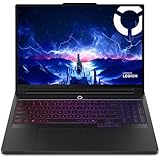
Here’s the catch for creators: refresh rate has nothing to do with color accuracy, brightness, or resolution. A 240Hz IPS panel in a 16-inch chassis typically covers 100% of sRGB and around 95% of DCI-P3 at roughly 350–500 nits — perfectly usable for client work and web content. But many 240Hz laptops still use 1920 x 1200 or 2560 x 1600 IPS panels, whereas the premium OLED option at 240Hz-class responsiveness delivers per-pixel illumination, true blacks, and Delta-E values under 2 from the factory. For video editors grading HDR footage, the OLED panel is the more meaningful upgrade than raw refresh rate alone.
Also worth knowing: most 240Hz panels support Variable Refresh Rate (G-Sync or VRR), which eliminates tearing when your frame rate dips below the panel’s ceiling — useful in both gaming and scrubbing a heavy timeline.
Pros
- Smoother competitive gameplay. Lower motion blur and input lag translate into a genuine, measurable edge in shooters and racing games — especially once you’re above 200 fps.
- No compromise on creative work. The higher refresh rate doesn’t cost you color coverage; 100% sRGB / ~95% DCI-P3 panels are standard in this tier, so photo and video work looks the same as on a 165Hz screen.
- Better responsiveness everywhere. Cursor movement, timeline scrubbing, and window management all feel snappier — a quality-of-life bump you notice daily.
- Future-proofs the purchase. RTX 50-series GPUs and DLSS frame generation make high frame rates achievable in more games each year; a 240Hz panel won’t feel outdated in three.
- VRR support smooths out frame dips, which matters when you’re gaming on battery or pushing demanding scenes.
Cons
- Cost premium. Expect to pay roughly $150–$400 more for a 240Hz configuration versus an otherwise identical 165Hz model — money that could buy more RAM, storage, or a better GPU.
- Diminishing returns. The jump from 60Hz to 144Hz is dramatic; 165Hz to 240Hz is subtle unless you’re actively competing.
- Often paired with mid-tier panels. Some manufacturers hit 240Hz while cutting corners on brightness (~300 nits) or resolution, which hurts creators more than the refresh rate helps.
- Battery drain. High refresh rates consume measurably more power; expect 10–20% shorter battery life unless you manually drop to 60Hz on the road.
- Your GPU has to keep up. In AAA titles at native 1600p, even an RTX 5080 won’t always clear 240 fps — you’ll be gaming at 100–140 fps in demanding titles, leaving the panel underused.
Who Should Buy It
Buy the 240Hz configuration if you split your time between creative work and competitive gaming. If you log serious hours in ranked shooters, fighting games, or sims, the responsiveness gain is real and permanent. A machine like the Alienware 16X Aurora (Ultra 9 275HX, RTX 5070, 32GB RAM, 2TB SSD at $2,699) hits the sweet spot: enough GPU muscle to feed a fast panel in esports titles, with specs that hold up in Premiere Pro and Blender. You’ll notice the difference within a week, and you won’t want to go back.
Who Should Skip It
Skip it if you’re primarily a creator who games casually. If your sessions are story-driven single-player games — RPGs, adventure titles, slower-paced AAA releases — capped at 60–120 fps anyway, you’re paying for headroom you’ll never use. In that case, put the money toward a better GPU or an OLED panel instead. The Lenovo Legion Pro 7i Gen 10 (Ultra 9, RTX 5080, OLED at $3,589) is the textbook example: an OLED display delivers deeper contrast, near-instant pixel response, and superior color for grading work — benefits you’ll see in every frame, not just the fast ones. If your budget is $3,500+, that configuration is the better creator-first choice even though raw Hz isn’t its headline.
Cheaper Alternatives
| Option | Cost | Trade-off |
|---|---|---|
| 165Hz IPS configuration | $1,800–$2,300 | Slightly less fluid esports play; otherwise identical experience for creative work |
| 240Hz laptop with RTX 5060/5070 | $1,700–$2,200 | Fast panel, but GPU may not sustain 240 fps in modern titles; weaker render/export performance |
| 16GB RAM / 1TB storage build instead | Saves $150–$300 | Fine for 1080p editing; you’ll hit storage and memory ceilings on 4K projects sooner |
| External 240Hz monitor | $250–$450 | Full refresh-rate benefit at your desk only; adds bulk and a cable when traveling |
FAQ
Does 240Hz matter if my GPU can’t hit 240 fps?
Partially. You still benefit from lower input lag and smoother motion at any frame rate, especially with VRR enabled. But the full benefit requires frame rates above roughly 165 fps, which realistically means esports titles or DLSS upscaling — not native-resolution AAA gaming.
Is a 240Hz display bad for photo and video editing?
No. Refresh rate is independent of color accuracy and brightness. Check the spec sheet for 100% sRGB coverage and a factory calibration report; if those are there, the panel is creator-safe regardless of its Hz rating.
Should I choose OLED or 240Hz IPS for a creator gaming laptop?
If you grade video or care about contrast, OLED wins — near-zero response times already make motion look exceptionally clean, and the image quality benefits all your work. Choose 240Hz IPS only if competitive gaming is a major, regular part of your usage and budget rules out OLED.
How much extra should I expect to pay for 240Hz in 2026?
Roughly $150–$400 over an equivalent 165Hz configuration, depending on brand and panel resolution. If the premium exceeds that, you’re usually better served upgrading the GPU or display technology instead.


