
The Short Answer
Yes—an RTX 5070 laptop is good for high-end gaming if the specific laptop has a high-wattage GPU implementation, effective cooling, and a QHD-class display. The RTX 5070 Laptop GPU is positioned for buyers who want excellent modern-game performance without moving into the much higher prices of RTX 5080 and RTX 5090 laptops. It is especially compelling for 1440p-style laptop gaming, usually labeled QHD or QHD+ on a 15.6-inch or 16-inch screen.
That condition matters. “RTX 5070” does not guarantee identical performance from every laptop. Thin systems may run the GPU at a lower power limit than thicker performance models, and a poor cooling design can reduce sustained speeds during long sessions. Before buying, confirm the laptop’s GPU power rating, display resolution, memory, and whether the charger is included at its full rated wattage.
As an Amazon Associate we earn from qualifying purchases at no extra cost to you.
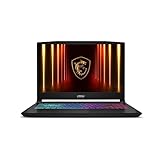

For most shoppers in 2026, an RTX 5070 laptop is a sensible high-end choice when priced close to the mid-$1,600 range. At more than $2,200, the rest of the configuration needs to be genuinely premium—not simply a stronger processor attached to the same graphics card.
What You Actually Get
An RTX 5070 gaming laptop is built for playing demanding new games at high settings on a QHD or QHD+ panel. QHD commonly means 2,560 x 1,440 pixels, while a 16:10 QHD+ display is typically 2,560 x 1,600. Those resolutions look noticeably sharper than 1,920 x 1,080 on a 15.6-inch screen, but they require more graphics power. The RTX 5070 is designed to handle that extra demand with help from DLSS upscaling and frame-generation features in games that support them.
The GPU generally comes with 8GB of GDDR7 video memory. That is enough for the majority of current games at 1080p and QHD with sensible settings, but it is not unlimited. In the most memory-heavy games, especially when high-resolution texture packs and aggressive ray tracing are enabled, you may need to reduce texture quality or rely on DLSS rather than simply choosing every maximum setting.
A laptop such as the MSI Katana 15 HX with a Core i7-14650HX and RTX 5070 at about $1,639.99 represents the more attractive value side of this category. The more expensive MSI Katana 15 HX configuration with a Core i9-14900HX, 32GB of DDR5 memory, 1TB NVMe storage, and a 165Hz QHD+ display is listed around $2,270.23. Both have the same graphics tier, so the price difference should be judged mainly on memory, processor needs, screen quality, storage, build, and cooling—not on an expectation of radically different gaming graphics performance.
For physical ownership, expect a performance-focused 15.6-inch RTX 5070 laptop to be a desk-friendly portable rather than an ultrabook. Many models are roughly 14 inches wide, 10 inches deep, and about 1 inch thick, with a weight commonly around 5 to 6 pounds before the charging brick. Their power adapters are substantial as well; high-performance gaming laptops often use 200W to 280W chargers. That is normal for a machine intended to run demanding games while plugged in.
Battery gaming is possible, but it is not the way to judge this class. On battery power, laptops commonly reduce GPU and CPU power to preserve runtime and control heat. Plan to plug in for full performance, particularly for competitive games at high refresh rates or visually demanding single-player titles.
Pros
- Strong QHD gaming fit: The RTX 5070 is well matched to 165Hz QHD and QHD+ laptop displays, especially when DLSS and frame generation are available.
- Modern feature set: It supports current Nvidia gaming technologies, including ray tracing, DLSS upscaling, and frame-generation options in compatible games.
- Better long-term headroom than entry gaming GPUs: It is a more comfortable choice for buyers who want to keep a laptop for several years and play new releases rather than only esports titles.
- High-refresh esports performance: Games such as Valorant, Rocket League, Overwatch 2, and similar competitive titles should take meaningful advantage of a 144Hz or 165Hz display.
- Good all-in-one capability: Paired with an HX-series Intel processor and 32GB of RAM, it can also handle video editing, schoolwork, multitasking, and many creative workloads.
- Potential value around $1,600 to $1,900: In that range, an RTX 5070 laptop can offer a strong balance of price and high-end gaming capability.
Cons
- 8GB of VRAM is the main limitation: It is adequate for most buyers, but maxed-out ray tracing and ultra texture settings can be unrealistic in a small number of demanding games.
- Performance varies by laptop design: Two RTX 5070 laptops can differ noticeably because of GPU wattage limits, cooling hardware, and manufacturer tuning.
- Not truly light travel gear: A 5-to-6-pound laptop plus a large power brick is manageable for occasional transport, not ideal for daily commuting.
- Fans can be loud under load: High-end gaming requires moving heat out of a compact chassis. Headphones are helpful during demanding games.
- Battery life is limited while gaming: Full-speed performance is intended for use with the charger connected.
- Some premium-priced configurations are hard to justify: A $2,200-plus RTX 5070 laptop should include clear upgrades in display, build quality, memory, storage, or support. Otherwise, it may be too close in price to a higher GPU tier.
Who Should Buy It
Buy an RTX 5070 laptop if you want one machine for serious QHD gaming, everyday work, and occasional creative projects. It is particularly well suited to someone upgrading from an older GTX- or RTX 30-series laptop, or from a lower-tier GPU that struggles with newer games at native QHD resolution.
It is also a strong choice for gamers who prefer a 15.6-inch or 16-inch laptop with a 144Hz or 165Hz screen. The GPU has enough capability to make that kind of display worthwhile in multiplayer games, while still delivering attractive image quality in cinematic games. Look for at least 16GB of RAM, though 32GB is preferable if you keep many browser tabs open, stream, edit video, or play heavily modded games. A 1TB SSD is the practical starting point because modern game installations can easily consume 80GB to 150GB each.
The best buyer is price-conscious but not bargain-only: someone willing to pay for a capable cooling system, a good screen, and sufficient memory instead of selecting the lowest advertised RTX 5070 price.
Who Should Skip It
Skip an RTX 5070 laptop if your main priority is the highest possible ray-tracing performance at maximum settings, especially at QHD+ resolution. Buyers who want to avoid texture compromises in the most demanding future games should consider a laptop with more video memory and a higher graphics tier.
You should also skip it if portability and battery life matter more than gaming speed. A thin 14-inch productivity laptop with integrated graphics or a lower-power dedicated GPU may be easier to carry and quieter for work. Likewise, if you play only lightweight esports games at 1080p, an RTX 5060 laptop or a discounted prior-generation model may provide enough performance for less money.
Finally, do not buy solely because a laptop has a Core i9 badge. For gaming, GPU configuration, cooling, screen quality, and price usually matter more than moving from a capable Core i7 HX processor to a Core i9 HX processor.
Cheaper Alternatives
| Option | Cost | Trade-off |
|---|---|---|
| RTX 5060 laptop with 16GB RAM | About $1,200–$1,500 | Lower QHD performance and less room for demanding ray tracing, but still very capable for 1080p and many QHD games with DLSS. |
| Discounted RTX 4060 laptop | About $900–$1,300 | Excellent value for 1080p gaming, but less future-ready for new high-demand games and high-refresh QHD play. |
| RTX 4070 laptop on sale | About $1,250–$1,600 | Can be a smart buy when heavily discounted, but lacks the newer-generation feature set and may have less favorable long-term value. |
| Desktop gaming PC with a midrange GPU | About $1,100–$1,600 | Often delivers more performance per dollar and easier upgrades, but includes no display, keyboard, portability, or battery. |
FAQ
Is an RTX 5070 laptop enough for 1440p gaming?
Yes. It is a very suitable GPU class for QHD and QHD+ laptop displays. In demanding games, use DLSS and adjust ray tracing or texture settings when necessary rather than assuming every setting must be set to maximum.
Is 8GB of VRAM enough for an RTX 5070 laptop?
It is enough for most current gaming at 1080p and QHD, but it is the component to watch over time. Games with ultra texture packs, extensive mods, or heavy ray tracing may require more selective settings than they would on a GPU with more video memory.
Should I choose 16GB or 32GB of system memory?
Choose 32GB if the price increase is reasonable. Sixteen gigabytes remains workable for gaming, but 32GB gives more breathing room for background apps, streaming, creative software, large mods, and longer ownership.
Is the $2,270 MSI Katana 15 HX worth more than the $1,639.99 version?
Only if you specifically value its Core i9-14900HX processor, 32GB of DDR5 memory, 1TB SSD, and 165Hz QHD+ display configuration. Since both models use an RTX 5070, the lower-priced Core i7 version is likely the better gaming value unless the higher-end model also offers meaningful display, cooling, storage, or build-quality advantages.


