
As an Amazon Associate we earn from qualifying purchases at no extra cost to you.



Choosing a creator laptop used to be a simple spec-sheet exercise. Today the hardest call is the one on the screen itself: OLED or Mini LED. Both technologies look stunning in a store, both cost real money, and both promise the color accuracy that photo editors, video colorists, and designers depend on. The real decision a buyer faces is not “which screen is better” in the abstract — it’s which trade-off fits your workflow, your room, and your budget. OLED delivers perfect blacks and jaw-dropping contrast; Mini LED pushes serious brightness and shrugs off burn-in anxiety. One of them will make your HDR footage sing. The other will survive eight-hour grading sessions without you ever thinking about pixel wear.
Top 3 picks at a glance
Quick Verdict
If you edit photos and video in a controlled, dim-ish home office and you crave true blacks — perfect for grading log footage or viewing dark cinematic scenes — an OLED creator laptop is the better pick. Models like the HP OmniBook 7 Creator Laptop 16″ with a touch OLED HDR display ($1,469.99) or the Lenovo Slim 7i with a 14″ OLED touchscreen and 32GB of RAM ($1,315) hit a sweet spot around $1,300–$1,500.
If your workspace sits next to a bright window, if you work 6+ hour days on static interfaces (spreadsheets, editing timelines, code), or if you simply want a panel that will not develop burn-in over years of use, Mini LED is worth its typically higher price and heavier chassis — usually $1,800–$3,500 for capable creator configurations.
Side by Side
| Factor | OLED Creator Laptop | Mini LED Creator Laptop |
|---|---|---|
| Black level / contrast | Perfect blacks (pixels turn off fully), near-infinite contrast | Excellent but not perfect; local dimming zones can show slight blooming around bright objects |
| Peak brightness | Typically 400–600 nits full screen, 500–750 nits HDR highlights | Typically 600–1,000+ nits full screen, 1,000–1,600 nits HDR highlights |
| Comfort for long sessions | Less eye strain in dim rooms; low blue light by nature | Better in bright rooms; glossy Mini LED panels can still pick up reflections |
| Burn-in risk | Small but real with static content over years; mitigations built in | Essentially none; LCD-based pixels don’t wear the same way |
| Weight and thickness | Usually thinner and lighter — 2.8–3.9 lb for 14–16″ models | Usually bulkier — 4.0–5.5 lb due to the backlight array and cooling |
| Price range | $1,100–$2,000 for most creator configurations | $1,800–$3,500 for serious Mini LED creator machines |
| Battery life | Efficient on dark content; can be thirsty with bright white pages | Consistent draw regardless of content; generally shorter overall |
| Maintenance | Minimal; occasional pixel-refresh cycles run automatically | Minimal; keep vents clear as these run warmer under load |
| Resale value | Buyers may discount for burn-in concerns, so expect 10–15% less than Mini LED equivalents | Strong resale; panels age predictably |
| Best for | Photographers, colorists, cinematic editors, dark-room work | HDR masters, bright studios, heavy static-content users, longevity-focused buyers |
Where Oled Creator Laptop Wins
Contrast is the headline. Because every pixel emits its own light and can switch off entirely, an OLED panel produces true black — not the dark gray you get from even the best backlit LCD. When you’re color grading night footage, editing moody portraits, or reviewing shadow detail in product photography, that per-pixel control means you see exactly what your audience will see. Color accuracy out of the box is typically excellent too, with most creator-grade OLED panels covering 100% of DCI-P3.
Response time is another quiet advantage. OLED pixels change state nearly instantly (around 0.1–0.2 ms), which makes scrubbing through a timeline feel crisper and benefits anyone who also games or reviews motion-heavy content.
Portability tilts OLED’s way as well. Without a layered backlight, panels are thinner, and laptops built around them — like the 14″ Lenovo Slim 7i OLED at a travel-friendly weight — slip into a backpack without a second thought. The HP OmniBook 7’s 16″ touch OLED HDR display shows how large these panels have gotten while staying slim.
Finally, price. Entry into genuinely color-accurate OLED starts around $1,100–$1,300, several hundred dollars less than the floor for a competent Mini LED creator machine.
Where Mini Led Creator Laptop Wins
Brightness is the whole argument. Mini LED backlights use thousands of tiny LEDs grouped into hundreds or thousands of local dimming zones, letting the screen hit 1,000+ nits sustained in HDR — roughly double what most OLED panels manage. If you master HDR content for delivery platforms with peak-brightness targets, or if your desk sits near a sunny window, Mini LED stays legible where OLED starts feeling dim.
Longevity is the second pillar. OLED’s organic compounds degrade over time, and static UI elements — editing timelines, toolbars, browser chrome — can eventually leave faint burn-in. Manufacturers mitigate this with pixel shift, logo dimming, and periodic refresh cycles, and realistic risk for a mixed-use creator is low. But if you run the same software eight hours a day for years, Mini LED removes the worry entirely. Its inorganic backlight simply doesn’t wear that way.
Sustained performance matters too: Mini LED laptops tend to run higher-wattage GPUs (80–140W classes) in their larger chassis, so rendering and export times often beat similarly priced thin OLED machines. If you also game or push 3D work, that headroom is real.
Cost Over 5 Years
Base hardware: expect $1,200–$1,700 for a strong OLED creator laptop versus $1,800–$3,500 for Mini LED, so call it a $400–$1,500 gap upfront.
Power draw over five years: assume 45W-class systems charging roughly 3–4 hours daily. At an average U.S. rate of about $0.17 per kWh, both categories cost roughly $25–$45 per year to run — $125–$225 over five years. OLED’s efficiency on dark content narrows the gap slightly, but it’s not a deciding factor.
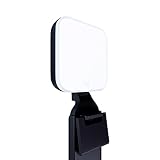
Maintenance and accessories: both need little beyond a quality bag and maybe an external monitor calibration (~$100–$200 if color-critical). If you add lighting for video calls or content capture, an affordable ring of options exists — the Logitech Litra Glow premium LED streaming light at $58.60 sits in the sweet spot, while the CYNOVA magnetic RGB video light with mini desktop tripod at $13.97 is a bargain accent light.
Resale after five years: OLED laptops typically recoup 25–35% of value, Mini LED somewhat more because of the burn-in concern discount on used OLED.
Five-year totals: roughly $1,400–$2,000 all-in for OLED versus $2,000–$3,700 for Mini LED. If budget matters, OLED wins clearly. If longevity and brightness justify the premium for your work, Mini LED earns it back in peace of mind.
Which One for Your Home
Small Apartment
Space and weight matter more than peak brightness. A 14–16″ OLED machine like the Lenovo Slim 7i (14″, 32GB RAM) doubles as your editing station and couch companion, and its slim profile fits a tiny desk. In a dim apartment with window light you can control, OLED’s contrast advantage shines brightest — literally.
Family with Kids or Pets
Static content is less the issue than unpredictability: laptops get moved, screens get left on, and things get bumped. A rugged-feeling Mini LED machine tolerates the “always on, always bright” household lifestyle without burn-in anxiety, and its higher brightness fights kitchen and living-room glare. If you go OLED, set a short screen timeout and use dark themes to minimize static-element wear.
Rental
If you might relocate in a couple of years and plan to sell the laptop when you do, Mini LED’s stronger resale and age predictability make it the safer investment. But if you’re renting short-term and cash flow is tight, the lower entry price of OLED — the HP OmniBook 7 16″ at $1,469.99, for example — keeps more money in your pocket, and the portability suits a life in flux.
Long-Term Home
Planning to stay put and keep the machine five-plus years? Match the panel to your room. A dedicated home office where you control the blinds favors OLED’s cinematic contrast. A bright shared space with a fixed desk near windows favors Mini LED’s brightness and durability. Either way, pair the laptop with a calibrated external monitor and a proper light — even a $58.60 Logitech Litra Glow improves your on-camera presence enough that the screen choice becomes about editing, not meetings.
FAQ
Do OLED laptops really get burn-in from editing software?
The risk is real but modest for mixed use. Burn-in develops from thousands of hours of identical static elements at high brightness. Modern panels include pixel shift, refresh cycles, and timeout protections, and creators who vary their work rarely notice issues within a typical 3–5 year ownership window. Heavy daily users of one static-heavy app face the highest risk.
Is Mini LED worth the extra $500–$1,500?
Only if you need the brightness or the longevity. If you edit in a controlled, dimmable space and work on varied content, OLED gives you 90% of the visual experience for far less money. If you master HDR for delivery, work beside bright windows, or run the same software all day every day, the premium buys genuine capability.
Which is better for photo editing specifically?
OLED, for most photographers. Perfect blacks make shadow detail easier to judge, color coverage is typically 100% DCI-P3 out of the box, and the response is instant. One caveat: for print-focused work, check that the panel offers an sRGB/Adobe RGB mode, since OLED’s wide gamut can oversaturate images without proper color management.
How long will either laptop last?
Both categories use modern Intel Core Ultra or equivalent processors and 16–32GB of RAM, so expect 5–7 years of capable service before software demands outgrow the hardware. The panel is usually the differentiator: OLED may show minor wear by year five of heavy static use, while Mini LED panels typically dim slightly but remain uniform well beyond that.
Related guides
- Alienware 16 Aurora RTX 5070 Review: Display, Portability and Configuration Gaps
- Lenovo Legion Pro 7i Gen 10 Review: 64GB RAM and Dual-SSD Configuration
- MSI Katana 15.6-inch RTX 5050 Review: Configuration Strengths and Upgrade Unknowns
- ASUS ROG Strix SCAR 16 G635LX-XS97 Review: Display Ambition, Upgrade Questions


