
Shopping for a portable workstation GPU gets confusing fast when every spec sheet leads with VRAM. The biggest mistake buyers make when figuring out what to look for in portable workstation gpu vram is assuming more gigabytes automatically equals better performance. A 24GB card with slow memory, a narrow bus, or a power limit that throttles in a small chassis will often lose to a well-balanced 16GB card in real creative work.
Another common error is treating workstation VRAM like gaming VRAM. In a portable workstation — whether it’s a compact desktop you move between studio and site, a rack-mounted editing node, or a small-form-factor build with a handle — VRAM determines what you can load, not just how fast it runs. Textures, 8K timelines, large CAD assemblies, and AI models have to live in that memory. If they spill over to system RAM, you get stutter, crashes, or failed renders even if the GPU core is fast enough.
As an Amazon Associate we earn from qualifying purchases at no extra cost to you.
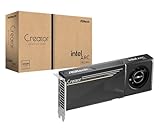


The third mistake is ignoring the physical limits of portability: power, cooling, and size. High-VRAM workstation cards are trending larger and more power-hungry in 2026, with some dual-GPU or 48GB blower models drawing 250W or more and measuring over 12 inches long. If your case, power supply, and airflow cannot support that, the extra VRAM is useless. This guide breaks down what actually matters so you pay for VRAM you can use.
Top 3 picks at a glance
Decide These 3 Things First
Before you compare any cards, lock in these three decisions. They filter 90 percent of the options and keep you from overbuying.
1. What will live in VRAM all at once? List your heaviest simultaneous load. For example: DaVinci Resolve with 6K RAW + noise reduction + Fusion effects, or SolidWorks with a 10,000-part assembly, or running a 20-billion-parameter local AI model. If your typical scene uses 10-12GB, a 16GB card gives you headroom. If you regularly handle 8K video, massive point clouds, or multiple 4K displays with 3D viewports, you should be looking at 24GB and up.
2. What are your portable power and space limits? Measure your case and check your power supply. Most true portable workstations (12 to 20-liter small-form-factor cases like those used for on-set DIT carts) support GPUs up to 300-336mm long, 2.5 slots thick, and 600W to 850W total system power via SFX or SFX-L supplies. Low-profile or single-slot blower cards are narrower at 38-42mm thick and fit 2U to 4U portable racks. If you only have a 500W supply or a 270mm clearance, your shortlist changes completely.
3. Do you need ISV-certified workstation drivers or will a creator/gaming driver do? Certified workstation drivers (like Intel Arc Pro, AMD Radeon Pro, NVIDIA RTX Pro) are validated for apps such as AutoCAD, Revit, SolidWorks, and Avid. They cost more per gigabyte but offer stability and support for 10-bit color, error correction, and enterprise features. If you primarily edit in Premiere Pro, Blender, or run inference workloads without needing certification, a creator-class card with the same VRAM can save you $200 to $400.
Size and Form Factor: Will It Fit and Still Cool Properly?
Portable does not just mean light. It means the card must survive transport, fit a compact chassis, and get enough air.
- Length and thickness: Full workstation blower cards like the ASRock Intel Arc Pro B60 Creator 24GB are typically 280-310mm long and dual-slot (38-40mm thick), designed to exhaust heat out the back in tight cases. Triple-fan creator cards like the ASRock Radeon RX 9070 Challenger 16GB are often 305-330mm long and 2.7 to 3.1 slots thick (50-62mm). Measure your case GPU clearance and leave 15-20mm for cables.
- Weight and mounting stress: Cards range from 650g for compact single-fan models to 1,100-1,450g for large triple-fan and 48GB dual-GPU designs. In a portable build that gets moved, a card over 1,000g should use a support bracket or a case with a reinforced PCIe riser to prevent slot damage.
- Power connectors and PSU headroom: Portable workstation GPUs span 75W (slot-powered) to 300W. A 16GB card in this class typically uses one 8-pin or two 8-pin connectors and recommends a 650W PSU. A 24GB workstation model like the Arc Pro B60 lists a 200-240W total board power and recommends 700W+. The 48GB WEELIAO MAXSUN Arc Pro B60 Turbo variant, which uses two GPUs on one board, can approach 260-300W and needs a 850W+ SFX supply with three 8-pin connectors. Keep 30 percent PSU headroom above the card’s rated wattage.
- Display outputs for work: Look for four DisplayPort 2.1 or 1.4a outputs if you drive multiple 4K reference monitors. Many blower workstation cards offer four mini-DP or full-size DP ports. Creator/gaming cards often give you three DP plus one HDMI 2.1. For color-critical work, DP 2.1 supports higher bandwidth for 4K 120Hz 10-bit without compression.
Memory Type and Bandwidth: Why 16GB Is Not Equal to 16GB
VRAM capacity is only one number. Type, bus width, and bandwidth decide how quickly the GPU can actually use that memory.
- GDDR6 vs. GDDR6X vs. GDDR5X: Newer portable workstation cards use GDDR6 or GDDR6X. GDDR6 at 18-20 Gbps is the current standard for efficiency and cost. Older relocated workstation cards like the PNY Quadro P5000 with 16GB GDDR5X at 10-11 Gbps are still sold around $300 to $450 refurbished, but they offer less than half the bandwidth of a modern equivalent. For video and 3D, bandwidth matters as much as capacity.
- Bus width: Think of this as lanes on a highway. A 24GB card on a 192-bit bus (like the Arc Pro B60 Creator) moves data differently than a 16GB card on a 256-bit bus (like the RX 9070 Challenger). Wider buses generally deliver higher total bandwidth. Example ranges: 192-bit GDDR6 at 19 Gbps yields about 456 GB/s; 256-bit GDDR6 at 20 Gbps yields about 640 GB/s.
- ECC and error correction: True workstation VRAM often includes ECC, which corrects single-bit errors. It prevents subtle artifacting and crashes in long renders, simulations, and medical imaging. It adds cost and typically reduces usable capacity slightly, but it is worth it if your work is billable and you cannot afford re-renders.
- What to target: For 4K editing and mid-size CAD, aim for at least 16GB GDDR6 on a 192-bit bus or wider with 400+ GB/s. For 6K/8K, large assemblies, or local AI with 24B+ models, look for 24GB GDDR6 with 450+ GB/s or 48GB pooled memory if you run models that must stay entirely in VRAM.
Construction and Cooling: Blower vs. Open-Air for Portable Use
How a card is built determines whether it survives in a cramped, moving case.
- Blower (single-fan, enclosed shroud): Found on most workstation cards such as the Arc Pro B60 series. It draws air in and ejects it out the rear bracket. Best for portable workstations, rack cases, and any chassis under 20 liters where internal airflow is limited. Noise is higher at 38-45 dBA under load, but thermals are more predictable when the case is closed for transport.
- Open-air (dual/triple fan): Found on creator/gaming designs like the RX 9070 Challenger with 0dB silent modes. Quieter at 32-38 dBA and cooler in a well-ventilated desk case, but it dumps heat inside the chassis. In a small portable case without excellent exhaust fans, these cards can heat-soak and throttle after 10-15 minutes of sustained load.
- Build durability: Workstation cards often use a full metal shroud, vapor chamber, and reinforced backplate. Look for a rigid backplate, metal fan housing, and a PCIe bracket secured with four screws rather than two if the system will be carried. Weight distribution matters more than it does in a stationary tower.
- PCIe generation: Current cards use PCIe 5.0 x16 or x8 interfaces. In portable systems with PCIe 4.0 riser cables, you will lose 2-4 percent performance at most, but you gain compatibility. Check that your riser is rated for the generation you are using to avoid signal errors.
Real-World Performance: How VRAM Prevents Bottlenecks
VRAM does not make a slow GPU fast, but insufficient VRAM makes any GPU slow. Here is how to map capacity to tasks in a portable workstation.
- Video editing (Premiere Pro, Resolve, Avid): 16GB handles most 4K timelines with LUTs and basic effects. Move to 24GB if you stack temporal noise reduction, use Fusion composites, or edit 6K RAW where a single frame with cache can exceed 12-14GB. If you edit multicam 8K, 24GB is the practical minimum.
- 3D and CAD (Blender, Maya, SolidWorks, Revit): Model complexity and texture resolution dominate VRAM. A 4K PBR texture set can use 500MB to 1GB per material. Large architectural scenes can push past 16GB quickly. For viewport work under 8 million polygons, 16GB is usually comfortable. For full-scene ray tracing or assemblies over 15,000 parts, 24GB to 48GB prevents out-of-memory fallbacks to system RAM, which can cut viewport frame rates by 50 percent or more.
- AI and local inference: This is where VRAM math is strict. A model needs its parameters plus KV cache plus overhead. As a rule of thumb, you need about 1.2 to 1.4GB per billion parameters in 8-bit quantization. A 24GB card fits roughly a 16-20B model comfortably; a 48GB pooled card fits 32-40B models. If you plan to run larger models, 24GB is entry-level, 48GB is more future-proof.
- Thermals and sustained clocks: Portable cases hit thermal limits sooner. A card rated at 2520MHz boost may sustain 2100-2300MHz after 20 minutes in a compact case, depending on fan curves. Blower cards hold closer to their base clock but at higher fan speed. This is normal and not a lab defect; it is why wattage and cooler design matter as much as advertised clocks.
Price Tiers: What You Should Expect to Pay per VRAM Level
Prices for workstation VRAM have settled into clear bands. Use these ranges to spot overpriced listings and refurbished traps.
- Budget tier ($300 to $550): 12GB to 16GB, often older or refurbished workstation cards like Quadro P5000-class or entry Arc/Radeon Pro. GDDR5X or early GDDR6, PCIe 3.0 or 4.0, 180W or less. Fine for 1080p to 4K editing, light CAD, and secondary portable rigs. Expect no ECC on some models and shorter warranty.
- Mid tier ($600 to $850): The sweet spot for most portable workstations. 16GB to 24GB of modern GDDR6, 192-bit to 256-bit, PCIe 5.0, 200-250W. Examples include new 16GB RDNA 4 creator cards around $649.99 and 24GB Arc Pro B60 workstation cards around $649.99. You get current display outputs, AV1 encode, and workstation drivers.
- Premium tier ($1,200 to $2,000+): 24GB to 48GB, blower or dual-GPU designs for heavy AI, 8K, and large dataset work. Cards like the 48GB Turbo variants list near $1,939 and target users who need memory capacity over raw gaming frame rates. Cost per gigabyte is higher here ($35 to $45 per GB vs. $27 to $32 per GB in the mid tier), but it is cheaper than failing jobs mid-render.
- Cost trap to avoid: Do not pay premium prices for GDDR5X-era 16GB cards just because they say Quadro or workstation. At $399, a used P5000 can be reasonable for a legacy system with a 500W PSU, but at $600 it is outperformed by a new 16GB GDDR6 card with twice the bandwidth and lower power.
Warranty, Drivers, and Long-Term Support
Portable workstations get moved, bumped, and run hard. Support matters more than with a stationary desk PC.
- Warranty length: New workstation cards typically carry 3 years, sometimes with an extended 2-year registration. Creator/gaming cards usually offer 3 years as well, but refurbished workstation cards often have only 90 days to 1 year through the seller. For a work machine, prioritize a full 3-year manufacturer warranty.
- Driver branch: Workstation cards get quarterly certified drivers plus security patches for 4 to 5 years. Gaming/creator cards get frequent performance drivers but less ISV testing. If you bill clients for CAD or broadcast work, the certified branch saves troubleshooting time.
- Power and RMA realities: Check the RMA process before you buy. Some blower workstation brands require you to ship in the original anti-static clamshell; others accept any secure packaging. Keep the original box for at least the warranty period if you travel with the system.
Delivery, Assembly, and Portability Checks
Final checks before you order prevent return headaches.
- Assembly order: In small cases, install the GPU last. Connect power cables to the card before seating it if the clearance is under 20mm to the side panel. For cards over 300mm, remove front fans temporarily, slide the card in at an angle, then reinstall fans.
- Delivery inspection: Workstation cards ship with a rigid inner tray. On arrival, check for bent bracket tabs, loose backplate screws, and rattling fans, which indicate drop damage. Test with a short FurMark or Blender Classroom render for 10 minutes and watch for hotspot temps over 95C or sudden power drops.
- Portability prep: If you fly or drive with the system, remove the GPU and pack it separately in its original foam if the case lacks a GPU brace. Vibration in a vehicle can crack a PCIe slot on a heavy triple-fan card. For pelican-style portable workstations, a blower card under 900g is easier to keep installed during transport.
Spec Checklist
| Spec | Budget | Mid | Premium |
|---|---|---|---|
| VRAM Capacity | 12GB – 16GB | 16GB – 24GB | 24GB – 48GB |
| Memory Type & Bandwidth | GDDR5X / GDDR6, 300-450 GB/s, 192-bit | GDDR6 18-20 Gbps, 456-640 GB/s, 192 to 256-bit | GDDR6 19-20 Gbps, 640+ GB/s or pooled 48GB |
| Form Factor & Weight | Single or dual-slot, 250-280mm, 650-850g | Dual-slot blower or 2.5-slot, 280-330mm, 850-1,100g | Dual-slot blower / dual-GPU, 300-336mm, 1,100-1,450g |
| Power & PSU Required | 75-180W, 500-600W PSU, 1x 8-pin | 200-250W, 650-750W SFX PSU, 2x 8-pin | 260-300W, 850W+ SFX-L, 3x 8-pin |
| Cooling & Noise | Single blower or dual fan, 38-45 dBA | Blower or triple fan with 0dB mode, 32-42 dBA | Blower / turbo, 40-48 dBA, rear exhaust preferred |
| Outputs & PCIe | 3x DP 1.4 + HDMI, PCIe 3.0/4.0 x16 | 4x DP 2.1, PCIe 5.0 x16, AV1 encode/decode | 4x DP 2.1, PCIe 5.0 x16, 10-bit + ECC options |
| Drivers & Warranty | 90 days – 1 year, creator or legacy workstation drivers | 3-year warranty, certified workstation drivers | 3-year + extended, ISV certified, enterprise support |
| Street Price Range | $300 – $550 | $600 – $850 | $1,200 – $2,000+ |
Red Flags
- 16GB GDDR5X at a new-card price: If a 16GB card from several generations ago is listed above $500, you are paying for the name, not performance. Bandwidth and power efficiency will be far behind a new $649.99 16GB GDDR6 card.
- Vague VRAM specs: Listings that say 24GB without naming bus width, memory type, or bandwidth are hiding a weak configuration. Always confirm GDDR6, bus width, and speed in Gbps.
- 48GB claims without explaining pooled vs. single-GPU memory: Some 48GB cards use two 24GB GPUs on one board. That memory is not unified for all tasks. For gaming or single-GPU rendering, you may only access 24GB per chip. Confirm whether the workload can use pooled memory.
- No power rating or PSU recommendation: A listing that omits total board power or connector count is risky for portable builds. If you cannot verify wattage and connector type, assume it will not fit your SFX supply.
- Refurbished with no returns: Workstation cards that have been mined or run 24/7 in servers often have worn fans and dried thermal paste. Without at least a 30-day return window and a stated warranty, skip it.
FAQ
How much VRAM do I actually need for a portable workstation?
For most portable creative work, 16GB is the starting point and 24GB is the comfortable standard. Choose 16GB if your heaviest projects stay under 12GB in GPU-Z or task manager. Choose 24GB if you edit 6K RAW, run large CAD assemblies, composite in Resolve Fusion, or run local AI models over 14B parameters. Only move to 48GB if you regularly exceed 20GB or need to keep 30B+ models entirely in VRAM to avoid slow system RAM spillover.
Is a 24GB workstation card better than a 16GB creator card at the same price?
Not always. At around $649.99, you can find both a 24GB workstation blower and a 16GB triple-fan creator card. The 24GB workstation option is better if you need capacity for 8K, large textures, or certified drivers and four DisplayPorts for multi-monitor grading. The 16GB creator card is often better if you need higher memory bandwidth, lower noise on a desk, and faster boost clocks for shorter renders where capacity is not the limit. Match the card to whether you are capacity-limited or speed-limited.
Will a big triple-fan GPU overheat in a portable case?
It can if the case is under 15 liters without direct exhaust. Triple-fan cards recirculate heat inside the case and rely on case fans to remove it. In compact portable builds, a blower card that exhausts heat out the back usually sustains performance longer, even though it is 4-6 dBA louder. If you prefer a triple-fan model, ensure your case has at least two 120mm exhaust fans and keep 25mm of clearance above the fans.
Can I upgrade VRAM later or add a second card?
VRAM is soldered and cannot be upgraded. Plan for the capacity you will need for the next two to three years. You can add a second card in some portable workstations, but most small cases only have one full x16 slot. Even when a second slot exists, not all apps can pool VRAM across two cards. For single-application performance, one card with enough VRAM is more reliable than two smaller cards. Only consider dual-GPU boards like the 48GB Turbo if your software explicitly supports multi-GPU memory pooling for your task.
Related guides
- Alienware 16 Aurora RTX 5070 Review: Display, Portability and Configuration Gaps
- Lenovo Legion Pro 7i Gen 10 Review: 64GB RAM and Dual-SSD Configuration
- MSI Katana 15.6-inch RTX 5050 Review: Configuration Strengths and Upgrade Unknowns
- ASUS ROG Strix SCAR 16 G635LX-XS97 Review: Display Ambition, Upgrade Questions


