
The modern home office is no longer just a temporary corner of a guest bedroom; it is a carefully curated space where professional productivity meets residential design. When setting up your home workspace, the core engine of your computer—the graphics processing unit (GPU)—defines not only how fast your programs run, but also how your physical environment functions. The choice between a dedicated desktop workstation GPU and a portable gaming GPU laptop is a major decision that impacts space, noise, aesthetics, and lifestyle.
For home users, this decision often boils down to a fundamental trade-off: do you commit to a permanent, high-performance desktop setup that commands its own physical desk space, or do you choose a sleek, portable laptop that can be tucked away into a drawer when dinner starts? A workstation GPU is engineered for absolute stability, continuous heavy rendering, and professional software certifications. Conversely, a gaming GPU laptop offers an all-in-one, mobile package that easily transitions from daylight spreadsheet tasks to nighttime entertainment. Balancing these hardware realities with your home layout is the key to creating an efficient, clutter-free workspace.
As an Amazon Associate we earn from qualifying purchases at no extra cost to you.



Top 3 picks at a glance
Quick Verdict
If you have a dedicated, permanent home office and your daily work involves professional 3D modeling, CAD, data science, or heavy video rendering, a desktop built around a workstation GPU is the superior choice. It offers unmatched thermal management, long-term upgradeability, and quiet operation under sustained loads. However, if you live in a multi-use space, value physical flexibility, or want a single device that handles both office work and high-end recreation, a gaming GPU laptop is the ideal solution, providing portability and excellent value in a compact footprint.
Side by Side
To help you visualize how these two hardware paths integrate into your home, here is a breakdown of their physical, financial, and practical characteristics:
| Feature | Workstation GPU (Desktop) | Gaming GPU Laptop | |
|---|---|---|---|
| Physical Footprint | Large; requires a mid-to-large tower chassis (approx. 18x8x18 inches) and a dedicated desk. | Very small; compact chassis (approx. 14×10 inches) that fits on any surface. | Small; fits easily in a backpack or drawer. |
| Acoustic Comfort | Generally quiet; larger slow-spinning fans or specialized blower designs keep noise low. | Can be loud; small high-RPM fans produce a noticeable high-pitched whine under load. | |
| Visual Clutter | High; multiple cables, external monitor power bricks, and peripheral cords to manage. | Low; single power cable, built-in screen, keyboard, and trackpad keep the desk clean. | |
| Durability & Lifespan | Excellent; individual components are protected inside a sturdy, stationary metal chassis. | Moderate; exposed to physical drops, hinge wear, keyboard spills, and battery degradation. | |
| Price Range | $600 to $3,000+ for the GPU alone; full system costs range from $1,800 to $5,000+. | $800 to $3,000+ for the complete, ready-to-run system. | |
| Maintenance & Upkeep | Simple; easy to open the case, blow out dust, or swap individual cooling fans. | Difficult; sealed chassis requires professional service or delicate handling to clean or repair. | |
| Resale Value | High; individual graphics cards retain value well among professionals and builders. | Moderate-Low; older laptops depreciate quickly as batteries age and screens wear out. | |
| Best For | Dedicated home studios, professional creators, architects, and remote engineers. | Shared living rooms, hybrid workers, students, and casual gamers. |
Where Workstation GPU Wins
The primary advantage of a desktop workstation GPU lies in its uncompromising engineering. These graphics cards are built to run at 100% utilization for days at a time without breaking a sweat or crashing. This reliability is driven by specialized, independent software vendor (ISV) certified drivers, which are rigorously tested against professional applications like AutoCAD, Premiere Pro, SolidWorks, and Blender. If your livelihood depends on your computer never crashing mid-render, the stability of a workstation card is invaluable.
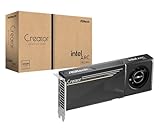
If you are building a custom PC for your home office, a dedicated workstation card like the ASRock Intel Arc Pro B70 Creator 32GB Workstation Graphics Card, Xe2-HPG, 32GB GDDR6, PCIe 5.0, 4X DP 2.1, Blower Fan, Vapor Chamber, Honeywell PTM7950 ($1299.99) offers massive memory capacity and premium cooling technologies designed to keep your workspace quiet. For those on a tighter budget who still want massive memory reserves for complex projects, the ASRock Intel Arc Pro B60 Creator 24GB Graphics Card, Workstation GPU, Xe2-HPG, 2400MHz, 24GB GDDR6 192-bit, PCIe 5.0, 4X DP 2.1, Blower ($649.99) provides professional-grade stability at a highly competitive price point.
Additionally, workstation GPUs utilize blower-style fans and vapor chambers to exhaust hot air directly out of the back of your computer chassis. In a home environment, this is a massive benefit. Instead of dumping heat inside the computer case—which forces other system fans to spin faster and louder—the heat is quietly pushed out of the room’s immediate desk area, keeping your workspace peaceful and cool.
Where Gaming GPU Laptop Wins
The gaming GPU laptop is the ultimate champion of versatility and space optimization. In modern homes where space is at a premium, not everyone has the luxury of a dedicated room for an office. A gaming laptop allows you to transform any surface—be it a dining table, a kitchen island, or a coffee table—into a high-performance workstation in seconds. When your workday is done, you simply close the lid and slide the computer into a drawer, instantly reclaiming your living space.
On the hardware front, machines like the Acer Nitro V 16S AI Gaming Laptop | AMD Ryzen 7 260 Processor | NVIDIA GeForce RTX 5060 Laptop GPU (572 AI Tops) | 16″ WUXGA IPS 180Hz Display | 32GB DDR5 | 1TB Gen 4 SSD | Wi-Fi 6 | ANV16S-41-R2AJ ($1399.99) show just how much power can be packed into a single portable chassis. With advanced AI processing capabilities and a high-refresh-rate screen, it transitions seamlessly from daytime creative tasks to nighttime gaming. For those seeking a highly portable, budget-friendly entry point, the msi Thin 15 15.6” 144Hz FHD Gaming Laptop: Intel Core i7-13620H, NVIDIA Geforce RTX 4050, 16GB DDR4, 512GB NVMe SSD, WiFi 6E, Win 11: Black B13VE-2678US ($1018.99) offers a lightweight design that is easy to move around the house or take to a local coffee shop.
Gaming laptops also provide an all-in-one financial advantage. When you buy a laptop, you are purchasing the GPU, CPU, storage, memory, keyboard, trackpad, webcam, and a high-quality display all at once. There is no need to spend hundreds of extra dollars on external monitors or mechanical keyboards unless you want to, making it a highly cost-effective way to bring heavy graphics power into your home.
Cost Over 5 Years
When planning a home office budget, looking at the sticker price of your hardware is only the first step. You must also account for power consumption, maintenance, and the inevitable hardware upgrade cycle. Looking ahead to 2026 and beyond, energy costs and software demands will continue to climb, making long-term efficiency a key part of your home’s utility budget.
A desktop system featuring a professional workstation GPU typically pulls between 300 and 600 watts from the wall under heavy rendering loads. If you work 8 hours a day, 5 days a week, at an average residential utility rate of $0.16 per kilowatt-hour (kWh), running a 450W desktop system costs approximately $150 per year in electricity. Over five years, that totals $750. However, the saving grace of the desktop is upgradeability. If your workflow demands more power in four years, you do not need to buy a whole new computer; you can simply swap out your graphics card, keeping your initial investment in the chassis, power supply, and motherboard intact.
A gaming laptop is significantly more energy-efficient, typically drawing between 90 and 230 watts under full load. Running a 150W laptop for the same 8 hours a day costs roughly $50 per year in electricity, or $250 over five years. While this saves you $500 in power bills compared to the desktop, the long-term catch is obsolescence. Laptops are highly integrated systems. When the GPU or CPU becomes too slow for your software, or when the internal lithium-ion battery degrades to the point of holding no charge, you must replace the entire machine. Over a five-year span, the inability to upgrade individual components often makes the laptop more expensive in total lifecycle costs.
Which One for Your Home
Small Apartment or Studio
If you live in a compact apartment or a studio loft, space is your most valuable asset. A massive desktop tower with dual monitors and a tangle of power cables can easily overwhelm a small room, making it feel cluttered and chaotic. In this scenario, a gaming GPU laptop is the clear winner. Its ability to pack away into a backpack or slide under a couch means your home remains a home, rather than looking like a corporate server room. The built-in screen and keyboard eliminate the need for bulky office furniture, allowing you to work comfortably from a dining table or a compact writing desk.
Family Home with Kids and Pets
In a bustling household filled with children and active pets, safety and durability are paramount. Laptops left on kitchen counters or low desks are prime targets for spilled juice boxes, accidental drops, and curious cats stepping on keyboards. For these busy homes, a desktop workstation is actually the safer option. The heavy tower can be securely mounted underneath a sturdy desk or placed safely on a high shelf, completely out of reach of toddler hands and wagging dog tails. Cables can be neatly routed and hidden behind furniture using zip ties, reducing tripping hazards and keeping expensive electronics safe from daily household chaos.
Rental Properties
If you rent your home, you have to design your office with mobility in mind. Moving heavy, fragile desktop PCs, multiple monitors, and delicate desk mounts is a stressful, physically demanding process that increases the risk of damaging your expensive hardware. A gaming GPU laptop makes moving painless. You can pack your entire professional workstation, along with its charger and a mouse, into a single backpack in under thirty seconds. This ease of transport makes it simple to set up your office in a new rental without worrying about desk space or wall-mounting monitors.
Long-Term Home with a Dedicated Office
If you own your home and have a dedicated, permanent room set aside for your office, the desktop workstation GPU is the ultimate choice. This setup allows you to invest in a premium, ergonomically optimized workspace. You can route cables through grommets in a solid wood standing desk, mount large, color-accurate dual monitors to the wall, and place a quiet, beautifully lit desktop tower on a dedicated stand. In this environment, the superior cooling, quiet operation under load, and long-term upgradeability of a workstation graphics card will provide a highly productive, comfortable workspace for years to come.
FAQ
Can I play video games on a professional workstation GPU?
Yes, you can. While workstation GPUs are optimized and certified for professional software, they use the same underlying graphics architectures as consumer gaming cards. They will run modern video games very well, though they may lack some of the specialized game-specific driver updates that consumer gaming laptops receive on launch days.
Are gaming laptops too loud for a quiet home office?
Under heavy loads, such as 3D rendering or high-end gaming, a laptop’s small internal fans must spin at very high speeds to keep the system cool. This creates a noticeable, high-pitched whirring sound. If you share a workspace with a partner or prefer absolute silence while you concentrate, a desktop workstation with larger, slower-spinning fans is a much quieter option.
Is a 24GB or 32GB GPU memory capacity necessary for basic office work?
No. For standard tasks like word processing, web browsing, and managing spreadsheets, basic integrated graphics are more than enough. High VRAM capacities (like 24GB or 32GB) are specifically designed for demanding professional workloads, such as local AI model training, editing 8K video, rendering complex 3D architectural scenes, and running detailed engineering simulations.
Can I connect multiple monitors to a gaming GPU laptop?
Yes, most modern gaming laptops feature multiple display outputs, including HDMI ports and USB-C ports with DisplayPort compatibility. This allows you to connect one or two external monitors to create a multi-screen workspace at your desk, though running multiple high-resolution screens will increase the laptop’s operating temperature and fan noise.


