The best aluminum tripods for travel and cameras are the Peak Design Travel Tripod Aluminum for maximum packing efficiency, the Manfrotto Befree Advanced Aluminum for a familiar all-purpose setup, the Benro Travel Angel FTA28AB1 for heavier camera-and-lens combinations, and the Vanguard VEO 3T 235AB for flexible travel features at a moderate price.
Aluminum remains attractive in 2026 because it costs less than carbon fiber, handles rough travel well, and provides useful vibration damping compared with very light plastic supports. The trade-off is weight: an aluminum travel tripod commonly weighs about 3–5 pounds, while a comparable carbon-fiber model may save roughly 0.5–1.5 pounds.
As an Amazon Associate we earn from qualifying purchases at no extra cost to you.


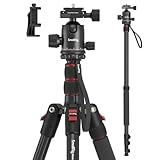

Our Top Picks
 K&F Concept 64 inch/163cm Lightweight Aluminum Travel Camera64" height/8kg load2.5 PoundsCheck on Amazon


Top 3 picks at a glance
Best aluminum tripods at a glance
| Model | Approx. weight | Folded length | Maximum height | Rated load | Best for |
|---|---|---|---|---|---|
| Peak Design Travel Tripod Aluminum | 3.44 lb / 1.56 kg | 15.4 in / 39 cm | 60 in / 152 cm | 20 lb / 9.1 kg | Small bags and mirrorless cameras |
| Manfrotto Befree Advanced Aluminum | About 3.5 lb / 1.6 kg | About 15.7 in / 40 cm | About 59 in / 150 cm | 17.6 lb / 8 kg | General travel photography |
| Benro Travel Angel FTA28AB1 | About 4.3 lb / 2 kg | About 18.9 in / 48 cm | About 67 in / 170 cm | About 22 lb / 10 kg | Full-frame cameras and telephoto lenses |
| Vanguard VEO 3T 235AB | About 3.7 lb / 1.7 kg | About 16 in / 41 cm | About 61 in / 155 cm | About 22 lb / 10 kg | Travelers wanting a monopod option |
Specifications can vary slightly by kit, head, and regional version. More importantly, a tripod’s published load rating is not a promise of equally stable performance at that load. A long, front-heavy lens creates much more leverage than a compact camera with the same total weight.
1. Peak Design Travel Tripod Aluminum: best for small luggage
The Peak Design Travel Tripod Aluminum is the easiest choice when folded length matters more than maximum rigidity. Its legs and center column pack into a compact shape, and the included ball head sits inside the leg arrangement rather than adding a conventional external pan-and-tilt assembly.
That design makes it particularly useful for city travel, carry-on luggage, and daypacks. It reaches approximately 60 inches, which is tall enough for most standing compositions, while the 15.4-inch folded length is unusually short for a full-height tripod.
Strengths and limitations
- Load capacity: Suitable for mirrorless bodies, DSLR bodies, and moderate zooms when the legs are not fully extended.
- Folded length: One of the best choices when the tripod must fit inside a narrow backpack.
- Head movement: The ball head is quick for reframing, but less natural for smooth independent pan, tilt, and roll adjustments than a three-way head.
- Leg locks: Twist locks keep the exterior clean and compact, but they require fully tightening each section. Partial engagement can allow a leg to slip.
Choose it for a compact mirrorless kit, landscape work, architecture, and long exposures. For a full-frame body paired with a 100–400mm lens, a larger tripod will provide a more confident platform.
2. Manfrotto Befree Advanced Aluminum: best balanced travel option
The Manfrotto Befree Advanced Aluminum is a practical middle ground. Its reverse-folding legs keep the packed size near 16 inches, while the conventional travel design provides a familiar setup for photographers who already use Manfrotto plates and heads.
The included ball head is fast for still photography, and many versions include a center-column system that allows low-angle work. It is a strong match for crop-sensor cameras, full-frame mirrorless bodies, and standard zooms such as a 24–70mm equivalent.
What to inspect before buying
- Check whether the package includes the head and which quick-release plate standard it uses.
- Confirm that the center-column mechanism locks firmly; a loose column can introduce movement even when the legs are rigid.
- Test every leg section after packing. Travel tripods often have four leg sections, so there are more locks to maintain than on a studio tripod.
The Befree Advanced is less compact internally than the Peak Design design, but its conventional controls are easier to understand and service. It is usually a better choice for photographers who value familiar adjustment over the smallest possible package.
3. Benro Travel Angel FTA28AB1: best for heavier camera setups
The Benro Travel Angel FTA28AB1 gives up some portability to gain height and a sturdier stance. With a folded length close to 19 inches and a weight around 4.3 pounds, it is not the lightest travel option, but it is more comfortable supporting a full-frame camera, a wide-aperture zoom, or a medium telephoto lens.
Its approximately 67-inch maximum height helps tall photographers avoid bending, although maximum height is not always the same as best stability. For landscapes and night photography, lowering the center column usually produces sharper images than extending every section to its limit.
Why the extra size can be worthwhile
Assume a camera and lens weigh 5 pounds and the setup’s center of gravity sits 6 inches above the tripod platform. A small gust or accidental touch creates a turning force around the head. Increasing the tripod’s stance width and using thicker upper leg sections reduces how easily that force becomes visible camera movement. This is why a tripod rated for 20 pounds is not automatically equivalent to another tripod rated for 20 pounds.
The Travel Angel is the better pick for outdoor photographers who carry heavier equipment and can tolerate a longer package. Its leg-lock hardware should be checked periodically for grit, especially after beach or desert travel.
4. Vanguard VEO 3T 235AB: best for flexibility
The Vanguard VEO 3T 235AB is aimed at travelers who want more than a basic ball-head tripod. Its design supports low-angle shooting and can convert one leg into a monopod, which is useful when walking with a long lens or when a full tripod is not practical.
The approximately 16-inch folded size keeps it travel-friendly, while the roughly 61-inch maximum height works for most eye-level compositions. The extra conversion hardware adds versatility but also means there are more joints and locks to inspect before a trip.
It suits photographers who alternate between landscapes, portraits, museums, and light telephoto work. If every ounce matters, a simpler tripod may be preferable; if one support must cover several shooting styles, the VEO 3T is more adaptable.
Match the tripod to your camera setup
| Your situation | Recommended class | What matters most | Reasonable compromise |
|---|---|---|---|
| Phone or compact camera | Light aluminum travel tripod | Folded length and quick setup | Accept lower wind resistance |
| APS-C or Micro Four Thirds with standard zoom | 3–4 lb travel tripod | Ball-head control and lock durability | Four-section legs are acceptable |
| Full-frame body with 24–70mm lens | Mid-size aluminum travel tripod | Platform stiffness and head tension | Choose moderate folded length |
| Full-frame body with 70–200mm lens | Larger travel tripod | Thicker upper legs and wider stance | Carry an extra pound or more |
| Long telephoto or wildlife work | Heavy aluminum or dedicated support | Head balance and vibration control | Do not rely on the maximum load number alone |
How to evaluate leg-lock durability
For twist locks, extend each leg section, tighten it firmly, and apply a moderate downward force. The section should not rotate or slide. For lever locks, close the lever and check whether the section moves; a lever that closes with almost no resistance may need adjustment.
During travel, avoid dragging grit into the locks. Wipe the legs before collapsing them, and rinse aluminum tubing with clean water after exposure to salt. Do not use heavy grease inside a leg lock unless the manufacturer specifies it, because grease can attract abrasive dust.
Ball head movement and camera stability
A ball head is fastest for still subjects because one control can release the camera for repositioning. It is less suitable for smooth video movement. If you shoot video, look for a separate pan lock and a head designed for controlled tilt rather than assuming a photographic ball head will work well.
For sharper long exposures, use this setup sequence:
- Spread the thickest leg sections first and keep the thinnest sections retracted when possible.
- Place one leg toward the main direction of the load, such as downhill on a slope.
- Keep the center column low unless height is essential.
- Attach the camera, then gently press the shutter or use a two-second timer.
- Disable image stabilization only when the camera or lens manual recommends doing so for tripod use.
Hang a bag from the hook only when it cannot swing in the wind. A swinging bag can make the tripod less stable rather than adding useful ballast.
Frequently asked questions
Is aluminum better than carbon fiber for a travel tripod?
Aluminum is often the better value when lower cost, rough-travel durability, and useful vibration damping matter more than minimum weight. Its main disadvantage is that it is heavier: an aluminum travel tripod commonly weighs about 3–5 pounds, while a comparable carbon-fiber model may save roughly 0.5–1.5 pounds. The choice depends on how much weight you are willing to carry.
Can these tripods support a full-frame camera with a telephoto lens?
They can, but the larger models are more appropriate for heavier combinations. The Peak Design model is described as suitable for moderate zooms, while the Benro Travel Angel is a better choice for a full-frame camera, a wide-aperture zoom, or a medium telephoto lens. For a 70–200mm lens or long telephoto work, thicker upper legs, a wider stance, and vibration control matter.
Does a tripod’s maximum load rating show how stable it will be?
No. A published load rating is not a promise of equally stable performance at that load. A long, front-heavy lens creates more leverage than a compact camera with the same total weight. Stability also depends on stance width, upper-leg thickness, head balance, and whether the center column is extended. For heavier equipment, do not rely on the maximum load number alone.
What should I do to maintain an aluminum tripod during travel?
Wipe the legs before collapsing them so grit does not enter the locks. After exposure to salt, rinse the aluminum tubing with clean water. For twist locks, tighten each section and check that it does not rotate or slide; for lever locks, confirm that the closed lever holds the section firmly. Avoid heavy grease inside a leg lock unless the manufacturer specifies it.
Are these travel tripods suitable for video?
They are primarily described for still photography, and a ball head is less suitable for smooth video movement. If you shoot video, look for a separate pan lock and a head designed for controlled tilt rather than assuming a photographic ball head will work well. The ball heads discussed are convenient for quickly repositioning a camera for still subjects.
Final buying recommendation
Choose the Peak Design Travel Tripod Aluminum if the tripod must disappear into a small bag. Choose the Manfrotto Befree Advanced Aluminum for a familiar, balanced travel kit. Choose the Benro Travel Angel FTA28AB1 when load capacity, height, and thicker legs matter more than minimum weight. Choose the Vanguard VEO 3T 235AB if a monopod conversion and flexible shooting positions justify a slightly more complex design.
Before ordering, compare the tripod’s folded length with your actual bag, not just its advertised capacity. Then add the camera, lens, and plate weight together, and select a tripod that has meaningful stability margin rather than one that merely meets the published load rating.