The best 5G phones under $300 in 2026 are the Samsung Galaxy A25 5G, Google Pixel 7a, OnePlus Nord N30 5G, Motorola Moto G Power 5G (2024), and Samsung Galaxy A15 5G, with the Galaxy A25 5G offering the most balanced mix of full sub-6 5G band support, 4 years of OS updates, and all-day battery life for most buyers on T-Mobile, AT&T, and Metro-style carriers.
If you are shopping in this price range, raw processor speed matters less than three things spec sheets often bury: which 5G bands are actually supported, how long the phone will receive security and Android updates, and how the battery holds up under real 5G drain. This guide ranks the top affordable options by those real-world value factors.
As an Amazon Associate we earn from qualifying purchases at no extra cost to you.



Our Top Picks

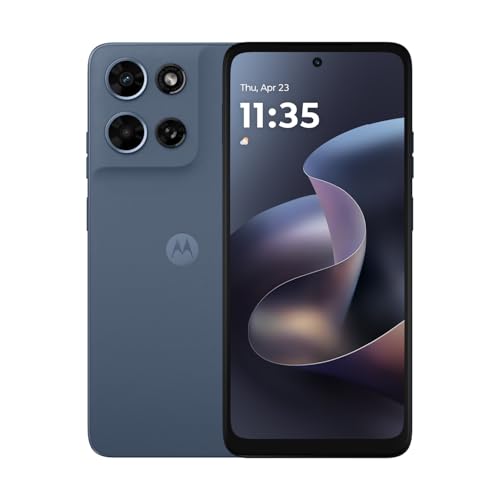

Top 3 picks at a glance
How We Ranked Value Under $300
Instead of ranking by benchmark scores alone, these phones are scored on five criteria that determine whether a budget 5G phone still feels good in year two and three:
- Network-band support: Does it cover low-band (n71, n5), mid-band (n41, n77, n78), and does it need mmWave (n260/n261)? For most users in 2026, mid-band n77/n41 is the speed layer, while low-band is coverage.
- Battery life on 5G: Capacity divided by modem + display drain, not just mAh number.
- Camera performance: Sensor size and processing, especially 0.5x / 1x / 2x consistency in daylight and low light.
- Software updates: Years of promised OS and security patches remaining from 2026.
- Real-world value: Storage/RAM at the usual street price, plus features like NFC, stereo speakers, and expandable storage.
The 5 Best 5G Phones Under $300 Ranked
1. Samsung Galaxy A25 5G – Best Overall Balance
Usually $200-$300, the Galaxy A25 5G is the safest pick for most U.S. buyers because it covers the widest sub-6 5G bands in this price bracket, has a 6.5-inch 120Hz Super AMOLED display that stays visible outdoors, and Samsung promises 4 OS upgrades and 4 years of security updates from its launch. That update policy alone extends usable life to 2027-2028, which cheaper rivals cannot match.
It ships with 128GB storage + microSD expansion and 6GB or 8GB RAM, stereo speakers, and NFC for payments. The Exynos 1280 / Dimensity 1080-class performance is not flagship fast, but it handles 5G streaming, navigation, and light gaming like Call of Duty Mobile at medium settings without throttling. The main 50MP camera with OIS produces more consistent daylight and indoor shots than other budget phones, though low-light video remains soft.
Best for: Buyers who want to keep the phone 3-4 years and need reliable carrier compatibility.
2. Google Pixel 7a – Best Camera and Software
Usually $270-$330 but regularly discounted to under $300 in 2026, the Pixel 7a trades expandable storage for the best image processing in this class. Its 64MP main sensor with Google’s HDR and Night Sight delivers noticeably cleaner skin tones and dynamic range than any other phone under $300, and it shoots stable 4K video where competitors cap at 1080p or produce shaky footage.
It supports the core sub-6 bands (n1/n2/n5/n41/n71/n77/n78) on all major U.S. carriers and includes 5G carrier aggregation, but lacks mmWave – which does not matter for most buyers. Google promised 5 years of security updates from its May 2023 launch, so it remains supported until 2028. The 6.1-inch 90Hz OLED is smaller and more pocketable, and the Titan M2 chip enables VPN by Google One and Call Screening features you will not get on Samsung or Motorola budget models.
Trade-off: 90Hz vs 120Hz, no microSD slot, and 4385mAh battery charges at 18W wired, so top-ups are slower.
3. OnePlus Nord N30 5G – Best Battery Life + Fast Charging
Usually $250-$300, the OnePlus Nord N30 5G (also sold as OnePlus Nord CE 3 Lite in other regions) wins on charging speed and battery endurance. Its 5000mAh battery with 50W SUPERVOOC typically recharges from 0-100% in about 70-75 minutes, roughly half the time of the Galaxy A15 5G or Pixel 7a.
It has a 6.72-inch 120Hz LCD, 8GB RAM / 128GB storage + microSD, stereo speakers, and a 3.5mm headphone jack. 5G support focuses on sub-6 low and mid-band, which covers T-Mobile n41/n71 and AT&T n77 – ideal for suburban and urban mid-band coverage. OnePlus offers 2-3 years of security updates, shorter than Samsung or Google. The 108MP main camera is sharp in bright light but relies heavily on pixel-binning and struggles with motion in low light compared to the Pixel 7a.
Best for: Heavy media users who need two-day light use and the fastest charging under $300.
4. Motorola Moto G Power 5G (2024) – Best Battery Endurance on a Budget
Usually $200-$280, the Moto G Power 5G (2024) is built for maximum runtime. Motorola pairs a 5000mAh battery with a 6.7-inch 120Hz LCD and a very efficient Dimensity 7020 platform. Under continuous 5G browsing, it often lasts longer than smaller-battery Pixels despite the larger screen.
It includes 8GB RAM, 128GB storage + microSD up to 1TB, and clean Android with Moto Gestures. Band support covers sub-6 5G widely, including n77 for C-band, but like most phones in this tier, it does not include mmWave. Motorola typically provides 1 OS upgrade and 3 years of security patches, so it is best if you plan to upgrade within 2-3 years. The 50MP main camera is decent outdoors but has slower autofocus and no OIS.
Best for: Users who prioritize two-day battery and stock Android without extra UI layers.
5. Samsung Galaxy A15 5G – Best Under $200 Value
Usually $150-$200, the Galaxy A15 5G is the cheapest way to get a reliable sub-6 5G phone with a Super AMOLED 90Hz display and the same 4-year update promise as the A25. It uses a Dimensity 6100+ chip, 4GB/6GB RAM options, and 128GB storage + microSD.
5G support includes the essential low and mid bands (n5/n41/n66/n71/n77) for nationwide coverage. The 5000mAh battery easily clears a full day, but 25W charging is slower than OnePlus. Camera output is adequate in daylight from its 50MP main sensor, but expect more noise indoors and limited ultra-wide quality. If your budget is strict, this is the value king that does not sacrifice update longevity.
Spec Comparison: Bands, Battery, Updates, and Cameras
| Phone | 5G Bands (U.S. Sub-6) | Battery / Charging | Display | OS Updates Remaining (from 2026) | Rear Cameras |
|---|---|---|---|---|---|
| Samsung Galaxy A25 5G | n5, n41, n66, n71, n77, n78 | 5000mAh / 25W | 6.5″ AMOLED 120Hz | ~2 OS + 2 years security | 50MP OIS + 8MP UW + 2MP macro |
| Google Pixel 7a | n1, n2, n5, n41, n66, n71, n77, n78 | 4385mAh / 18W | 6.1″ OLED 90Hz | ~2 years security to 2028 | 64MP OIS + 13MP UW |
| OnePlus Nord N30 5G | n5, n25, n41, n66, n71, n77 | 5000mAh / 50W | 6.72″ LCD 120Hz | ~1 year security | 108MP + 2MP depth + 2MP macro |
| Moto G Power 5G (2024) | n2, n5, n41, n66, n71, n77 | 5000mAh / 30W | 6.7″ LCD 120Hz | ~1-2 years security | 50MP + 8MP UW |
| Samsung Galaxy A15 5G | n5, n41, n66, n71, n77 | 5000mAh / 25W | 6.5″ AMOLED 90Hz | ~2 OS + 2 years security | 50MP + 5MP UW + 2MP macro |
Note: None of these budget models include mmWave n260/n261. That only matters if you need peak 5G speeds inside specific stadiums, airports, or downtown mmWave zones on Verizon. For nationwide 5G, mid-band n77/n41 coverage is far more important.
Decision Matrix: Which Phone Fits Your Situation
Use your carrier and priorities to choose, instead of comparing only price:
| If You… | Choose This | Why |
|---|---|---|
| Want the longest software support under $300 | Galaxy A25 5G or Galaxy A15 5G | Samsung 4-year policy keeps security patches past 2027 |
| Care most about photos/video | Pixel 7a | Flagship-level HDR, Night Sight, and 4K processing |
| Need fastest charging and longest screen time | OnePlus Nord N30 5G | 50W charging + 5000mAh + efficient LCD |
| Use T-Mobile / Metro mid-band 5G heavily | Any of the 5, but avoid import variants | Ensure n41 + n71 + n77 are listed for U.S. model |
| Need microSD + headphone jack | Moto G Power 5G (2024) or Nord N30 5G | Both include expandable storage; Nord N30 and Moto G keep 3.5mm jack |
| Want smallest phone for one-handed use | Pixel 7a | 6.1-inch body vs 6.7-inch on Motorola/OnePlus |
Worked Example: Real Battery Runtime on 5G
mAh alone is misleading because 5G modems and 120Hz displays add constant drain. Here is a simple power budget you can apply to any phone in this list:
Formula: Runtime (hours) = Battery Capacity (Wh) / Average Power Draw (W), where Wh = (mAh / 1000) * Nominal Voltage (3.87V)
Example 1 – Galaxy A25 5G: 5000mAh * 3.87V / 1000 = 19.35Wh. Mixed use with 5G streaming at ~120 nits, 120Hz auto, draws about 2.8W (screen ~1.2W + SoC/modem ~1.1W + other ~0.5W). 19.35 / 2.8 = 6.9 hours of continuous screen-on time. In real use with standby mixed in, that translates to 1.5 days light use or a full heavy day.
Example 2 – Pixel 7a: 4385mAh * 3.87V / 1000 = 16.97Wh. Same workload draws slightly more per hour because the smaller battery runs at higher voltage sag, about 2.9W. 16.97 / 2.9 = 5.85 hours screen-on. You get better idle efficiency from Google’s optimizations, but continuous 5G video will drain it about 15-18% faster than a 5000mAh model.
What to do with this: If you commute with 2 hours of 5G video daily plus navigation, a 5000mAh phone gives you roughly 1 extra hour of buffer before needing a charger. If you cannot charge midday, prioritize the 5000mAh options. If you can top up nightly, the Pixel 7a’s efficiency is sufficient.
Settings to Maximize 5G Battery and Speed
After inserting your SIM, apply these settings to get the advertised value without extra drain:
- Network mode: Set to 5G Auto / Smart 5G, not 5G Only. 5G Only forces the modem to search for weak 5G and burns 15-20% more power indoors. Auto lets the phone fall back to LTE when 5G is weak.
- Display: Use Adaptive 120Hz rather than forced 120Hz. On LCD models like the Nord N30 and Moto G Power, forced 120Hz adds ~0.3-0.4W constant drain.
- Band locking not needed: Do not manually select bands. U.S. carriers use carrier aggregation across n41+n77 automatically when available.
- Software updates: Enable auto-download over Wi-Fi. On Samsung and Pixel, delayed updates mean you miss modem efficiency patches that improve 5G standby drain by 5-10%.
- Camera: For sharp low-light shots on budget phones, hold steady for 1-2 seconds after tapping shutter – OIS models like the A25 5G and Pixel 7a are still capturing multi-frame stacks.
What You Give Up Under $300
To stay under $300, all these phones make the same compromises: no mmWave 5G, no wireless charging, plastic frames, and processors that handle 60fps gaming but will throttle in 30-minute sustained sessions. You also get slower UFS 2.2 storage instead of UFS 3.1/4.0, so app installs and large game loads take 20-30% longer than flagships. If you need wireless charging or 3x telephoto, you need to step up to the $400-$600 class.
Frequently asked questions
Which of these phones is best for a buyer who plans to keep it for several years?
The Samsung Galaxy A25 5G is the safest long-term choice for most buyers because it combines broad sub-6 5G support, 4 OS upgrades, 4 years of security updates, expandable storage, NFC, stereo speakers, and all-day battery life. The Galaxy A15 5G also offers Samsung’s 4-year update promise, but its processor and camera system are more limited.
Do any of these phones support mmWave 5G?
No, none of the five phones include mmWave n260 or n261 support. That limitation mainly matters for peak 5G speeds in specific stadiums, airports, or downtown Verizon zones. For nationwide coverage, the article emphasizes low-band coverage and mid-band n77 or n41 support instead, so mmWave is not important for most buyers.
Which phone should I choose if I need expandable storage?
Choose the Samsung Galaxy A25 5G, OnePlus Nord N30 5G, Motorola Moto G Power 5G (2024), or Samsung Galaxy A15 5G. Each includes a microSD card slot, while the Google Pixel 7a does not offer expandable storage. The Nord N30 and Moto G Power also include a 3.5mm headphone jack.
Which phone charges the fastest?
The OnePlus Nord N30 5G charges the fastest, with 50W SUPERVOOC charging that typically reaches a full charge in about 70-75 minutes. The Galaxy A25 5G and Galaxy A15 5G use 25W charging, the Moto G Power 5G (2024) uses 30W, and the Pixel 7a supports 18W wired charging.
Which phone is the smallest and easiest to use one-handed?
The Google Pixel 7a is the smallest option in this group, with a 6.1-inch OLED display and a more pocketable body. The other listed displays measure 6.5 inches or 6.7 inches, making them better suited to buyers who prefer larger screens for streaming, navigation, or gaming rather than one-handed use.
Final Recommendation
For most buyers looking for the best 5G phones under $300 right now, the Samsung Galaxy A25 5G is the best overall pick because it balances complete sub-6 band support, an AMOLED 120Hz display, and multi-year updates. Choose the Pixel 7a if camera quality is your top priority, the OnePlus Nord N30 5G if you want the fastest charging, and the Galaxy A15 5G if you need to stay well under $200 without losing update support.
Before buying, confirm the listing says “U.S. unlocked” and lists n77 or “C-band” in the specs – import variants sometimes omit n77 and will show 5G but never connect to mid-band speeds on AT&T and Verizon.