The best car subwoofers for deep bass are matched to your available enclosure space, amplifier power, and preferred response: choose a sealed 10-inch sub for tight low-end in a small car, a ported 12-inch model for maximum output, or a shallow sub when cargo space is the limiting factor.
As an Amazon Associate we earn from qualifying purchases at no extra cost to you.


Our Top Picks
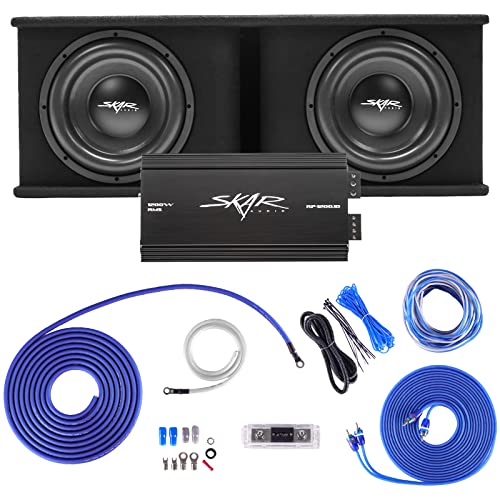

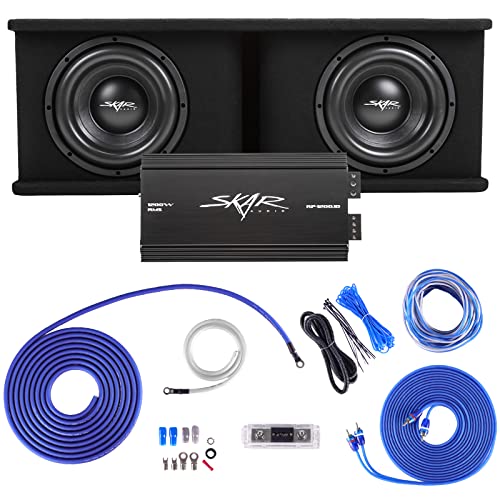
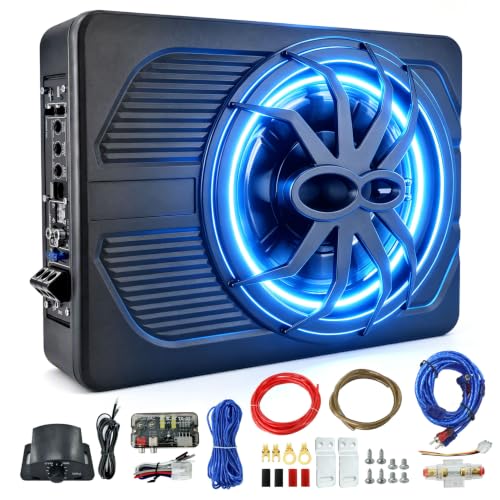
Top 3 picks at a glance
Quick comparison: which subwoofer fits your vehicle?
| Vehicle or listening priority | Recommended format | Useful target | Why it works |
|---|---|---|---|
| Compact hatchback with limited trunk space | Sealed 10-inch | 300–500 watts RMS, 0.6–1.0 cubic feet | Strong extension without sacrificing much cargo room |
| Sedan or SUV prioritizing loud, physical bass | Ported 12-inch | 500–800 watts RMS, 1.75–2.5 cubic feet | Higher output around the tuning frequency |
| Truck behind a seat or under a seat | Shallow 10- or 12-inch | 300–600 watts RMS, manufacturer-specific enclosure | Fits restricted depth while retaining useful low-frequency output |
| Accurate bass for rock, jazz, and acoustic music | Sealed 10-inch or 12-inch | 300–600 watts RMS | Smoother transient response and simpler cabin integration |
| Maximum bass from one subwoofer | Ported 15-inch | 750–1,200 watts RMS, 3–4.5 cubic feet | Moves more air, but needs substantial space and electrical capacity |
What “deep bass” actually requires
Deep bass means more than a high wattage number. A subwoofer must play low frequencies efficiently, move enough air, and operate in an enclosure that supports its design. Frequencies around 20–30 Hz create the deepest rumble, while much of the audible punch in kick drums and bass guitar sits between 40 and 80 Hz.
Driver diameter matters because cone area determines how much air the subwoofer can move. Two 10-inch subwoofers generally move more air than one 15-inch subwoofer, but require twice the enclosure space, amplifier power, wiring, and installation work. A single high-quality 12-inch subwoofer is often the most balanced choice for a daily-driven vehicle.
Power ratings should be compared using RMS power, not peak or maximum power. A subwoofer rated at 500 watts RMS is designed for sustained operation near that level, while a “1,500-watt peak” claim does not tell you what amplifier it can use continuously.
Sealed versus ported enclosures
Sealed boxes: controlled and space-efficient
A sealed enclosure is an airtight box. The trapped air acts like a spring behind the cone, producing controlled movement and a relatively smooth response. Sealed boxes are usually smaller, easier to install, and more forgiving when the enclosure volume is slightly different from the recommendation.
Choose sealed when you want bass that blends naturally with the front speakers, listen to varied music, or have limited trunk space. The tradeoff is efficiency: a sealed sub generally needs more amplifier power to produce the same output as a correctly tuned ported design.
Good examples include the JL Audio 10W3v3 or 12W3v3 in a properly sized sealed enclosure, the Alpine R2-W10D4 in a compact sealed box, and the Rockford Fosgate P3D4-10 when you want a robust daily-use driver.
Ported boxes: louder and more efficient
A ported enclosure uses a vent to reinforce a specific range of bass. Around the tuning frequency, the port contributes substantial output, allowing the system to play louder with less amplifier power. This makes ported boxes attractive for hip-hop, electronic music, and anyone who wants bass you can feel outside the vehicle.
Ported designs need more internal volume and careful construction. The port must have adequate cross-sectional area; a port that is too small can produce audible chuffing. Ported boxes also require a subsonic filter, especially when playing frequencies below the box tuning point, because cone movement can increase rapidly below tuning.
A ported 12-inch enclosure tuned around 32–35 Hz is a strong general-purpose target. Tuning closer to 30 Hz favors deeper extension, while tuning around 38–40 Hz emphasizes louder upper bass but gives up some low-frequency smoothness.
Choosing between 8-, 10-, 12-, and 15-inch drivers
8-inch subwoofers
An 8-inch sub is appropriate when installation space is extremely restricted or when you want to add moderate bass without changing the vehicle’s character. It can improve impact, but it is not the best choice for very deep, high-output bass unless multiple drivers are used.
10-inch subwoofers
A 10-inch model is often the best fit for a compact car. It offers a useful compromise between low-frequency extension, enclosure size, and amplifier demand. A sealed 10-inch sub with a 300–500-watt RMS amplifier can deliver a substantial improvement over factory bass without consuming the entire trunk.
12-inch subwoofers
The 12-inch format is the safest recommendation for most enthusiasts. It moves noticeably more air than a 10-inch driver and can deliver deep bass from either a sealed or ported enclosure. Allow roughly 1.0–1.5 cubic feet for many sealed designs and 1.75–2.5 cubic feet for many ported designs, but always follow the chosen driver’s specification.
15-inch subwoofers
A 15-inch subwoofer is for drivers who prioritize output and low-frequency authority over cargo capacity. It is often more comfortable playing the lowest notes at high volume, but the enclosure may occupy several cubic feet. The vehicle must also support the amplifier’s current draw and the enclosure must be securely mounted.
Power matching: a practical calculation
Suppose you select a subwoofer rated at 600 watts RMS and an amplifier that is 75 percent efficient at the intended load. In a typical 14.4-volt charging system, the approximate current requirement is:
600 watts divided by 14.4 volts divided by 0.75 efficiency equals about 56 amps.
That is only the subwoofer amplifier’s estimated full-output demand; the vehicle’s factory electronics and other amplifiers also require current. If the entire audio system could draw another 25 amps, the electrical system may need to support approximately 80–85 amps above normal vehicle operation during sustained peaks.
This calculation does not mean the amplifier pulls its maximum current continuously. Music has a changing duty cycle, but it shows why a powerful subwoofer may require appropriately sized power cable, a properly rated fuse near the battery, solid ground connections, and an alternator and battery in good condition.
Match an amplifier’s clean RMS output to approximately 75–125 percent of the subwoofer’s RMS rating. For a 500-watt RMS subwoofer, an amplifier capable of roughly 375–625 watts RMS at the correct impedance is a sensible range.
Installation space is a specification, not an afterthought
Measure usable space before choosing the subwoofer. Record width, height, depth, hatch or trunk opening dimensions, and the position of seats or spare-tire hardware. A box that fits inside the trunk may not pass through the opening.
Remember that external enclosure dimensions are larger than the listed internal air volume. For example, a sealed box measuring 24 by 14 by 12 inches has a gross volume of:
24 multiplied by 14 multiplied by 12, divided by 1,728, equals 2.33 cubic feet.
After subtracting the wood, subwoofer basket, and bracing, the net volume may be around 1.9–2.1 cubic feet. That may be suitable for some 12-inch drivers but too large for a compact 10-inch design. Ported boxes lose additional internal space to the port and therefore need careful net-volume calculations.
Shallow subwoofers solve depth problems, not every space problem. Models such as the JL Audio 10TW3-D4, JL Audio 12TW3-D4, Kicker CompRT, and Rockford Fosgate P3SD4-10 are designed for reduced mounting depth, but they still need an enclosure with the correct air volume. A shallow driver in an undersized box can sound constrained and may not reach its intended low-end performance.
Recommended buying paths
Best compact daily-driver setup
Choose a sealed 10-inch sub rated around 300–500 watts RMS, paired with a mono amplifier in the same power range. This approach suits small sedans, hatchbacks, and factory systems where clean integration matters more than maximum volume. The JL Audio 10W3v3, Alpine R2-W10D4, and Rockford Fosgate P3D4-10 are examples of suitable driver classes and models.
Best all-around deep-bass setup
Choose a 12-inch subwoofer rated around 500–800 watts RMS. Use a sealed enclosure for balanced music reproduction or a ported enclosure tuned near 32–35 Hz for stronger output. The JL Audio 12W3v3 and Kicker CompR 12 are examples worth considering, provided the enclosure and impedance match the amplifier.
Best space-saving setup
Choose a shallow 10- or 12-inch subwoofer in a purpose-built enclosure. This is appropriate for pickup trucks, sports cars, and vehicles where the sub must fit under a seat or behind a passenger seat. Expect a little less ultimate output than a conventional deep-basket driver, but the installation may be far more practical.
Best high-output setup
Choose a ported 15-inch subwoofer or two 12-inch subwoofers, with at least 750 watts RMS and potentially more depending on the drivers. Confirm that the enclosure fits, the amplifier supports the final impedance, and the vehicle’s charging system can supply the required current. This is a system-building project rather than a simple accessory upgrade.
Settings that protect the system and improve bass
- Set the low-pass filter around 70–90 Hz so the subwoofer handles bass without becoming easy to locate.
- Start with a 12 dB-per-octave slope and adjust by ear or measurement for a smooth transition with the door speakers.
- Use a 25–30 Hz subsonic filter for a ported enclosure tuned around 32–35 Hz.
- Keep bass boost at zero initially. Excessive boost can consume amplifier headroom and cause clipping.
- Set the phase to 0 degrees, then compare it with 180 degrees at the crossover region. Keep the setting that produces stronger, smoother bass at the driver’s seat.
- Secure the enclosure so it cannot move during braking, and protect power wiring with a fuse close to the battery.
Frequently asked questions
Do I need one subwoofer or multiple subwoofers?
One high-quality 12-inch subwoofer is often the most balanced choice for a daily-driven vehicle. Two 10-inch subwoofers generally move more air than one 15-inch subwoofer, but they require twice the enclosure space, amplifier power, wiring, and installation work. Choose multiple drivers only when you have the available space and electrical capacity.
How can I tell whether a subwoofer will fit my vehicle?
Measure the usable width, height, depth, hatch or trunk opening, and the position of seats or spare-tire hardware before buying. The enclosure must pass through the opening, not merely fit inside the trunk. Also account for external box dimensions, wood, the subwoofer basket, bracing, and the additional space taken by a port.
What does a subsonic filter do in a car audio system?
A subsonic filter helps protect a subwoofer in a ported enclosure from excessive cone movement below the box tuning point. Ported designs should use one, especially when playing frequencies below tuning. Without appropriate filtering, cone movement can increase rapidly below the enclosure’s tuning frequency, potentially reducing controlled operation.
Can a factory electrical system support a powerful subwoofer amplifier?
It depends on the amplifier’s current demand and the vehicle’s existing electrical load. A 600-watt amplifier at 14.4 volts and 75 percent efficiency may require about 56 amps at full output. Factory electronics and other amplifiers add to that demand, so the battery, alternator, wiring, fuse, and ground connections must be adequate.
Why should I use RMS ratings instead of peak wattage?
RMS ratings indicate the sustained power a subwoofer is designed to handle, while peak or maximum figures do not show what an amplifier can supply continuously. Match clean amplifier output to approximately 75–125 percent of the subwoofer’s RMS rating at the correct impedance, and set gain with a voltage target or distortion-detection method rather than using it as a volume control.
Final verdict
For most vehicles, a 12-inch subwoofer in a correctly designed enclosure is the best balance of deep bass, output, and practicality. Choose a sealed 10-inch model when space and musical control matter most, a ported 12-inch model when you want louder low end, or a shallow subwoofer when installation depth determines the entire build. The enclosure’s net volume, the amplifier’s RMS output, and the vehicle’s electrical capacity matter just as much as the driver’s size.