The best headphones for studio recording are the beyerdynamic DT 770 PRO for dependable closed-back tracking, the Audio-Technica ATH-M50x for a versatile all-rounder, and the Sennheiser HD 600 or beyerdynamic DT 900 PRO X when mixing accuracy matters more than isolation.
The right choice depends on where the headphones sit in your workflow. Closed-back headphones prevent microphone bleed during vocal and instrument recording, while open-back models usually provide a more natural soundstage for mixing. No single design is ideal for both jobs, so the comparison below focuses on isolation, frequency response, comfort, and cable practicality.
As an Amazon Associate we earn from qualifying purchases at no extra cost to you.



Our Top Picks
 Audio-Technica ATH-M20x Professional Studio Monitor HeadphonesATH-M20X11.4 x 10 x 4.1 inches0.5 poundsCheck on Amazon
 Sony MDR7506 Professional Large Diaphragm HeadphonePack of 11 x 1 x 1 inches0.5 PoundsCheck on Amazon
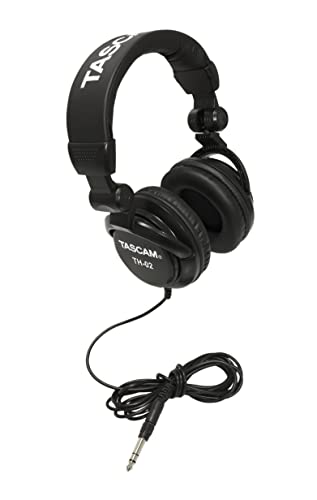 TASCAM TH-02 Professional Studio Monitor HeadphonesMedium7 x 3.5 x 8.5 inches0.7 PoundsCheck on Amazon

Top 3 picks at a glance
Best studio headphones at a glance
| Model | Design | Impedance | Cable options | Best use | Typical market range |
|---|---|---|---|---|---|
| beyerdynamic DT 770 PRO | Closed-back | 32, 80, or 250 ohms | Fixed straight or coiled cable, depending on version | Vocal and instrument tracking | Usually $140–$200 |
| Audio-Technica ATH-M50x | Closed-back | 38 ohms | Detachable; straight and coiled cables included | Tracking, editing, and general production | Usually $150–$180 |
| Sennheiser HD 280 Pro | Closed-back | 64 ohms | Fixed coiled cable | Maximum isolation on a budget | Usually $90–$130 |
| Sony MDR-7506 | Closed-back | 63 ohms | Fixed coiled cable | Speech, broadcast, and detailed editing | Usually $90–$120 |
| beyerdynamic DT 900 PRO X | Open-back | 48 ohms | Detachable mini-XLR cable | Mixing and long editing sessions | Usually $250–$300 |
| Sennheiser HD 600 | Open-back | 300 ohms | Detachable dual-sided cable | Midrange and tonal balance decisions | Usually $300–$450 |
The best closed-back headphones for tracking
beyerdynamic DT 770 PRO: best overall for recording
The DT 770 PRO is a strong default for vocalists, guitarists, podcasters, and home-studio musicians because its closed earcups reduce headphone spill into a microphone. Its over-ear pads are comfortable for extended sessions, and the broad stereo presentation makes it easier for performers to hear a click track and backing arrangement.
Its sound is not perfectly flat. The bass and treble are prominent enough to make the presentation feel energetic, while the upper treble can expose hiss and harshness. That can help with editing, but it also means you should not use its tonal balance alone to decide whether a mix has enough high-frequency energy.
Choose the 32-ohm version for laptops, phones, controllers, and modest interfaces. The 80-ohm version is a useful middle ground for most USB audio interfaces. The 250-ohm version is best reserved for interfaces or headphone amplifiers with ample voltage output. Cable choice varies by version, so confirm whether you want a straight or coiled lead before buying.
Audio-Technica ATH-M50x: best for flexible cable setups
The ATH-M50x is a practical choice when one pair of headphones must handle tracking, editing, and casual mix checks. Its earcups swivel and fold, and its detachable cable system is more convenient than the fixed cables found on many studio classics. The package commonly includes straight and coiled cable options, allowing you to use a short lead at a desk or a longer coiled cable near a microphone stand.
The presentation has a noticeable low-end and upper-mid/treble character rather than a strictly neutral response. Bass-heavy productions may sound more controlled than they really are, so check kick and sub-bass decisions on speakers or a second reference pair. For performers, however, the lively sound and strong isolation are often more engaging than a very flat headphone response.
Sennheiser HD 280 Pro: best when isolation is the priority
The HD 280 Pro is particularly useful for singers recording close to a sensitive condenser microphone. Its closed construction provides substantial passive isolation without relying on batteries or electronic noise cancellation. The folding design also makes it easy to store in a compact recording setup.
The clamp can feel firm, especially during the first few sessions, and the fixed coiled cable is less convenient than a detachable system. Its sound is relatively controlled for tracking and spoken-word work, but comfort and fit should take priority: a performer who constantly adjusts tight headphones will produce a less consistent recording.
Sony MDR-7506: best for editing and spoken word
The MDR-7506 remains useful for dialogue editing, broadcast monitoring, and identifying clicks, mouth noise, and electrical hum. Its upper-mid and treble emphasis can bring small problems forward, which is helpful during cleanup. That same emphasis can make sibilance seem more severe than it is, so use a neutral reference before applying aggressive de-essing.
The fixed coiled cable is durable and familiar in production environments, but it is not the best choice if you need a replaceable or low-profile cable. The earcups are also less spacious than some modern over-ear alternatives.
The best open-back headphones for mixing
beyerdynamic DT 900 PRO X: the practical open-back choice
The DT 900 PRO X offers a relatively accessible combination of open-back spaciousness, moderate 48-ohm impedance, and a detachable mini-XLR cable. It is easier to drive than many high-impedance reference headphones, making it a sensible option for a desktop interface, laptop dongle, or compact production computer.
Open earcups allow air and sound to pass through, reducing the enclosed sensation that can make panning and reverb judgments feel exaggerated. They also leak heavily, so do not use this model beside a live microphone. The DT 900 PRO X is well suited to balancing vocals, judging stereo width, and making longer editing sessions less fatiguing.
Sennheiser HD 600: best for midrange accuracy
The HD 600 is a long-standing reference for vocal, guitar, piano, and snare decisions because its midrange is clear and comparatively even. It is especially valuable when a mix sounds acceptable on consumer headphones but loses vocal intelligibility or acoustic detail on other systems.
Its 300-ohm impedance does not automatically make it superior, but it does increase the importance of the headphone output. A weak source may reach a usable level while sounding compressed or lacking headroom. The HD 600 is open-back, has no useful tracking isolation, and emphasizes accurate tonal judgment over powerful bass impact.
How to choose the right impedance and power
Impedance is only one part of the drive requirement; sensitivity also matters. As a practical example, suppose a headphone needs about 100 dB SPL from a 1 mW reference level. Reaching 110 dB requires ten times the power because a 10 dB increase is a tenfold power increase. For a 300-ohm headphone, that is approximately:
Voltage = √(power × resistance) = √(0.010 W × 300 Ω) ≈ 1.73 V RMS.
That is a peak-oriented listening calculation, not a recommended everyday volume. It shows why a 300-ohm model benefits from a capable interface or headphone amplifier, particularly when monitoring quiet recordings with headroom. For a 32- to 80-ohm closed-back model, most modern audio interfaces can usually provide comfortable working levels, but check the interface specification if the output sounds strained or unusually quiet.
Decision matrix: match the headphones to your setup
| Your situation | Choose | Why |
|---|---|---|
| Recording vocals with a condenser microphone | DT 770 PRO or HD 280 Pro | Closed isolation reduces click and backing-track bleed. |
| One pair for a laptop and USB interface | ATH-M50x or DT 770 PRO 32-ohm | Moderate impedance and practical compatibility. |
| Mixing in a quiet room | DT 900 PRO X or HD 600 | Open-back designs make space and panning easier to judge. |
| Mixing late at night without speakers | Closed-back model plus cross-checks | Isolation prevents room noise, but use multiple references for translation. |
| Frequent cable replacement or different desk layouts | ATH-M50x or DT 900 PRO X | Detachable cables are easier to replace and route. |
| Dialogue cleanup and noise detection | Sony MDR-7506 | Upper-frequency detail can reveal clicks, hiss, and mouth noise. |
How to use studio headphones accurately
- Set a repeatable monitoring level. Begin quietly, raise the level only until speech and kick transients are clear, and avoid making loudness your quality test. Louder playback often makes bass and detail seem artificially better.
- Use closed-back headphones for recording. Keep the performer’s cue mix lower than necessary and raise only the elements needed for timing. Lower cue volume reduces bleed and listening fatigue.
- Use open-back headphones for balance decisions. Check vocal level, reverb tails, panning, and midrange masking, then verify bass and sub-bass on speakers or another headphone design.
- Compare at matched loudness. If one pair is louder by even a few decibels, it may appear clearer and more exciting. Match levels before judging frequency response.
- Account for the seal. Glasses, hair, and loose pads can reduce low-frequency seal on closed-back headphones. If the bass changes when you press the cups gently against your head, fit is affecting the result.
Frequently asked questions
Can I use open-back headphones to record vocals?
They are not a good choice beside a live microphone because open-back headphones leak heavily. Use a closed-back model such as the DT 770 PRO or HD 280 Pro instead; their isolation reduces headphone spill into the microphone. Open-back models are better suited to mixing in a quiet room, where isolation is less important.
Will closed-back headphones give me an accurate mix?
They can be useful for monitoring, but the article recommends cross-checking mix decisions on speakers or another reference. Closed-back models may have a tonal character that affects judgments—for example, the ATH-M50x has noticeable low-end and upper-mid/treble character. Open-back headphones are suggested for balance, panning, and reverb decisions in a quiet room.
Why does my closed-back headphone bass sound different when I adjust the fit?
The seal can affect the bass. Glasses, hair, or loose pads may reduce the low-frequency seal, and the article suggests noticing whether the bass changes when you gently press the cups against your head. Check the fit before treating that change as a mix problem.
Should I choose a fixed or detachable headphone cable?
Choose based on how you use and route the cable. A detachable system, such as the ATH-M50x or DT 900 PRO X, is easier to replace or adapt to different desk layouts. Fixed coiled cables are used on models such as the Sony MDR-7506 and HD 280 Pro, but are less convenient if you need a replaceable or low-profile cable.
How loud should I listen while monitoring?
Listen quietly, raising the level only until speech and kick transients are clear. The article advises against using loudness as a quality test because louder playback can make bass and detail seem artificially better. Keep a repeatable monitoring level, and keep a performer’s cue mix as low as needed for timing.
Final recommendation
For most recording setups, start with the beyerdynamic DT 770 PRO, selecting the impedance and cable style that suit your interface. Choose the ATH-M50x if detachable cables and folding portability matter more. For mixing, add an open-back reference such as the DT 900 PRO X for easier drive or the HD 600 for focused midrange decisions. The most reliable workflow is not trusting one headphone completely: track with isolation, mix with a suitable open design when possible, and confirm important low-end decisions on another playback system.