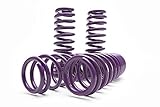
The best lowering springs for a better ride are usually Eibach Pro-Kit or H&R Sport for a moderate drop and controlled comfort, while Swift Spec-R, Eibach Sportline, and H&R Super Sport suit drivers who prioritize sharper handling over maximum ride softness.
As an Amazon Associate we earn from qualifying purchases at no extra cost to you.



Our Top Picks
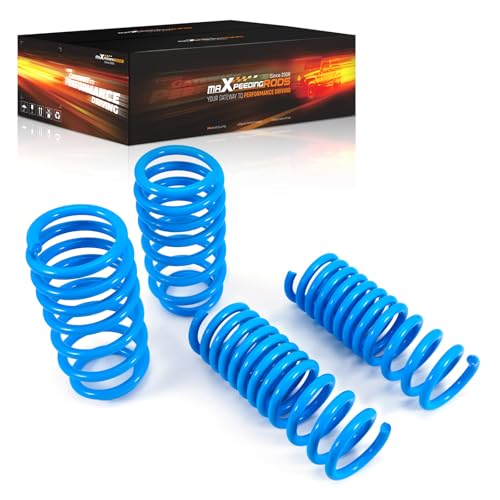


Top 3 picks at a glance
Best Lowering Springs Compared
Lowering springs replace the factory coil springs with shorter, stiffer springs. The result is a lower center of gravity, less body roll, and a more deliberate steering response. The trade-off is reduced suspension travel and, depending on the spring, a firmer ride or greater risk of bottoming out.
| Spring line | Typical drop | Ride character | Best use | Alignment impact |
|---|---|---|---|---|
| Eibach Pro-Kit | About 0.8–1.5 inches | Firm but generally street-friendly | Daily driving with improved stance and handling | Usually moderate; verify camber after installation |
| H&R Sport | About 1.0–1.8 inches | Noticeably firmer, controlled | Drivers wanting a more aggressive balance | Often requires adjustment, especially at the rear |
| Swift Spec-R | About 1.0–1.5 inches | Performance-focused without being race-only | Fast street cars and occasional track use | Alignment check is essential |
| Eibach Sportline | About 1.5–2.3 inches | Firm, with less bump-travel margin | Low visual stance and sharper turn-in | Frequently needs correction hardware |
| H&R Super Sport | About 1.5–2.5 inches | Firm and aggressive | Appearance-led builds and spirited driving | Often significant; inspect tire wear closely |
| TEIN S.Tech | About 1.0–2.0 inches | Sporty, with vehicle-dependent comfort | Budget-conscious street builds | Required after installation |
These are broad ranges rather than guaranteed results. The actual drop depends on the vehicle, engine weight, existing suspension condition, wheel and tire combination, and whether the car has a performance or standard suspension package.
Which Spring Is Best for Your Situation?
| Your priority | Best starting choice | Why | What to watch |
|---|---|---|---|
| Daily commute and rough roads | Eibach Pro-Kit | Moderate lowering preserves more bump travel | Do not combine with worn dampers |
| Sharper handling without an extreme drop | H&R Sport or Swift Spec-R | Higher spring rates reduce roll and pitch | Confirm damper compatibility |
| Lowest practical street stance | Eibach Sportline or H&R Super Sport | More visual change and stronger body control | Greater bump-stop and alignment concerns |
| Lower cost than coilovers | TEIN S.Tech or vehicle-specific H&R Sport | Simple fixed-height upgrade | Height cannot be adjusted later |
| Frequent track days | Swift Spec-R or a matched coilover system | More performance-oriented rate and response | A fixed spring may not provide enough adjustment |
Drop Height: Moderate Versus Aggressive
A drop of roughly 0.75–1.25 inches is normally the easiest compromise. It reduces the visual wheel gap while retaining useful suspension travel. This range is also less likely to create severe tire rubbing or excessive negative camber.
Once the drop approaches 1.5 inches or more, the suspension has less room to compress before contacting the bump stops. A car can feel stiff not because the spring itself is poorly designed, but because it is operating on the bump stops too often. An aggressive drop may also require shorter dampers, modified bump stops, adjustable camber arms, or a different wheel offset.
Measure before ordering. Record the distance from the wheel-center hub to the fender lip at all four corners, rather than measuring from the ground. Hub-to-fender measurements are not distorted by tire size. After installation, expect the car to settle slightly over the first several drives.
Spring Rates and Ride Comfort
Spring rate describes how much force is needed to compress a spring a given distance. A higher rate generally reduces body movement but transmits more impact through the chassis. The important point is that rate alone does not predict comfort: damper matching, suspension geometry, bump-stop design, tire sidewall, and road quality matter just as much.
Many manufacturers publish drop figures but do not publish complete front and rear rates for every application. Avoid choosing solely by a claimed percentage increase. A vehicle with a soft factory spring may tolerate a substantial rate increase, while a car that already has sport suspension may become unpleasant with a similar-looking lowering spring.
For a better ride, prioritize a moderate drop and a progressive or carefully matched spring design. Progressive springs use an initial softer portion for small road imperfections and become firmer as compression increases. They are not automatically superior, but they can work well on street cars that need both comfort and roll control.
What Changes in Handling?
- Less body roll: The car stays flatter during cornering, making steering inputs feel more immediate.
- Less nose dive: Firmer front springing can reduce forward weight transfer under braking.
- Less squat: Firmer rear springing helps control acceleration squat.
- Lower center of gravity: Reducing ride height can reduce the leverage that causes body movement.
- Reduced compliance: On uneven corners, a spring that is too stiff can make the tires lose contact more easily.
Lowering does not automatically improve grip. If the new springs push the tires onto the bump stops, introduce too much negative camber, or overwhelm the original dampers, the car may feel more aggressive while cornering less consistently.
Compatibility: Check More Than the Vehicle Name
Buy only a spring kit listed for the exact chassis, body style, drivetrain, engine, and suspension package. A spring for a four-cylinder sedan may not be correct for a heavier V6, hybrid, wagon, or all-wheel-drive version. Front axle weight is particularly important because it affects ride height and available travel.
Also check whether the kit is intended for standard dampers, factory sport dampers, or shortened performance dampers. A modest Pro-Kit-style drop may work acceptably with healthy original dampers, but a larger drop can leave a standard damper operating outside its ideal range. If the dampers are leaking, bouncy, or more than roughly 50,000–75,000 miles old, replacing them during the spring installation is usually more sensible than fitting new springs around worn units.
Alignment Needs After Lowering
An alignment is not optional. Lowering changes the angles of the control arms, which commonly increases negative camber and alters toe. Toe is especially important because a small error can rapidly wear the inside or outside edges of the tires.
As a practical example, suppose a rear axle gains 1.2 degrees of negative camber and 0.10 degrees of toe-in per side after lowering. The car may corner well, but the extra camber can reduce inner-edge tread life, while excessive toe can scrub the tires during every mile of straight-line driving. The correct fix is not simply to lower tire pressure; it is to measure and adjust the geometry.
- Ask the shop for before-and-after alignment printouts.
- Set toe within the vehicle manufacturer’s preferred range.
- Use adjustable camber arms or bolts if the factory adjustment cannot restore acceptable geometry.
- Recheck alignment after the springs have settled, especially if the initial measurement was performed immediately after installation.
Installation Complexity and Hidden Costs
Spring installation is a moderate-to-advanced suspension job. It normally requires removing the strut assemblies, compressing the springs safely, transferring the upper mounts, and reassembling everything to the correct torque. A high-quality external spring compressor and careful safety procedures are essential; a compressed spring stores substantial energy.
Budget for more than the springs. A realistic street-car installation may also need new upper mounts, bearings, dust boots, bump stops, alignment, and possibly dampers. Parts and labor commonly place a spring upgrade in the general range of $600–$1,500, depending on vehicle design and which supporting components are replaced. Rusted fasteners, seized adjusters, or multi-link rear suspension can increase that figure.
After installation, verify that the springs seat correctly, the coils do not bind, brake hoses are not stretched, and the tires clear the fenders and suspension components at full steering lock and full compression. Drive gently at first, listen for clunks, and recheck fasteners according to the manufacturer’s instructions.
Frequently asked questions
How can I measure my car’s current ride height before choosing springs?
Measure from the center of each wheel hub to the fender lip. Take readings at all four corners, since this avoids tire-size effects and gives you a baseline to compare with the car’s ride height after installation. The actual drop can vary with the vehicle, engine weight, suspension condition, and wheel and tire combination.
Will lowering springs work with my original dampers?
They may work with healthy original dampers when the drop is modest, but compatibility depends on the spring kit and vehicle. A larger drop can leave standard dampers operating outside their ideal range. If the dampers are leaking or bouncy, or are more than roughly 50,000–75,000 miles old, consider replacing them during the spring installation.
Why might my lowered car feel stiff even with suitable springs?
The suspension may be contacting its bump stops too often because lowering reduces compression travel. Comfort also depends on damper matching, suspension geometry, bump-stop design, tire sidewall, and road quality—not just spring rate. This is more of a concern as the drop approaches 1.5 inches or more.
What should I check after the springs are installed?
Confirm that the springs seat correctly, the coils do not bind, brake hoses are not stretched, and the tires clear the fenders and suspension components at full steering lock and compression. Drive gently at first, listen for clunks, and recheck fasteners according to the manufacturer’s instructions. Have the alignment checked after installation.
Can lowering springs improve grip on uneven roads?
Not necessarily. Lowering can reduce body roll, but a spring that is too stiff may make the tires lose contact more easily on uneven corners. Grip can also suffer if the springs push the tires onto the bump stops, create too much negative camber, or overwhelm the original dampers.
Final Recommendation
For most owners seeking the best lowering springs without sacrificing everyday usability, start with Eibach Pro-Kit. Choose H&R Sport or Swift Spec-R if sharper response is more important than softness. Select Eibach Sportline or H&R Super Sport only when you accept a firmer ride, reduced travel, and a greater need for alignment and clearance work. Whichever line you choose, match it to healthy dampers, confirm exact vehicle compatibility, and complete a four-wheel alignment before judging the finished ride.