Our Top Picks


Best Restored Hermès 3000 Vintage Typewriters
The best restored Hermès 3000 vintage typewriters are the machines with documented cleaning and adjustment, even letter impressions, a keyboard layout you can use comfortably, an intact carrying case, and a seller who will support you after delivery—not necessarily the example with the newest paint or highest asking price.
Quick comparison: which restored Hermès 3000 is right for you?
| Buyer situation | Best choice | What to prioritize | Acceptable market range |
|---|---|---|---|
| Daily writing at home | Later Hermès 3000 with a clean, consistent action | Quiet carriage, reliable ribbon advance, fresh platen assessment | Usually $350–$650 |
| Portable writing or travel | Complete machine with sound original case | Case latches, handle, feet, carriage lock and manageable weight | Usually $400–$750 |
| Collector display | Unusually clean example from a desirable production period | Original decals, body finish, matching case and accessories | Usually $500–$900 |
| Budget first typewriter | Cosmetically imperfect but mechanically serviced example | Typing test, return policy and low-risk shipping | Usually $250–$450 |
| Non-US keyboard user | Machine with the correct national layout | Physical key arrangement, punctuation and return policy | Usually $350–$700 |
These are broad 2026 market ranges rather than fixed valuations. A complete original case, rare keyboard, excellent finish or professional restoration can move a machine above them, while missing parts and uncertain condition should move the price down.
As an Amazon Associate we earn from qualifying purchases at no extra cost to you.

What makes one Hermès 3000 better than another?
The Hermès 3000 was produced in multiple periods and regional configurations. Two machines carrying the same model name can differ in body details, keyboard layout, platen condition, ribbon system, case design and the quality of previous repairs. Treat the model name as a starting point, not a complete specification.
1. Restoration records
Ask for a dated description of the work, not just the word “refurbished.” A useful record should identify which of the following were completed:
- Dust and debris removal from the segment, typebars and carriage rails.
- Cleaning of old oil and replacement with appropriate, minimal lubrication.
- Inspection of escapement, margin mechanism, tabulator and carriage-return operation.
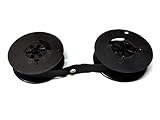
- Ribbon installation and confirmation that both ribbon spools advance correctly.
- Platen and feed-roller assessment, including whether paper slips or feeds unevenly.
- Repair or replacement of broken springs, feet, knobs, screws or case hardware.
- Alignment check showing that upper- and lower-case characters strike in the same position.
“Serviced” can mean anything from a careful mechanical overhaul to a quick wipe-down. Give more weight to a repair log, close-up photographs and a typing sample than to a polished exterior.
2. Typing condition
A restored machine should be judged by the page it produces. Request a scan or photograph showing several lines of mixed upper- and lower-case text, numbers, punctuation and repeated characters. Look for letters that sit too high or low, weak impressions, double strikes, skipped spaces and inconsistent spacing.
Ask specifically whether the machine can type continuously across a full line without carriage hesitation. A carriage that works during a short demonstration can still reveal problems near the left or right margin. The seller should also confirm that the backspace, shift, margin release, line-spacing selector and carriage-return lever work.
Platen hardness deserves realistic expectations. Many vintage platens are firmer than new ones, which can make the machine louder and produce sharper impact. That is not automatically a defect. The important questions are whether paper feeds evenly, whether characters print consistently and whether the seller has disclosed cracks, flat spots or excessive noise.
Keyboard layout is a buying decision, not a detail
Hermès 3000 machines were sold with different national keyboard arrangements. A machine imported from another country may have a perfectly functional keyboard but unfamiliar placement for punctuation, symbols, accents or special characters.
Do not rely on a seller’s “English keyboard” label alone. Ask for a straight-on photograph of every key and compare it with the layout you normally use. Check:
- QWERTY, QWERTZ or AZERTY letter arrangement.
- Quotation marks, apostrophe, hyphen and parentheses.
- Numbers and symbols accessed through the shift key.
- Accent keys or dead keys on international versions.
- Whether the key legends match the machine’s actual mechanical output.
Replacement keycaps rarely solve every layout issue, because the underlying type slug may still produce a different character. If you write in English every day, the correct physical layout is usually worth paying more for.
Case and accessories: inspect the complete package
The original carrying case is useful protection, but it can also create problems. Check that the case closes without forcing the machine, that its latches hold securely and that its handle is not separating from the shell. Interior foam or lining should not be crumbling onto the typewriter.
Confirm which accessories are included and whether they are functional:
- Original or compatible power-free ribbon and both ribbon spools.
- Dust cover, if supplied.
- Carriage lock or transport restraint.
- Paper support and any removable knobs or guides.
- Service notes, user manual or replacement parts.
Accessories should not outweigh mechanical condition. A handsome case cannot compensate for a slipping escapement, seized carriage or badly misaligned typebars. Conversely, a missing case is a fair reason to negotiate, especially if you plan to transport the machine.
Use this buyer decision matrix before paying
| If you value… | Choose… | Accept only if… | Walk away when… |
|---|---|---|---|
| Reliable daily typing | Mechanically documented restoration | A full-line typing sample is available | The seller cannot explain carriage or ribbon work |
| Authentic appearance | Clean original finish with limited cosmetic repair | Mechanical condition is documented separately | New paint hides corrosion or altered markings |
| Easy transport | Complete case and secure hardware | Case closes around the machine without pressure | Handle, hinges or latches are cracked |
| Low ownership risk | Seller with a written return period | Packaging and damage claims are clearly explained | The sale is final despite undisclosed condition |
| Special characters | Keyboard matching your language | Key legends and type samples agree | The seller supplies only a generic stock photograph |
How to evaluate a listing step by step
Step 1: Verify the exact machine
Request photographs of the front, rear, keyboard, carriage, underside and serial or identification markings where visible. Compare every photograph with the description. This catches mismatched cases, replacement panels and images reused from another listing.
Step 2: Read the repair evidence
Separate completed work from recommended work. “Platen could be replaced” means it has not been replaced. “Ribbon included” does not prove that the ribbon reverses correctly. Ask for the date of the service because storage after restoration can introduce dust, dried lubricant or transport damage.
Step 3: Examine a real typing sample
Look for consistent character alignment, even darkness and clean spacing. A sample should include repeated letters, capitals, numbers and punctuation. If only an attractive paragraph is shown, ask for a second sample containing the characters that are most often problematic.
Step 4: Calculate the delivered cost
Use a simple total rather than comparing sticker prices:
Total cost = machine price + shipping + insurance or packing charge + immediate supplies + expected repair reserve.
For example, a $425 machine with $70 shipping, $20 of ribbon and a conservative $75 repair reserve has a practical first-year budget of $590. A $500 machine with documented service and included supplies may therefore be the safer purchase than a $375 machine with no history.
Step 5: Confirm support before ordering
Ask what happens if the carriage arrives out of alignment, a key becomes detached or a ribbon does not advance. Strong seller support includes careful packaging instructions, a defined damage-reporting window and access to troubleshooting or a return process. Photograph the unopened package and the machine immediately if shipping damage is suspected.
Common red flags in “restored” Hermès 3000 listings
- Only exterior photographs, with no page sample.
- “Works” without details about every major mechanism.
- Heavy new paint, polished metal or replacement decals presented as original condition.
- Unclear keyboard photographs or a description that says only “international.”
- A case described as included without photographs of its hinges, handle and interior.
- Excessive oil visible around the segment or carriage rails.
- No disclosure of missing feet, broken plastic, stains, corrosion or hard-to-find parts.
- No return terms for a machine that has not been demonstrated typing.
Frequently asked questions
How can I tell whether a Hermès 3000 has a useful restoration history?
Ask for a dated repair description that distinguishes completed work from recommended work. It should explain cleaning, lubrication, carriage and escapement inspection, ribbon advancement, platen and feed-roller condition, repairs to hardware, and alignment checks. Give more weight to a repair log, close-up photographs, and a real typing sample than to the word “refurbished” or a polished exterior.
What should a Hermès 3000 typing sample include?
A useful sample should show several lines of mixed upper- and lower-case text, numbers, punctuation, and repeated characters. Examine whether characters align consistently, impressions are even, spacing is clean, and there are no double strikes or skipped spaces. Ask whether the machine types continuously across a full line and whether the carriage works near both margins.
Can I use a Hermès 3000 with an unfamiliar keyboard layout?
You can, but an unfamiliar layout may place punctuation, symbols, accents, or special characters differently from what you expect. Request a straight-on photograph of every key and compare it with your normal layout. Check the letter arrangement, shifted symbols, quotation marks, apostrophe, hyphen, parentheses, and any accent or dead keys before ordering.
What should I check on the carrying case before buying?
Check that the case closes without forcing the machine, its latches hold securely, and the handle is not separating from the shell. Look for crumbling interior foam or lining that could fall onto the typewriter. Also confirm whether the case includes a carriage lock or transport restraint, paper support, dust cover, and other listed accessories.
What should I do if a restored Hermès 3000 arrives damaged?
Ask the seller about the damage-reporting window, packaging expectations, troubleshooting help, and return process before ordering. If shipping damage is suspected, photograph the unopened package and the machine immediately. A defined support process reduces ownership risk, while a sale that is final despite undisclosed condition provides less protection if the machine arrives with a problem.
Final buying advice
For most buyers, the best restored Hermès 3000 is a mechanically documented, correctly laid-out machine with a convincing full-line typing sample and a sound case—not the rarest color or the most aggressively polished example. Spend first on typing condition and seller support, then on cosmetics and accessories. If the listing answers how the machine was restored, how it types, which keyboard it has, what arrives in the box and what support is available afterward, you have enough information to compare it responsibly with other restored examples.