A wired home router decision usually starts with a simple question: do you want a box that mostly hands out Ethernet connections and firewall rules, or a full wireless router that also happens to have gigabit LAN jacks? The keyword “wired” tells you the cables matter more than the antennas. Maybe you have a desktop, a console, a network storage drive and a printer all within reach of a patch panel, and the Wi-Fi is only there for phones. In that setup, WAN failover, VPN support and gigabit LAN ports count for more than a headline wireless speed number.
This guide is for people shopping for a home or home-office router in 2026 who plan to plug most of their gear in with Ethernet. It covers two business-style wired routers and five wireless models that still give you gigabit wired ports, so you can see where each approach makes sense. Everything below is judged from the product titles only, so treat it as a shortlist to verify against the full spec sheets before you buy.
Our Top Picks
 TP-Link AC1200 Gigabit Dual Band WiFi RouterWi-Fi 5 AC12008.46 x 4.92 x 1.81 inches0.71 poundsCheck on Amazon
 ASUS RT-AX1800S Dual Band WiFi 6 Extendable RouterRouter9.06 x 5.28 x 2.2 inches0.82 poundsCheck on Amazon

Top 3 picks at a glance
Quick Picks
As an Amazon Associate we earn from qualifying purchases at no extra cost to you.



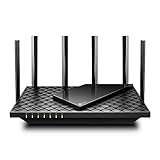
| Product | Best for | Key spec from the title |
|---|---|---|
| TP-Link ER605 | Wired-first home office with two internet lines | Up to 3 WAN Ethernet ports plus 1 USB WAN, SPI firewall |
| TP-Link Archer A6 | Small apartment on a tight budget | AC1200 dual band, MU-MIMO, 4 antennas |
| TP-Link AC1900 | Mid-sized home with many devices | AC1900 dual band, MU-MIMO |
| TP-Link Deco X55 | Larger homes that need wired mesh nodes | AX3000 WiFi 6, 3 gigabit ports per unit |
| ASUS ExpertWiFi EBG15 | Security-minded home office | IPS intrusion prevention, Layer 7 firewall |
| ASUS RT-AX1800S | Families wanting built-in security and parental control | WiFi 6 dual band, AiMesh compatible |
| TP-Link Archer AX73 | Streaming and gaming households | AX5400 WiFi 6 dual band gigabit |
How to Choose
Count your WAN and LAN needs first
Before comparing wireless standards, list what actually plugs in. Every router here advertises gigabit wired connections, but only the two business-style models list multiple WAN ports and a USB WAN. That matters if you want a second internet line or a cellular backup. If you only have one modem, one WAN port is all you need, and extra LAN jacks matter more. Four LAN ports is the usual minimum; if you have more than four wired devices, plan on a small unmanaged switch.
Match the wireless tier to your leftover Wi-Fi use
If Wi-Fi is secondary, an AC1200 or AC1900 class model covers phones and laptops without paying for extra bandwidth. WiFi 6 models such as AX1800, AX3000 and AX5400 handle more simultaneous devices and are the safer pick if you expect the router to last several years. Do not chase the biggest number: the AX label is a combined theoretical figure across bands, and real speeds depend on your internet plan and walls.
Look at security and VPN features
Wired-focused routers earn their place with firewall features. The titles mention SPI firewall, IPS intrusion prevention, Layer 7 firewall, built-in VPN and subscription-free network security. Check whether security features need a monthly plan, because some brands lock them behind subscriptions. VPN support in a router lets you reach a home network remotely or route traffic through a provider, which a plain consumer router may skip.
Plan for expansion with mesh or AP mode
Coverage claims in titles are maximums. A mesh set with a 6500 sq ft claim assumes open floor plans. Ethernet backhaul, meaning a cable between nodes, almost always beats wireless links, so a wired-heavy home is a good fit for mesh. Features such as OneMesh, AiMesh and AP mode let you add a second unit later. Budget models usually cut corners on port count, management software and update support, so skim the product page for those details.
One more thing to ignore: marketing labels such as “smart,” “long range” and “high speed” appear on nearly every router title and tell you very little. Focus on checkable items instead, namely the number of WAN ports, the gigabit LAN count, the wireless class, the firewall features named in the listing, and whether the manufacturer offers a mesh or access point family you can grow into. A router with fewer headline claims but a clear upgrade path is often the better long-term buy, especially when your cabling is already in the walls and you do not want to redo it.
Finally, think about who will manage the device. A business-style router with SDN integration rewards someone comfortable with a controller dashboard and VLANs, while a consumer router with an app suits people who want to set it up once and forget it. Be honest about which person you are, because an unused feature set is wasted money at any budget tier.
The 7 Best Options
TP-Link ER605
The ER605 is the purest wired router in this group. The title lists up to three WAN Ethernet ports plus a USB WAN, an SPI firewall, load balancing and Omada SDN integration, which points to a small-office design rather than a living-room gadget. It suits someone who wants two internet lines combined or on failover, with separate access points handling wireless.
- Strength: multiple WAN options with load balance support for redundant connections.
- Strength: Omada SDN integration lets you grow into managed access points later.
- Trade-off: the title does not describe Wi-Fi, so you need a separate access point for wireless.
Skip it if you want one box that does everything with no setup.
TP-Link Archer A6
The Archer A6 is an AC1200 gigabit dual band router with MU-MIMO, four antennas, OneMesh support and an AP mode. It fits a small apartment or a bedroom office where a few wired devices and several wireless ones share a modest connection.
- Strength: gigabit wired ports and dual band wireless at a budget tier.
- Strength: AP mode and OneMesh give it a second life as an extender.
- Trade-off: AC1200 is an older wireless class, so it will feel crowded in a busy smart home.
Skip it if you need WiFi 6 or have a large house.
TP-Link AC1900
This AC1900 smart router adds more wireless headroom than the A6 while staying on the older Wi-Fi 5 standard. The title highlights dual band operation and MU-MIMO for serving several devices at once, which suits a family household with laptops, tablets and a wired desktop.
- Strength: higher wireless class than AC1200 for a mid-sized home.
- Strength: MU-MIMO helps with several active devices.
- Trade-off: the title does not list WiFi 6, so future-proofing is limited.
Skip it if you want a router that will stay current with newer phones and laptops for years.
TP-Link Deco X55
The Deco X55 is an AX3000 WiFi 6 mesh system sold as a 3-pack covering up to 6500 sq ft or a single unit covering up to 2500 sq ft. Each unit has three gigabit ports and the set replaces a router and extender. It fits larger or multi-floor homes where you can run Ethernet to each node.
- Strength: three gigabit ports per unit make wired backhaul and local devices easy.
- Strength: the single unit and the 3-pack share one platform, so you can start small.
- Trade-off: three ports per unit disappear quickly if each node hosts several wired devices.
Skip it if you live in a small apartment where one router is enough.
ASUS ExpertWiFi EBG15
The EBG15 is a gigabit VPN wired router with up to three WAN Ethernet ports plus a USB WAN, IPS intrusion prevention and a Layer 7 firewall. It targets people who treat the home network like a small office, with remote work, VPN tunnels and security policies.
- Strength: IPS and Layer 7 firewall go beyond basic consumer protection.
- Strength: multi-WAN support offers failover and load sharing.
- Trade-off: it is a wired router, so wireless needs separate access points.
Skip it if you want simple setup and built-in Wi-Fi.
ASUS RT-AX1800S
The RT-AX1800S is a dual band WiFi 6 router that is extendable and AiMesh compatible, with parental controls, a built-in VPN and subscription-free network security. It fits families that want safety tools without monthly fees and plan to add a second ASUS unit later.
- Strength: security and parental control features are included without a subscription, according to the title.
- Strength: AiMesh compatibility allows expansion.
- Trade-off: AX1800 is the entry WiFi 6 tier, so it is not the choice for heavy gaming households.
Skip it if you have a very large home or need multiple WAN lines.
TP-Link Archer AX73
The Archer AX73 is an AX5400 WiFi 6 dual band gigabit router aimed at streaming with long range coverage. It is the strongest wireless option here for a household with many 4K streams, game consoles and phones on the air.
- Strength: the highest wireless class in this list for busy homes.
- Strength: gigabit wired ports for consoles and desktops.
- Trade-off: it carries a higher cost than the AC models, and the title does not list business features such as multiple WANs.
Skip it if you only need a few wired ports and light browsing.
Which One Fits Your Situation
You run a home office with two internet lines
Pick the TP-Link ER605 or the ASUS ExpertWiFi EBG15. Both list multiple WAN ports and a USB WAN, and the EBG15 adds IPS and Layer 7 firewall features. Pair either with a separate access point.
You have a large home and can run cable
The TP-Link Deco X55 3-pack is the logical fit: three gigabit ports per unit and a coverage claim of up to 6500 sq ft, with wired backhaul to keep speeds steady.
You want one affordable router for a small place
The TP-Link Archer A6 handles a handful of wired devices and a normal number of wireless ones. Choose the ASUS RT-AX1800S instead if WiFi 6 and parental controls matter.
You stream and game heavily
The TP-Link Archer AX73 has the largest wireless class listed. Plug consoles and a desktop into its gigabit ports and leave Wi-Fi for the rest.
Common Mistakes
- Buying on Wi-Fi speed numbers alone when most of your gear is wired.
- Ignoring the WAN port count when you want a backup internet line.
- Assuming coverage claims in square feet apply to homes with thick walls or several floors.
- Skipping the check for security features that might need a paid subscription.
- Forgetting that a wired-only router needs a separate access point for Wi-Fi.
Related guides
- Gaming Laptop Battery Draining While Plugged In Fix
- Graphics Cards For Low Wattage Power Supplies
- How To Stop Laptop Thermal Throttling In Software
Frequently Asked Questions
Is a wired router different from a regular Wi-Fi router?
A wired router focuses on Ethernet routing, firewall rules and VPN, and leaves wireless to separate access points. A regular Wi-Fi router bundles both. Both use gigabit wired ports for local devices.
Do I need WiFi 6 if I use mostly cables?
Not necessarily. If only phones and a few laptops use wireless, a Wi-Fi 5 class router can be enough. WiFi 6 helps when many wireless devices are active at once.
What does multi-WAN actually do?
It lets a router connect to more than one internet source, either to share the load or to fail over if one line drops. The titles of the ER605 and EBG15 mention up to three WAN Ethernet ports plus a USB WAN.
Can I mix mesh units with Ethernet backhaul?
Mesh systems such as the Deco X55 are designed to work with wireless or wired links between nodes. Wired links are generally more stable, so use them where cables can be run.