The best beard straightening heated brushes combine a moderate 120–200°C heat range, closely spaced heated teeth, insulated anti-scald tips, and a shape that suits your beard length; for most beards, an adjustable corded brush is the safest all-round choice.
As an Amazon Associate we earn from qualifying purchases at no extra cost to you.



Our Top Picks


Top 3 picks at a glance
Quick comparison: which heated beard brush fits you?
| Beard situation | Useful heat range | Brush design | Power choice | Typical styling time | Best fit |
|---|---|---|---|---|---|
| Short beard, under 10 mm | 120–160°C | Very short, tightly packed teeth | Corded or fast-heating battery | 1–2 minutes | Compact beard-specific brush |
| Medium beard, 10–25 mm | 140–180°C | Close teeth with insulated tips | Corded for consistent output | 2–4 minutes | Adjustable heated beard brush |
| Long, dense beard over 25 mm | 160–200°C | Longer teeth and wider paddle | Corded | 4–7 minutes | High-coverage brush or comb |
| Travel and occasional touch-ups | 130–180°C | Small head with guarded teeth | Rechargeable battery | 2–4 minutes | Cordless beard straightener |
What makes the best beard straightening heated brushes different?
A heated beard brush does not straighten hair in the same way as flat irons. Its teeth separate the beard while warmth relaxes bends and reduces puffiness. That makes it easier to preserve volume and less likely to create a sharply pressed, unnatural finish. The trade-off is that the brush must get close enough to the hair without exposing skin to excessive heat.
1. A useful, not merely high, heat range
Look for several temperature settings rather than a single maximum temperature. A useful starting range is 140°C for fine or short facial hair, 160°C for an average medium beard, and 180°C for a coarse, dense beard. Temperatures near 200°C can be useful for stubborn hair, but they increase the chance of dry hair, skin discomfort, and accidental burns.
More heat is not automatically faster. If the brush is too hot, you may need to make fewer passes, but one slow pass at 160°C can be safer and produce a better result than repeatedly correcting damage caused by 200°C. Adjustable heat also lets two people with different beard textures use the same device.
2. Tooth spacing must match beard density
Closely spaced teeth are valuable on short or thin beards because they contact more hairs in each pass. However, teeth that are too tightly packed can snag a thick, curly beard. Long, wide-spaced teeth are better for dense or long beards because they reach through the outer layer instead of simply smoothing its surface.
For a beard under roughly 10 mm, choose a compact head with short teeth and rounded, insulated tips. For a beard above 25 mm, prioritize longer teeth, a broader heated area, and enough spacing to move through the beard without pulling.
3. Anti-scald construction matters more than marketing claims
A safe design places the heating element behind a row of comb teeth, with cool-touch tips or a protective outer shell between the hot surface and your skin. The handle should remain insulated, and the controls should be positioned so your thumb does not accidentally raise the temperature while styling.
Look for automatic shutoff, usually after approximately 30–60 minutes, plus a heat-resistant storage surface or travel cover. A brush can be technically temperature-controlled and still be uncomfortable if the exposed plate sits directly against the neck or jawline.
Head-to-head: corded versus cordless beard straighteners
Corded brushes
Corded models normally provide the most consistent heat because they are not limited by a small internal battery. They are the better choice for long, dense beards, where several minutes of continuous heating may be needed. A cord also avoids the common cordless problem of reduced performance near the end of a charge.
The disadvantages are less convenient storage and the need to style near an outlet. A swivel cord and a cable of about 1.8–2.5 metres make a noticeable difference, especially when styling the back or underside of the beard.
Cordless brushes
Battery-powered models are convenient for travel, office touch-ups, and quick shaping before an event. They are usually smaller and can be easier to control around the moustache. However, battery models often have a lower sustained heat output and may take longer on a thick beard.
Do not judge runtime only by the advertised number of minutes. If a device runs for 30 minutes but takes 4 minutes to style your beard, it theoretically supplies 7.5 sessions. In practice, reserve at least 20% for heat-up, battery ageing, and cold-weather performance:
Practical sessions ≈ rated runtime ÷ styling time × 0.8. For example, 30 minutes ÷ 4 minutes × 0.8 equals approximately 6 usable sessions. That is adequate for a weekend away, but less convenient if you style every day without frequent charging.
How to choose by beard length and texture
- Short stubble or a very short beard: choose a low-temperature brush with short, guarded teeth. A full-size hair straightening brush may not reach the hair effectively and may put unnecessary heat near the skin.
- Short-to-medium beard: choose an adjustable brush around 120–180°C. This is the most flexible category and usually offers the best balance of control, speed, and safety.
- Curly or coarse beard: choose longer teeth, a wider head, and at least a 160°C setting. Detangle first; forcing a heated brush through knots increases pulling and heat exposure.
- Long beard: choose a corded model with stable output and a larger heated surface. Work in sections rather than trying to straighten the entire beard in one pass.
- Fine, dry, or chemically treated hair: stay near 120–150°C and use fewer passes. A high maximum temperature provides little benefit if the hair is easily dehydrated.
Named options and the spec classes they represent
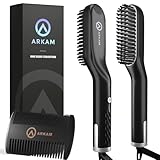
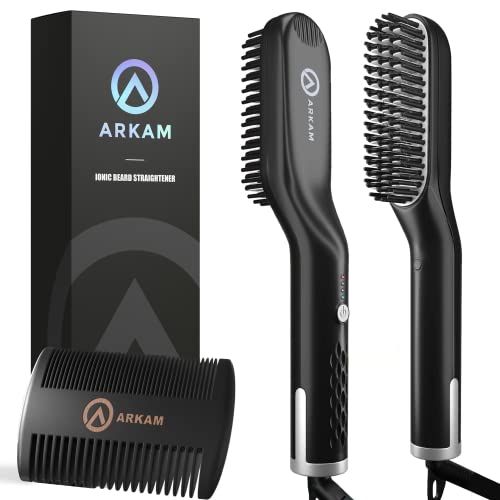
The Aberlite Pro Beard Straightener is a useful example of the corded, beard-specific category: it is designed around a compact comb form, guarded heating elements, and temperature control for facial hair. It suits people who want consistent output for a medium or dense beard rather than maximum portability.
The Kuschelbär Beard Straightener represents the compact heated beard-brush category. Its small form is convenient for travel and detailed work around the moustache and jawline. This style is most appropriate when portability and close control matter more than covering a very long beard quickly.
When comparing either type with a general-purpose heated hair brush, check the tooth length and skin protection first. A larger hair brush may cover more area, but its head can be awkward around the chin and may not guard the skin as effectively as a beard-specific design.
How to use a heated beard brush without flattening your beard
- Dry the beard completely. Water conducts heat and makes hair more vulnerable to damage. Towel-dry, then wait until the beard is fully dry.
- Apply a small amount of beard oil or heat-protective product. Avoid saturating the hair; excess oil can make the beard feel greasy and transfer residue to the brush.
- Start at 140–160°C. Give the brush time to reach temperature rather than increasing the setting immediately.
- Separate the beard into sections. Lift the outer layer so the heated teeth can reach the hairs underneath.
- Use slow, continuous passes. Move from near the roots toward the ends without holding the brush in one place. One or two passes per section is usually enough.
- Shape after straightening. Use your fingers or a cool comb to direct the sides, moustache, and bottom edge. This preserves some volume instead of pressing everything flat.
- Reduce the temperature if the hair feels rough. Roughness, a burnt smell, or skin discomfort means the setting, speed, or number of passes needs to change.
Styling time: what to expect
A short beard can usually be tidied in 1–2 minutes once the brush is hot. A medium beard generally takes 2–4 minutes, while a long or very curly beard may require 4–7 minutes, including sectioning. Heat-up time adds roughly 30–90 seconds depending on the device.
To estimate whether a larger brush is worthwhile, compare coverage rather than peak temperature. If a wider head reduces six passes to four, it may save more time than a model that heats 20°C hotter. For facial hair, controlled contact and fewer repeated passes are usually more useful than maximum heat.
Frequently asked questions
Can I use a heated beard brush on a damp beard?
No, dry the beard completely before using a heated beard brush. Water conducts heat and makes hair more vulnerable to damage. Towel-dry the beard, then wait until it is fully dry. You can apply a small amount of beard oil or heat-protective product, but avoid saturating the hair because excess oil may make the beard greasy and transfer residue to the brush.
How many passes should I make over each beard section?
Use one or two slow, continuous passes per section in most cases. Move the brush from near the roots toward the ends without holding it in one place. Separate the beard into sections and lift the outer layer so the heated teeth reach the hairs underneath. If the hair feels rough or the skin becomes uncomfortable, reduce the temperature or number of passes.
Is a beard-specific brush better than a general-purpose heated hair brush?
A beard-specific brush may be more suitable for facial hair because its compact form can provide closer control and more effective skin protection. A larger hair brush may cover more area, but it can be awkward around the chin and may not guard the skin as effectively. Compare tooth length and skin protection rather than choosing based only on coverage.
How long will a cordless beard straightener last between charges?
A cordless brush’s usable sessions depend on its rated runtime and your styling time. For example, a device rated for 30 minutes that takes 4 minutes per session theoretically supplies 7.5 sessions. Reserving 20% for heat-up, battery ageing, and cold-weather performance gives approximately 6 usable sessions. Actual performance may be lower as the battery approaches the end of its charge.
What should I do if my beard feels flat after straightening?
Shape the beard after straightening instead of pressing every section flat. Use your fingers or a cool comb to direct the sides, moustache, and bottom edge, which preserves some volume. Lift the outer layer while styling so the heated teeth reach underneath, and use slow passes rather than holding the brush in one place or repeatedly correcting the same section.
Bottom line
Choose a compact, guarded brush with 120–180°C adjustment for a short or medium beard; choose longer teeth, wider coverage, and corded power for a long or coarse beard; and choose cordless operation only when portability outweighs sustained heat performance. The best beard straightening heated brushes are the ones that let you match temperature, tooth spacing, and pass speed to your actual beard instead of forcing every beard into the same high-heat setting.