The best double end bags for boxing are the ones that match your available space, preferred rebound speed, and mounting strength: choose a compact leather bag for fast technical work, a larger synthetic-leather bag for forgiving home practice, or a reinforced commercial model if you can install fixed anchors.
As an Amazon Associate we earn from qualifying purchases at no extra cost to you.
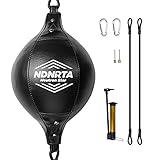


Our Top Picks


Top 3 picks at a glance
Quick Picks by Training Situation
| Training situation | Best choice | Useful specification | Why it fits |
|---|---|---|---|
| Small apartment or shared room | Compact 6–7 inch double end bag | About 1.5–2.5 lb; adjustable cords | Needs less clearance and produces manageable rebound |
| Beginner learning accuracy | Medium 8–9 inch synthetic-leather bag | About 2–4 lb; moderate elasticity | Large enough to see clearly and less punishing after missed punches |
| Fast combinations and defensive slips | Small leather bag | 6–7 inches; tight, elastic cords | Returns quickly and exposes timing errors |
| Frequent, high-volume training | Reinforced commercial-grade bag | Leather or heavy synthetic leather; replaceable bladders | Better stitching, anchors, and resistance to repeated impact |
| No permanent drilling allowed | Door-frame or removable-anchor setup | Light-to-medium bag; conservative cord tension | Reduces load on temporary mounting points |
What Makes the Best Double End Bags for Boxing?
Bag material: leather versus synthetic leather
Leather remains the premium choice for a double end bag because it generally handles repeated impacts, stretching, and friction at the attachment points well. A good leather bag also tends to retain its shape, which gives punches a more predictable target. Cleto Reyes and some higher-end Ringside models are examples of leather-focused equipment commonly selected for serious training.
Synthetic leather is often the better value for home use. Modern polyurethane-based covers can be durable enough for regular boxing sessions while costing less and resisting sweat and humidity reasonably well. A synthetic bag is especially sensible if several people will use it or if you are still deciding whether double end training will become a permanent part of your routine.
Look beyond the cover itself. Check for double-stitched seams, reinforced loops, protected attachment rings, and a replaceable bladder. The cord loop is often exposed to more stress than the center of the bag. A beautiful cover with a weak loop is not a durable bag.
Rebound speed and control
Rebound speed comes from several parts working together: bag size, bag weight, bladder pressure, cord elasticity, and cord tension. The smallest bag is not automatically the fastest. A light bag with very elastic cords can return rapidly but unpredictably, while a slightly heavier bag with firm cords may provide a cleaner rhythm.
- Slow to moderate rebound: better for beginners, accuracy drills, and learning to keep the hands near the face.
- Moderate to fast rebound: useful for one-two combinations, parries, slips, and controlled head movement.
- Very fast rebound: best for experienced boxers who want timing pressure and frequent angle changes.
For most home users, a medium bag with moderate cord elasticity is the safest starting point. You can make it more demanding by shortening the cords and increasing tension; you cannot easily make an extremely small, fast bag feel forgiving.
Size, Clearance, and Home-Space Requirements
Bag diameter changes both visibility and difficulty. A 6-inch bag presents a small target and reacts quickly. An 8- or 9-inch bag is easier to track and usually feels more stable, making it more appropriate for first-time users.
Measure the space in three dimensions before buying. The bag needs room to move forward and backward, not only room for your shoulders. As a practical minimum, allow about 3 feet of clear space in front of the bag and 2 feet to each side. For fast work, 4 feet in front and roughly 3 feet on either side gives a more useful training envelope.
A common home mistake is mounting the top point too close to a wall. The bag then swings into the wall during hooks and slips, which changes the rebound and can damage both the bag and the finish. If your only location is narrow, select a larger, slower bag and shorten the training range rather than using a very fast model.
Mounting Hardware Matters More Than Many Buyers Expect
A double end bag pulls alternately on the ceiling and floor. Every punch creates changing loads, so a weak anchor can loosen even when the bag itself is light. A ceiling hook should be attached to a structural joist, beam, or properly installed backing—not merely drywall. The lower anchor should be fixed into a structural floor point or a suitable wall-mounted bracket.
For a permanent installation, use a rated swivel or eye bolt at the top and a heavy-duty eye bolt, floor anchor, or purpose-built lower bracket at the bottom. Choose hardware with a working load comfortably above the bag’s static weight. The load is dynamic: a 3-pound bag can impose substantially more than 3 pounds of changing force when it reaches the end of a stretched cord.
Temporary door anchors can work with a light bag, but they are less predictable than structural mounting. Do not use a temporary setup for maximum-power punches, especially if the door opens toward the anchor or has a hollow core. Inspect the attachment points before every session.
Cord Adjustability: The Feature That Changes the Workout
Adjustable cords let you tune height, tension, and rebound without replacing the entire setup. Look for cord systems with secure knots, buckles, or threaded adjusters that will not slip under repeated movement. Elastic cords should be shielded from sharp hardware and should not show cracking, flattened sections, or exposed fibers.
A useful starting setup
- Set the center of the bag around nose to upper-chest height.
- Keep the top and bottom cords close to vertical when the bag is at rest.
- Begin with modest tension, roughly 10–15% stretch beyond the relaxed cord length.
- Throw light jabs and straight punches for 30 seconds.
- Increase tension in small increments until the bag returns before your stance becomes disorganized.
If the bag travels too far after every punch, increase tension slightly or use a heavier bag. If it snaps back so quickly that you cannot see the target, reduce tension, use a less elastic cord, or choose a larger bag. The goal is not maximum speed; it is a repeatable rhythm that lets you practice clean mechanics.
Material and Rebound Comparison
| Bag type | Typical diameter | Typical weight | Rebound character | Best use |
|---|---|---|---|---|
| Compact leather | 6–7 inches | 1.5–3 lb | Fast and sensitive | Advanced accuracy, slips, rhythm changes |
| Medium synthetic leather | 8–9 inches | 2–4 lb | Moderate and forgiving | Beginners and general home training |
| Large training bag | 9–10 inches | 3–5 lb | Slower and steadier | Fundamentals, light-contact drills, shared use |
| Small competition-style bag | 5–6 inches | 1–2.5 lb | Very quick and demanding | Experienced boxers and advanced timing work |
Worked Space Calculation for a Home Boxing Setup
Suppose your bag is 8 inches in diameter and your cords allow it to swing up to 18 inches from its resting center. The bag’s movement envelope is approximately:
Bag diameter + twice the travel distance = 8 inches + (2 × 18 inches) = 44 inches
That is about 3 feet 8 inches of front-to-back movement before accounting for your body. Add roughly 24 inches for your stance and punching reach, and you need around 68 inches, or 5 feet 8 inches, from the wall behind you to the farthest expected bag position. This is why a setup that appears to fit on paper can still feel cramped during hooks and slips.
Buying Decision: Which Specification Should You Prioritize?
- Choose material first if the bag will receive daily use. Prioritize leather or heavily reinforced synthetic leather.
- Choose size first if you are a beginner or have limited visibility. An 8–9 inch bag is usually easier to learn on.
- Choose rebound behavior first if you already use a speed bag and want sharper timing. A 6–7 inch bag with adjustable elastic cords will be more demanding.
- Choose mounting hardware first if you rent or cannot drill. A compatible removable system is more important than premium leather.
- Choose replaceable parts first if you expect years of use. Replaceable bladders, cords, swivels, and loops can extend the life of the whole setup.
Care and Safety Checks
Inflate the bag according to its instructions rather than making it as hard as possible. Excess pressure can produce a harsh rebound and put unnecessary stress on seams. Wipe sweat from the cover after training, let the bag dry fully, and store it away from direct heat. Before each session, check the bladder, stitching, cord elasticity, knots, swivels, and both anchors.
For most people searching for the best double end bags for boxing, a medium 8–9 inch synthetic-leather model with adjustable cords is the most practical starting point. Move to a compact leather bag when your space and skills support faster rebound, and spend extra attention on the anchors because a well-mounted mid-range bag is safer and more useful than a premium bag attached to weak hardware.
Frequently asked questions
How do I choose a double end bag if I’m new to boxing?
An 8–9 inch synthetic-leather bag with moderate elasticity is a forgiving starting choice. Its larger target is easier to track, and its rebound is less demanding than that of a small, fast bag. Begin with modest cord tension and light jabs and straight punches, then adjust gradually until the bag returns at a pace you can control.
Can I install a double end bag without drilling into my home?
A door-frame or removable-anchor setup can work with a light bag, but it is less predictable than structural mounting. Keep cord tension conservative and avoid maximum-power punches, particularly with a hollow-core door or one that opens toward the anchor. The article recommends prioritizing a compatible removable system if you rent or cannot drill.
What should I check on a double end bag before buying it?
Check the seams, attachment loops, rings, and whether the bladder can be replaced. Reinforced loops and double-stitched seams matter because the cord loop is exposed to substantial stress. Also look for adjustable cords with secure knots, buckles, or threaded adjusters, and make sure the setup suits your available mounting points.
How can I tell whether my double end bag’s rebound is set correctly?
The rebound is suitable when the bag returns in a repeatable rhythm without making your stance disorganized. Start with modest tension and test it with light punches. If the bag travels too far, increase tension slightly or use a heavier bag; if it snaps back too quickly to track, reduce tension, choose a less elastic cord, or use a larger bag.
How much room do I need around a double end bag?
Allow about 3 feet of clear space in front and 2 feet on each side as a practical minimum; fast work benefits from more room. Also account for the bag’s movement and your stance, not just the space it occupies at rest. Mounting too close to a wall can make the bag hit it during hooks and slips.