The best portion control container sets for meal planning are 21-28 oz 2 or 3-compartment sets with molded portion markings, snap-lock lids with silicone gaskets, and polypropylene (PP) or borosilicate glass that is both freezer and microwave safe, because they balance accurate macro portions, leak resistance for sauces, and safe reheating without warping or staining.
As an Amazon Associate we earn from qualifying purchases at no extra cost to you.


Our Top Picks
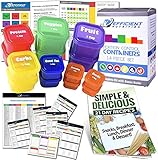
 Efficient Nutrition Portion Control Containers DELUXE KitLarge3 x 3 x 2 inches0.6 poundsCheck on Amazon
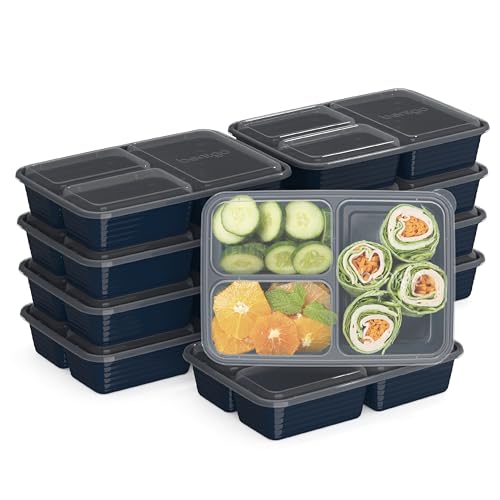 Bentgo Prep 3-Compartment Meal Prep Containers with Lids9.4 Inch x 6.5 Inch x 1.8 Inch1.79 PoundsCheck on Amazon


Top 3 picks at a glance
How to Choose the Right Capacity for Your Meal Plan
Capacity is not just about total volume. A 32 oz container with one compartment holds the same total food as a 3-compartment 32 oz container, but the latter forces portion discipline automatically. Choose capacity based on your daily calorie target and meal frequency, not just appetite.
Capacity vs. Meal Type
- 14-16 oz (1.75 – 2 cups) single or 2-compartment: Best for snacks, breakfast portions, kids’ meals, or 1,200-1,500 calorie plans split across 5-6 small meals. Prevents over-serving calorie-dense foods like grains and nuts.
- 21-24 oz (2.6 – 3 cups) 2-compartment: The versatile standard for most adults on a 1,600-2,200 calorie plan eating 3-4 meals per day. Typically configured as 12-14 oz main + 8-10 oz side.
- 28-34 oz (3.5 – 4.25 cups) 3-compartment: Best for high-volume or high-protein meal prep, athletes, or one-meal-a-day plus snacks. Standard split is often 16 oz + 8 oz + 8 oz, ideal for the plate method (1/2 vegetables, 1/4 protein, 1/4 carbs).
Worked Calculation: Matching Container Volume to Macros
Volumetric portioning is approximate, but you can calibrate it. One US cup (8 oz volume) of a food does not equal 8 oz weight. Use this reference to see why markings matter:
A common meal prep target is 450-550 calories per meal with 40g protein, 45g carbs, 15g fat. Here is how that translates to volume in a 3-compartment 24 oz container (12 oz / 8 oz / 4 oz split):
- 12 oz compartment (1.5 cups) for vegetables/salad: 1.5 cups of roasted broccoli is ~80 calories, 6g protein, high fiber. It fills volume without adding many calories, keeping the meal visually large.
- 8 oz compartment (1 cup) for lean protein: 1 cup of diced grilled chicken breast (about 6 oz by weight) is ~280 calories, 38g protein. This fits exactly in a 1-cup compartment.
- 4 oz compartment (0.5 cup) for complex carbs: 0.5 cup cooked quinoa is ~110 calories, 19g carbs, 4g protein.
- Total: ~470 calories, ~48g protein. If you used a single 24 oz compartment and eyeballed it, it is easy to add an extra 0.5 cup of quinoa (+110 calories) without noticing. Compartments prevent that drift.
If your plan is low-carb, invert the logic: use the small compartment for fats/sauces and the large one for protein + greens.
Portion Markings: Printed vs. Molded vs. Color-Coded
For true portion control, markings are more important than compartments alone.
- Molded volume markings (embossed in the plastic/glass): Most accurate and durable. Look for markings in oz, cups, and ml on the side wall in 2 oz / 50 ml increments. They will not fade after dishwashing and allow you to measure liquids and loose foods like rice directly in the container.
- Printed measurement lines: Cheaper but fade after 20-30 dishwasher cycles, especially with tomato-based foods.
- Color-coded lid systems (e.g., red = protein, green = vegetables, yellow = carbs, blue/purple/orange for fruits/healthy fats/seeds): Borrowed from programs like 21 Day Fix. Useful if you follow a container-count system rather than calorie counting. Each color corresponds to a specific volume (e.g., green is 1 cup, red is 3/4 cup, yellow is 1/2 cup). Good for beginners who do not want to weigh food.
- No markings: Avoid for portion control. You will still need external measuring cups, which defeats the purpose.
Recommendation: If you track macros, choose molded markings. If you follow a color-coded diet plan, choose a 7-piece or 14-piece color-coded set with a guide chart included.
Leak Resistance, Freezer and Microwave Compatibility Compared
These three features determine whether your containers survive a real week of prep, not just day one.
| Spec Class | Material | Total Capacity | Lid System | Leak Resistance | Freezer Safe | Microwave Safe | Notes on Durability |
|---|---|---|---|---|---|---|---|
| Lightweight Single-Compartment Set | Polypropylene (PP #5) | 16 oz | Press-on lid, no gasket | Low – not for soups or dressings | Yes, to -4°F / -20°C | Yes, to 248°F / 120°C, lid off | Stacks tightly, warps least, may stain with turmeric/tomato |
| Standard 2-Compartment Meal Prep | Polypropylene (PP #5) | 24 oz (14+10 oz) | 4-hinge snap-lock with silicone gasket | High – sauce stays in compartment | Yes | Yes, lid unclipped/vented | Best value range, usually $15-$30 for 10-20 pack; BPA-free |
| 3-Compartment Portion Control | Polypropylene (PP #5) | 32 oz (16+8+8 oz) | 4-hinge snap-lock with silicone gasket | High – cross-compartment leak resistant if not overfilled | Yes | Yes | Ideal for plate-method eating; check that dividers go to lid height |
| Borosilicate Glass 2-Compartment | Glass base + PP snap-lock lid | 30-35 oz | 4-hinge snap-lock with silicone gasket | Very High – best for liquids | Yes, avoid thermal shock | Yes, glass only (remove lid) | Heavier, usually $30-$55 for 5-6 pack; will not stain or retain odors |
| Bento-Style Color-Coded Set | Polypropylene (PP #5) | Varies: 12, 8, 6, 4, 2 oz containers | Press-on lids, no gasket | Medium – not fully leakproof | Yes | Yes | Excellent for precise macro counting across snacks; more lids to manage |
Key compatibility notes: Polypropylene (PP, recycling code 5) is the only plastic you should microwave. Never microwave polyethylene (PE) or polystyrene (PS) containers, and never microwave any plastic lid snapped shut – leave one corner vented to prevent pressure warping. For glass, avoid moving directly from freezer to hot oven or microwave; let it sit at room temperature for 5-10 minutes first. All sets listed are top-rack dishwasher safe, but hand-washing gaskets extends their seal life.
Stackability and Storage: What Actually Saves Space
Stackability is the difference between a fridge that holds 5 days of meals and one that holds 2.
- Nesting vs. Stacking: The best sets do both. Empty containers nest inside each other to save cabinet space, and filled containers stack vertically with flat, interlocking lids without sliding. Look for lids with a raised rim or recess that locks into the base of the container above.
- Uniform footprint: Choose sets where all sizes share the same rectangular footprint (e.g., all 24 oz and 32 oz containers are the same length/width, only divider layout differs). Uniform sets stack in stable columns, mixed shapes do not.
- Lid management: Stackable lids that clip together or have a dedicated lid holder prevent the common drawer of loose lids. Glass sets are 30-40% taller when stacked than PP sets of the same volume, so measure your fridge shelf height. A typical PP 3-compartment container is about 2.2 inches tall with lid; glass is 2.8-3.0 inches.
- Freezer stacking: For freezing, choose straight-sided containers without tapered walls. Tapered walls waste freezer space and crack more easily when food expands. Leave 0.5 inch of headspace for soups and stews.
Decision Matrix: Which Set Fits Your Routine
Match your primary routine to the spec class, not just to price.
| If You Do This… | Choose This Set… | Why It Fits |
|---|---|---|
| Office lunches, need leakproof for dressings/soups in a bag | 24 oz 2-compartment PP with gasket or 30 oz glass 2-compartment | Gasket prevents bag leaks; 2 compartments keep salad crisp until mixed |
| Strict portion counting / tracking apps / 21 Day Fix style | Color-coded multi-size set (4 oz to 12 oz) + one 24 oz 3-compartment set | Small containers = exact portions for nuts, dressings, fruits; large set for assembled meals |
| Batch cooking and freezing 10+ meals on Sunday | 32 oz 3-compartment PP, straight-walled, snap-lock | Freezer-safe PP resists cracking, dividers prevent flavor mixing after thawing, lightweight for large stacks |
| Reheating daily in shared office microwave, hate stains/smells | Borosilicate glass set | Glass does not stain from turmeric or tomato sauce, does not retain odors, reheats more evenly |
| Small fridge or mini-fridge, meal prep for 1-2 days only | 16-20 oz single or 2-compartment PP, uniform footprint | Lower height allows 2-3 layers per shelf; single compartment is most space-efficient |
| Carb cycling or bento-style variety (snacks + mains) | 3-compartment 24-28 oz with molded markings | Lets you adjust ratios daily without switching container sizes |
What to Check Before You Buy
- Divider height: Dividers should reach the lid gasket line. Low dividers let sauces bleed between compartments.
- Lid gasket is removable: Removable silicone gaskets can be cleaned and prevent mold buildup. Non-removable gaskets trap food.
- BPA-free and PP #5 or glass: Avoid containers without a resin code on the bottom. PP #5 is the standard for reusable meal prep in 2026.
- Microwave vent: Lids should have a steam vent or be designed to be unclipped on one side during reheating.
- How many you actually need: For 5-day prep for one person eating 2 prepped meals per day, you need 10 containers plus 2-3 extra for snacks. Sets sold in packs of 10, 15, or 20 are usually more economical than buying two 5-packs. Expect to pay generally $15-$30 for a 10-20 pack of PP sets and $30-$55 for a 5-6 pack of glass sets.
Care to Keep Them Leakproof Longer
Even good gaskets fail if overheated or overfilled. Let hot food cool for 10-15 minutes before lidding to avoid vacuum warping, fill only to 1/4 inch below the rim, and remove gaskets weekly to wash and air-dry. Replace any lid that no longer snaps audibly on all four hinges.
Frequently asked questions
How many containers do I need for a five-day meal-prep schedule?
For one person eating 2 prepped meals per day, you need 10 containers plus 2-3 extra for snacks. That provides one container for each planned meal while leaving additional containers available for smaller foods. The article recommends considering your actual meal frequency and using extra containers where snacks or separate ingredients need their own portions.
Can I microwave these containers with the lids on?
You should not microwave any plastic lid snapped shut. For PP containers, leave one corner vented or use the lid’s steam vent during reheating. The container itself should be marked microwave safe, and PP #5 is identified as the standard reusable meal-prep plastic. For glass sets, microwave the glass only and remove the lid.
How can I prevent silicone gaskets from developing mold?
Choose containers with removable silicone gaskets, then remove the gaskets for cleaning. Removable gaskets are easier to clean and help prevent mold buildup, while non-removable gaskets can trap food. The article also notes that all listed sets are top-rack dishwasher safe, but hand-washing gaskets extends their seal life.
Why should I leave headspace when freezing soups or stews?
Leave 0.5 inch of headspace when freezing soups and stews because food expands as it freezes. Straight-sided containers are preferred for freezer stacking because tapered walls waste freezer space and crack more easily when food expands. Polypropylene containers are described as freezer safe, while glass should be protected from thermal shock.
Do container markings measure food weight or volume?
Container markings measure volume, not food weight. One US cup, or 8 oz of volume, does not equal 8 oz by weight, so volumetric portioning is approximate. Molded markings in oz, cups, and ml can help measure liquids and loose foods such as rice directly, but macro calculations still depend on the food’s density.