The best skeleton dial mechanical watches under $500 are the Bulova Sutton Automatic, Fossil Townsman Automatic Skeleton, Rotary Cambridge Skeleton, and selected Seiko or Orient open-heart models—but the right choice depends on whether you prioritize a large viewing window, compact wearability, finishing, or longer power reserve.
As an Amazon Associate we earn from qualifying purchases at no extra cost to you.



Our Top Picks

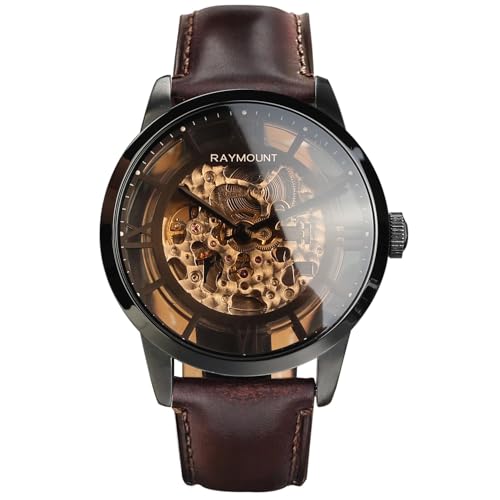


Top 3 picks at a glance
Quick comparison: the main trade-offs
| Watch | Typical market range | Case size | Movement visibility | Approx. power reserve | Best for |
|---|---|---|---|---|---|
| Bulova Sutton Automatic Skeleton | $300–$500 | About 43 mm | Large front and rear openings | About 40 hours | Maximum visual impact |
| Fossil Townsman Automatic Skeleton | $180–$300 | About 44 mm | Wide dial cutout with visible balance | About 42 hours | Large wrists and casual styling |
| Rotary Cambridge Skeleton | $300–$500 | About 42 mm | Openworked dial and exhibition back | About 40 hours | Dressier proportions |
| Seiko Presage Open Heart models | $300–$500 | About 40–41 mm | Partial view, not a full skeleton | About 41 hours | Balanced everyday wear |
| Orient Bambino Open Heart models | $200–$350 | About 40–41 mm | Small-to-medium dial opening | About 40 hours | Traditional dress-watch styling |
Specifications and prices can vary by reference, dial color, bracelet, and regional availability. The most important distinction is that a skeleton watch removes or cuts away much of the dial and sometimes the movement plates, while an open-heart watch exposes only the balance wheel and a small section of the mechanism.
Best overall visual choice: Bulova Sutton Automatic Skeleton
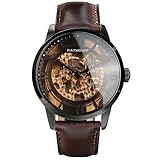
The Bulova Sutton Skeleton is the strongest choice when the main reason for buying a mechanical watch is seeing the mechanism. Its large case and broad cutout expose more of the gears, bridges, and balance assembly than the typical open-heart design. Many versions also use a transparent caseback, so the front and rear views work together.
The trade-off is size. A case around 43 mm can wear even larger when the dial has a lot of exposed metal and contrasting details. The relatively busy face is attractive in a dramatic, modern way, but it is less restrained than a conventional dress watch. Expect roughly 40 hours of running time, which is normal for an affordable automatic movement.
- Choose it if: movement visibility is your top priority.
- Watch for: the large case and potentially busy legibility.
- Material expectation: stainless-steel case, mineral or hardened mineral crystal on many versions, and a display back depending on reference.
Best large casual option: Fossil Townsman Automatic Skeleton
The Fossil Townsman Skeleton generally offers one of the easiest routes into a visually open automatic watch. Its dial opening is prominent, the case is usually around 44 mm, and the styling is more casual than the Bulova Sutton. It works especially well with denim, boots, leather jackets, and other relaxed outfits.
Its movement is usually based on a common entry-level automatic architecture, with a power reserve around 42 hours. That gives it a small practical advantage over a watch that runs closer to 40 hours, although neither will reliably last an entire weekend if removed on Friday evening.
The case size is the key decision. On a wrist measuring approximately 6.5 inches or less, a 44 mm skeleton can look oversized because the open dial draws attention to the watch’s full diameter. The watch is more proportionate on a medium-to-large wrist or when a bold fashion-watch profile is intentional.
Best dressier alternative: Rotary Cambridge Skeleton
The Rotary Cambridge Skeleton is a better fit for someone who wants visible mechanics without the most aggressive oversized styling. Its design leans toward a dress watch, with a cleaner case shape and a more formal presentation than the Townsman.
Movement visibility is still substantial, but the watch is not necessarily as transparent as a heavily cut-away fashion skeleton. That is a useful compromise: the dial remains easier to read, while the mechanical character is still obvious at a glance. A case near 42 mm places it between compact dress watches and large contemporary skeletons.
Look for a version with a sapphire crystal if available within your budget. Sapphire is substantially more resistant to scratches than mineral crystal, and that matters on a watch whose open dial is intended to be viewed for years. The specific reference should be checked because crystal and bracelet specifications can differ.
Best balanced everyday choices: Seiko Presage and Orient Bambino open-heart watches
Seiko Presage Open Heart and Orient Bambino Open Heart models are not full skeleton watches, but they deserve consideration when comfort, legibility, and classic styling matter more than maximum exposure. Their smaller apertures reveal the oscillating balance wheel while leaving most of the dial intact.
The Seiko Presage option generally offers richer dial finishing and a more polished overall presentation. The Orient Bambino usually emphasizes traditional dress-watch proportions and value. Both commonly use automatic movements with approximately 40–41 hours of power reserve.
These watches solve a problem that full skeletons often create: the more material removed from the dial, the harder it can be to separate the hands from the movement underneath. If you need to read the time quickly at work, in a meeting, or in low indoor light, an open-heart dial can be the more useful design.
Movement visibility versus readability
Skeletonization is not automatically better. A full skeleton normally gives you more visual access, but it also introduces several compromises:
- Less contrast: polished gears and bridges can compete with the hands.
- More visual clutter: the dial may be attractive up close but difficult to scan quickly.
- More apparent size: open designs make the entire case feel prominent.
- Less traditional styling: a skeleton tends to look contemporary, even when the case is dressy.
A useful rule is to choose a full skeleton when you want the watch to be a conversation piece, and an open-heart model when you want mechanical interest without sacrificing everyday time-telling.
Power reserve: the practical calculation
Most mechanical watches in this price class run for roughly 40–42 hours when fully wound. That number sounds close to two days, but the calendar makes the difference important.
Suppose a watch has a 41-hour power reserve and you remove it at 10 p.m. on Friday. It may stop at approximately 3 p.m. on Sunday:
Friday 10 p.m. + 41 hours = Sunday 3 p.m.
In practice, reserve can be lower if the watch is not fully wound, is worn loosely, or has developed poor amplitude. If you rotate between two watches every other day, a 40-hour movement will often stop between wears. A watch winder can keep it running, but it also keeps the movement operating continuously; manually setting it when you wear it is simpler and avoids unnecessary running time.
Decision matrix: which style fits your situation?
| Your priority | Best direction | Why | What to give up |
|---|---|---|---|
| Most visible mechanism | Bulova Sutton Skeleton | Large front opening and strong wrist presence | Compact comfort and understated styling |
| Casual, oversized appearance | Fossil Townsman Skeleton | Large case and bold design | Suitability for small wrists or formal settings |
| Dressier full skeleton | Rotary Cambridge Skeleton | More restrained case and formal character | Some of the dramatic openness of larger models |
| Fast, clear time reading | Seiko Presage Open Heart | Partial opening preserves dial contrast | Less movement exposure |
| Classic dress-watch value | Orient Bambino Open Heart | Traditional proportions and styling | Not a full skeleton display |
Case size, materials, and buying checks
Measure your wrist before choosing. A 40–41 mm case is usually easier to wear across casual and formal situations. Around 42–44 mm creates more wrist presence but can overhang a narrow wrist. Lug-to-lug distance matters as much as diameter: long lugs can make a nominally moderate watch wear large.
Stainless steel is standard at this price, but finishing varies. Brushed surfaces hide scratches better, while polished surfaces emphasize the case shape but show marks quickly. Mineral crystal is common and acceptable for budget ownership, but sapphire is preferable if the price difference is modest. Also check whether the bracelet has solid links and a useful adjustment range; a striking skeleton dial is less enjoyable if the bracelet cannot fit securely.
Frequently asked questions
Will a skeleton watch be difficult to read in low light?
It can be, because exposed gears and bridges may compete with the hands and reduce contrast. Full skeleton designs generally provide more movement visibility but can be harder to scan quickly, especially in low indoor light. An open-heart Seiko Presage or Orient Bambino leaves most of the dial intact, making it the more practical choice when fast, clear time reading matters.
How can I tell whether one of these watches will fit my wrist?
Measure your wrist and consider lug-to-lug distance as well as case diameter. A 40–41 mm case is generally easier to wear in both casual and formal situations, while a 42–44 mm case creates more wrist presence and may overhang a narrow wrist. The open dial of a skeleton can also make the entire watch feel more prominent.
Can these automatic watches run through the entire weekend off the wrist?
Usually not reliably if removed on Friday evening. Most watches in this price class have approximately 40–42 hours of power reserve, so a watch with a 41-hour reserve removed at 10 p.m. on Friday may stop around 3 p.m. on Sunday. Reserve can also be lower when the watch is not fully wound or is worn loosely.
Is a watch winder necessary for these mechanical watches?
No, a watch winder is not necessary. It can keep an automatic movement running, but that also means the movement operates continuously. Manually setting the watch when you wear it is simpler and avoids unnecessary running time. If you rotate between watches every other day, a movement with roughly 40 hours of reserve will often stop between wears.
What should I check besides the dial design before buying?
Check the crystal, case material, bracelet construction, and adjustment range. Mineral crystal is common and acceptable for budget ownership, while sapphire is more resistant to scratches when available within the budget. Stainless steel is standard, but polished surfaces show marks more readily than brushed ones. Also confirm that the bracelet has solid links and can fit securely.
Final verdict
For the most convincing mechanical display, choose the Bulova Sutton Skeleton. Pick the Fossil Townsman if you want a larger and more casual watch, or the Rotary Cambridge for a more formal full-skeleton design. If daily readability and traditional proportions matter more than maximum transparency, the Seiko Presage Open Heart and Orient Bambino Open Heart are smarter compromises. In this price range, the best skeleton dial mechanical watches under $500 are defined less by a single winner than by how much visual drama you are willing to trade for comfort and legibility.