
Choosing between an active cooling stand and a vacuum laptop cooler is less about finding the device with the most aggressive fan and more about deciding how your laptop fits into your home. Both options move heat away from the computer, but they create very different desk experiences. One is a visible, reusable stand that can improve posture and organize a workspace. The other attaches to a laptop’s exhaust vent and prioritizes concentrated cooling in a compact package.
The real buyer’s question is simple: do you want a quieter, more comfortable setup for everyday work, or maximum cooling assistance for a powerful laptop during demanding tasks? Your answer may also depend on whether you have a small apartment, children or pets, a rental desk, or a permanent home office. Here is how the two designs compare before you spend anywhere from roughly $20 to $100.
As an Amazon Associate we earn from qualifying purchases at no extra cost to you.



Top 3 picks at a glance
Quick Verdict
Choose an active cooling stand if you want a stable platform for daily work, better screen height, easier typing comfort, and a cleaner-looking desk. It is usually the more versatile home accessory because you can use it with office work, streaming, browsing, and light gaming. Many stands use one or more downward-facing fans and connect through USB, with power needs commonly in the 5W to 25W range depending on added features.
Choose a vacuum laptop cooler if your laptop has a compatible side or rear exhaust vent and you need focused heat removal during gaming, rendering, or other sustained workloads. These units are often smaller and less expensive, commonly priced from about $20 to $45, but they can be noisier and less convenient to move between machines.
For most shared living spaces, an active stand is the better all-around choice. For a high-performance gaming laptop that regularly runs hot, a vacuum cooler can be the more targeted tool.
Side by Side
| Factor | Active cooling stand | Vacuum laptop cooler |
|---|---|---|
| Comfort | Raises the screen, often by 2 to 6 inches; some offer several tilt levels | Adds little or no screen height and may pull on the exhaust area |
| Cooling approach | Moves air beneath the chassis across a broad area | Draws hot air directly from a compatible exhaust vent |
| Durability | Metal models can last for years; hinges and fans are the main wear points | Compact plastic housings are light, but clips, seals, and small fans can wear faster |
| Price range | About $30 to $100; feature-rich charging stands may cost more | About $20 to $50 |
| Maintenance | Usually requires occasional dusting of the fan grille and laptop intake | Needs frequent dust removal around the intake, filter, clip, or rubber seal |
| Space needed | Typically about 10 to 14 inches wide and 9 to 12 inches deep | Usually less than 6 inches wide and a few inches deep when attached |
| Look | Can resemble a monitor stand and blend into a finished home office | More visibly utilitarian, with a cable and device projecting from the laptop |
| Resale | Easier to resell because it works with a range of laptops and desks | Resale depends heavily on vent compatibility and included adapters |
| Best for | Everyday work, posture, shared rooms, and organized desks | Gaming, video production, and laptops with a hot, accessible exhaust vent |
Where Active Cooling Stand Wins
An active cooling stand is the more furniture-friendly option. Its broad base supports the laptop instead of hanging from one edge, and its raised position can make a desk feel less cramped. If you spend six or more hours a day at a computer, lifting the display closer to eye level may be more valuable than a small difference in fan speed. You will still want an external keyboard and mouse for a genuinely ergonomic setup.
Stability is another advantage. A quality stand can weigh roughly 1.5 to 4 pounds, giving it enough mass to stay put when you plug in a cable or adjust the screen. Aluminum and other high-grade alloy designs tend to look more like permanent desk accessories than gaming add-ons. A stand with a 10- to 15-inch laptop platform can also leave room for airflow beneath the chassis without requiring a separate attachment.
Active stands are usually easier to share. A family member can place a different laptop on the surface without checking whether its exhaust vent matches a particular cooler. They also make sense for video calls, schoolwork, and remote work, where posture, cable routing, and appearance matter as much as peak thermal performance.
Some newer stands add wireless charging or device-management features. For example, the 25W Qi2.2-Certified Wireless Charging Stand TEC Cooling High-Grade Alloy is listed at $65.99, putting it in the premium active-stand range. That type of product may appeal to someone who wants cooling and a more organized charging station rather than a single-purpose fan.
The main drawback is footprint. A stand occupies a permanent section of the desk, and its fans can still create a low hum. It may also raise the front edge enough to make built-in keyboard typing awkward. Treat it as a screen-raising platform and plan on using a separate keyboard when comfort matters.
Where Vacuum Laptop Cooler Wins
A vacuum laptop cooler is designed for direct extraction. Instead of pushing air across the bottom panel, it attaches near the laptop’s exhaust and pulls hot air outward. This focused approach can be useful when a gaming laptop’s internal fans are already working hard and the chassis has a clearly accessible vent.
Size and portability are the strongest advantages. Many vacuum coolers weigh well under 1 pound and can fit in a drawer or laptop bag. They are also inexpensive compared with premium stands. The Tempest Laptop Cooler with Vacuum Fan, Rapid Cooling, Temperature Detection is listed at $26.97, while the IETS GT202UB vacuum laptop fan cooler is listed at $32.99 and includes a temperature display and adjustable fan speeds. Those prices make it easier to try targeted cooling without redesigning a desk.
A vacuum cooler can be especially practical for a laptop that is used in several locations. You might attach it at a gaming desk, remove it for travel, and store it when using the laptop on a couch. However, the fit is not universal. The cooler must align with the exhaust vent, and an incorrect seal or clip position can reduce effectiveness. A vent on the side or rear is generally more promising than a design with no suitable opening.
Noise is the tradeoff. A compact high-speed fan may produce a sharper, more noticeable sound than the broad, slower airflow from a stand. The cable can also dangle from the laptop’s side, and the attachment may interfere with nearby ports. For a quiet bedroom, a shared living room, or a video meeting, that can be more annoying than the temperature benefit is worth.
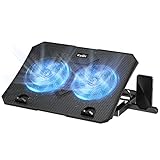
A basic cooling pad remains a middle-ground alternative. The KeiBn Laptop Cooling Pad with two fans, five height stands, and two USB ports is listed at $16.98. It is not a vacuum cooler, but its low price illustrates why shoppers should compare the value of broad support, adjustability, and cooling method before assuming that the smallest device is best.
Cost Over 5 Years
Purchase price is only the first part of ownership. An active stand costing $40 to $80 may serve as a laptop riser every day, even when its fan is turned off. A premium model around $65.99 can replace part of a charging or desk-organizing setup. If it lasts five years, the equipment cost works out to approximately $8 to $16 per year, before electricity.
Vacuum coolers commonly cost $20 to $45. At that price, they can be the cheaper initial purchase, but their specialized fit makes replacement more likely if you change laptops. Buying two units over five years would raise the equipment cost to about $40 to $90. A vacuum fan also tends to run at higher speeds during demanding sessions, although the USB electricity cost is usually modest compared with the laptop’s own power use.
Maintenance affects both choices. Dust buildup can restrict airflow and shorten fan life, so inspect grilles and vents every few months. Do not use a vacuum cooler as a substitute for cleaning the laptop’s internal fans. The most economical option is the one that remains compatible with your computer and useful in your room for the full five-year period.
Which One for Your Home
Small apartment
Pick an active cooling stand if you have one desk that serves as an office, dining table, and entertainment area. Its larger footprint takes space, but its raised screen and finished appearance make the desk more comfortable for long sessions. Choose a vacuum cooler only if storage is extremely limited and gaming heat is your primary concern.
Family with kids or pets
An active stand is usually safer and easier to manage because it provides a broad, stable base and fewer protruding parts. Route its USB cable along the back of the desk. A vacuum cooler can be knocked or pulled when attached to a laptop, and its small parts or loose cable may be more vulnerable in a busy room.
Rental
For a rental, choose a freestanding solution that requires no drilling, adhesive, or permanent cable installation. A compact vacuum cooler is convenient if you move between rooms, while an active stand is better if you have a designated desk. Either way, look for rubber feet and a base that will not scratch a finished tabletop.
Long-term home
If you are building a permanent office, start with an active stand. It can remain useful after you replace the laptop and can complement a separate monitor, keyboard, and charging setup. Add a vacuum cooler later only if a compatible gaming or workstation laptop still needs focused exhaust assistance.
FAQ
Is an active cooling stand better than a vacuum laptop cooler?
Neither is universally better. An active stand is better for comfort, stability, and general home use. A vacuum cooler is better for targeted exhaust removal when the laptop has a suitable vent and runs hot during sustained workloads.
Will a vacuum laptop cooler fit every laptop?
No. Compatibility depends on the location, shape, and size of the exhaust vent. Check the cooler’s attachment range and your laptop’s vent design before buying. A stand is generally less dependent on laptop-specific airflow layout.
Are active cooling stands quiet?
Many are reasonably quiet at lower speeds, but every fan produces some sound. Noise depends on fan size, speed, dust, and the surface beneath the stand. If you work in a bedroom or during calls, prioritize adjustable speeds and published noise information when available.
Which should I buy in 2026?
For most households, buy an active cooling stand if the laptop is part of your daily workspace. Choose a vacuum laptop cooler when gaming or creative workloads create a specific heat problem and the laptop’s exhaust vent is clearly compatible. If you are uncertain, the stand is the more flexible first purchase.
Related guides
- Alienware 16 Aurora RTX 5070 Review: Display, Portability and Configuration Gaps
- Lenovo Legion Pro 7i Gen 10 Review: 64GB RAM and Dual-SSD Configuration
- MSI Katana 15.6-inch RTX 5050 Review: Configuration Strengths and Upgrade Unknowns
- ASUS ROG Strix SCAR 16 G635LX-XS97 Review: Display Ambition, Upgrade Questions


