
Choosing an RTX 5080 laptop by wattage alone is one of the easiest ways to overspend—or buy a machine that looks powerful on paper but cannot sustain that power comfortably. Shoppers often see “RTX 5080” and assume every version performs alike. They do not. A thin 16-inch laptop with a lower graphics power limit can be a smart portable choice, while a thick 18-inch desktop replacement can give the GPU more thermal headroom and sustain higher clocks for longer gaming or rendering sessions.
The other common mistake is treating the advertised maximum TGP as a guaranteed, constant number. Manufacturers may list a maximum GPU power figure that includes Dynamic Boost, while actual power behavior changes with the game, CPU load, performance mode, room temperature, and whether the laptop is plugged in. The goal is not simply to buy the highest wattage available. It is to buy the wattage, cooling system, screen, and chassis size that fit how and where you use the laptop.
As an Amazon Associate we earn from qualifying purchases at no extra cost to you.


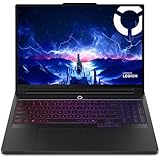
Top 3 picks at a glance
Decide These 3 Things First
- Choose your screen size and portability limit. A 16-inch RTX 5080 laptop usually weighs about 5.0 to 6.5 pounds, while 18-inch models often reach 7.0 to 9.0 pounds before adding a 1.8- to 2.5-pound power adapter. If you carry it daily, this matters as much as GPU wattage.
- Set your target resolution and frame-rate goal. For a 2560 × 1600 or 2560 × 1440 display, a well-cooled RTX 5080 with roughly 115 to 150 watts of available graphics power is a strong fit for high-refresh gaming. For a 4K-class panel, prioritize the display itself, memory capacity, and cooling rather than expecting wattage alone to solve every performance demand.
- Decide whether you value sustained speed or a slimmer design. If the laptop will mostly sit on a desk, choose the larger chassis with a higher sustained power target. If it will travel between classes, meetings, or rooms, an 80- to 115-watt design can be the more practical purchase even if it gives up some peak performance.
Chassis Size Determines How Useful High TGP Really Is
RTX 5080 laptop GPUs are commonly configured within an approximately 80- to 150-watt graphics-power range, depending on the laptop design. At the upper end, the GPU generally needs a large chassis, substantial heat dissipation, and a high-capacity charger. A 150-watt GPU configuration is most at home in a 17- or 18-inch model that is around 0.9 to 1.2 inches thick. These machines are intended to be moved occasionally, not carried all day.
Sixteen-inch models are the broad middle ground. Many measure roughly 14.0 by 10.0 inches and 0.75 to 1.0 inch thick. In this class, a laptop capable of 115 to 140 watts can offer an excellent balance of speed and manageability. It is also the category where you need to read the specifications most closely: two similar-looking 16-inch RTX 5080 systems may have meaningfully different cooling designs and power limits.
Do not dismiss a lower-power 14- or thin 16-inch laptop automatically. A system in the 80- to 105-watt range may be quieter, easier to pack, and more pleasant to use away from a desk. But if your primary goal is maximum frame rates, 3D work, or long rendering jobs, the larger machine has a clearer advantage because it can sustain more power.
Cooling Construction Matters More Than Marketing Language
For an RTX 5080 laptop, look beyond phrases such as “advanced cooling” or “AI cooling.” Find the details: vapor chamber or heat pipes, number of fans, rear and side exhaust vents, air-intake area, and whether the manufacturer states separate CPU and GPU power figures. A 150-watt GPU paired with a high-end processor can create a combined system load well above 200 watts, so the cooling system must manage both components at once.
Thicker aluminum-and-magnesium chassis designs tend to feel more rigid and can provide room for larger fans and heat sinks. Plastic is not automatically a deal-breaker, but inspect vent placement, keyboard flex, and the underside design. Avoid placing any gaming laptop on bedding, a couch cushion, or deep carpet; blocking the bottom intake can reduce performance and increase fan noise.
A useful buying question is: What is the sustained GPU power in the laptop’s standard or performance mode? The maximum figure may be 150 watts, but a machine that only reaches that level briefly is different from one designed to hold near that level during long gaming sessions. Manufacturers do not always publish sustained figures, so favor detailed technical documentation and independent hands-on coverage when available.
Performance Depends on the Whole Power Budget
TGP means Total Graphics Power: the power budget assigned to the laptop GPU. A higher TGP can allow higher sustained GPU clocks, but it is not a universal performance score. The CPU, system memory, screen resolution, cooling profile, and software settings all affect what you actually see.
For gaming at 2560 × 1600, an RTX 5080 laptop with 115 watts or more is a sensible target for buyers who want a 240Hz panel to feel worthwhile in competitive titles. In visually demanding single-player games, native resolution, ray tracing settings, and image-upscaling options will have a much larger effect on frame rate than the difference between, for example, 140 and 150 watts.
For content creation, prioritize 32GB of RAM as a practical minimum. Choose 64GB if you edit high-resolution video, work with large CAD files, run virtual machines, or keep several creative applications open at once. Storage should start at 1TB, but 2TB is the more comfortable choice when modern games can occupy 80GB to 150GB each. Check whether the laptop includes two M.2 SSD slots, since adding storage later can cost less than paying for a factory upgrade.
Also compare the display to the GPU. A 240Hz QHD+ panel is a balanced pairing for many buyers. An OLED panel can provide exceptional contrast and fast pixel response, but confirm brightness, refresh rate, and any burn-in coverage in the warranty. A high-wattage GPU is wasted if the display is dim, slow, or limited to a resolution that does not suit your work.
Price Tiers: Pay for Cooling, Screen, and Memory—not Just the GPU Label
RTX 5080 laptops occupy a premium category, but prices can vary sharply. Around $2,700 to $3,000, expect capable 16-inch models with 32GB of DDR5 memory, a 1TB or 2TB SSD, and a QHD+ high-refresh display. The HP OMEN Max configuration at $2,799 and the MSI Vector 16 HX AI at $2,798.88 illustrate this value-focused performance tier.
From roughly $3,200 to $3,800, you are typically paying for a higher-end display, more refined chassis construction, stronger cooling, larger battery capacity, or upgraded processor and memory options. A Lenovo Legion Pro 7i configuration priced around $3,589 falls into this range, where buyers should compare the screen, warranty, ports, and sustained-performance design closely.
At $4,000 to $4,500 and above, expect premium materials, larger screens, more elaborate cooling, and a more polished fit and finish. The Razer Blade 18 at $4,499.99 represents the luxury desktop-replacement end of the category. It may be the right purchase if you specifically value its 18-inch format and premium build, but it is not automatically the best value per dollar of gaming performance.
In 2026, do not pay a large premium solely for a claimed 150-watt maximum TGP if a less expensive, well-cooled 115- to 140-watt model has the screen, memory, and portability you prefer.
Warranty and Service Are Part of the Purchase Price
Most gaming laptops include a one-year limited warranty. Before buying, confirm whether it covers parts and labor for the full 12 months, whether shipping is included for repairs, and whether accidental-damage protection is available. Extended coverage often costs about $150 to $400 depending on term length and accident coverage.
For an expensive RTX 5080 system, service access matters. Check whether memory and SSD upgrades are user-accessible, and whether opening the bottom panel affects warranty coverage in your region. A laptop with two accessible SSD slots and standard memory modules can be a better long-term buy than a thinner system with soldered components and limited expansion.
Keep the original box for at least the return period. Large 18-inch laptops can be difficult and expensive to ship safely without their molded packaging.
Delivery, Setup, and Desk Space Should Not Be Afterthoughts
Measure your desk before ordering. A typical 16-inch gaming laptop needs a clear working area of at least 36 inches wide by 24 inches deep once you account for the charger, mouse, and ventilation space. An 18-inch model is more comfortable on a desk at least 42 inches wide and 28 inches deep. Leave 3 to 6 inches behind the rear exhaust vents.
Plan for the power adapter. High-performance RTX 5080 laptops may use 280-watt, 330-watt, or higher-capacity adapters, often measuring around 6 to 8 inches long. Use the included charger for full performance; USB-C charging can be convenient for travel on supported models, but it usually cannot supply enough power for maximum gaming performance.
After delivery, update the operating system, graphics driver, and manufacturer control software. Then check the available GPU modes: Quiet, Balanced, Performance, and manual or custom modes are common. Use Balanced for everyday work and Performance when plugged in for gaming or rendering. Do not judge a laptop’s TGP or speed from battery operation, because battery power limits are much lower.
Spec Checklist
| Spec | Budget | Mid | Premium |
|---|---|---|---|
| Typical price | $2,700–$3,000 | $3,200–$3,800 | $4,000–$4,500+ |
| Chassis size | 16 inches | 16–17 inches | 17–18 inches |
| RTX 5080 TGP target | 100–115W | 115–140W | 140–150W |
| Memory | 32GB DDR5 | 32GB DDR5, upgradeable | 64GB DDR5 or upgradeable 32GB |
| Storage | 1TB SSD | 2TB SSD or second M.2 slot | 2TB+ SSD and two M.2 slots |
| Display | QHD/QHD+, 165Hz | QHD+, 240Hz | QHD+ 240Hz or premium OLED |
| Best for | Value-focused desk gaming | Gaming and creative work | Maximum sustained performance |
Red Flags
- A listing that says “up to 150W” but does not identify the base TGP or whether Dynamic Boost is included.
- An 80- to 105-watt RTX 5080 priced the same as a clearly documented 140- to 150-watt competitor with similar memory and storage.
- Only 16GB of RAM in a laptop priced above $2,700.
- A 1TB SSD with no second storage slot when the laptop is intended for a large game library or media work.
- A 240Hz display without stated resolution, brightness, panel type, or variable-refresh-rate support.
- Rear exhaust vents placed so close to a wall or monitor stand that airflow will be blocked.
- Claims of desktop-equivalent performance without clear information on cooling, power modes, and charger capacity.
FAQ
Is 150W always better than 115W for an RTX 5080 laptop?
Not always. A 150-watt configuration can offer more sustained performance, especially in a large, well-cooled chassis. But the gain may be modest in some games, while the laptop can be heavier, louder, and more expensive. For a portable 16-inch machine, 115 to 140 watts is often the more balanced range.
Does Dynamic Boost count toward TGP?
It depends on how the manufacturer presents the specification. Some listings state a maximum graphics power that includes Dynamic Boost; others separate the base TGP and boost allowance. Look for both numbers and treat “maximum” as a ceiling rather than a constant operating level.
Can I get full RTX 5080 performance on battery power?
No. Gaming laptops reduce CPU and GPU power substantially on battery to protect battery life and manage heat. For full-performance modes and the highest available TGP, keep the laptop connected to its included power adapter.
Should I buy a 16-inch or 18-inch RTX 5080 laptop?
Choose 16 inches if you need a machine that can travel regularly and fit in a standard backpack. Choose 18 inches if it will mostly stay on a desk, you want the largest screen, and you value the cooling capacity needed for the highest sustained GPU power.
Related guides
- Alienware 16 Aurora RTX 5070 Review: Display, Portability and Configuration Gaps
- Lenovo Legion Pro 7i Gen 10 Review: 64GB RAM and Dual-SSD Configuration
- MSI Katana 15.6-inch RTX 5050 Review: Configuration Strengths and Upgrade Unknowns
- ASUS ROG Strix SCAR 16 G635LX-XS97 Review: Display Ambition, Upgrade Questions


