
For a laptop with an RTX 5080, “thin and light” is a relative term. These machines are slimmer and easier to carry than traditional desktop-replacement gaming laptops, but they are not usually as thin as an ultraportable office notebook. The graphics processor, cooling system, large battery, and high-wattage power adapter all add bulk.
Most RTX 5080 laptops measure about 0.6 to 1.1 inches thick (1.5 to 2.8 cm), with footprints around 14 to 16 inches wide and 9.5 to 11 inches deep. Weight generally falls between 4.3 and 6.5 pounds, before adding the charger. For 2026 buyers, the key is to check the complete footprint and power setup—not thickness alone.
As an Amazon Associate we earn from qualifying purchases at no extra cost to you.

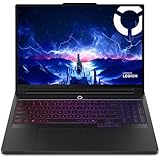


Top 3 picks at a glance
The Short Answer
A genuinely thin RTX 5080 laptop is approximately 0.6 to 0.8 inches thick and weighs roughly 4.3 to 5 pounds. This class usually uses a 16-inch display, a compact chassis, and carefully limited power settings.
More powerful performance models are closer to 0.9 to 1.1 inches thick and weigh 5.5 to 6.5 pounds. They commonly provide better sustained cooling and allow the laptop RTX 5080 to run closer to its upper power range. The tradeoff is a larger charger, often weighing another 1.5 to 2.5 pounds.
For planning purposes, reserve at least a 15-by-11-inch surface for a compact model and about 17-by-13 inches for a large laptop with room for ventilation and cables. Do not push the rear or side vents directly against a wall.
Standard Sizes
The table below compares representative RTX 5080 laptop size categories and several current-style configurations. Manufacturer measurements can vary slightly by display, battery, rubber feet, and regional configuration, so treat them as practical planning dimensions rather than furniture-grade tolerances.
| Example or category | Width | Depth | Thickness | Approx. weight |
|---|---|---|---|---|
| Compact 16-inch thin-and-light class | 13.98 in / 35.5 cm | 9.69 in / 24.6 cm | 0.59–0.69 in / 1.5–1.8 cm | About 4.3 lb / 2.0 kg |
| HP OMEN Max 16 RTX 5080 class | About 14.05 in / 35.7 cm | About 9.77 in / 24.8 cm | About 0.98 in / 2.5 cm | About 5.2 lb / 2.4 kg |
| Lenovo Legion Pro 7i Gen 10 | About 14.02 in / 35.6 cm | About 10.41 in / 26.4 cm | About 0.86–1.02 in / 2.2–2.6 cm | About 6.17 lb / 2.8 kg |
| MSI Vector 16 HX | About 14.13 in / 35.9 cm | About 10.33 in / 26.2 cm | About 0.98 in / 2.5 cm | About 5.95 lb / 2.7 kg |
| Large performance gaming class | 15.5–16.5 in / 39.4–41.9 cm | 10.5–11.5 in / 26.7–29.2 cm | 1.0–1.2 in / 2.5–3.0 cm | 6–7 lb / 2.7–3.2 kg |
The compact category is the closest match to the phrase “thin and light,” but it may sacrifice some peak graphics power or sustained performance. The HP OMEN Max, Lenovo Legion Pro 7i, and MSI Vector 16 are better described as portable performance laptops. Their roughly 14-inch width makes them easy to place in many bags, while their depth and weight are more substantial than those of a typical productivity laptop.
Price also follows the hardware and cooling design. The examples listed range from approximately $2,799 to $3,589. A larger chassis does not automatically mean a better screen or faster laptop, but it often creates more room for heat pipes, fans, memory, storage, and a higher-power processor.
How to Measure Your Space
- Measure usable width. Measure the flat area from left to right, not just the opening between furniture arms. Add at least 1 inch (2.5 cm) of clearance on each side if you regularly connect accessories.
- Measure usable depth. Measure from the front edge to the wall or monitor stand. A laptop that is 10.4 inches deep needs more than 10.4 inches in practice because rear vents and cable connectors need open air.
- Check height at the hinge. When the lid is open, the display rises well above the desk. If the laptop will sit beneath a shelf, measure from the desktop to the underside of the shelf with the screen opened to your preferred angle.
- Account for ventilation. Leave roughly 2 to 4 inches (5 to 10 cm) behind the laptop and avoid blankets, cushions, or soft furniture that can block bottom intake vents.
- Measure the charger separately. A 240W, 280W, or 330W adapter can take up a substantial section of a small desk. Measure its length and width, and plan for the cable’s bend radius.
- Check the bag compartment. Use the laptop’s actual width and depth rather than its screen size. A 16-inch laptop can be too large for a bag advertised as “16-inch compatible” if its interior dimensions are tight.
By Room or Use Case
Home office desk
A desk at least 24 inches wide and 20 inches deep works well for an RTX 5080 laptop, mouse, and a little cable room. A 30-by-24-inch desk is more comfortable if you use an external monitor. Keep the laptop on a hard surface, and position the charger where it cannot pull on the power connector.
Small bedroom or dorm room
Choose the compact end of the size range if the laptop will live on a narrow desk. A surface around 18 by 14 inches can hold the computer, but it leaves little room for a mouse or external drive. A laptop stand can improve airflow, although it increases the overall height and may make a shallow desk less convenient.
Living room or sofa use
These laptops are portable, but using one on a sofa or bed is not ideal. Soft surfaces can restrict intake vents and allow heat to build up. A lap desk with a rigid base should be at least 16 by 12 inches, preferably larger, with an open area beneath the laptop.
Travel and commuting
For frequent travel, target a machine under 5 pounds and verify the combined computer-and-charger weight. A 6-pound laptop paired with a 2-pound adapter can make a shoulder bag uncomfortable. Also check whether the backpack has a padded compartment at least 15 inches wide and 11 inches deep.
Gaming setup with a monitor
If the laptop will usually connect to a 27-inch monitor, keyboard, and mouse, chassis thickness matters less than port placement and desk depth. Allow at least 28 inches of desk width for a comfortable laptop-plus-monitor arrangement. Keep the laptop open enough for ventilation unless the manufacturer specifically supports closed-lid operation.
Common Sizing Mistakes
- Confusing screen size with chassis size: A 16-inch display does not mean the laptop is exactly 16 inches wide. Bezels and hinge design affect the footprint.
- Ignoring the charger: The computer may fit in a bag while the high-wattage adapter does not fit in the accessory pocket.
- Measuring only the thinnest edge: Some laptops taper, and the rear section may be thicker because of cooling hardware. Use the maximum listed thickness.
- Forgetting open-lid clearance: A laptop can fit under a shelf when closed but become unusable when the screen is raised.
- Blocking the vents: A tight cubby or fabric surface can restrict airflow and cause the fans to run louder.
- Assuming every RTX 5080 has the same power: Laptop RTX 5080 implementations can use substantially different power limits, commonly ranging from roughly 80W to 175W. Thin designs may run at lower limits to manage heat and noise.
FAQ
Are RTX 5080 laptops actually thin and light?
Some are, especially models around 0.6 to 0.8 inches thick and 4.3 to 5 pounds. However, many performance-focused versions are closer to 1 inch thick and 6 pounds. They are portable gaming laptops, not ultraportables.
How much desk space does an RTX 5080 laptop need?
Plan on at least 15 by 11 inches for the computer itself, then add ventilation and mouse space. A 24-by-20-inch desk is a more practical minimum for everyday use.
What is the typical weight with the charger?
Expect approximately 6 to 8.5 pounds total, depending on the laptop and adapter. Thin models may use a smaller power brick, while high-performance systems can include a 280W or 330W adapter.
Is a 16-inch RTX 5080 laptop too large for travel?
Not necessarily. A 16-inch model around 14 inches wide can fit many large laptop backpacks. Check the bag’s interior measurements, padding, and charger compartment before buying, and compare the complete travel weight rather than the laptop weight alone.
Related guides
- Alienware 16 Aurora RTX 5070 Review: Display, Portability and Configuration Gaps
- Lenovo Legion Pro 7i Gen 10 Review: 64GB RAM and Dual-SSD Configuration
- MSI Katana 15.6-inch RTX 5050 Review: Configuration Strengths and Upgrade Unknowns
- ASUS ROG Strix SCAR 16 G635LX-XS97 Review: Display Ambition, Upgrade Questions


