The best bike rear light for most riders is the Trek Flare RT for its strong daytime flash, compact mounting, and dependable rechargeable design; choose the Garmin Varia RTL515 if traffic detection matters more than maximum brightness, or the Lezyne Strip Drive Pro 400+ if you want the brightest, most versatile conventional taillight.
As an Amazon Associate we earn from qualifying purchases at no extra cost to you.



Our Top Picks

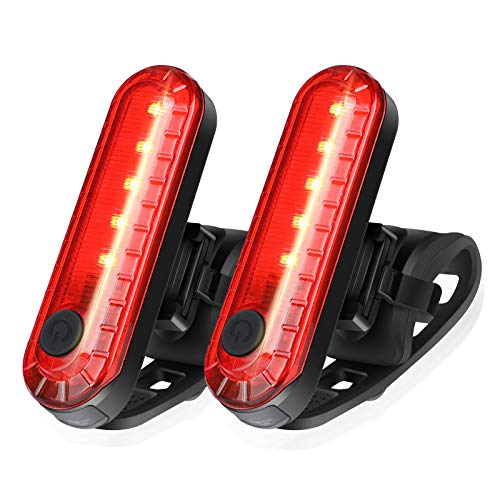
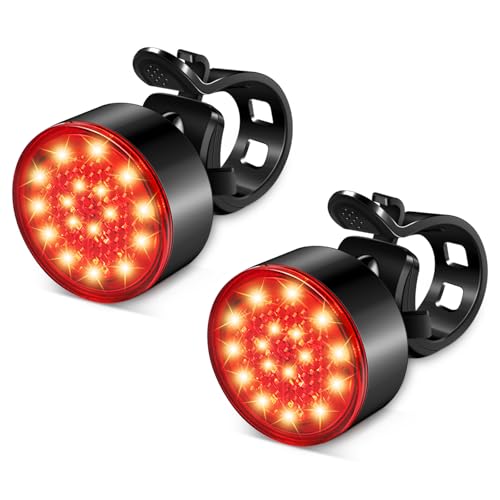
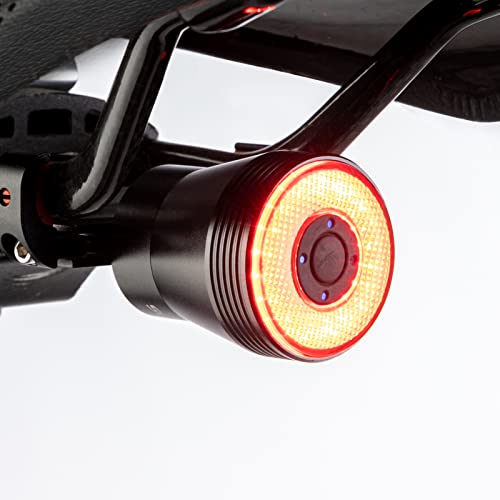
Top 3 picks at a glance
Best bike rear lights ranked
| Rank | Model | Best for | Maximum output | Claimed maximum runtime | Notable strength |
|---|---|---|---|---|---|
| 1 | Trek Flare RT | Daily road riding | 90 lumens | Up to 13.5 hours, mode-dependent | Excellent daytime flash and compact mount |
| 2 | Garmin Varia RTL515 | Roads with fast-moving traffic | Up to 65 lumens | Up to 6 hours with radar active | Rear-approach radar and app or head-unit alerts |
| 3 | Lezyne Strip Drive Pro 400+ | Maximum conventional brightness | 400 lumens | Up to about 30 hours, mode-dependent | Very bright output and broad visibility |
| 4 | Knog Blinder Road 600 | Powerful road-focused flash patterns | 600 lumens | Mode-dependent; lower settings last substantially longer | High peak output and multiple beam patterns |
| 5 | Cygolite Hotrod 90 | Simple commuter setup | 90 lumens | Up to about 100 hours on its lowest mode | Small body, easy mounting, long low-mode runtime |
Manufacturers quote runtime differently, and the brightest flash is rarely the mode you should use all day. Treat the figures above as comparison points rather than guarantees: temperature, battery age, flash pattern, and whether the light is being used continuously all affect the result.
1. Trek Flare RT: best overall rear light
The Trek Flare RT remains the strongest all-round choice for riders who want a dedicated visibility light without radar hardware. Its daytime-focused flash is designed to attract attention from a long distance, while its compact body works well on a seatpost, saddle bag, or rear rack with the appropriate mount.
Its advantages are balance rather than headline specifications. The beam is visible from a wide rear angle, the rechargeable battery is practical for regular commuting, and ANT+ connectivity allows compatible cycling computers to control the light. The housing is weather-resistant enough for normal wet-road use, although it should not be treated as a light designed for prolonged submersion.
Choose it if: you ride in traffic regularly, want a bright daytime flash, and prefer a small light with a secure dedicated mount.
2. Garmin Varia RTL515: best for detecting approaching vehicles
The Garmin Varia RTL515 is not the brightest light in this group, but it can be the most useful safety device on roads where vehicles approach from behind. Its radar detects compatible vehicles from behind and can show their distance and closing behavior on a Garmin head unit, smartphone app, or other compatible display.
The radar changes the riding experience because you do not need to keep checking over your shoulder to know that a vehicle is approaching. It does not identify every road user, and it cannot replace observation, shoulder checks, or good positioning. It also adds another battery to manage and costs more than a conventional rear light, usually around $150–$220 depending on the bundle and market.
The beam is deliberately attention-getting, but riders seeking maximum daytime intensity may prefer the Trek or Lezyne. Mounting security is generally good when the quarter-turn mount is fully engaged; check that the mount is tight because a radar light is heavier and more expensive than a basic flasher.
Choose it if: you ride rural roads, frequently encounter traffic from behind, and already use a compatible cycling computer or phone.
3. Lezyne Strip Drive Pro 400+: best for maximum brightness
The Lezyne Strip Drive Pro 400+ is the conventional-light choice for riders who prioritize a very bright output and a wide, attention-grabbing rear presence. Its multiple LEDs and flash patterns make it useful for daytime road riding, urban commuting, and group rides where a small low-output light can disappear into background traffic.
The trade-off is size and charging discipline. A 400-lumen setting consumes much more energy than a 30- or 50-lumen pulse, and its high output can be unnecessarily harsh when riding in a close group at night. Select a lower steady or pulsing mode after dark, and reserve maximum output for daylight, poor weather, or high-speed roads.
The broad lens helps with off-axis visibility, but no rear light provides equal brightness from every angle. Position it vertically and keep bags, jackets, and seat packs from covering the lens.
4. Knog Blinder Road 600: best for high-output flash patterns
The Knog Blinder Road 600 suits riders who want a powerful rear flasher with several distinct patterns rather than a single simple pulse. Its peak output is more than enough for daytime visibility, and the compact form factor is convenient on performance bikes.
Its main limitation is that maximum-lumen figures do not describe beam quality or runtime by themselves. A focused beam may look extremely bright directly behind the bicycle but provide less side visibility than a wider strip-style lens. Select a pattern that remains visible from angled approaches, particularly on junctions and multi-lane roads.
Mounting deserves attention: use the correct strap tension for your seatpost and check it before every ride. An aerodynamic or unusual-shaped post may require a different mounting solution than a standard round post.
5. Cygolite Hotrod 90: best simple commuter light
The Cygolite Hotrod 90 is a sensible choice for riders who want a small, uncomplicated light at a generally lower market price, often around $30–$50. It offers useful flash modes, broad enough visibility for urban riding, and excellent low-mode endurance.
It is not the pick for the fastest rural roads or the darkest unlit routes. Its value comes from being easy to leave on a commuter bike and inexpensive enough that buying a second unit for a bag or backup mount is practical. Use a brighter model if your route includes high-speed traffic, heavy rain, or long stretches without street lighting.
How to choose by riding situation
| Your situation | Best match | Recommended setup | Why |
|---|---|---|---|
| Daytime road riding with frequent traffic | Trek Flare RT | Day flash, mounted 70–120 cm above the road where possible | Strong attention signal without radar cost or extra complexity |
| Rural roads with vehicles approaching from behind | Garmin Varia RTL515 | Radar enabled; pair with a compatible head unit or phone | Provides approach alerts as well as rear lighting |
| Urban commuting in daylight | Cygolite Hotrod 90 | Medium flash; carry a charging cable at work | Compact, affordable, and easy to keep charged |
| Fast riding or poor daytime visibility | Lezyne Strip Drive Pro 400+ | High daytime flash; reduce output in close groups | Large output and wide rear presence |
| Performance bike with limited mounting space | Knog Blinder Road 600 | Use the most side-visible flash pattern | High output in a compact body |
Brightness is not the same as visibility
Rear-light performance depends on four related factors:
- Peak output: useful for daytime attention, but it can shorten runtime quickly.
- Beam pattern: a broad, diffused lens helps vehicles approaching from an angle.
- Flash timing: irregular or attention-focused patterns can stand out better than a weak constant glow.
- Mount position: a bright light hidden behind a saddle bag is less useful than a lower-output light with a clear view.
For night riding in a group, avoid the most aggressive mode if it distracts riders behind you. A moderate steady or gentle pulse is usually more considerate, while a brighter daytime flash is appropriate when background glare and daylight reduce contrast.
A practical runtime calculation
Suppose a light has a 1,000 mAh battery at 3.7 volts. Its approximate stored energy is:
1 Ah × 3.7 V = 3.7 Wh
If the light consumes an average of 0.5 watts on a particular mode, the theoretical runtime is:
3.7 Wh ÷ 0.5 W = 7.4 hours
Real runtime may be closer to six hours after accounting for circuit losses, temperature, battery protection, and the point at which the light reduces output. This is why a 400-lumen mode may last only a few hours while a low flash can last a day or more. If your commute is 45 minutes each way, five days per week, you need about 7.5 hours of weekly use. A light rated for six hours on your chosen mode will not cover the week without a midweek charge.
Mounting, weather resistance, and charging checklist
- Check the angle: aim the light straight back rather than toward the ground or sky.
- Test the mount: push the light sideways and upward before riding. It should not rotate or slide down the post.
- Keep the lens clear: mud and road spray can reduce apparent brightness more than a small lumen difference.
- Match weather protection to use: IPX ratings indicate water resistance, not impact resistance or resistance to pressure washing.
- Prefer USB-C when convenient: it reduces cable clutter if your phone, computer, and other riding equipment use the same connector.
- Charge before the low-battery warning: output can drop or flash patterns can change when the battery is nearly empty.
Frequently asked questions
Can the Garmin Varia RTL515 replace checking over my shoulder?
No, the Garmin Varia RTL515 cannot replace observation, shoulder checks, or good road positioning. Its radar detects compatible vehicles approaching from behind and can show their distance and closing behavior on a compatible cycling computer, smartphone app, or other display. It does not identify every road user, so riders still need to remain attentive to their surroundings.
Which rear-light mode should I use when riding with a group at night?
Use a moderate steady or gentle pulse rather than the most aggressive mode. A high-output flash can distract riders behind you, especially in a close group, while a moderate setting is usually more considerate. Reserve brighter daytime flashes for conditions where background glare or daylight reduces contrast, and choose an output appropriate for the riding environment.
How often might I need to recharge a rear light during a commuting week?
You may need a midweek charge if your chosen mode lasts six hours or less. A commute of 45 minutes each way, five days per week, requires about 7.5 hours of weekly use. Actual runtime varies with temperature, battery age, flash pattern, and continuous use, so the manufacturer’s claimed figure should be treated as a comparison point rather than a guarantee.
Where should I position a rear light for better visibility?
Position the light where the lens has a clear view and, where possible, mount it 70–120 cm above the road. Keep saddlebags, jackets, and seat packs from covering it. A broad or diffused lens can help vehicles approaching from an angle, but no rear light provides equal brightness from every direction, so mounting position and beam pattern both matter.
Does a higher lumen rating always mean a rear light is more visible?
No, a higher lumen rating does not always mean better visibility. Beam pattern, flash timing, and mount position also affect how well a light attracts attention. A focused beam may appear very bright directly behind the bicycle but offer less side visibility than a wider strip-style lens. Peak output can also shorten runtime quickly, particularly on high-power modes.
Final verdict
For most cyclists, the Trek Flare RT is the best bike rear light because it combines daytime visibility, manageable size, useful runtime, and a secure mounting system. The Garmin Varia RTL515 is the better safety upgrade for traffic awareness, while the Lezyne Strip Drive Pro 400+ is the stronger choice when maximum conventional brightness is the priority. Whichever model you choose, a clear lens, reliable mount, and charging routine matter as much as the lumen number printed on the box.