The best reel to reel tape recorders for home listening are the Revox B77 for the strongest all-round vintage choice, the Technics RS-1500 for versatile high-fidelity playback, the Pioneer RT-707 for a compact deck, and the Tascam 32 or Otari MX-5050 for practical recording—provided you verify the machine’s format, speed, heads, and service history before buying.
As an Amazon Associate we earn from qualifying purchases at no extra cost to you.


Our Top Picks
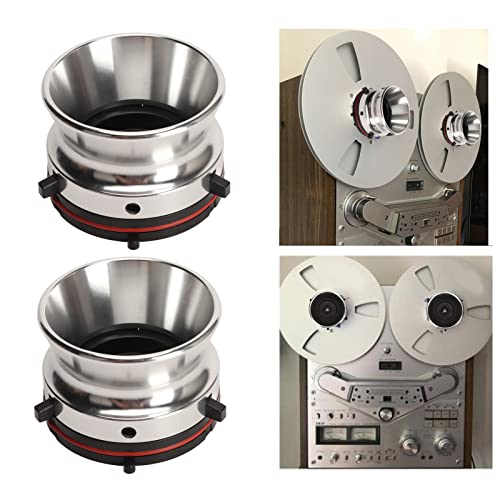
 American Recorder Technologies S-721H-2 Professional Tape Head Cleaner-2oz1 Count (Pack of 1)Check on Amazon


Top 3 picks at a glance
Quick comparison
| Model | Main strength | Typical speeds | Track format | Best use | Typical 2026 market range |
|---|---|---|---|---|---|
| Revox B77 | Serviceable, excellent playback and recording | 3¾/7½ or 7½/15 ips | ¼-track stereo or ½-track stereo | Serious home listening and recording | Usually $1,200–$3,000, depending on service |
| Technics RS-1500 | Direct-drive transport and format flexibility | 3¾/7½/15 ips | ¼-track, with some models supporting multiple formats | Playback of varied tape collections | Usually $1,500–$3,500 |
| Pioneer RT-707 | Compact, attractive, relatively easy to use | 3¾/7½ ips | ¼-track stereo | Pre-recorded tapes and casual recording | Usually $900–$2,000 |
| Tascam 32 | Simple half-track recording | 7½/15 ips | ½-track stereo | Making high-quality stereo masters | Usually $800–$1,800 |
| Otari MX-5050 | Professional transport and robust construction | Often 7½/15 ips, depending on version | ½-track or ¼-track, depending on version | Studio-quality recording and playback | Usually $1,000–$3,000 |
| Sony TC-377 | Affordable entry into vintage reel-to-reel | 1⅞/3¾/7½ ips | ¼-track stereo | Learning the format on a budget | Usually $300–$800 before restoration |
These ranges describe broad used-market expectations rather than guaranteed prices. A recently serviced machine can cost considerably more than an apparently identical deck that needs belts, capacitors, pinch rollers, alignment, and head work.
What to choose for your situation
| Your situation | Best fit | Why | Important limitation |
|---|---|---|---|
| You mainly want to play commercial prerecorded tapes | Revox B77 or Technics RS-1500 | Both can offer excellent transport stability and high-speed playback | You must match the tape’s track format and speed |
| You want to record stereo mixes at the highest practical quality | Tascam 32 or half-track Revox B77 | ½-track stereo puts more tape width behind each channel | ½-track tapes are not automatically compatible with ordinary ¼-track decks |
| You have a mixed collection of old tapes | Technics RS-1500 or a correctly configured Revox | Format and speed flexibility reduce compatibility problems | Some RS-1500 variants differ substantially in heads and electronics |
| You want a smaller vintage deck | Pioneer RT-707 | More compact than many professional machines and supports 7½ ips | No 15 ips operation and generally less format flexibility |
| You need a rugged machine for frequent recording | Otari MX-5050 | Professional transport design and strong parts availability in specialist circles | Versions vary; connectors, track format, and speed must be checked carefully |
| You have a small budget and accept restoration work | Sony TC-377 or similar three-speed consumer deck | Lower purchase cost and useful learning platform | Restoration can cost more than the machine |
Playback versus recording: the decision that matters most
A reel-to-reel deck may be excellent at playback yet inconvenient for recording. Commercial prerecorded tapes are commonly ¼-track stereo, while professional stereo masters are often ½-track. A ¼-track stereo tape divides the tape into four longitudinal tracks and uses two tracks at a time for stereo. The tape can be turned over to play the other stereo pair. A ½-track stereo machine uses roughly half the tape width for each channel, normally in one direction only.
For playback, ¼-track is usually the more practical format because many consumer prerecorded tapes and home recordings use it. For recording, ½-track can provide better signal-to-noise performance and lower crosstalk, especially at 15 ips, but it uses more tape and limits compatibility with ordinary four-track collections.
Do not assume that a machine described as “stereo” supports every stereo reel. A ½-track tape played on a ¼-track head can sound faint, phasey, or incomplete. A ¼-track tape played on a ½-track deck may reproduce only part of the program or produce severe channel imbalance.
Tape speed and what it changes
- 1⅞ ips: Long playing time, but limited treble extension and more audible tape noise. Useful mainly for voice or low-fidelity recordings.
- 3¾ ips: Common on consumer machines and suitable for many older home recordings.
- 7½ ips: The practical minimum for convincing high-fidelity music recording on many decks.
- 15 ips: The preferred speed for serious stereo recording, with better treble response and lower modulation noise, at the cost of twice as much tape as 7½ ips.
A 2,400-foot reel of standard-play ¼-inch tape runs for approximately 96 minutes at 7½ ips, but only about 48 minutes at 15 ips. The calculation is simple: 2,400 feet × 12 inches equals 28,800 inches; dividing by 7.5 inches per second gives 3,840 seconds, or 64 minutes per direction on a two-sided ¼-track recording. At 15 ips, the same reel provides about 32 minutes per direction. A ½-track recording uses the tape in one direction, so its usable program time is approximately 64 minutes at 7½ ips or 32 minutes at 15 ips.
This is why 15 ips is not automatically the best choice for every listener. It improves performance, but it doubles tape consumption and gives fewer uninterrupted albums per reel.
The strongest choices in detail
Revox B77: best all-rounder
The B77 is one of the safest recommendations for a serious home system because it combines good playback, capable recording electronics, a stable transport, and unusually strong service documentation. Versions exist with different speed pairs and track configurations, so identify the exact machine rather than buying by model name alone.
Choose a 7½/15 ips half-track machine if recording is the priority. Choose a 3¾/7½ ips quarter-track version if your collection consists mainly of consumer tapes. A serviced B77 is far more desirable than an unserviced example with a lower asking price.
Technics RS-1500: best for format flexibility
The RS-1500 is attractive to collectors with tapes from several eras. Its direct-drive transport avoids some belt-related problems, and certain configurations support unusually broad format coverage. However, the head block and electronics determine what it can actually play, so inspect the specific configuration and not merely the RS-1500 badge.
It is particularly appealing as a playback machine. Recording performance can also be excellent, but replacement heads and specialized repairs may be expensive.
Pioneer RT-707: best compact vintage option
The RT-707 offers 3¾ and 7½ ips operation in a relatively compact chassis. It is a sensible choice for prerecorded ¼-track tapes and occasional home recording. Its shorter feature list is also an advantage: there are fewer format decisions to make.
Look closely at the capstan servo, pinch roller, transport controls, and head wear. A clean exterior does not prove that the tape path is correctly calibrated.
Tascam 32 and Otari MX-5050: best recording-focused machines
The Tascam 32 is a straightforward half-track stereo recorder designed around 7½ and 15 ips operation. It is less suitable for a mixed consumer tape collection but very effective for recording stereo mixes from a modern audio interface, preamplifier, or digital source.
The Otari MX-5050 is a broader family rather than one identical specification. Some versions are half-track, some quarter-track, and speed options vary. It can be an excellent professional choice, but model suffix, head configuration, voltage, and connector type need to be confirmed before purchase.
Serviceability and the real cost of ownership
Vintage reel-to-reel machines are electromechanical devices. Common work includes replacing belts, idler tires, pinch rollers, dried lubricants, noisy switches, aging capacitors, and out-of-spec tension components. Heads may need cleaning and demagnetizing, but worn heads cannot be restored by cleaning.
- Ask whether the machine was recently serviced by someone familiar with tape transports.
- Request evidence that both channels record and play at the advertised speed.
- Check for stable capstan speed, smooth braking, and a pinch roller that is not hard or cracked.
- Inspect the heads for deep wear grooves and uneven contact patterns.
- Confirm that the machine’s mains voltage matches your electrical system.
- Budget for alignment after transport work or head replacement.
A practical reserve for professional servicing is often $300–$1,000, with complex repairs or scarce parts potentially exceeding that amount. This makes a documented service history more valuable than cosmetic restoration.
Are tapes still available?
Yes, but expectations should be realistic. New ¼-inch tape is still produced by specialist manufacturers, including products sold under the ATR Magnetics and Recording The Masters names. Availability changes by width, formulation, reel length, and region. New prerecorded music tapes are a smaller niche than vinyl or compact discs, while used tapes are plentiful but unpredictable.
Used tape requires caution. Sticky-shed syndrome affects some older back-coated formulations and can cause squealing, residue, or oxide shedding. Tapes should be stored vertically in a cool, dry environment, away from heat and strong magnetic fields. Do not put an unknown valuable reel on an expensive deck until its condition has been assessed.
Frequently asked questions
What should I check before buying a used reel-to-reel recorder?
Verify the exact model configuration, track format, available speeds, head condition, and service history. Ask for evidence that both channels record and play at the advertised speed, and check for stable capstan speed, smooth braking, and a pinch roller without hardening or cracks. Also confirm the mains voltage matches your electrical system.
Can a reel-to-reel recorder play any stereo tape?
No; the tape’s track format must match the recorder’s heads. Commercial prerecorded tapes are commonly ¼-track stereo, while professional stereo masters are often ½-track. A mismatch can result in faint, incomplete, phasey playback or severe channel imbalance. Check both the tape format and the machine’s actual head configuration.
How long does a reel of tape last at different speeds?
Playing time depends on reel length, speed, and track format. The article gives a 2,400-foot reel as an example: at 7½ ips, a ¼-track recording provides about 96 minutes across two directions; at 15 ips, about 48 minutes. A ½-track recording runs in one direction, providing approximately 64 minutes at 7½ ips or 32 minutes at 15 ips.
Does cleaning a tape head fix wear?
No; cleaning removes dirt, but it cannot restore worn heads. The article recommends inspecting heads for deep wear grooves and uneven contact patterns. Cleaning and demagnetizing are maintenance tasks, while head wear is a separate condition to assess when evaluating a machine.
What should I use to make stereo recordings from a modern audio source?
The Tascam 32 is described as a straightforward option for recording stereo mixes from a modern audio interface, preamplifier, or digital source. It records half-track stereo at 7½ and 15 ips, making it less suitable for a mixed collection of consumer tapes but effective for recording.
Bottom line
For most buyers, the Revox B77 is the best reel to reel tape recorder when playback and recording both matter. Select a quarter-track version for broad consumer compatibility or a half-track version for serious recording. Choose the Technics RS-1500 when format flexibility is the priority, the Pioneer RT-707 when compact simplicity matters, and the Tascam 32 or Otari MX-5050 when your goal is high-quality half-track recording. In every case, buy the exact track format and speed you need, and value service history above appearance.