A gaming room with bare walls gives every voice call, keyboard clack and speaker burst a second life as echo. That reflected sound blurs speech on stream, makes game audio feel harsh, and leaves recordings sounding hollow. Acoustic panels fix the reflection problem at the surface: they absorb mid and high frequency energy where it lands, so you hear direct sound from your speakers and microphone rather than the room bouncing it back.
The five panels below cover the main ways buyers treat a gaming or streaming room, from thin polyester tiles that double as wall decor to thick foam wedges and a furniture grade fabric panel with a mineral wool core. They differ in size, thickness, material, published NRC figure, coverage per pack and mounting method, and those differences matter more than brand names. One honest limit applies to every pick: panels absorb sound inside a room, they do not block sound through a wall, so they calm echo rather than isolate you.
As an Amazon Associate, we earn from qualifying purchases.
Top 3 picks at a glance

Quick answer
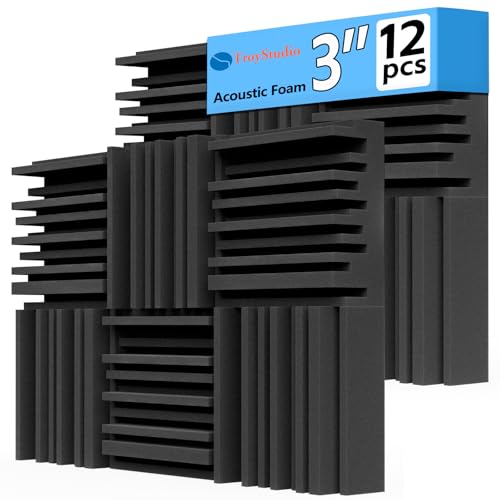
For most gaming rooms, the TroyStudio 3-inch foam pack is the balanced pick: thick tiles, honest coverage and a maker-listed NRC of 0.9. The JBER 12 pack covers the same wall area on a budget tier. For a premium result, the ATS Acoustics mineral wool panel and the Auralex Studiofoam wedges publish the strongest figures.
The five picks
JBER Acoustic Foam Panels, 12 Pack, 1 x 12 x 12 Inches
The JBER pack is the entry point for a first treatment: twelve wedge profile foam tiles, each one foot square and one inch thick, covering twelve square feet of wall. The wedge face breaks up flat reflections, and the polyurethane foam is light enough to hang with adhesive strips or spray adhesive. JBER lists the foam density at 30 kilograms per cubic meter and states an NRC above 0.8 as its own maker claim; treat that figure with care, because one inch of foam has limited reach into lower frequencies whatever the headline number says. For a desk wall or the wall behind a microphone, it handles flutter echo well for its tier and suits renters learning placement. The listing describes the foam as fire resistant, and the tiles ship in black with other colors listed.
Specs
- Size and count: 12 x 12 x 1 inches, 12 panels
- Material: Polyurethane foam, wedge profile
- Density: 30 kilograms per cubic meter (maker listed)
- Coverage: 12 square feet per pack
- NRC: Above 0.8 (maker claim)
- Mounting: Not stated
TroyStudio Thick Acoustic Foam Panels, 12 Pack, 12 x 12 x 3 Inches
TroyStudio takes the same one foot square tile format and triples the thickness. Three inches of polyurethane foam reaches further down the frequency range than thin tiles, and the grooved 3D face adds surface area while giving the wall a deliberate, geometric look. The maker lists an NRC of 0.9, again a maker claim rather than an independent figure, but the extra depth is real and is why this pack sits a tier above basic wedges. Twelve tiles cover twelve square feet, enough for the first reflection points beside and behind a desk, and the listing suggests spray adhesive, double sided tape, or small pins, so renters can choose the least invasive option.
Specs
- Size and count: 12 x 12 x 3 inches, 12 panels
- Material: Polyurethane foam, grooved 3D face
- Coverage: 12 square feet per pack
- NRC: 0.9 (maker claim)
- Weight: 2.97 pounds per pack
- Mounting: Adhesive, tape or pins (per listing)
BUBOS Acoustic Wall Panels, 6 Pack, Wood Print, 23.62 x 23.62 Inches
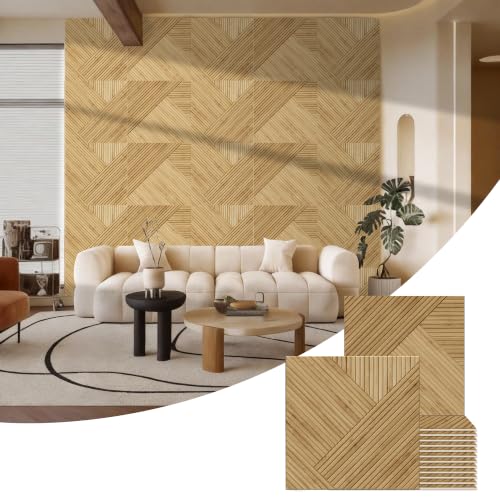
BUBOS answers a different brief: treatment that looks like decor. Each of the six panels measures just under two feet square and carries a realistic wood print over high density polyester fiber, so a treated wall reads as a design feature rather than a studio build. At 0.4 inches thick these are thin panels, and BUBOS publishes no NRC figure, so judge them as reflection control for speech and echo rather than deep absorption. The peel and stick backing is the practical headline: no nails, no drills and no separate adhesive purchase, and the maker says the panels come down cleanly. Six panels span about 23 square feet, and the product page carries an OEKO-TEX Standard 100 certification.
Specs
- Size and count: 23.62 x 23.62 x 0.4 inches, 6 panels
- Material: High density polyester fiber, wood print finish
- Coverage: About 23 square feet per pack
- NRC: Not stated
- Mounting: Peel and stick backing
- Certification: OEKO-TEX Standard 100 (per product page)
Auralex Studiofoam Wedges, 12 Pack, 24 x 24 x 2 Inches, Charcoal

Auralex is the long established studio name in this group, and its Studiofoam Wedges scale the wedge idea up: each panel is two feet square and two inches thick, so a twelve pack covers 48 square feet, four times the area of the small tile packs. Auralex publishes full absorption data for the profile rather than a lone headline number, with an overall NRC of 0.80 for the two inch wedge, and its published coefficients show strong mid and high frequency absorption and modest low frequency reach. That data is why this pack sits on the premium tier: coverage planning can rest on figures the maker stands behind in print. The charcoal finish suits gaming rooms, and the larger panels mean fewer seams.
Specs
- Size and count: 24 x 24 x 2 inches, 12 panels
- Material: Open cell polyurethane foam (Studiofoam)
- Coverage: 48 square feet per pack
- NRC: 0.80 (maker published)
- Color: Charcoal
- Mounting: Adhesive (per maker guidance)
ATS Acoustics Acoustic Panel, 24 x 48 x 2 Inches, Beveled Edge, Black

The ATS panel is a different construction from everything above: a mineral wool core inside a solid wood frame, wrapped in 100 percent jute fabric with a beveled edge, built like furniture rather than cut like foam. One panel covers eight square feet at two inches thick, and ATS publishes an NRC of 1.00 for it, the top of the scale, drawn from laboratory data the maker commissioned. The maker is equally plain that it absorbs echo inside the room and blocks no noise between rooms. At 8.25 pounds this is a hardware install, and ATS includes mounting hardware and an installation template in the box. A pair flanking a desk gives the strongest published absorption in this roundup; it is sold one panel at a time, so plan the layout first.
Specs
- Size and count: 24 x 48 x 2 inches, 1 panel, beveled edge
- Material: Mineral wool core, 100 percent jute cover, solid wood frame
- Coverage: 8 square feet per panel
- NRC: 1.00 (maker published)
- Weight: 8.25 pounds
- Mounting: Hardware and installation template included
How to choose
Thickness sets the floor of what a panel can do. Thin tiles around half an inch calm flutter echo and speech reflections, two inch panels work across a wider band, and three inch foam or two inch mineral wool reaches furthest toward the lower midrange where voices carry weight. No panel here controls deep bass; that job belongs to corner treatment, a separate purchase.
Read NRC figures with their source in mind. An NRC published with laboratory data behind it, as Auralex and ATS provide, can be compared across brands with some confidence. A maker claim with no data sheet, common on budget foam and felt tiles, is a weaker signal, and thin panels claiming figures near thick panel territory should be read as marketing. Where no NRC is published, as with BUBOS, judge on thickness and material.
Coverage is simple arithmetic: the small twelve packs cover twelve square feet, the BUBOS six pack about 23 square feet, the Auralex pack 48 square feet, and each ATS panel eight square feet. Treat the first reflection points first: the wall behind the monitors, the side walls at ear level, and the wall behind your seat. Partial coverage at those points beats full coverage scattered at random.
Material shapes performance and upkeep. Polyurethane foam is light and easy to mount but wants care around ignition sources, so read each listing’s fire information. Polyester fiber panels are thin, decor friendly and simple to clean. Mineral wool behind fabric is the heavy, durable, best documented route and needs real mounting hardware. Match mounting to your walls: peel and stick suits renters, pins and tape suit light foam, framed panels need their supplied hardware.
Who should skip
Skip panels entirely if your goal is to block sound between rooms. Every product here absorbs reflections inside your space; none will quiet a loud household for your stream or keep game audio out of the next room, and the ATS listing says as much about its own panel. Sound isolation is a construction project involving mass and sealing, not a wall tile purchase.
Skip thin tiles if your room problem is boom or rumble: half inch felt and one inch foam leave low frequencies almost untouched, so a small room with standing wave trouble needs thicker panels and corner treatment instead. Also skip adhesive mounting if your lease forbids wall residue, and choose a hardware or pin mounted route you can fully reverse. A room full of soft furnishings, carpet and curtains may gain little; treat one reflection wall, listen, and add coverage only if the echo remains.
FAQ
Do acoustic panels block noise from other rooms?
No. Panels absorb sound already inside your room, which reduces echo and makes speech and game audio clearer. They do not add meaningful isolation through a wall or door. If the problem is a loud television in the next room or your voice carrying into a bedroom, panels will not solve it; the fix involves sealing gaps and adding mass.
How many panels does a gaming room need?
Begin with the first reflection points: the wall behind your monitors and the side walls beside your seat. One twelve pack of foot square tiles covers twelve square feet, enough for a desk zone in a small room. Larger rooms scale up with the Auralex pack at 48 square feet or several ATS panels. Add coverage in stages and stop when the echo is controlled.
Where should panels go in a streaming setup?
Place panels where sound bounces between your mouth, the microphone and the nearest walls: behind the monitors facing you, on the side wall at ear height, and behind your chair if that wall is bare. Ceiling coverage above the desk helps in rooms with hard floors. Keep the layout symmetric so the stereo image stays even.
Are foam panels safe to use indoors?
Foam panels are a standard fixture in studios, and listings describe fire resistant treatments on several picks here, including the JBER tiles. Read the fire information on each product page before ordering, keep foam away from heaters and open flame, and consider the polyester or mineral wool picks to avoid foam altogether.
Final verdict
Match the panel to the room and the goal. The JBER pack is the budget way to learn placement and calm a desk wall. The TroyStudio three inch tiles are the balanced mid range pick for most gaming rooms. BUBOS suits shared, styled rooms needing decor first, renter friendly treatment. Auralex brings published data and bulk coverage for a dedicated setup, and the ATS Acoustics panel is the premium anchor, with the strongest published NRC.
Product and ASIN Reference
| Product | ASIN |
|---|---|
| JBER Acoustic Foam Panels, 12 Pack, 1 x 12 x 12 Inches | B08R1JFZCF |
| TroyStudio Thick Acoustic Foam Panels, 12 Pack, 12 x 12 x 3 Inches | B0CNCWCFSD |
| BUBOS Acoustic Wall Panels, 6 Pack, Wood Print, 23.62 x 23.62 Inches | B0CQ7BQ5WK |
| Auralex Studiofoam Wedges, 12 Pack, 24 x 24 x 2 Inches, Charcoal | B001JNMSX4 |
| ATS Acoustics Acoustic Panel, 24 x 48 x 2 Inches, Beveled Edge, Black | B002WLGW66 |
Related guides
More from Amazon
Programs that pair well with the guide above. Offers and eligibility are set by Amazon and may change.
Free shipping on eligible items, Prime Video and more. Eligible new members can start with a free trial.
Start a Prime free trialAd-free music streaming. Eligible new subscribers can start with a free trial.
Try Music Unlimited freeA Prime membership for ages 18-24 with a trial period. Eligibility is set by Amazon.
See Prime for Young AdultsAudiobooks and podcasts to listen to on the go. Eligible new members can start with a free trial.
Try Audible freeAs an Amazon Associate we earn from qualifying purchases.