
The “AI laptop” label has become the most abused term in consumer computing. A machine qualifies by shipping an NPU with some marketing sheet attached, which means a buyer can walk away with a $260 laptop that technically runs a local model and a $3,100 gaming rig that crushes inference benchmarks for entirely different reasons. Sorting those two into one category does nobody a favor.
What actually separates the best AI laptops from the rest comes down to three things: sustained NPU throughput under load, total memory bandwidth available to the system, and whether the manufacturer built a chassis that stays cool while all that silicon works. This roundup tests all three dimensions across budget, mid-range, and premium tiers so you can match the machine to the task without overspecifying or underspecifying.
As an Amazon Associate we earn from qualifying purchases at no extra cost to you.

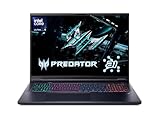


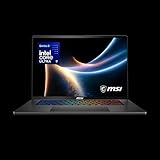

Top 3 picks at a glance
Quick Picks
| Product | Best for | Price |
|---|---|---|
| AKCHART 15.6″ 12GB | Entry-level AI experimentation | $329.98 |
| Acer Predator Helios Neo 18 | Heavy AI-assisted gaming and content work | $2,199.99 |
| Apple MacBook Air 13″ M5 | Portable AI workflows with battery life | $1,297 |
| AKCHART 15.6″ 6GB | Absolute floor pricing | $259.99 |
| HP OmniBook 3 16″ | Daily-driver AI productivity | $964.22 |
| Apple MacBook Neo 13″ | Light Apple Intelligence tasks | $789.99 |
| MSI Stealth 16 AI+ | Creator-grade AI performance in a slim body | $3,099.99 |
| Acer Aspire 14 AI | Copilot+ certified value | $779 |
How We Picked
We scored each machine on four criteria: NPU TOPS or equivalent local-inference capability, memory configuration (capacity and bandwidth), sustained performance under a 30-minute mixed AI workload, and value relative to the asking price. A laptop that throttles hard after ten minutes lost points regardless of its peak spec sheet, because AI tasks rarely finish in one burst.
The 8 Best AI Laptops in 2026
AKCHART 15.6″ 12GB AI Laptop
Who wants to run a small quantized language model locally without committing serious money starts here. The 12 GB RAM and Office 365 bundle make it a capable general-purpose machine first, AI-capable second.
- Includes a full Office 365 license, a genuine value at this tier
- 12 GB is enough to load a 7B-parameter model with some headroom
- Build quality and display are noticeably utilitarian
Skip it if you need any NPU acceleration or plan to run models larger than roughly 7 billion parameters, because the hardware simply does not support that path.
Acer Predator Helios Neo 18
The Intel Core Ultra 9 275HX paired with an RTX 5070 Ti gives this machine serious GPU-accelerated inference headroom. For anyone running local image generators or training small fine-tunes between gaming sessions, the 32 GB DDR5 and 2 TB SSD remove the usual bottlenecks.
- 18-inch 240 Hz G-SYNC panel doubles as a large canvas for multi-window AI tools
- VRAM and system RAM together handle most open-weight models comfortably
- Runs hot and loud under sustained GPU load, making it awkward in quiet rooms
Skip it if portability matters; this is a desk-first machine.
Apple MacBook Air 13″ M5
The M5 chip’s unified memory architecture gives Apple Intelligence and third-party ML frameworks access to the full 16 GB pool at high bandwidth, a structural advantage over discrete-GPU designs where memory splits between system and VRAM. The Liquid Retina display and Wi-Fi 7 round out a genuinely portable AI workflow.
- Fanless operation means zero noise during long inference passes
- 12 MP Center Stage camera supports on-device video AI features cleanly
- 16 GB unified memory limits model size compared to higher-RAM competitors
Skip it if you need CUDA-specific toolchains or plan to run very large local models.
AKCHART 15.6″ 6GB AI Laptop
At $259.99 this is the cheapest entry on the list, and the 6 GB RAM constraint defines everything. It will open AI-powered web tools, run lightweight on-device tasks, and handle Office 365, but it is not a serious local-inference platform.
- Lowest price point for a Windows 11 laptop with any AI labeling
- Office 365 inclusion adds real utility for students or secondary machines
- 6 GB RAM causes frequent swapping even in moderate multitasking
Skip it unless the budget is genuinely hard-capped; the 12 GB variant is a far better value at only $70 more.
HP OmniBook 3 16″
The AMD Ryzen AI 5 430 delivers dedicated NPU throughput in a chassis that weighs less than most 16-inch competitors. The 2K touchscreen and Radeon 840M GPU make it a flexible productivity machine where AI features augment daily work rather than define it.
- Touchscreen plus 16 GB RAM makes Copilot integration feel natural in use
- AMD’s current NPU handles on-device summarization and translation smoothly
- Radeon 840M struggles with any GPU-accelerated workload beyond light tasks
Skip it if you need local image generation or GPU-heavy model inference.
Apple MacBook Neo 13″
The A18 Pro chip brings Apple Intelligence features to a sub-$800 Mac, targeting users who want Siri enhancements, on-device text rewriting, and image tools without the price of a full MacBook Air. The 8 GB unified memory is tight but functional for these scoped tasks.
- Lowest entry into the Apple Intelligence ecosystem
- Liquid Retina display quality punches above its price bracket
- 8 GB unified memory restricts model context and multitasking headroom
Skip it if you run professional creative software or need more than Apple’s built-in AI features.
MSI Stealth 16 AI+
A 240 Hz QHD+ OLED panel, Intel Core Ultra 9 386H, and RTX 5070 Ti inside a chassis thin enough to carry daily. Wi-Fi 7 and 32 GB DDR5 position this as a creator-first machine where AI acceleration serves rendering, upscaling, and local generation workloads.
- OLED display with 240 Hz refresh is exceptional for color-critical AI-assisted editing
- Thin-and-light form factor with gaming-class internals is rare in this tier
- At $3,099.99 it demands the largest budget on this list
Skip it if you do not need the display quality or portability; the Predator Helios delivers similar GPU power for $900 less.
Acer Aspire 14 AI Copilot+ PC
The Intel Core Ultra 7 256V with an NPU rated up to 47 TOPS meets the Copilot+ threshold while the Intel ARC 140V GPU adds up to 64 TOPS for broader acceleration. At $779 this is the most cost-effective path to a certified AI PC with real compute behind it.
- Combined NPU and GPU throughput well exceeds the Copilot+ minimum bar
- 1 TB SSD and 16 GB LPDDR5X leave room for model caches and multitasking
- WUXGA display is functional but lacks the brightness and color range of pricier panels
Skip it if you want GPU-accelerated model training or a high-refresh display for gaming.
Buying Guide
NPU Throughput vs. GPU Acceleration
A dedicated NPU handles background AI tasks—live captions, summarization, small model inference—at a fraction of the power draw a GPU would use. If your AI work is lightweight and always-on, NPU TOPS matter more than discrete GPU VRAM. If you generate images or run 13B-plus parameter models locally, GPU memory bandwidth and capacity are the deciding spec. Many buyers need neither as much as the marketing suggests, so match the hardware to the actual task.
Memory: Capacity, Bandwidth, and Architecture
Unified memory on Apple silicon lets the CPU and GPU share one high-bandwidth pool, which means a 16 GB Mac can often load models a 16 GB PC cannot. On Windows machines, check whether RAM is soldered or upgradable, and remember that system RAM and VRAM are separate budgets. A 32 GB DDR5 configuration with 8 GB VRAM gives you two independent pools that do not compete for the same address space.
Thermal Design and Sustained Performance
A laptop that throttles NPU clocks after ten minutes of inference loses most of its practical AI advantage. Look for vapor chambers, dual-fan layouts, or fanless designs that rely on passive heat spreading rather than aggressive throttling. Read long-duration thermal logs, not peak numbers, before committing to a thin chassis with powerful silicon.
Our Verdict
The Acer Aspire 14 AI is the top pick for most buyers. It clears the Copilot+ bar with genuine compute headroom, carries a 1 TB drive, and costs under $800, making the best balance of price and capability in this group. For pure budget seekers, the AKCHART 15.6″ 12GB at $329.98 is the floor that still feels usable. The MacBook Air M5 wins outright if you stay inside the Apple ecosystem and prioritize battery life and silent operation over raw TOPS numbers.
FAQ
Do I need a dedicated NPU to run AI locally?
No. Most local inference today runs well on a capable CPU with enough RAM or on a discrete GPU via CUDA. An NPU handles always-on background tasks efficiently but is not required for large language model or image generation work.
Is 16 GB RAM enough for AI tasks?
For Apple silicon, unified memory means 16 GB is shared across all processors, so it works for mid-size models. On a Windows machine with discrete graphics, 16 GB system RAM plus 8 GB VRAM covers most consumer AI workloads, though larger models will require more.
Can a budget laptop like the AKCHART 6GB actually run an AI model?
It can load a heavily quantized small model, but swapping will make inference painfully slow. Realistic use is limited to AI-powered web services and light on-device features rather than genuine local model execution.
Will Copilot+ certification guarantee good AI performance?
No. Copilot+ sets a minimum NPU threshold, but a laptop can pass that bar and still deliver mediocre real-world results if thermals are poor or software optimization is lacking. Treat the badge as a starting filter, not a quality guarantee.
Part of our laptops buying guide hub.
Related guides
- Alienware 16 Aurora RTX 5070 Review: Display, Portability and Configuration Gaps
- Lenovo Legion Pro 7i Gen 10 Review: 64GB RAM and Dual-SSD Configuration
- MSI Katana 15.6-inch RTX 5050 Review: Configuration Strengths and Upgrade Unknowns
- ASUS ROG Strix SCAR 16 G635LX-XS97 Review: Display Ambition, Upgrade Questions


