The best overall choice among these models is the Polk Audio Monitor XT60: it is the most balanced pick for a conventional living-room stereo or home-theater system because its tower format provides fuller-range sound without immediately requiring a separate subwoofer. For a television-only setup, the Polk Audio Signa S2 is the simpler answer because its soundbar, wireless subwoofer, and TV-focused design avoid the complexity of an AV receiver and multiple speakers. Budget-conscious stereo listeners should choose the Polk Audio T15 pair, while larger rooms and higher-output home theaters are better served by the Monitor XT70.
This guide to the best Polk speakers for home, TV and music separates soundbars, bookshelf speakers, towers, center channels, subwoofers, and surround speakers instead of treating them as interchangeable. The right choice depends on whether you need dialogue clarity, stereo imaging, bass extension, surround placement, easy TV connection, or a path to a larger receiver-based system. The listed TCL S65K is included as a non-Polk soundbar alternative for shoppers who specifically want Dolby Atmos and a packaged 5.1-style arrangement.
Our Top Picks
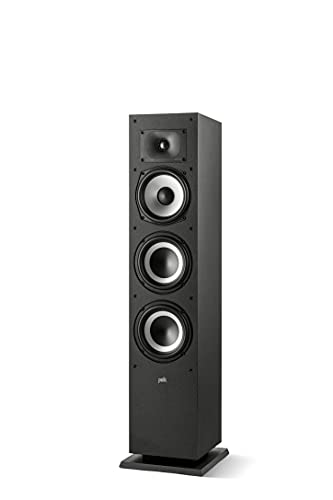
 Polk Audio T50 Home Theater Floor Standing Tower9.25 x 8.75 x 36.5 Inches7.75 x 8.75 x 36.25 Inches20.35 PoundsCheck on Amazon



Top 3 picks at a glance
Quick Comparison
| Product | Best for | Key specs and design | Price tier |
|---|---|---|---|
| Polk Audio Signa S2 | TV sound in a simple living room | Ultra-slim soundbar with wireless subwoofer; TV-oriented system; supports common digital TV connections | Mid-range |
| Polk Audio T15 | Affordable stereo and compact surround channels | Pair of passive bookshelf speakers; rear-ported cabinet; designed for receiver or amplifier use | Budget |
| Polk Audio Monitor XT60 | Balanced tower-based music and home theater | Single passive floor-standing tower; Monitor XT family; uses a conventional speaker-wire connection | Mid-range |
| Polk Audio Monitor XT20 | Bookshelf stereo or surround speakers | Pair of passive bookshelf speakers; larger Monitor XT bookshelf format; requires amplification | Budget |
| Polk Audio T50 | Affordable floor-standing home theater | Single passive tower speaker; listed with 150-watt home-theater power handling; receiver-powered | Mid-range |
| Polk Audio T30 | Dialogue in a Polk T-Series theater | Single passive center-channel speaker; listed with 100-watt power handling; horizontal center design | Budget |
| Polk Audio PSW10 | Adding bass to a small or medium system | 10-inch powered subwoofer; listed with up to 100 watts; dedicated low-frequency enclosure | Mid-range |
| TCL S65K S Series | Packaged surround and object-based TV sound | 5.1-channel soundbar system; Dolby Atmos and DTS:X support; wireless subwoofer and wireless surrounds | Premium |
| Polk Audio Signature Elite ES10 | Higher-quality compact surrounds | Pair of passive surround speakers; Signature Elite series; requires receiver amplification | Mid-range |
| Polk Audio Monitor XT70 | Large-room output and full-scale home theater | Single large passive floor-standing tower; Monitor XT family; receiver-powered | Premium |
| Polk Audio Blackstone TL1 | Compact center-channel installation | Single compact passive center speaker; glossy finish; intended for dialogue duties in a home theater | Budget |
| Polk Audio SR2 | Easy wireless Polk surround expansion | Pair of wireless surround speakers; designed to add rear-channel sound to compatible Polk systems | Mid-range |
How We Chose
This roundup separates products by role before comparing price tier. A tower speaker cannot be judged by the same criteria as a center channel, and a wireless surround pair solves a different problem from a passive bookshelf pair. The selection emphasizes the information that affects a real purchase: speaker type, number of units included, amplification requirements, connection method, room size, bass responsibilities, dialogue placement, and upgrade path.
We also account for system compatibility. Passive Polk speakers need an amplifier or AV receiver, while the Signa S2 and TCL S65K are self-contained TV systems. Product names provide some exact information, such as the T50’s listed 150-watt rating, the T30’s listed 100-watt rating, and the PSW10’s 10-inch driver and up-to-100-watt description. Where a listing does not establish an exact crossover point, sensitivity figure, input selection, or cabinet measurement, this guide describes the specification class rather than inventing a number. No product claims here depend on personal testing or ownership.
1. Polk Audio Signa S2 – Best for TV sound without an AV receiver
As an Amazon Associate we earn from qualifying purchases at no extra cost to you.

The Polk Audio Signa S2 is the best match for someone whose immediate goal is better television sound rather than a traditional component theater. Its ultra-slim soundbar sits below a TV, while the included wireless subwoofer handles low-frequency effects. That arrangement gives you a clear upgrade over many built-in television speakers without asking you to position a left speaker, right speaker, center speaker, surrounds, receiver, and subwoofer separately.
This is an especially sensible choice for apartments, bedrooms, open-plan spaces, and living rooms where a full speaker system would be visually intrusive. It is also easier to explain to a family: the television connects to the bar, the subwoofer is placed near a wall or seating area, and the system is controlled as one TV-audio setup. The subwoofer’s wireless connection reduces cable clutter, although it still needs its own power outlet.
- System type: ultra-slim TV soundbar with a wireless subwoofer.
- Main job: improving speech intelligibility, perceived scale, and bass for television and films.
- Amplification: self-powered soundbar system; no separate AV receiver is required.
- Placement: soundbar beneath or in front of the TV, with the subwoofer on the floor near a wall.
- Best room class: small to medium rooms where convenience matters more than discrete surround placement.
The main strength is category fit. A passive T15 pair can sound more convincing for two-channel music when properly positioned, but it also needs amplification and leaves television dialogue to a phantom center image. The Signa S2 puts a dedicated horizontal front stage directly under the screen, so voices remain anchored near the picture. Its subwoofer also gives action films and music more low-end weight than an ultra-thin soundbar could produce alone.
Set the bar in front of the television rather than inside a closed cabinet. If dialogue sounds muffled, make sure the TV is not using its own speakers simultaneously and try the bar’s speech-focused mode if available. If bass dominates a small room, move the subwoofer away from a corner before lowering it dramatically; corners reinforce bass, and a modest relocation can smooth the result.
Pros
- Simple TV-focused setup with no separate receiver.
- Ultra-slim bar is easier to fit below modern televisions.
- Included wireless subwoofer adds impact without a subwoofer cable across the room.
- More practical than passive speakers for viewers who mainly watch television.
Cons
- Does not provide the same physical separation as left, center, right, and surround speakers.
- Not the best upgrade path for someone planning a component-based theater.
- The subwoofer still requires mains power and careful placement.
- Music imaging is more constrained than with a well-positioned stereo pair.
Compared with the TCL S65K, the Signa S2 is the simpler and usually less elaborate option. The TCL is aimed at shoppers who specifically want a packaged 5.1-channel system with Dolby Atmos, DTS:X, wireless surrounds, and a wireless subwoofer. Choose the Polk when easy stereo-style TV enhancement is the priority; choose the TCL when rear effects and object-based movie sound matter more than a minimal footprint.
2. Polk Audio T15 – Best for budget stereo and compact systems
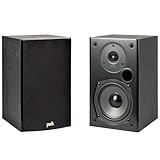
The Polk Audio T15 is the most approachable passive speaker in this list. It arrives as a pair of black bookshelf speakers and is a useful starting point for a low-cost stereo system, desktop-adjacent listening space, or entry-level receiver-based home theater. The listing’s 100-watt description should be treated as a system-planning guide rather than a promise that every amplifier rated at 100 watts will be an ideal match.
Because the T15 is passive, it needs speaker-wire connections to an amplifier, stereo receiver, AV receiver, or another suitable power source. That requirement is the key difference between it and the Signa S2. The T15 does not accept TV audio by itself. A television can feed an amplifier through a compatible output, but the amplifier must handle the conversion and power duties.
- Included: one pair of bookshelf speakers.
- Speaker class: passive compact stereo speaker.
- Cabinet design: rear-ported bookshelf enclosure.
- Listed power class: up to 100 watts in the product description.
- Best use: front left/right stereo, small-room music, or compact surround channels.
Placement determines whether the T15 sounds inexpensive or surprisingly capable. Keep the two speakers at roughly equal distances from the main seat, aim their front panels toward the listening position, and place them on stands or a stable shelf with the tweeters near ear height. Leave some space behind the rear ports. A bookshelf can work, but pushing the cabinet tightly against the wall may increase upper-bass energy and reduce clarity.
For a basic stereo system, a compact amplifier rated around 30 to 75 watts per channel into the speaker’s intended load is generally a sensible planning range, subject to the amplifier and speaker’s actual specifications. More power is not automatically harmful; distortion from an overdriven small amplifier can be more damaging than clean power. The useful rule is to avoid turning either component into a heat or clipping problem.
Pros
- Low-cost entry into separate stereo sound.
- Sold as a pair, so no second purchase is needed for left and right channels.
- Compact enough for desks, shelves, stands, and small media rooms.
- Can later be reused as surround or secondary-room speakers.
Cons
- Requires an amplifier or AV receiver.
- Small bookshelf cabinets cannot replace a true subwoofer for deep cinematic bass.
- Rear ports make wall-tight placement less forgiving.
- Dialogue is not as physically anchored as it would be with a dedicated center speaker.
The nearest alternative is the Monitor XT20. The XT20 is the better choice when you want the larger bookshelf format and a more ambitious Monitor XT-based system, particularly for a receiver-driven theater. The T15 is the better value for a first stereo pair, secondary room, or restrained budget. If the system will mostly serve music and the room is modest, the T15 is enough to establish a real stereo image without committing to floor-standing cabinets.
3. Polk Audio Monitor XT60 – Best balanced tower for music and home theater
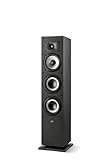
The Polk Audio Monitor XT60 is the strongest all-around tower choice in this group for many living rooms. It is a single passive floor-standing speaker from Polk’s Monitor XT family, so a stereo buyer must purchase two units for left and right. Its tower enclosure gives it more cabinet volume and driver area than compact bookshelf designs, which makes it a natural fit for full-range music, front-channel home theater duty, and rooms where a subwoofer is helpful but not the first purchase.
It is important to distinguish “more bass” from “subwoofer replacement.” A tower can make music sound fuller and reduce the workload on a subwoofer, but movie soundtracks contain very low-frequency effects that are best handled by a dedicated subwoofer and an AV receiver’s bass-management system. The XT60 therefore works well as part of a two-channel system today and a larger theater later.
- Included: one passive floor-standing tower speaker.
- Family: Polk Monitor XT series.
- System role: front left or front right speaker; two are needed for stereo.
- Amplification: conventional speaker-wire connection to a suitable receiver or amplifier.
- Best room class: medium rooms and larger spaces that benefit from a physically substantial front stage.
The practical advantage over the T15 or XT20 is scale. A tower raises the acoustic output area, places drivers vertically across a taller cabinet, and reduces the need for speaker stands. That does not guarantee superior sound in every room: a poorly positioned tower can produce more room interaction than a carefully placed bookshelf pair. Leave breathing room from side walls, keep the left and right towers symmetrical, and avoid putting one directly inside a corner.
For a two-channel setup, begin with the towers and add a subwoofer only if you want more low-bass extension or higher-impact film playback. For home theater, pair the front towers with a matching center-channel family member where possible and use an AV receiver with calibration. The center speaker usually handles the bulk of movie dialogue, so the XT60 should not be expected to perform that role alone in a multichannel system.
Pros
- Flexible front speaker for stereo, television, and movies.
- Floor-standing cabinet avoids the cost and footprint of speaker stands.
- More scale and headroom potential than compact bookshelf models.
- Strong upgrade path toward a receiver-based home theater.
Cons
- Sold as a single speaker, so stereo requires two purchases.
- Needs an amplifier or AV receiver.
- Takes more floor space than the T15 or XT20.
- A dedicated subwoofer remains valuable for the deepest film effects.
The nearest alternative is the T50. The T50 is another mid-range Polk tower and may be preferable when a shopper is building specifically around the T-Series range. The XT60 is the more natural choice for someone who wants the newer Monitor XT family and a balanced music/theater platform. Compare the center and surround speakers you intend to buy before mixing families; a coherent front stage often matters more than choosing the largest individual tower.
4. Polk Audio Monitor XT20 – Best bookshelf speakers for a growing theater

The Polk Audio Monitor XT20 is the bookshelf alternative for shoppers who want more scale than the T15 but do not want floor-standing towers. It is sold as a pair, which makes it immediately useful for left/right stereo, front channels in a compact theater, or surround positions in a receiver-based system. Its Monitor XT family identity also makes it a logical starting point for a system built around other Monitor XT models.
The XT20 is best for listeners who can provide proper placement. A bookshelf speaker placed on a low cabinet behind a television may work, but stands are often better because they allow correct tweeter height and symmetrical spacing. As with any passive speaker, the pair needs an amplifier. For TV use, the practical chain is television to receiver or amplifier, then speaker wire to the XT20s.
- Included: one pair of passive bookshelf speakers.
- Family: Polk Monitor XT series.
- Placement options: stands, sturdy shelves, front channels, or surround positions.
- System role: stereo left/right, compact theater fronts, or rear/side channels.
- Best room class: small to medium rooms, with a subwoofer recommended for theatrical bass.
Compared with the T15, the XT20 is the more substantial bookshelf proposition. That does not mean a dramatic improvement in every room, because room acoustics, placement, and amplification remain decisive. The useful difference is system ambition: the XT20 makes more sense when you already know you want a Monitor XT-based theater or when a bookshelf pair will serve as the main music speakers for years.
Use an 80 Hz crossover as a starting point when the XT20 is paired with a subwoofer and an AV receiver, then adjust by ear or with the receiver’s calibration. This is not a claim about the speaker’s exact acoustic limit; it is a common theater-management starting point that keeps deep bass out of small cabinets and lets the subwoofer handle it. If the sound becomes thin, try a lower crossover; if bass becomes localized or muddy, check subwoofer placement and phase before simply raising the level.
Pros
- Sold as a pair for immediate stereo use.
- More suitable than the T15 for a planned Monitor XT theater.
- Flexible enough for fronts, stereo, or surround duties.
- Uses less floor space than a tower speaker.
Cons
- Needs an amplifier or AV receiver.
- Requires stands or carefully chosen furniture for ideal placement.
- Needs a subwoofer for the deepest movie bass.
- Not as visually imposing or potentially room-filling as the XT60 or XT70.
The T15 is the nearest budget alternative. Choose the T15 when cost and compactness dominate. Choose the XT20 when you want a stronger foundation for a multi-channel Monitor XT system, need bookshelf speakers that can remain useful after a future upgrade, or prefer a more substantial compact stereo pair.
5. Polk Audio T50 – Best affordable floor-standing T-Series speaker

The Polk Audio T50 is a single black floor-standing speaker designed for a receiver-based home theater or stereo system. Its listing identifies a 150-watt home-theater power figure, placing it above the smaller T-Series bookshelf approach in intended scale. Because it is sold individually, a stereo buyer needs two, and a theater builder should budget for the matching center and surround roles separately.
The T50 is a practical pick when you want towers without moving into the premium tier. Floor-standing speakers can simplify furniture planning because they do not need stands, and they can create a more substantial front soundstage than small bookshelf units. They are not automatically better for every room: in a compact room, a bookshelf pair plus a subwoofer may be easier to integrate.
- Included: one passive floor-standing tower speaker.
- Listed power class: 150 watts for home-theater use.
- System role: front left or right channel; two are required for stereo.
- Amplification: AV receiver or stereo amplifier required.
- Best use: affordable front-stage scale for music and movies.
A useful planning calculation is to treat the listed 150-watt figure as the upper design class, not as a target amplifier setting. If an amplifier delivers 75 watts per channel into the speaker load, it is already providing half the numerical power rating. Doubling power from 75 to 150 watts adds only about 3 dB of theoretical maximum level, not twice the perceived loudness. Room size, listening distance, speaker sensitivity, and distortion limits matter more than chasing the largest wattage number.
Place the T50s symmetrically around the screen, with the tweeters directed toward the seating position. If a subwoofer is added, let the receiver redirect the lowest bass rather than forcing the towers and subwoofer to reproduce the same range at full strength. This usually produces cleaner results and makes the PSW10 easier to blend.
Pros
- Affordable path to floor-standing front speakers.
- Listed 150-watt home-theater power class suits a broad range of receivers.
- Useful for both stereo music and front-channel theater duty.
- No separate speaker stands are required.
Cons
- Sold as one speaker rather than a stereo pair.
- Requires external amplification.
- Floor-standing cabinets may overwhelm small rooms visually or acoustically.
- A separate center and subwoofer remain important for a complete theater.
The closest alternatives are the Monitor XT60 and XT70. The T50 makes the most sense for a budget-conscious T-Series build. The XT60 is a stronger middle-ground choice for a newer Monitor XT system, while the XT70 targets shoppers who need more physical scale and are prepared to invest in a larger room and capable receiver.
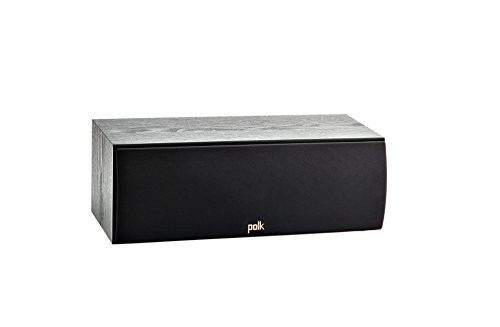
6. Polk Audio T30 – Best budget center speaker for dialogue
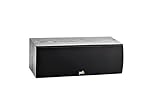
The Polk Audio T30 is a single horizontal center-channel speaker and one of the most useful purchases in a conventional movie system. Its job is not to create a wide stereo image or deep bass. Its job is to keep voices anchored to the screen and make dialogue consistent for listeners seated left or right of the center position. The product listing describes it as a 100-watt home-theater center speaker.
Many budget theaters spend heavily on front towers while using no dedicated center. That arrangement can sound good for music, but it makes dialogue depend on a phantom center created by the left and right speakers. A physical center is usually the better upgrade for television and film, particularly when several people watch from different seats.
- Included: one passive center-channel speaker.
- Listed power class: 100 watts.
- Orientation: horizontal cabinet designed below or above a display.
- Amplification: AV receiver or suitable multichannel amplifier required.
- Best use: dialogue reproduction in a Polk T-Series theater.
Place the T30 as close to the screen as possible, with its front edge near the cabinet edge rather than buried deep inside furniture. If it sits below the TV, angle it upward toward ear level. If it sits above the TV, angle it downward. These small changes can matter more than increasing the center-channel volume because they reduce reflections from the cabinet and aim the high-frequency content toward viewers.
Set the center channel to “small” in the receiver even if its cabinet looks substantial. A common 80 Hz crossover is a reasonable starting point, allowing the subwoofer to handle the lowest effects and reducing demands on the center. If speech is still unclear, check the display’s audio mode, room reflections, center placement, and dynamic-range settings before adding excessive treble.
Pros
- Directly addresses the most common home-theater complaint: unclear dialogue.
- Affordable way to make a receiver-based system more complete.
- Designed for horizontal placement below or above a TV.
- 100-watt listed power class fits many entry-level receivers.
Cons
- Not a standalone stereo or full-range music solution.
- Requires an AV receiver or multichannel amplifier.
- Best tonal match comes from using compatible front speakers.
- Can be difficult to place correctly in a very shallow TV cabinet.
The Blackstone TL1 is the nearest alternative when cabinet size is the problem. The T30 is the better budget theater center when you have space beneath the screen and are building around the T-Series. The TL1 suits a compact installation, but its smaller form should be selected because of placement requirements, not simply because it is cheaper.
7. Polk Audio PSW10 – Best compact subwoofer upgrade

The Polk Audio PSW10 is a 10-inch powered subwoofer listed with up to 100 watts and intended to add dedicated low-frequency output to a home-theater or stereo system. It is the most direct answer for a system that sounds clear but lightweight, particularly when the main speakers are bookshelf models or compact towers. It can also be useful with a TV setup, provided the sound system has a compatible subwoofer connection.
A subwoofer is not merely a device that makes everything louder. Its real value is division of labor. The main speakers handle midrange and treble, where voices and melodies live, while the subwoofer handles low bass. With an AV receiver, bass management can redirect low frequencies from multiple channels to the subwoofer, allowing smaller speakers to play more comfortably.
- Driver class: 10-inch powered subwoofer.
- Listed power class: up to 100 watts.
- System role: dedicated low-frequency extension and impact.
- Best pairings: T15, XT20, T50, XT60, and compatible receiver-based systems.
- Placement: floor placement, commonly near the front wall, with experimentation required.
Start with the subwoofer volume around the middle of its range and use the receiver’s automatic calibration if available. A practical first crossover is 80 Hz for bookshelf speakers. If the main speakers are larger towers, try 60 to 80 Hz depending on how the blend sounds. The goal is not to hear a separate box; bass should appear to come from the entire front stage.
Placement is the difficult part. A corner can provide more output but may create a boomy peak at one seat and a bass hole at another. Put the subwoofer temporarily near the main listening position, play a bass-rich track or familiar film scene, and walk around the room’s front area. The location where bass sounds smoothest is a candidate for the subwoofer. This “subwoofer crawl” is not magic; it samples the room’s bass response from the listener’s position before you place the unit there.
Pros
- Dedicated 10-inch design adds weight to films and music.
- Useful upgrade for compact bookshelf speakers.
- Powered design avoids asking the main amplifier to provide all low-frequency power.
- Compact enough for many small and medium rooms.
Cons
- Requires a compatible subwoofer output or connection method.
- Placement strongly affects perceived bass quality.
- One compact subwoofer cannot produce the same room coverage as multiple larger units.
- Incorrectly high volume can make a system sound slow or boomy.
The nearest alternative is using tower speakers such as the T50 or XT60 without a subwoofer. Towers may produce fuller mid-bass, but the PSW10 remains the more appropriate tool for the lowest effects. Choose the PSW10 when your existing system sounds thin; choose towers first when you also need a stronger full-range front stage and do not yet own suitable main speakers.
8. TCL S65K S Series – Best packaged Atmos-style TV system

The TCL S65K S Series is the non-Polk alternative for shoppers who want a packaged multichannel soundbar system rather than separate Polk passive speakers. Its listing identifies a 5.1-channel arrangement with Dolby Atmos, DTS:X, a wireless subwoofer, and wireless surround speakers. That combination makes it the most feature-oriented TV package in this roundup for viewers who want rear effects without wiring passive surround speakers back to an AV receiver.
The key word is packaged. You are not choosing independent left, center, right, surround, and subwoofer components. You are buying a coordinated system designed to be installed around a TV. That can be a major advantage for a rental, a secondary room, or a living room where running speaker wire is unacceptable. The wireless label does not mean every unit is battery powered; the bar, subwoofer, and surround modules generally still need appropriate power connections.
- System class: 5.1-channel soundbar package.
- Immersive formats: Dolby Atmos and DTS:X listed.
- Included expansion: wireless subwoofer and wireless surround speakers.
- Best use: television and movies with rear effects and a simple installation.
- Amplification: integrated into the packaged system.
Dolby Atmos and DTS:X support does not guarantee overhead sound in every room. The result depends on the source, the system’s speaker arrangement, ceiling height, room shape, and processing. Treat the format support as compatibility with object-based soundtracks, not as a promise that every seat will hear a discrete sound directly above it.
For setup, place the soundbar centered with the screen and keep the wireless surrounds behind or beside the main seating position, slightly above ear height if the manual permits. Keep the subwoofer away from a tightly enclosed cabinet. In a small room, lower the subwoofer level before lowering the entire system; excessive bass can mask dialogue and make surround effects feel less precise.
Pros
- Includes a subwoofer and wireless surround speakers.
- Supports Dolby Atmos and DTS:X according to the listing.
- Less speaker-wire installation than a passive AV receiver system.
- More immersive for films than a basic two-piece soundbar.
Cons
- Less modular and upgradeable than separate Polk speakers and an AV receiver.
- Wireless components still need power and sensible placement.
- Object-based audio depends on source material and room conditions.
- Not the best route for someone who wants high-quality independent stereo music components.
The closest alternative is the Polk Signa S2. Choose the Signa S2 for a simpler, less ambitious TV upgrade. Choose the TCL when rear-channel effects, Atmos/DTS:X compatibility, and an all-in-one installation are the deciding factors. If you already own an AV receiver, the passive Polk speakers in this guide offer a better long-term expansion path.
9. Polk Audio Signature Elite ES10 – Best compact surrounds for a refined system

The Polk Audio Signature Elite ES10 is a pair of passive surround speakers from Polk’s Signature Elite family. It is aimed at the shopper who wants compact rear or side channels in a more carefully assembled receiver-based theater. Because the pair is passive, it needs speaker wire from an AV receiver or multichannel amplifier. It is not a plug-and-play wireless replacement for the SR2.
Surround speakers do not need to reproduce the same broad front-stage presentation as left, center, and right speakers. Their main job is to create ambient envelopment, directional effects, and movement around the seating position. Compact surrounds can therefore be a sensible choice even when the front speakers are larger towers, provided the receiver handles bass management correctly.
- Included: pair of passive surround speakers.
- Family: Polk Signature Elite.
- System role: side or rear surround channels.
- Amplification: AV receiver or multichannel amplifier required.
- Best room class: small to medium theaters that need discrete wired surrounds.
Place the pair symmetrically relative to the primary seat. In a 5.1 layout, side placement slightly behind the listener is often more useful than putting both speakers directly behind the sofa. In a 7.1 layout, the receiver determines whether the speakers serve side or rear duties. Keep them above seated ear height only as much as needed to avoid a speaker being directly next to one listener’s head.
Matching every speaker family is desirable but not mandatory. Tonal continuity matters most across the front three channels because sounds pan across the screen. Surrounds can come from a different Polk family if placement, impedance compatibility, and receiver configuration are appropriate. The ES10 therefore makes sense as an upgrade to an existing Polk front stage, not just as a complete-system purchase.
Pros
- Sold as a pair for immediate surround installation.
- Compact format is easier to place than large tower speakers.
- Suitable for a wired, receiver-based theater.
- Signature Elite branding positions it above basic entry-level surround choices.
Cons
- Requires speaker wire and an AV receiver.
- Does not include a subwoofer or front speakers.
- Wired installation may be difficult in finished rooms.
- Not intended to replace full-range front left and right speakers.
The SR2 is the nearest alternative. Select the ES10 when you want passive speakers, receiver control, and a conventional upgrade path. Select the SR2 when running wire is the problem and you have a compatible Polk wireless system. The Monitor XT20 pair can also serve surround duties, but the ES10 is the more focused choice when compact rear-channel placement is the priority.
10. Polk Audio Monitor XT70 – Best large-room Monitor XT tower

The Polk Audio Monitor XT70 is the largest and most ambitious tower in this roundup. It is a single large passive floor-standing speaker from the Monitor XT family, so a stereo pair requires two units. Its intended buyer has a larger listening room, a capable AV receiver or amplifier, and a desire for more front-stage scale than compact bookshelves or entry-level towers provide.
Large speakers are not automatically the right choice. They need room to breathe, adequate amplifier control, and enough listening distance for their drivers to integrate naturally. In a small room, an XT70 placed close to a wall can produce excessive bass reinforcement and a crowded soundstage. In a medium-to-large room, its physical scale can make music and cinematic effects feel less constrained.
- Included: one large passive floor-standing tower.
- Family: Polk Monitor XT series.
- System role: premium front left or right channel.
- Amplification: suitable stereo amplifier or AV receiver required.
- Best room class: medium to large rooms with space for careful placement.
Plan the system around the XT70 rather than buying it in isolation. Two towers form the stereo foundation, but a home theater also benefits from a center channel with similar tonal character, a properly integrated subwoofer, and surrounds at matching listening levels. Receiver calibration is particularly useful because a large front speaker can interact strongly with the room’s bass modes.
A simple power-budget example shows why amplifier matching matters. Suppose a receiver can provide 80 watts per channel into the relevant speaker load and you use five channels at once. A rough electrical allocation is 80 × 5 = 400 watts of channel output before accounting for efficiency, power-supply limits, and real program content. That does not mean the receiver continuously draws or delivers 400 watts, but it explains why a small receiver may compress at high volume even if its single-channel rating looks adequate. For normal listening, clean operation and room calibration matter more than selecting the biggest printed wattage.
Pros
- Largest Monitor XT tower option in this list.
- Designed for substantial front-stage scale in larger rooms.
- Works for serious stereo and receiver-based home theater.
- Can reduce the main speakers’ dependence on a subwoofer for upper bass.
Cons
- Sold individually, requiring two for stereo.
- Needs more physical space and careful room integration.
- Requires capable amplification.
- A large tower still does not eliminate the value of a dedicated theater subwoofer.
The XT60 is the closest alternative and the better choice for most medium rooms. Choose the XT70 when you have the room, listening distance, and amplifier to use its larger format. If your room is small or your main problem is weak dialogue, buy the T30 or improve center placement before choosing a bigger tower.
11. Polk Audio Blackstone TL1 – Best compact center speaker
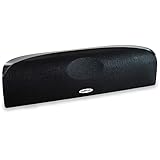
The Polk Audio Blackstone TL1 is a compact passive center-channel speaker with a high-gloss finish. It is designed for a home-theater installation where a conventional center speaker will not fit beneath the television or inside the furniture. Its smaller cabinet makes it a placement solution first and a system-building choice second.
The TL1 is appropriate when the TV stand has limited height, when the screen is mounted close to furniture, or when visual discretion matters. A center channel must be close to the screen to keep voices anchored to faces. A larger speaker that is forced far below the display can create a worse result than a smaller speaker placed correctly.
- Included: one passive center-channel speaker.
- Finish: high-gloss cabinet finish.
- System role: dialogue and front-center effects.
- Amplification: AV receiver or suitable center-channel amplifier required.
- Best use: compact television furniture and space-limited theaters.
Use the receiver’s center-level adjustment to make dialogue sit naturally between the left and right channels. Do not compensate for a blocked or badly aimed speaker solely by raising its volume. If the TL1 is inside a cabinet, pull it flush with the front edge and avoid covering its front with a door or fabric that changes the high-frequency response.
The TL1 is also a reminder that a center speaker’s job is specialized. It does not need to be a replacement for a stereo pair, and it is not the correct upgrade for someone who listens mainly to two-channel music. Its value appears when dialogue in movies and shows needs a stable physical anchor.
Pros
- Compact form fits restricted TV furniture.
- High-gloss finish suits a visually neat installation.
- Dedicated center design improves dialogue placement over phantom-center stereo.
- Useful when cabinet height prevents a larger center speaker.
Cons
- Not a complete speaker system by itself.
- Requires an AV receiver or amplifier.
- Smaller cabinet has less scale than the T30.
- Should be matched carefully with the front left and right speakers.
The T30 is the nearest alternative. Choose the TL1 when furniture and display clearance are the decisive constraints. Choose the T30 when there is enough space and you want a more substantial budget center for a T-Series theater. In either case, placement directly below or above the screen is more important than the cabinet’s appearance.
12. Polk Audio SR2 – Best wireless Polk surround pair

The Polk Audio SR2 is a two-speaker wireless surround package designed to add rear-channel sound to compatible Polk systems. It is the most convenient surround option in this list for shoppers who want discrete surround effects but do not want to run speaker wire from an AV receiver to the back of the room. Compatibility is the first question: wireless surround modules are not universal speakers, so confirm that the soundbar or Polk system supports the SR2 before buying.
The SR2 is useful in rented homes, finished rooms, and living spaces where cable channels would be unattractive. Wireless transmission reduces the long signal cable, but each surround speaker generally needs access to power. Plan for outlets near the intended positions and avoid placing the modules where furniture blocks their output.
- Included: two wireless surround speakers.
- System role: rear or side surround effects.
- Connection class: wireless connection to a compatible Polk host system.
- Amplification: integrated into the wireless surround units.
- Best use: convenient expansion of a compatible Polk TV sound system.
Place the speakers evenly on either side or slightly behind the main seat. If one speaker is much closer to the listener, use the host system’s channel-level or distance controls if available. Wireless surrounds are most effective when they create a broad field rather than firing directly into one person’s ear, so a modest height increase can help in a sofa-based room.
The SR2 should not be compared directly with the ES10 on soundbar convenience alone. The ES10 is a conventional passive pair for an AV receiver, with more freedom in system selection but more installation work. The SR2 is a practical accessory for a compatible Polk ecosystem, not a universal replacement for receiver-driven speakers.
Pros
- Reduces the need for long speaker-wire runs.
- Sold as a pair for rear or side surround use.
- Useful in finished rooms and rentals.
- Integrated amplification simplifies expansion.
Cons
- Requires compatibility with the host Polk system.
- Each unit still needs power.
- Less flexible than passive speakers in a conventional AV receiver system.
- Does not replace a front left, right, center, or subwoofer system.
The closest alternative is the Signature Elite ES10. Pick the SR2 when convenience and wireless expansion are essential. Pick the ES10 when you already own an AV receiver, can run speaker wire, and want to choose the crossover, amplifier, and broader speaker configuration yourself.
How to Choose
Start with the system category
The first decision is whether you want a self-contained TV system or separate passive speakers. The Signa S2 and TCL S65K include their own amplification and are intended to work as coordinated soundbar systems. The SR2 also uses integrated amplification, but it is a surround expansion product rather than a complete front-stage system. The remaining Polk speakers are passive: they need an AV receiver, stereo amplifier, or compatible multichannel amplifier.
For a television that is mainly used for news, shows, sports, and streaming, a soundbar is usually the shortest route. Choose the Signa S2 if you want a slim, uncomplicated bar with a subwoofer. Choose the TCL S65K if wireless surrounds, Dolby Atmos, DTS:X, and a packaged 5.1 arrangement matter more. Do not buy passive T15 speakers expecting them to connect directly to a TV unless you also have the necessary amplifier or receiver.
Choose by the number of listeners and seats
A two-channel stereo pair is optimized around a listening triangle: the left speaker, right speaker, and main seat are approximately similar distances apart. This works well for one or two people seated centrally. The T15, XT20, T50, XT60, XT70, or another suitable pair can create that presentation when positioned symmetrically.
A center channel becomes more valuable when several people watch from different seats. The T30 and TL1 anchor dialogue to the screen and reduce the need to keep your head exactly between the front speakers. The T30 is the better fit when space allows; the TL1 is the practical choice when the TV cabinet is shallow or low. Center speakers should be close to the display, aimed toward listeners, and not hidden behind a cabinet door.
Match speaker size to room size
Small rooms often benefit from compact speakers and controlled bass. A T15 or XT20 pair with the PSW10 can be more manageable than large towers pushed into corners. The soundbar options are especially practical when the room is narrow or furniture placement is fixed. In a small room, excessive speaker size can produce bass buildup, early reflections, and a physically crowded front wall.
Medium rooms offer more flexibility. The XT20 pair can serve as a substantial bookshelf system, while the T50 or XT60 can provide a larger front stage. Add the T30 for dialogue and the PSW10 for low-frequency effects if you are building a receiver-based theater. Leave space between towers and side walls, and keep left/right distances as similar as the room permits.
Large rooms and long listening distances favor the XT70 or another physically larger front-stage arrangement. You will also need an amplifier that remains comfortable at your preferred volume. Larger speakers do not make a weak receiver powerful, and a subwoofer remains useful because it can handle deep bass more efficiently than the main channels.
Understand watts before choosing an amplifier
Power ratings are useful only when interpreted alongside distance, speaker sensitivity, impedance, room size, and listening level. The T15 is listed in a 100-watt class, the T30 in a 100-watt class, the T50 at 150 watts, and the PSW10 at up to 100 watts. These figures do not mean you must find an amplifier with exactly the same number, nor do they predict loudness by themselves.
As a simple example, suppose your amplifier supplies 50 watts per channel and you later replace it with one supplying 100 watts per channel. That is a doubling of electrical power, but the theoretical maximum increase is about 3 dB. Perceived loudness does not double. A much larger change comes from reducing listening distance, improving placement, avoiding clipping, or adding a properly integrated subwoofer.
For a five-channel theater, also consider shared power supply limits. If a receiver is rated at 80 watts per channel with one or two channels driven, it may provide less when all five channels play demanding content simultaneously. That is not automatically a problem for normal film listening, but it matters in a large room at high levels. The XT70 is more likely to benefit from a capable receiver than the T15 used at moderate volume.
Decide whether you need a subwoofer now
Choose the PSW10 when your main speakers sound thin, when film effects lack impact, or when you want the receiver to redirect demanding low bass away from bookshelf speakers. A 10-inch powered subwoofer is a different tool from a tower speaker: it is designed specifically for low frequencies and has its own amplification.
With T15 or XT20 bookshelf speakers, start with the receiver’s crossover around 80 Hz. With T50 or XT60 towers, try a setting in the 60 to 80 Hz region and listen for the smoothest transition. This is a setup starting point, not a claim about an exact crossover requirement. If bass sounds boomy, reduce the subwoofer level, move it away from a corner, or check phase. If it sounds weak, test another location before assuming the subwoofer lacks power.
Plan the front stage before buying surrounds
In a movie system, the priority order is usually front left and right, center, subwoofer, then surrounds, although room limitations can change it. Surround speakers add immersion, but they cannot fix unclear dialogue or weak front imaging. For a T-Series system, the T50 towers and T30 center create a coherent starting point. For a Monitor XT system, the XT60 or XT70 fronts and an appropriate Monitor XT center provide a stronger family match.
Use the ES10 when you want passive wired surrounds connected to an AV receiver. Use the SR2 when you own a compatible Polk host system and need wireless expansion. Use the XT20 pair as surrounds only if you already have them or want a larger speaker that can later move to front-channel duty. A surround speaker does not need to be oversized; placement and calibration are more important.
Consider placement before cabinet finish
Bookshelf speakers need a stable surface or stands. Keep the T15 or XT20 tweeters near seated ear height and avoid placing rear-ported cabinets tightly against the wall. Towers such as the T50, XT60, and XT70 need floor space and should be positioned symmetrically. A shiny compact center such as the TL1 may fit better than a larger matte speaker if the installation has strict clearance limits.
Soundbars should be centered below the TV, not pushed deep inside a cabinet. Keep the front of the bar unobstructed. Wireless subwoofers and surround speakers need power outlets even though their audio signal is wireless. Before choosing the SR2 or TCL S65K, map the nearest outlets and decide whether cables can be hidden safely.
Use this decision matrix
| Your situation | Best starting choice | Why | What to add or watch for |
|---|---|---|---|
| TV only, small room, minimal setup | Signa S2 | Soundbar and subwoofer avoid an AV receiver | Keep the bar clear of cabinet obstructions |
| TV and movies with wireless rear effects | TCL S65K | Packaged 5.1 system with wireless surrounds and listed Atmos/DTS:X support | Allow power outlets for wireless modules |
| Low-cost music stereo | T15 pair | Affordable passive left/right speakers | Budget for an amplifier and speaker stands or shelves |
| Compact but more ambitious receiver theater | XT20 pair | Bookshelf format with a Monitor XT upgrade path | Add a center and subwoofer for films |
| Budget floor-standing front stage | T50 | Affordable tower format and listed 150-watt power class | Buy two for stereo and add a center for dialogue |
| Balanced medium-room stereo or theater | XT60 | Flexible Monitor XT tower platform | Two are needed for stereo; a subwoofer remains useful |
| Large room and higher-output front stage | XT70 | Largest tower format in this list | Use a capable receiver and allow generous placement space |
| Dialogue is the main weakness | T30 | Dedicated center channel with 100-watt listed class | Place close to and aim toward the TV audience |
| Very shallow TV furniture | Blackstone TL1 | Compact center format and high-gloss finish | Do not hide it behind a cabinet door |
| Existing system lacks low bass | PSW10 | 10-inch powered subwoofer with up-to-100-watt listing | Experiment with position and start near an 80 Hz crossover |
| Compatible Polk system, no speaker-wire run | SR2 | Wireless surround pair | Verify host compatibility and provide power |
Think about future upgrades
A soundbar is convenient but relatively closed. You can often add compatible surrounds or adjust the subwoofer, but you cannot freely replace each front speaker with a different model. A receiver-based Polk system is more modular. You can start with T15 speakers, add a PSW10, replace the front pair with towers, and add a T30 or another suitable center later.
If the long-term plan is a serious theater, begin with the front three channels and receiver rather than buying random speakers for every position. If the long-term plan is simple TV improvement, do not buy a receiver system merely because it offers more theoretical upgrade paths. The best system is the one that fits how the room will actually be used.
Frequently Asked Questions
What are the best Polk speakers for home, TV and music?
The Polk Audio Monitor XT60 is the best overall choice for a conventional receiver-based home, music, and movie system. The Signa S2 is better for a simple TV setup, while the T15 is the most accessible budget stereo pair.
Are Polk T15 speakers good for a TV?
They can work well for TV when connected to a stereo amplifier or AV receiver. They do not connect directly as a self-powered TV speaker system, and they do not provide a physical center channel unless paired with a receiver and center speaker.
Is the Signa S2 better than separate Polk bookshelf speakers?
It is better for convenience and direct TV use because it includes a soundbar and wireless subwoofer. Separate T15 or XT20 speakers can provide stronger stereo separation and a better upgrade path, but they require amplification, placement, and more equipment.
Do I need two Polk tower speakers for music?
Yes. The T50, Monitor XT60, and Monitor XT70 are listed as single speakers, so two are needed for left and right stereo. A single tower can serve one front channel in a multichannel system but cannot create normal stereo by itself.
Should I choose the T50, XT60, or XT70?
Choose the T50 for an affordable T-Series tower system, the XT60 for a balanced medium-room Monitor XT setup, and the XT70 for a larger room with more space and a capable amplifier. Room size and the planned center and surrounds should influence the choice as much as cabinet size.
Does the PSW10 replace tower speakers?
No. The PSW10 adds low-frequency output, while tower speakers provide the main stereo or front-channel presentation. A subwoofer can complement bookshelf or tower speakers, but it cannot replace the left and right channels.
Are wireless Polk SR2 speakers compatible with every soundbar?
No. The SR2 is intended for compatible Polk systems rather than universal wireless use. Confirm compatibility with the specific host soundbar or system before purchasing, and remember that each wireless speaker still needs power.
Is Dolby Atmos on the TCL S65K guaranteed to sound overhead?
No. The listing’s Atmos support means the system can process compatible object-based soundtracks, but the perceived height effect depends on the speaker arrangement, room, ceiling, source, and seating position. It is best understood as format compatibility rather than a guarantee of a discrete overhead speaker experience.
Final Recommendations by Reader Situation
Choose the Polk Audio Signa S2 when the priority is a simple TV upgrade with a subwoofer. Choose the Polk Audio T15 for the lowest-cost separate stereo pair, or the Monitor XT20 when you want a more expandable bookshelf-based theater. The Monitor XT60 is the best overall balance for a medium-room music and movie system, while the Monitor XT70 is the large-room choice.
For dialogue, select the T30 when space allows or the compact Blackstone TL1 when furniture clearance is tight. Add the PSW10 when the system needs deeper bass. Pick the ES10 for wired passive surrounds, the SR2 for compatible wireless Polk expansion, and the TCL S65K when a packaged 5.1 Atmos/DTS:X-style TV system is more attractive than a modular Polk receiver setup.