Students shop differently from everyone else. The laptop has to survive a backpack, last through back-to-back lectures, handle a pile of browser tabs, and open the documents that professors expect, all without stretching a tight budget. The phrase “recommended laptops for students” is really a request for a short list of dependable, affordable machines where the compromises are known up front. The right choice often comes down to a few checkable numbers: memory, storage, screen size, and how long the charger can stay in the bag.
This guide is written for high school, college, and online-course students who need a machine for notes, research, video calls, and essays rather than video editing or gaming. All six picks sit in the budget tier, and each is judged only on what its listing states. In a 2026 back-to-school season crowded with near-identical listings, the useful move is to compare RAM, storage type, and screen quality, and to notice where a bargain quietly trims one of those.
Our Top Picks
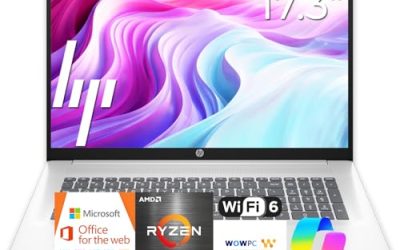
 HP 14” Laptop Ultra-Portable Computer 2026 Student Business4GB RAM + 628GB Storage12.76 x 8.86 x 0.71 Inches3.24 PoundsCheck on Amazon


Top 3 picks at a glance
Quick Picks
As an Amazon Associate we earn from qualifying purchases at no extra cost to you.


| Product | Best for | Key spec from the title |
|---|---|---|
| 15.6-Inch Windows 11 Pro Pentium Laptop | Everyday coursework | 8GB RAM, 256GB SSD, Office 365 included, 6H battery |
| DRKAKO 15.6-Inch Student Laptop | Multitasking on a budget | 12GB RAM, 256GB SSD, FHD IPS, 180-degree lay-flat |
| HP 14-Inch Ultra-Portable Laptop | Carrying it everywhere | 14-inch, 4GB RAM, 128GB UFS plus 500GB external storage |
| TRHRO 15.6-Inch Laptop | Ports and screen quality | 12GB RAM, 128GB SSD, FHD IPS, USB-C, USB 3.2 |
| HP 14-Inch Ultra-Light Laptop | Long days away from an outlet | Celeron N4500, 12-hour battery listed, 1-year Office 365 |
| ASUS Vivobook Go 15.6 | A familiar brand and slim design | Intel Dual Core N4500, 4GB RAM, 128GB SSD |
How to Choose
Memory is the first spec to protect
A student laptop spends its life running a browser with many tabs, a word processor, and a video call at once. Four gigabytes of RAM works for light use, but it is where slowdowns appear first. Eight gigabytes is a more comfortable floor for coursework, and 12GB or more gives headroom if you keep research, music, and chat open together. When two listings are otherwise similar, favor the one with more memory over the one with a prettier name.
Storage type and capacity
Solid-state drives boot and open files faster than older storage, and a 256GB SSD is a workable minimum for documents and a few apps. Be cautious with listings that add external storage to reach a big total, since an external card or drive is not the same as a fast internal drive. Models using eMMC or UFS storage are usually slower than a standard SSD, so plan on cloud storage for large files.
Screen size, panel type, and battery
A 14-inch laptop is easier to carry between classes, while a 15.6-inch model gives more room for split-screen work. An IPS panel generally offers wider viewing angles than a basic display, which helps when you share a screen with a study partner. For battery, a listed number such as 6 or 12 hours is a manufacturer’s claim, so assume real use falls short and carry a charger on long days.
Where budget machines cut corners
Entry-level processors, such as Celeron and Pentium chips, are fine for typing and browsing but slow down under heavy loads. Plastic bodies, modest speakers, and limited ports are common. Ignore marketing phrases like AI assistant or Copilot unless the machine has enough memory to run it, and confirm that any bundled Office subscription is a time-limited license rather than a permanent one. Finally, look at the hinge and the keyboard layout described in a listing, since a laptop that sits on lecture-hall desks and library tables for years takes more daily abuse than one used mostly at home.
The 6 Best Options
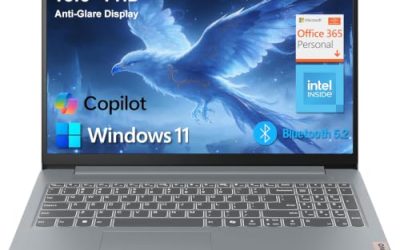
15.6-Inch Windows 11 Pro Pentium Laptop
This unbranded listing offers a 15.6-inch screen, Windows 11 Pro, an Intel Pentium processor, 8GB of RAM, a 256GB SSD, and Office 365, along with a 6-hour battery claim, a mini HDMI port, and a camera and microphone. On paper it is a balanced starter for essays and online classes, with enough memory to keep several apps open and a big screen for reading. A student who splits the day between lecture notes, a spreadsheet, and a streamed seminar would likely feel at home, though the unbranded listing means warranty and support terms deserve a close read.
- Strength: 8GB of RAM and a 256GB SSD hit the sweet spot for coursework.
- Strength: a mini HDMI port makes it easy to connect to a projector or monitor.
- Trade-off: a 6-hour battery claim is short for a full day of classes.
Who should skip it: students who need strong support from a known brand should check the warranty details.
DRKAKO 15.6-Inch Student Laptop
DRKAKO targets students directly. The title lists a 15.6-inch FHD IPS display, 12GB of RAM, a 256GB SSD, a J4105 quad-core processor, a 180-degree lay-flat hinge, Wi-Fi 5, Bluetooth, and Office 365. The memory figure stands out in this budget tier and suits students who run many tabs at once. The lay-flat hinge also helps when a group project means turning the screen toward a classmate across the table, a small detail that matters in study rooms.
- Strength: 12GB of RAM gives more multitasking room than most entry-level models.
- Strength: an FHD IPS display and lay-flat hinge help with group work and shared screens.
- Trade-off: the J4105 is an older entry-level processor, so heavy software will feel slow.
Who should skip it: students running design or engineering software should step up to a faster processor.
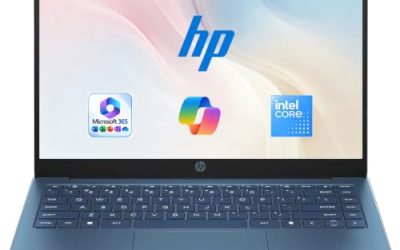
HP 14-Inch Ultra-Portable Laptop
This HP model pairs a 14-inch screen with an Intel four-core CPU, 4GB of RAM, and 628GB of storage, made up of 128GB UFS plus a 500GB external drive. The title also lists Copilot AI and Microsoft Office. It aims at students who value a compact, portable machine for note taking and web research. The mixed storage setup is the detail to read carefully, because the internal 128GB is what the system uses day to day, while the external portion works more like a shelf for files you do not open constantly.
- Strength: a 14-inch body is easy to carry between classes.
- Strength: bundled Office access covers typical assignments.
- Trade-off: 4GB of RAM limits multitasking, and only 128GB is internal storage.
Who should skip it: anyone who keeps many tabs open or needs fast internal storage should pick a model with more memory.
TRHRO 15.6-Inch Laptop
The TRHRO lists a 15.6-inch FHD IPS screen, 12GB of RAM, a 128GB SSD, and a Pentium Gold 6500Y processor with a boost up to 3.4GHz. The listing claims it outperforms the N4020, a claim worth treating cautiously. USB-C, USB 3.2, Wi-Fi 5, and Bluetooth 5.2 round out a port and wireless set that suits connecting accessories. A commuter student who plugs in a flash drive, a phone, and an external monitor at a desk could use that variety, and the larger memory helps when a lecture recording and a research document are open at once.
- Strength: 12GB of RAM and a USB-C port are useful extras for the category.
- Strength: an FHD IPS display improves reading comfort and viewing angles.
- Trade-off: 128GB of SSD space fills quickly, so lean on cloud storage.
Who should skip it: students storing large projects locally will want a bigger drive.
HP 14-Inch Ultra-Light Laptop
This HP is pitched at student and home use, with a one-year Office 365 subscription, an Intel Celeron N4500, 4GB of RAM, and 64GB of eMMC storage plus a 64GB SD card. The listing claims a 12-hour battery. It appeals to students who prize portability and endurance over speed. It fits a high school or first-year student whose workload is mostly documents, slides, and web pages, and who would rather carry a light bag than chase raw performance. Treat the storage layout as a reason to lean on cloud folders for school files.
- Strength: the listed 12-hour battery targets a full day of classes.
- Strength: a 14-inch ultra-light build is easy to carry.
- Trade-off: 4GB of RAM and 64GB of eMMC storage are tight even for light use.
Who should skip it: students who download large files or multitask heavily should choose more memory and storage.
ASUS Vivobook Go 15.6
The Vivobook Go is a slim and portable 15.6-inch laptop positioned for study. Its title lists an Intel Dual Core N4500, 4GB of RAM, a 128GB SSD, and Windows 11. The ASUS name and model number L510KA-ES04 make it easy to research warranty and support options. It is a reasonable choice for a parent shopping for a first laptop, since an established maker with a specific model number makes comparison shopping and driver searches simpler than with a generic listing.
- Strength: a known brand and slim design suit students who want a straightforward machine.
- Strength: a 128GB SSD loads faster than eMMC storage found in some alternatives.
- Trade-off: 4GB of RAM is the weak point for multitasking.
Who should skip it: anyone running video calls with many tabs should select a model with 8GB or more.
Which One Fits Your Situation
You write papers and keep many tabs open
The DRKAKO offers 12GB of RAM and a 256GB SSD, which gives the most multitasking room of the group.
You carry the laptop across campus all day
The HP 14-inch Ultra-Light lists a 12-hour battery and a compact body, which suits a long schedule away from outlets.
You need ports for projectors and accessories
The 15.6-inch Pentium laptop has a mini HDMI port, while the TRHRO adds USB-C and USB 3.2.
You want a familiar brand with a clear model number
The ASUS Vivobook Go is the easiest to research for reviews and support, though its 4GB of RAM calls for light workloads. Pair it with disciplined tab habits and cloud storage, and it can cover a basic course load.
Common Mistakes
- Buying 4GB of RAM to save money and then fighting slowdowns every semester.
- Counting external storage as if it were a fast internal drive.
- Trusting a battery claim and leaving the charger at home.
- Assuming a bundled Office subscription lasts forever instead of expiring after a set term.
- Believing a comparison to an older chip makes a budget processor fast.
Related guides
- Gaming Laptop Battery Draining While Plugged In Fix
- Graphics Cards For Low Wattage Power Supplies
- How To Stop Laptop Thermal Throttling In Software
Frequently Asked Questions
How much RAM does a student laptop need?
Eight gigabytes is a good floor for coursework, and 12GB or more adds comfort. Four gigabytes works only for light browsing and writing.
Is a 14-inch or 15.6-inch laptop better for school?
A 14-inch model is easier to carry, while a 15.6-inch screen is more comfortable for reading and split-screen work. Choose based on how far you carry it daily.
Does an SSD matter for students?
Yes. It speeds up startup and file access compared with eMMC storage. A 256GB SSD is a practical minimum.
Do these laptops handle video calls?
Entry-level chips can handle calls and online classes, especially with 8GB of RAM or more. Close extra tabs during calls to keep things smooth.