The best gaming mouse pad material depends on how you aim. Cloth gives you stopping power and control for low-sensitivity tactical shooters, hard plastic and glass give you the fastest, lowest-friction glide for tracking-heavy games, hybrid surfaces split the difference, and Cordura trades a little raw speed for outstanding durability. There is no single winner, only the surface that matches your sensitivity, your grip, and the games you play.


As an Amazon Associate, we earn from qualifying purchases.
Below, we break down how each material behaves, then recommend one pad that represents each material class at its best.
Top 3 picks at a glance
Mouse Pad Materials Explained: Speed vs Control
Every mouse pad sits somewhere on a spectrum between speed and control. Speed surfaces have low friction, so the mouse starts moving easily and keeps gliding with little resistance. Control surfaces have higher friction, which makes small corrections easier and helps you stop the crosshair exactly where you want it. Your mouse feet, your sensitivity, and even humidity interact with the material, so the same pad can feel different from one desk to another.
Cloth
Cloth is the classic mouse pad material and still the most popular. A woven textile surface over a rubber base produces balanced friction: enough glide for comfortable swipes and enough texture for reliable stops. Cloth pads are soft under the wrist, quiet, rollable for travel, and forgiving of worn mouse feet. The trade-offs are that cloth absorbs moisture, can feel slower in humid rooms, and the surface gradually changes character as it wears and collects dust. For most players, especially low-sensitivity players who make large arm movements, cloth remains the safest starting point.
Hard plastic
Hard pads use a rigid polymer sheet, usually polypropylene or a similar plastic, over a thin rubber backing. The surface is far slicker than cloth and does not compress under the mouse, so initial movement is almost effortless and the glide stays consistent across the whole pad. Hard plastic does not absorb sweat, wipes clean in seconds, and never frays. The downsides are faster mouse-foot wear, a louder glide, and a firm feel that some wrists dislike. Hard pads suit high-sensitivity players and fast, flick-heavy play.
Glass
Glass pads take the hard-surface idea to its extreme. A tempered or aluminosilicate glass top delivers the lowest and most consistent friction of any common material, and because glass does not wear down, the glide on day one is the glide you get years later. Glass is also completely unaffected by humidity. In return, glass pads are heavy, cold to the touch, unforgiving of dust or grit trapped under the mouse, and they wear mouse feet faster than cloth. They reward clean desks and players who want maximum speed with zero surface degradation.
Hybrid
Hybrid pads blend a firm, smooth gliding layer with a soft, rollable base. The top surface is usually a tightly woven or coated fabric engineered to glide more like a hard pad, while the rubber underneath keeps the comfort and portability of cloth. Hybrids aim to give you hard-pad speed with cloth-pad stopping power, and they resist water and warping better than plain cloth. They are a strong middle ground for players who found pure hard pads too slippery and pure cloth too slow.
Cordura
Cordura is a high-tenacity woven nylon fabric originally built for military and outdoor gear. As a mouse pad surface it feels like a faster, tougher cloth: the weave is durable, splash resistant, and noticeably more resistant to fraying and surface breakdown than standard polyester cloth. The glide is quick for a fabric pad, with a slightly textured feel that keeps tracking feedback clear. Cordura pads suit players who like cloth control but go through ordinary pads too quickly.
Mouse feet and surface pairing
The material under your mouse is only half of the friction equation. The other half is your mouse feet. Standard PTFE feet glide smoothly on every surface in this guide, but they wear fastest on glass and hard plastic, and worn, scratchy feet can make even a premium pad feel inconsistent. Softer cloth hides minor foot wear, while glass exposes it immediately. If you move to a hard or glass pad, budget for replacement feet and keep a spare set in your desk. Aftermarket feet also let you fine-tune a pad: thicker, rounded-edge feet reduce scratchiness on glass, while faster, harder feet can add a touch of speed to cloth. Treat the pad and the feet as one system, and replace the cheaper half first when the glide feels off.
The Best Pad in Each Material Class
1. SteelSeries QcK XXL — Cloth (budget)
The QcK line is the reference point for cloth pads, and the XXL version stretches that micro-woven surface across your whole desk. The cloth is tuned for a balance of glide and control that works with both optical and laser sensors, and the thick rubber base keeps the pad planted during wide arm swipes. It is the pad to choose if you want the classic cloth feel with maximum room for low-sensitivity aiming.
Specs
- Surface: Micro-woven cloth
- Dimensions: 900 x 400 mm
- Thickness: 4 mm
- Base: Non-slip rubber
- Tier: budget
2. Logitech G440 — Hard Plastic (mid-range)
The G440 is a rigid hard pad built for high-DPI play. Its polypropylene surface has a fine texture that keeps sensor tracking stable while offering very low friction for subtle hand movements and quick flicks. Because the surface is hard plastic, it never absorbs moisture and wipes clean, and the rubber base stops it sliding around the desk. If you want to try a hard surface without jumping straight to glass, the G440 is the natural first step.
Specs
- Surface: Hard polypropylene polymer
- Dimensions: 340 x 280 mm
- Base: Rubber, non-slip
- Model: 943-000790
- Tier: mid-range
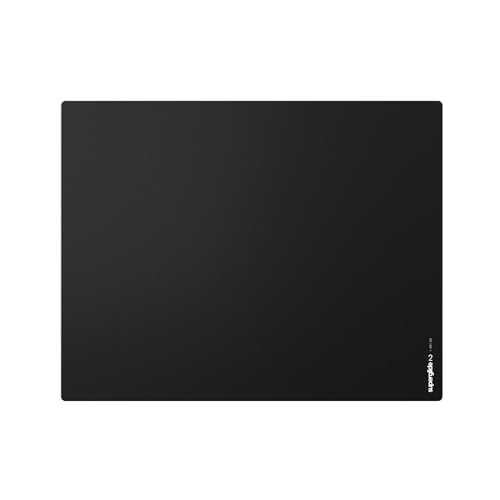
3. Pulsar Superglide v2 — Glass (premium)
The Superglide v2 is an aluminosilicate glass pad with a fully molded silicone rubber base. The glass surface is exceptionally smooth and consistent, with rounded, polished edges so your forearm never catches a sharp corner. It is one of the fastest surfaces you can buy, and it will not slow down with wear the way cloth does. Keep a microfiber cloth nearby, because dust control matters more on glass than on any other material in this guide.
Specs
- Surface: Aluminosilicate glass
- Dimensions: 420 x 330 mm (Size L, Black)
- Base: Fully molded high-density silicone rubber
- Tier: premium
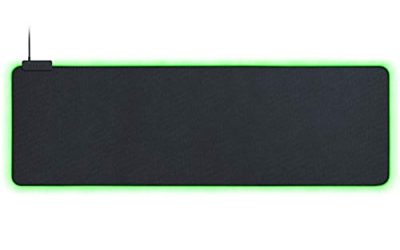
4. Razer Strider Chroma — Hybrid (premium)

The Strider Chroma pairs a hybrid soft and hard surface with a full RGB lighting frame. The top layer glides with the smoothness of a hard mat while the soft base keeps it rollable, cushioned, and resistant to warping. It is warp and water resistant, has seamless edges, and the XXL footprint covers mouse and keyboard together. For players who want hybrid glide plus a lit desk setup, this is the flagship option.
Specs
- Surface: Hybrid soft and hard mat, proprietary weave
- Dimensions: 900 x 370 mm
- Thickness: 4 mm
- Lighting: 19 Razer Chroma RGB zones
- Model: RZ02-04490100-R3U1
- Tier: premium
5. Endgame Gear MPC-450 — Cordura (mid-range)

The MPC-450 covers a natural rubber base with genuine Cordura fabric, producing a fast cloth-like glide with far better resistance to wear, moisture, and dirt than ordinary textile pads. The stitched edges resist fraying, and the surface stays consistent in conditions that make standard cloth feel muddy. It is the durability pick: a pad built for players who compete often, travel with their gear, or simply want one pad to last for years.
Specs
- Surface: Cordura fabric
- Dimensions: 450 x 400 mm
- Thickness: 3 mm
- Base: Natural rubber
- Edges: Stitched
- Model: EGG-MPC-450-BLK (Stealth Edition, Black)
- Tier: mid-range
How to Choose a Mouse Pad Material
Start with your sensitivity and your games. Low-sensitivity players in tactical shooters usually do best on cloth or Cordura, where the extra friction helps the crosshair settle. High-sensitivity players and tracking-heavy aim styles benefit from hard plastic, hybrid, or glass, where low friction keeps micro-adjustments effortless.
Next, think about maintenance. Glass and hard plastic wipe clean and ignore humidity, but they demand clean mouse feet and punish trapped grit. Cloth is the most forgiving of dust and worn feet but needs washing and slowly changes feel. Cordura sits between the two, shrugging off splashes and wear while keeping a fabric feel.
Finally, consider comfort and desk habits. Soft pads (cloth, hybrid, Cordura) cushion your wrist and roll up for travel. Hard pads and glass stay perfectly flat and consistent but feel firm and, in the case of glass, heavy and cold. Match the material to the way you actually play, not to what looks fastest on paper, and remember that fresh mouse feet make a bigger difference on hard surfaces than on cloth.
Frequently Asked Questions
Which mouse pad material is best for FPS games?
It depends on the shooter. Tactical FPS titles that reward precise stops, such as Counter-Strike or Valorant, usually favor cloth or Cordura for their control. Faster, tracking-heavy shooters often suit hard plastic, hybrid, or glass surfaces, where low friction makes continuous target tracking easier.
Do glass mouse pads wear out mouse feet faster?
Yes. Glass is harder than PTFE mouse feet, so feet wear down more quickly on glass than on cloth. The pad itself stays consistent for years, but you should expect to replace mouse feet more often and keep the surface free of dust and grit.
Are hard mouse pads better than cloth?
Neither is universally better. Hard pads are faster, more consistent, and easier to clean, while cloth pads offer more stopping power, comfort, and forgiveness for worn mouse feet. The better choice is the one that matches your sensitivity, grip style, and the games you play most.
How long does a cloth mouse pad last?
A quality cloth pad typically stays in good shape for one to two years of daily play before the glide noticeably changes from wear, dust, and moisture. Cordura and hybrid surfaces generally hold their original feel longer, and glass does not wear down at all under normal use.
Final Verdict
Material is the single biggest decision in buying a mouse pad. Choose cloth for balanced control, hard plastic for an easy step into fast surfaces, glass for maximum speed and permanence, a hybrid for speed with soft-pad comfort, and Cordura for cloth-like control that outlasts ordinary fabric. The five pads above are the strongest current example of each class, so pick the material first and the choice makes itself.
Product and ASIN Reference
| Product | ASIN |
|---|---|
| SteelSeries QcK XXL (Cloth) | B00WAA2704 |
| Logitech G440 (Hard Plastic) | B0BHMK6B2X |
| Pulsar Superglide v2, Size L, Black (Glass) | B088M466ZC |
| Razer Strider Chroma, XXL (Hybrid) | B0B75YMDMC |
| Endgame Gear MPC-450, Black (Cordura) | B08V4VK55N |
Related guides
More from Amazon
Programs that pair well with the guide above. Offers and eligibility are set by Amazon and may change.
Free shipping on eligible items, Prime Video and more. Eligible new members can start with a free trial.
Start a Prime free trialAd-free music streaming. Eligible new subscribers can start with a free trial.
Try Music Unlimited freeA Prime membership for ages 18-24 with a trial period. Eligibility is set by Amazon.
See Prime for Young AdultsAudiobooks and podcasts to listen to on the go. Eligible new members can start with a free trial.
Try Audible freeAs an Amazon Associate we earn from qualifying purchases.