Choosing a gaming mouse brand is a bigger decision than choosing a single mouse. The brand decides the software you will live in, the wireless system your future keyboard and headset may share, the shape language your hand will learn, and how deep the range runs when your needs change from shooters to MMOs. The best gaming mouse brands have earned their positions in different ways: one through esports dominance and safe shapes, one through relentless feature innovation and a huge ecosystem, one through multi-genre engineering and strong mid-range depth, and one through software power and specialist designs that nobody else attempts.
This guide profiles the four brands that matter most, using one representative flagship mouse from each, all real and currently listed on Amazon US, so you can see what each maker’s best current hardware looks like rather than reading abstract claims. It also names the wider field honestly, because brands such as Zowie, HyperX, ASUS ROG, Glorious and Pulsar each own a niche the big four do not. Read it as a map: find the brand whose strengths match your games and your desk, then shop inside that range with confidence.
Disclosure: As an Amazon Associate, this site may earn from qualifying purchases made through links in this article, at no additional cost to you.
Top 3 picks at a glance


Quick picks
- Logitech G PRO X Superlight 2 Wireless Gaming Mouse – ASIN: B09NBWL8J5
- Razer DeathAdder V3 Pro Wireless Gaming Mouse – ASIN: B0B6XZLNHQ
- SteelSeries Rival 5 Gaming Mouse with PrismSync RGB Lighting – ASIN: B093LSMKL3
- Corsair Scimitar RGB Elite Wired MOBA/MMO Gaming Mouse – ASIN: B082LRMY53
Use the quick list to see each brand’s representative mouse, then read the brand profiles below. Specifications are taken from the product listings named here, so confirm the exact variant on the listing before you order, because flagship lines are sold in several colours, editions and bundles.
Logitech G: the esports standard

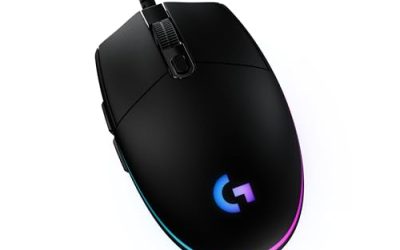
Brand character: Logitech G is the default setting of competitive gaming mice. Its LIGHTSPEED wireless system was among the first to be trusted on tournament stages, its HERO sensor line is known for consistency and efficiency, and its shape philosophy favours safe, widely compatible shells refined over many generations rather than radical redesigns. The range runs from entry wired mice to the Superlight line at the top, and G Hub software ties mice, keyboards and headsets together with per-game profiles and LIGHTSYNC lighting. If a player asks what to buy without wanting to think about brands at all, this is the brand they are usually handed.
Representative mouse: The G PRO X Superlight 2 shows the philosophy at its purest: a symmetrical 60 gram shell, the HERO 2 sensor rated to 44,000 DPI, polling up to 8,000 Hz, LIGHTFORCE hybrid switches, battery life listed up to 95 hours and POWERPLAY charging compatibility. View on Amazon – ASIN: B09NBWL8J5
Strengths: The deepest esports pedigree in the category, dependable wireless, strong battery efficiency across the range, and shapes that suit the widest spread of hands and grips. Support, availability and community knowledge are as good as it gets.
Points to consider: The design language is conservative, and players who want expressive RGB or experimental shapes will find more elsewhere. The flagship line sits in the premium tier, and G Hub, while capable, is a sizeable application that some players prefer to avoid by relying on onboard memory.
Razer: the feature frontier
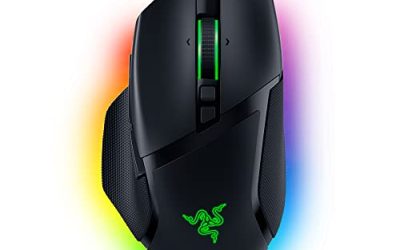
Brand character: Razer builds for enthusiasts who read specification sheets. It pushes polling rates, sensor figures and switch technology earlier than rivals, wraps them in Chroma RGB, the most developed lighting ecosystem in gaming, and covers every shape niche from the ergonomic DeathAdder to the button-loaded Naga to the symmetrical Viper. Synapse software is the centre of the system, with per-device lighting through Chroma Studio, Hypershift secondary layers and deep macro tools. Razer also serves audiences others ignore, including left-handed players through limited Naga runs.
Representative mouse: The DeathAdder V3 Pro carries the brand’s current technology in its most famous shape: an ergonomic 63 gram shell, Focus Pro 30K optical sensor, third-generation optical switches, HyperSpeed wireless and battery life listed up to 90 hours, with higher polling available through the HyperPolling dongle. View on Amazon – ASIN: B0B6XZLNHQ
Strengths: The broadest shape and feature range of any brand here, the strongest lighting ecosystem, and a habit of shipping tomorrow’s specifications today. Esports credibility is genuine, with the Viper line a fixture in professional FPS play.
Points to consider: The range is so wide that model names and generations can confuse, and flagship features sometimes need a separate dongle to unlock. Synapse is powerful but heavy, and Razer’s premium positioning means its best mice rarely occupy the value end of the market.
SteelSeries: the multi-genre engineer
Brand character: SteelSeries designs like an engineer with a wide brief. Its TrueMove sensor line, built with PixArt, emphasises tracking fidelity features such as tilt correction; its shapes, from the Rival line to the Aerox line, target several genres at once rather than a single title; and its GG software combines settings, lighting through PrismSync, and app integrations in one hub. SteelSeries also has a long memory for beloved shapes, reviving classics such as the Sensei for ambidextrous players, which gives the brand unusual strength with left-handed and symmetrical-shape fans.
Representative mouse: The Rival 5 shows the approach clearly: a wired multi-genre mouse at 85 grams with a TrueMove Air sensor rated to 18,000 CPI, nine programmable buttons including a sniper button and tilt switch, ten-zone PrismSync RGB, and switches with an IP54 resistance certification according to the listing. View on Amazon – ASIN: B093LSMKL3
Strengths: Versatility. A SteelSeries mouse rarely forces a genre choice, the mid-range depth is excellent, and the software integrations with games and chat tools are distinctive. Ambidextrous heritage is a real differentiator for southpaw players.
Points to consider: The brand lacks a single dominant esports shape on the scale of the Superlight or Viper, so players who want the exact mouse a favourite professional uses may land elsewhere. Some features live inside the broader GG platform, which is more software than minimalists want.
Corsair: the software and specialist power
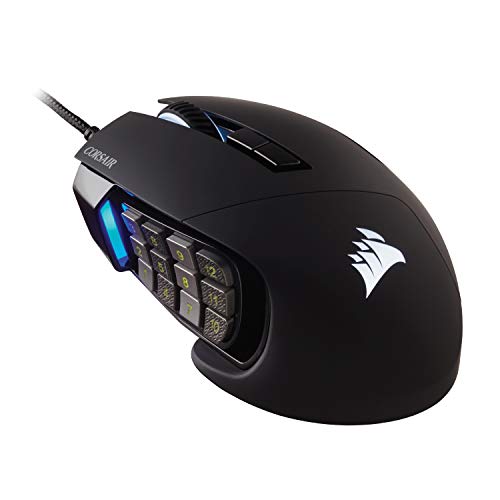
Brand character: Corsair approaches mice from the whole-system side. Its iCUE software is arguably the most powerful control suite in PC gaming, linking mice with keyboards, headsets, fans and case lighting in one place, and its mouse range leans into specialisation: the Scimitar line owns the wired MMO niche with its sliding keypad, while other models target palm-grip comfort, wireless multi-device desks and first-person shooters. Players building an all-Corsair desk get the tightest version of this brand.
Representative mouse: The Scimitar RGB Elite is the specialist flagship: a wired MMO and MOBA mouse with seventeen programmable buttons, a twelve-button side panel that slides and locks to fit your thumb position, a PixArt PMW3391 sensor rated to 18,000 DPI, mechanical side-button switches and onboard profile storage with hardware playback. View on Amazon – ASIN: B082LRMY53
Strengths: iCUE’s macro and lighting depth, genuinely unique hardware ideas such as the Key Slider panel, and strong integration for players standardising a full setup on one maker. The specialist lines are best in class at their specific jobs.
Points to consider: iCUE is a heavyweight application, and Corsair’s mouse range is smaller than Logitech’s or Razer’s, with less presence in the ultralight esports segment. Players outside the Corsair ecosystem get less of the brand’s main advantage.
The wider field, honestly
Four brands do not cover everything. Zowie, now under BenQ, is the purist esports choice, with driverless mice, shapes refined for competitive shooters and a no-software philosophy many professionals love. HyperX makes straightforward, well-priced mice with a lighter software footprint. ASUS ROG pushes enthusiast features such as hot-swappable switches and very high polling in its flagship line. Glorious built its name on lightweight modular designs and enthusiast customisation, and Pulsar has become a favourite among competitive players for ultralight symmetrical shapes with strong value. Any of these can be the right answer for a specific player; the big four in this guide are the brands with the depth to cover most players, most genres and most desks.
How to choose a gaming mouse brand
Match the brand to your main genre first. Shooter-first players should start with Logitech G or Razer, whose flagship shapes and wireless systems define that space. MMO-first players should look at Corsair for wired specialisation and Razer for wireless and left-handed options. Mixed-genre players who want one mouse to do everything well should weigh SteelSeries heavily, and players building a whole desk around one software suite should compare iCUE and Chroma ecosystems before choosing hardware at all.
Then think in systems, not products. If your keyboard, headset and mouse will share a brand, lighting sync, profile switching and updates all get simpler, and every maker here rewards that loyalty with its best features inside its own software. Check the shape catalogue for your hand size and grip, because a brand whose shapes fit you is worth more than a specification lead you cannot feel. Finally, consider support horizons: the big brands publish firmware, keep replacement parts and community knowledge available for years, which matters for a device you will use daily.
Frequently asked questions
Which brand makes the most reliable gaming mice?
All four brands here build mice with switches rated for tens of millions of clicks and provide multi-year support through their software and service channels. Real-world reliability depends more on the specific model and how it is treated than on the badge, which is why this guide recommends shopping within these ranges rather than chasing a single reliability winner.
Is it worth keeping all my gear from one brand?
For most players, yes, once you pass two devices. Shared software means one place for profiles, lighting and updates, and the sync effects across a desk genuinely look better. Players with a single favourite mouse should simply buy that mouse; ecosystem benefits grow with each added device.
Which brand is best for small hands or left-handed players?
For left-handed players, Razer has the only true left-handed shell among the big brands, and SteelSeries has the strongest ambidextrous heritage. For small hands, check each brand’s compact lines specifically, since flagship shapes from every maker here trend medium to large.
Do professional players all use one brand?
No. Professional stages are split mainly between Logitech G and Razer in shooters, with Zowie ever-present and SteelSeries, Corsair and Pulsar all represented. That spread is the honest answer to the brand question: at the top level, shape fit decides, and every brand here has shapes that fit somebody perfectly.
How often do brands release new flagship mice?
Flagship lines refresh on a cycle of roughly one to two years, usually around sensor, switch or polling advances. A current flagship from any brand here will stay relevant for years, so buy for your hand and your games rather than waiting for the next announcement.
Conclusion
Pick Logitech G for the safest competitive standard and the strongest all-round wireless system. Pick Razer for the widest range, the boldest features and the deepest lighting ecosystem. Pick SteelSeries for multi-genre versatility and ambidextrous strength. Pick Corsair for software power and specialist designs that lead their niches. The best gaming mouse brand is the one whose shapes fit your hand and whose system fits your desk, and with the four profiles above, you can make that call deliberately instead of by habit.
Related guides
More from Amazon
Programs that pair well with the guide above. Offers and eligibility are set by Amazon and may change.
Free shipping on eligible items, Prime Video and more. Eligible new members can start with a free trial.
Start a Prime free trialAd-free music streaming. Eligible new subscribers can start with a free trial.
Try Music Unlimited freeA Prime membership for ages 18-24 with a trial period. Eligibility is set by Amazon.
See Prime for Young AdultsAudiobooks and podcasts to listen to on the go. Eligible new members can start with a free trial.
Try Audible freeAs an Amazon Associate we earn from qualifying purchases.