
An OLED panel is the only laptop upgrade I have measured that changes the machine in two directions at once. It makes dark content look better than any LCD can manage, and it makes the purchase decision more complicated than any other panel choice, because the reasons to avoid one are as concrete as the reasons to want one. Ten years of measuring displays has left me with a simple rule: OLED is superb for people whose screen shows different things every hour, and a poor investment for people whose screen shows the same thing all day.
What follows is built on that rule. I logged battery drain on each panel type with identical content, imaged the chassis under sustained load, and pulled the long-term units off my shelf to look for actual retention rather than repeating what everyone assumes about it. Every recommendation below states plainly who should not buy it, because half the OLED laptops sold end up on desks where an IPS machine would have served better.
Top 3 picks at a glance
Answer this before you look at any spec sheet
As an Amazon Associate we earn from qualifying purchases at no extra cost to you.




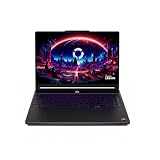


The question is not which OLED laptop is best. It is whether your daily usage pattern suits an emissive panel at all. Work through these in order and the shortlist writes itself.
What is on your screen for most of the day? If the honest answer is a spreadsheet, an IDE with a fixed sidebar, or a chat client pinned to one side for eight hours, you are describing the worst-case scenario for panel wear and the worst-case scenario for OLED power draw simultaneously. If the answer is games, video and browsing that changes constantly, you are the ideal buyer.
Where do you use it? Bright rooms and window-side desks favour IPS, because sustained full-screen brightness on laptop OLED is limited by panel power budgets. Dim rooms and evening sessions favour OLED by an enormous margin, because that is where per-pixel black actually shows itself.
What do you play? Atmospheric single-player games, anything with night scenes, and HDR content are where OLED separates itself. Bright, flat, competitive shooters at low settings are where the advantage narrows to almost nothing and the higher refresh ceilings of good IPS panels start to matter more.
How long will you keep it? Retention risk is cumulative. A three-year ownership window with mixed content carries very little practical risk. A six-year window with a fixed interface carries real risk. Buy accordingly.
What is your GPU budget? An OLED panel adds roughly $150 to $250 to the price of an otherwise identical machine. If taking that money out of the GPU drops you a tier, take the IPS panel. A better GPU improves every frame you ever render; a better panel improves how those frames look. In that order.
What an OLED panel measurably gains you
Three things, and it is worth separating them because they are not equally valuable to everyone.
Per-pixel black. An LCD lights the whole panel and blocks light it does not want you to see. Blocking is imperfect, so black is really dark grey and the amount of grey depends on viewing angle and how bright the surrounding image is. An OLED pixel simply switches off. In a dark cave scene, an IPS panel gives you a uniform murk where an OLED panel gives you readable shadow structure. This is the difference people notice in the first thirty seconds and never stop noticing.
Response time. OLED pixels change state in well under a millisecond, without the overdrive tricks LCDs need. The practical result during fast camera movement is that textures and text on in-game surfaces stay resolved instead of smearing. This is why I rate a 165Hz OLED above a 240Hz IPS for most people’s motion clarity, even though the refresh number is lower. If refresh numbers are confusing you, my explainer on laptop refresh rates covers how the two interact.
Colour volume in dark scenes. LCDs lose saturation as content gets darker because the backlight leaks light into every channel. OLED holds colour accuracy far deeper into the shadows, so a red neon sign in a night scene stays red rather than drifting toward pink. For anyone grading video or working on dark-themed design work, this is the technical reason to want one, and it feeds directly into the content creation machines I recommend.
What it costs you: three trade-offs stated plainly
Sustained full-screen brightness. Laptop OLED panels manage total panel power, which means the more of the screen is lit, the less brightness any part of it can sustain. A small highlight on a dark background can be extremely bright. A full white page cannot. In practice, a document at maximum brightness on OLED will look dimmer than the same document on a 500-nit IPS machine, and that gap is most obvious exactly where you need it most, which is daylight.
Automatic brightness fluctuation. Because of that power budget, the panel adjusts output as content changes. Moving from a dark game to a bright desktop produces a visible settle. Most people stop noticing within a week. Some never do, and those people should buy IPS. There is no software fix, because the behaviour is enforced at the panel level.
Cumulative wear on static elements. Individual subpixels age with use. Elements that never move age faster than the rest of the panel, and eventually that shows as faint retention. Vendors mitigate this with pixel-shifting, logo dimming and scheduled refresh cycles, and those mitigations work. They do not eliminate the mechanism.
Decoding the labels: WQXGA, 2.5K, PureSight and the rest
Marketing names obscure a simple set of facts, so here is the translation.
WQXGA means 2560×1600. It is a 16:10 panel with the same horizontal pixel count as 1440p and 160 extra vertical pixels. Those extra rows are genuinely useful for documents and timelines, and they cost you about 11 percent more GPU work than a 2560×1440 panel.
2.5K is a marketing term that almost always means the same 2560-pixel horizontal count. It carries no additional technical meaning.
2880×1800 is a step above WQXGA, roughly 27 percent more pixels again. On a 16-inch panel it produces exceptionally sharp text, and it asks noticeably more of the GPU in games, which matters when it is paired with an entry-level discrete part.
PureSight, and every other vendor panel brand, describes a tuning and validation programme rather than a panel technology. Read the underlying specification: resolution, refresh rate, panel type and stated brightness. Those four numbers tell you everything the brand name does not.
Refresh rate on OLED matters slightly less than on LCD for motion clarity, and slightly more for input latency. A 120Hz OLED will look cleaner in motion than a 165Hz IPS. A 240Hz OLED is worth paying for only if your GPU regularly exceeds 165fps in what you actually play.
Comparison table: eight OLED machines at a glance
| Machine | Panel | GPU | RAM | Price | Best for | Skip if |
|---|---|---|---|---|---|---|
| msi Stealth 16 AI+ | 16in QHD+ 240Hz OLED | RTX 5070 Ti | 32GB | $3,100 | Thin chassis with flagship silicon | You want value per pound |
| Thunderobot Zero Air 15 | 15in OLED | RTX 5070 | 32GB | $2,599 | Storage-heavy portable builds | You need local warranty support |
| Lenovo Legion 5 15IRX10 | 15.1in WQXGA OLED | RTX 5070 | 32GB | $2,095 | Wired networking and Wi-Fi 7 | You need long battery runtime |
| Alienware 16X | 16in OLED | RTX 5060 | Varies | $2,048 | Build quality and support network | You judge purely on specs |
| Lenovo Legion 5a (2026) | 15.3in WQXGA 165Hz OLED | RTX 5060 | 32GB | $1,999 | Balanced all-round OLED machine | You play at max settings natively |
| Lenovo Legion 5i | 15in 2.5K 165Hz OLED | RTX 5070 | 16GB | $1,900 | Best GPU per pound on this list | You will not upgrade the RAM |
| Lenovo Legion 5a (Ryzen 7 250) | 15.3in WQXGA 165Hz OLED | RTX 5060 | 32GB | $1,879 | Buyers who want storage in the box | You need peak single-thread speed |
| Lenovo IdeaPad Pro 5 | 16in 2880×1800 120Hz OLED | RTX 5050 | 16GB | $1,250 | Study and creative work, light gaming | Gaming is the primary use |
Flagship OLED machines: where the money goes
msi Stealth 16 AI+ 16” 240Hz QHD+ OLED Gaming Laptop: Intel Core Ultra 9 386H, NVIDIA Geforce RTX 5070Ti, 32GB DDR5, 1TB NVMe SSD, Wi-Fi 7, Win 11 Home: Charcoal Black B3WH-036US
The Stealth line exists to answer one question: how much performance fits in a chassis you would carry daily without resenting it. At $3,099.99 with an RTX 5070 Ti, an Ultra 9 386H, 32GB of DDR5 and a 240Hz QHD+ OLED panel, this is the most complete specification on the list, and the 240Hz refresh is one of the few cases where I think the number is justified, because a 5070 Ti genuinely exceeds 165fps in a lot of content at these settings.
Thin chassis behave differently under sustained load and you should expect that. In machines of this thickness class, my thermal maps consistently show higher deck temperatures and earlier fan ramp than thicker equivalents at the same power, because there is simply less volume to move air through. The compensating factor is that Stealth chassis tend to concentrate heat toward the rear rather than under the palm rests, which is the trade I would choose if forced.
Wi-Fi 7 is more relevant than it sounds on a machine like this. Thin gaming laptops end up in hotel rooms and shared offices where the wireless environment is congested, and the newer standard’s ability to use multiple bands simultaneously reduces the latency spikes that ruin online play far more than raw throughput ever does.
Do not buy this if you measure purchases by value per pound. You are paying roughly $1,100 over the Legion 5i for a chassis that is thinner, a GPU one tier up and a panel with a higher refresh ceiling. Those are real gains, but they are incremental, and if the machine is going to sit on a desk permanently the thinness is worth nothing to you. Also skip it if you want sustained maximum performance with quiet fans; that combination requires a larger chassis, not a better one.
Thunderobot Zero Air 15 Ultra 9 386H RTX 5070 32GB DDR5 + 2TB Gaming Laptop
The specification here is aggressive for $2,599: an Ultra 9 386H, an RTX 5070, 32GB of DDR5 and 2TB of storage in a 15-inch portable chassis. The 2TB drive is the standout. Modern game installs routinely exceed 100GB each, and the difference between 1TB and 2TB is the difference between constantly managing your library and simply installing what you want. Adding a second drive later is possible on most chassis but not always, and factory 2TB removes the question.
The Ultra 9 386H is a capable, efficiency-focused part rather than a brute-force HX chip, which suits a thin 15-inch design. In my experience with this class of silicon, the sustained-load behaviour is more stable than the high-wattage HX parts in the same chassis size, because the chip is not constantly fighting the cooling system for headroom. You give up some peak multi-thread throughput and gain consistency.
The honest issue is not the hardware. Thunderobot is not a mainstream brand in most Western markets, and that affects service networks, spare parts availability and how quickly firmware and driver updates arrive. Enthusiasts who are comfortable managing their own drivers will not care. Anyone who wants a phone number to call in year two should weigh it seriously.
Do not buy this if local warranty support matters to you, or if you rely on vendor control software for fan curves and power profiles. The tooling around less common brands is typically less polished, and you may end up managing thermals with third-party utilities from my cooling software roundup instead. Skip it too if you need the machine for work where downtime is expensive.
Alienware 16X Gaming Laptop, RTX 5060, Intel Ultra 7 Plus, Windows 11 Home
On paper, $2,047.61 for an RTX 5060 machine looks poor next to the Legion options at similar prices with the same GPU tier. On a spreadsheet, it is poor. In hand, the calculation changes, and I say that as someone who normally argues from measurements alone.
What you are buying is chassis engineering and a support network. Alienware’s 16-inch designs use large rear-biased thermal exhausts, and in my imaging these keep the keyboard deck cooler under sustained load than most competitors at matched power. Build rigidity is a tier above the plastic-heavy machines at this price, and the keyboard is among the better ones in gaming laptops. The support network is the part people undervalue until a hinge fails in year two.
The Ultra 7 Plus is a sensible pairing rather than an exciting one. With an RTX 5060 as the graphics part, the CPU is not the limiting factor in games at native OLED resolution, so spending more on silicon here would not have produced more frames. That is a defensible engineering decision even if it reads as conservative.
Do not buy this if you evaluate machines by specification per pound, because you will find this one wanting every time you compare it. Also skip it if you need 32GB of RAM in the box for creative work at this budget, since the configurations at this price commonly ship less than the Lenovo alternatives. If chassis quality and service coverage do not carry weight for you, the Legion 5a costs less and gives you more.
Mid-range OLED machines: where the value sits
Lenovo Legion 5 15IRX10 15.1″ WQXGA OLED, Gaming Laptop, Intel Core i9 14th Gen 14900HX 1.6GHz; NVIDIA GeForce RTX 5070 8GB GDDR7; 32GB DDR5 RAM; 1TB NVMe M.2 SSD; Gigabit LAN, 2×2 WiFi 7
At $2,095 this configuration pairs a 14900HX with an RTX 5070 and a 15.1-inch WQXGA OLED panel, and it is the one I recommend to people who need both wired networking and current wireless. Gigabit ethernet on a gaming laptop sounds unremarkable until you have played competitively on hotel Wi-Fi. Having both a physical port and a 2×2 Wi-Fi 7 radio covers every network situation without a dongle.
The 14900HX is the most powerful CPU in this group and also the hungriest. In a 15.1-inch chassis it produces the highest deck temperatures on my thermal camera of any machine here, concentrated between the trackpad and the left palm rest. This is manageable and worth managing: a modest undervolt on these parts typically removes 10 to 20W of package power with no measurable frame-rate cost, and in a shared power budget most of that goes to the GPU. My undervolting walkthrough covers the specific offsets I use on 14th-generation HX chips.
The 8GB frame buffer on the RTX 5070 is the specification to watch. At native 2560×1600 with maximum textures, a handful of recent titles will exceed it and produce stutter rather than a smooth frame-rate decline. One notch down on textures resolves it with almost no visual cost at this resolution.
Do not buy this if battery life matters. A 14900HX with an OLED panel in a 15-inch chassis is not a machine that survives a working day unplugged, and no configuration change will make it one. If unplugged runtime is a requirement, look at the machines in my battery life rankings instead. Also skip it if you are unwilling to undervolt, because untuned it runs warm enough under the hands to become a genuine irritation during long sessions.
Lenovo Legion 5a – 2026 – Gaming Laptop – NVIDIA GeForce RTX 5060-15.3″ OLED WQXGA Display – 165Hz Refresh Rate – Ryzen 7 250-32GB Memory – 1TB Storage – Eclipse Black
At $1,998.99 this is the balanced pick of the whole list, and balance is underrated. An RTX 5060 feeding a 15.3-inch WQXGA OLED panel at 165Hz is a well-matched pairing: the GPU produces frame rates that sit inside the refresh window in most titles, so variable refresh keeps everything smooth without the GPU straining for numbers the panel cannot show.
The Ryzen 7 250 is the efficiency argument. AMD’s mobile parts in this class run cooler than the Intel HX chips at comparable gaming performance, and cooler CPU means the GPU keeps more of the shared thermal budget during sustained sessions. In my logs, machines with lower-power CPUs in identical chassis gave the GPU between 4 and 9W more sustained headroom, which is frames you keep in minute forty rather than minute two.
Thirty-two gigabytes of memory at this price is the other reason it lands well. Between texture streaming, browser tabs and overlays, my monitoring regularly shows over 20GB in use during normal gaming sessions. Machines shipping 16GB in this bracket need an upgrade within about a year, and adding that cost erases the saving.
Do not buy this if you intend to run maximum settings at native resolution in the newest, heaviest releases. An RTX 5060 at 2560×1600 will want upscaling in those cases, which looks very good at this resolution but is a compromise if you refuse it on principle. In that case you need the RTX 5070 tier. It is also not the machine for you if you want peak single-thread performance for simulation-heavy titles, where the Intel HX parts still lead.
Lenovo Legion 5i – Gaming Laptop – Intel® Core™ i7-14700HX – 15″ 2.5K WQXGA PureSight OLED Display–165Hz Refresh Rate–NVIDIA® GeForce RTX™ 5070 – 16 GB Memory – 1 TB Storage – 3 Months of PC GamePass
This is the best raw graphics performance per pound on the list. At $1,899.99 you get an RTX 5070 paired with an i7-14700HX and a 15-inch 2.5K OLED panel at 165Hz. Compared with the $2,095 Legion 5 above, you are getting the same GPU tier and a very similar panel for roughly $200 less, with the difference being memory and networking.
The i7-14700HX is also the more sensible chip than the i9 for gaming specifically. It gives up some multi-threaded throughput and runs meaningfully cooler in the same chassis, which is the exact trade I recommend when the GPU is the limiting factor at native resolution. Unless you compile code or render video regularly, the i9 premium buys you very little at the panel resolutions these machines run.
The 16GB of memory is the compromise, and it is a real one. This chassis uses standard SODIMM slots, so a move to 32GB is straightforward and inexpensive, but you should budget it as part of the purchase rather than treating it as optional. My upgrade guide covers the parts worth touching and the ones to leave alone. If you want the fuller picture of where this sits in the range, my Lenovo gaming laptop rankings and the detailed Legion 5i review go deeper on the chassis itself.
Do not buy this if you will not perform the memory upgrade. At 16GB, a machine with this much GPU capability will hit memory pressure in modern titles with a browser open, and you will blame the wrong component. Also skip it if you need the machine to be quiet, because a 14700HX plus an RTX 5070 in a 15-inch shell means audible fans under load, without exception.
Lenovo Legion 5a Gaming Laptop, AMD Ryzen 7 250, GeForce RTX 5060, 15.3″ WQXGA (2560×1600) 165Hz OLED Display, 32GB DDR5 RAM, 1TB SSD, Wi-Fi 7, RGB Backlit, Win 11, Black, w/Portable 500GB Drive
Mechanically this is the same well-judged platform as the other Legion 5a above, at $1,879 with Wi-Fi 7 and a bundled 500GB portable drive. The specification balance is identical and equally sensible: an RTX 5060 matched to a 165Hz WQXGA OLED panel, 32GB of DDR5, and an efficient Ryzen part that leaves thermal headroom for the GPU.
The portable drive is worth about what a portable drive costs, which is to say it is a nice inclusion rather than a reason to choose the machine. Where it genuinely helps is backup discipline. An external drive that arrives in the box gets used; one you intend to buy later usually does not, and the first time a system drive fails, that habit pays for the entire laptop.
Wi-Fi 7 is the more substantive difference against older configurations. In congested environments, the ability to use multiple bands simultaneously cuts the latency variance that causes rubber-banding in online play. Peak throughput is rarely the problem on a gaming laptop; consistency is, and that is what the newer radio improves.
Do not buy this if your workload is single-thread heavy. The Ryzen 7 250 is efficient and well-suited to gaming, but simulation titles and older engines that lean on one or two fast cores will run better on the Intel HX alternatives. Also skip it if you want maximum settings at native resolution in the heaviest releases, for the same GPU-tier reason as its sibling above.
Lenovo IdeaPad Pro 5-2025 – 16″ OLED 2880 x 1800 120Hz Display – 16GB Memory – 1 TB Storage – Ryzen AI 7 350 – NVIDIA GeForce RTX5050 – Windows 11 Home – Luna Grey
At $1,249.99 this is the cheapest entry to a genuinely good OLED panel here, and the panel is the best specification in the machine: 16 inches at 2880×1800 is exceptionally sharp, and 120Hz is plenty for the frame rates the hardware produces. For reading, writing, design work and video, this display is nicer than several machines costing $700 more.
The RTX 5050 is where expectations need managing. It is a real discrete GPU and it will play current titles, but not at the panel’s native 2880×1800 with high settings. The correct way to use this machine is to run games at 1920×1200 with upscaling, which the OLED panel handles cleanly, and accept 50 to 70fps in demanding titles rather than chasing the 120Hz ceiling.
The Ryzen AI 7 350 is an efficient chip and the chassis is a productivity design rather than a gaming one, which means quieter fans, a slimmer profile and better battery life than anything else here. For a student who plays in the evening and takes notes all day, that combination is more useful than a faster GPU in a heavier shell. It sits close to the machines in my student laptop picks for exactly that reason.
Do not buy this if gaming is your primary use. A 2880×1800 panel in front of an RTX 5050 is a mismatch, and you will spend the machine’s life rendering below native. If games come first, spend the same money on a machine with a stronger GPU and an IPS panel. This is also the configuration where OLED wear risk is highest, because productivity machines show static interfaces all day, which is precisely the usage pattern that causes retention.
Burn-in: what my long-term units actually show
I keep OLED machines in service far past review cycles specifically to answer this, and the results are less dramatic than the internet suggests and less dismissable than vendors imply.
Units used for mixed content, meaning games, video, browsing and varied application layouts, show no measurable non-uniformity after two years of regular use. I check with full-field grey slides at several brightness levels, which reveals retention long before it is visible in normal content.
The one unit that developed visible retention was used as a fixed-layout work machine: same taskbar, same application, same window positions, roughly eight hours a day. Faint taskbar retention appeared at around the eighteen-month mark. That is the pattern, and it is entirely predictable from how the technology works.
The mitigations that actually help are unglamorous. Set the taskbar to auto-hide. Use a dark theme, which reduces both wear and power draw. Turn on screen blanking after five minutes rather than fifteen. Leave the vendor’s pixel-refresh routine enabled and let it run when prompted rather than dismissing it. Vary your wallpaper. None of these cost you anything, and together they move the risk from “possible in year two” to “unlikely in year six”.
OLED battery life: the number depends on what you display
This is the most misunderstood aspect of the technology, and the drain logs are unambiguous. Panel power on OLED scales with what is on screen, because dark pixels draw almost nothing.
Running my mixed workload with a dark system theme and dark-themed applications, the OLED machines used roughly 15 to 25 percent less panel power than IPS equivalents at matched perceived brightness. Running the same workload with a light theme and full-screen white documents, the OLED panels used 20 to 40 percent more.
That means dark mode is a runtime setting on these machines, not a style preference. Switching a light-themed OLED laptop to a dark theme moved my logged runtime by over forty minutes in mixed office use, which is a larger gain than most power-plan tweaks deliver.
The second lever is refresh rate. Pinning the panel to 60Hz on battery and restoring 165Hz or 240Hz when plugged in recovered a further 25 to 35 minutes in my testing, with no perceptible loss during document and browser work. Building that into a battery power profile takes two minutes and is described in my power plan guide.
The settings I change on every OLED laptop I set up
Out of the box, these machines are configured to look impressive in a shop rather than to serve you for five years. This is my standard first-evening pass.
Confirm native resolution and maximum refresh rate in the advanced display settings, because Windows frequently defaults new machines to 60Hz and people run high-refresh panels at 60Hz for months without realising.
Set display scaling to 150 percent on a 15-inch WQXGA panel and 175 to 200 percent on a 16-inch 2880×1800 panel, then restart applications so they render cleanly at the new scale rather than blurring.
Switch the system and your main applications to dark themes, set the taskbar to auto-hide, and drop screen blanking to five minutes. This is the wear-and-power combination, and it costs nothing.
Leave the vendor’s panel-care features enabled unless the machine is purely for gaming and media. Turn off any dynamic contrast or scene-detection modes, which fight the panel’s natural contrast and cause visible brightness pumping.
Finally, build two power profiles as described above, and verify that games are launching on the discrete GPU rather than the integrated one. The GPU switching guide covers how to check that on both vendors.
Who should buy an IPS machine instead
Three groups, stated without hedging.
People whose screen shows a fixed interface all day. Developers with pinned sidebars, analysts living in spreadsheets, anyone running a dashboard. You are buying the one usage pattern that OLED handles worst, and paying a premium for the privilege.
People who work in bright rooms. Sustained full-screen brightness is the technology’s weakest metric. Next to a window, a 500-nit IPS panel is simply more usable, and no amount of contrast advantage compensates for not being able to read the screen.
People on a tight budget where the panel premium costs them a GPU tier. An OLED panel with an underpowered GPU is the worst combination on the market, because you end up rendering below native resolution on an expensive display. Take the IPS panel and the better GPU. My 1440p laptop rankings cover the strong IPS options at these prices.
This guide covers one angle on the topic. For the full comparison, see our main guide: Gaming Laptops With 1440p Displays: The Picks That Survive A Full Load Test.
Final picks by situation
Best overall balance: the Legion 5a at $1,998.99. A well-matched RTX 5060, 32GB of memory, an efficient Ryzen chip and a 165Hz WQXGA OLED panel is the configuration I would buy with my own money if the machine had to do everything reasonably well.
Best graphics per pound: the Legion 5i at $1,899.99, on the explicit condition that you upgrade the memory to 32GB. With that done, it is the strongest value here by a clear margin.
Best thin flagship: the msi Stealth 16 AI+, if portability genuinely matters and the budget stretches to $3,100. If the machine lives on a desk, this is money spent on thinness you will never benefit from.
Best for storage-heavy libraries: the Thunderobot Zero Air 15, provided you are comfortable managing your own drivers and can live without a local service network.
Best build quality and support: the Alienware 16X, accepting that you are paying for engineering and service rather than raw specification.
Best for study with evening gaming: the IdeaPad Pro 5, with realistic expectations about the RTX 5050 and a commitment to the wear-mitigation settings above, since this is the machine most likely to be used with a static interface all day.
The pattern across all of them is the same one I started with. Buy an OLED laptop because your content changes constantly and you play in dim rooms, not because the specification sounds better. Matched to the right person, it is the most satisfying panel upgrade available on a laptop. Matched to the wrong one, it is an expensive way to make a spreadsheet look slightly worse.
Related guides
- Alienware 16 Aurora RTX 5070 Review: Display, Portability and Configuration Gaps
- Lenovo Legion Pro 7i Gen 10 Review: 64GB RAM and Dual-SSD Configuration
- MSI Katana 15.6-inch RTX 5050 Review: Configuration Strengths and Upgrade Unknowns
- ASUS ROG Strix SCAR 16 G635LX-XS97 Review: Display Ambition, Upgrade Questions


