
The best 1440p gaming laptop right now is the msi Katana 15 HX, because it pairs a genuine QHD+ (2560×1600-class) 165Hz panel with an RTX 5070 and i9-14900HX strong enough to actually push that resolution in modern titles. But “1440p gaming laptop” gets used two different ways in product listings, and this guide covers both: laptops with a true QHD+/WQXGA screen built in, and laptops whose FHD+ or WUXGA panel is 1920×1200 but whose GPU is strong enough to run games at 1440p-equivalent settings, either through DLSS/FSR upscaling on the laptop’s own display or by driving an external 1440p monitor. Each of the 8 laptops below is labeled clearly so you know exactly which type you’re buying.
Top 3 picks at a glance
 ASUS ROG Strix G16 (2025) Gaming Laptop, 16” FHD+ 16:10 165Hz/3ms, NVIDIA®...Check price
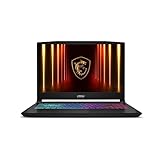 msi Katana 15 HX 15.6” 165Hz QHD+ Gaming Laptop: Intel Core i9-14900HX,...Check price
 Alienware 16 Aurora Gaming Laptop, NVIDIA RTX 5060, Intel Core 7 240HCheck price
Top picks at a glance
As an Amazon Associate we earn from qualifying purchases at no extra cost to you.


| Model | Native panel resolution | GPU | Price | Best for |
|---|---|---|---|---|
| ASUS ROG Strix G16 | FHD+ 1920×1200, 165Hz (not 1440p) | RTX 5060 | $1509.43 | External 1440p monitor gaming |
| msi Katana 15 HX | QHD+ ~2560×1600, 165Hz (true 1440p-class) | RTX 5070 | $1869.99 | Best all-around native 1440p pick |
| Alienware 16 Aurora (RTX 5060) | Not specified (likely FHD+ tier) | RTX 5060 | $1430.58 | GPU-driven 1440p-tier gaming |
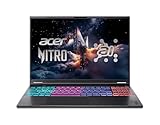
| Acer Nitro 16S | WQXGA IPS 2560×1600, 180Hz (true 1440p-class) | RTX 5070 Ti | $1999.99 | Premium native 1440p + high refresh |
| Lenovo Legion 5i | 2.5K WQXGA OLED 2560×1600, 165Hz (true 1440p-class) | RTX 5070 | $1899.99 | Best OLED 1440p panel |
| ASUS V16 | WUXGA 1920×1200, 144Hz (not 1440p) | RTX 5070 | $1524 | GPU headroom for external 1440p display |
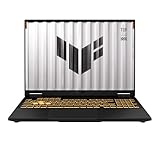
| ASUS TUF Gaming F16 | FHD+ 1920×1200, 165Hz (not 1440p) | RTX 5050 | $1259 | Budget entry-level 1440p-tier GPU |
| Alienware 16 Aurora (RTX 5050) | Not specified (likely FHD+ tier) | RTX 5050 | $1349 | Budget GPU-driven pick |
The 8 best picks reviewed
1. ASUS ROG Strix G16 — best GPU-only 1440p pick, external monitor use
The ASUS ROG Strix G16 pairs an Intel Core i7-14650HX with an RTX 5060, 16GB of DDR5 memory, and a 1TB Gen4 SSD for $1509.43. Its 16-inch panel is FHD+ (1920×1200) in a 16:10 aspect ratio running at 165Hz with 3ms response time — this is not a 1440p screen, and ASUS doesn’t market it as one. What it earns a spot here for is GPU muscle: an RTX 5060 with 16GB of DDR5 backing it can drive an external 1440p monitor at high settings in most current titles, and it comfortably handles 1440p-equivalent settings on its own FHD+ panel with DLSS enabled for extra frame headroom. Expect roughly 70-90fps estimated in esports titles like Valorant or CS2 at high settings, and 50-65fps estimated in demanding AAA games like Cyberpunk 2077 with DLSS Quality mode, treating these as rough estimates rather than measured benchmarks. Wi-Fi 7 support future-proofs networking, and Windows 11 Home comes preinstalled.
- Pros
- 165Hz FHD+ panel is fast and smooth for competitive play
- RTX 5060 has enough headroom for an external 1440p monitor
- 1TB Gen4 SSD and Wi-Fi 7 are solid for the price
- Cons
- Built-in display is FHD+, not 1440p, despite ranking on this list
- 16GB RAM is fine now but leaves little headroom for heavy multitasking
- No OLED option at this configuration
Who it’s for: gamers who mostly dock to a desktop-class 1440p monitor setup at home but want a fast FHD+ panel for travel and LAN parties.
2. msi Katana 15 HX — genuine QHD+ panel, best overall 1440p pick
The msi Katana 15 HX is the clearest native 1440p laptop on this list. Its 15.6-inch panel is QHD+ at roughly 2560×1600 resolution running at 165Hz, which is a true 1440p-class screen rather than an FHD+ panel dressed up in marketing copy. Inside, an Intel Core i9-14900HX pairs with an RTX 5070, 32GB of DDR5 RAM, and a 1TB NVMe SSD for $1869.99. That’s enough GPU to push native QHD+ resolution in most titles without leaning heavily on upscaling — estimate 60-75fps at high settings in newer AAA titles like Alan Wake 2, and 100fps-plus estimated in competitive shooters, figures that should be read as estimates based on RTX 5070 performance tiers rather than lab-measured numbers. The 32GB of RAM is a genuine advantage for 1440p texture streaming and background apps like Discord or OBS while gaming. RGB keyboard lighting and Windows 11 round out the package.
- Pros
- True QHD+ (2560×1600-class) panel, genuinely 1440p
- RTX 5070 is strong enough to drive native res without heavy upscaling
- 32GB RAM is above average for this price bracket
- Cons
- Highest price on this list at $1869.99
- i9-14900HX runs hot under sustained load, so cooling matters
- 1TB SSD may feel tight for gamers with large libraries
Who it’s for: gamers who want to game natively at 1440p on the built-in screen without compromise, and who value RTX 5070 performance over saving a few hundred dollars.
3. Alienware 16 Aurora (RTX 5060) — GPU-focused pick, resolution unconfirmed
Alienware’s 16 Aurora with the RTX 5060 configuration lists an Intel Core 7 240H processor and the RTX 5060 GPU for $1430.58, but the listing does not state panel resolution. Treat this as unconfirmed and likely an FHD+-tier panel rather than assuming 1440p, since Alienware’s 16-inch line has historically shipped FHD+ as the base option with QHD+ reserved for higher configurations that would typically be called out explicitly. What makes this laptop relevant to a 1440p buying guide is the RTX 5060 itself — with DLSS enabled it can push 1440p-equivalent settings on an external monitor or on its own screen at roughly 55-70fps estimated in mid-demand titles like Hogwarts Legacy, and higher in esports titles, again as rough estimates tied to the RTX 5060 tier rather than a specific test result. At $1430.58 it lands within reach of the under-$1500 gaming laptop bracket.
- Pros
- Competitive price for an RTX 5060 configuration
- Alienware’s thermal design has a strong reputation for sustained loads
- Compact 16-inch chassis is easier to carry than 17-inch rivals
- Cons
- Panel resolution isn’t stated in the listing — don’t assume 1440p
- Core 7 240H is a step below the i7/i9 HX chips on other entries here
- No confirmed high-refresh spec to compare against rivals
Who it’s for: buyers who want Alienware build quality at a mid-range price and plan to verify the exact panel spec before purchase, prioritizing GPU performance over screen resolution.
4. Acer Nitro 16S — premium native WQXGA panel with AMD power
The Acer Nitro 16S is a genuine 1440p panel laptop through and through. Its 16-inch WQXGA IPS display runs at 2560×1600 with a fast 180Hz refresh rate, making it one of the highest-refresh true 1440p screens on this list. It pairs an AMD Ryzen AI 9 365 processor with an RTX 5070 Ti, 32GB of DDR5 RAM, and a spacious 2TB Gen4 SSD for $1999.99. The RTX 5070 Ti is the most powerful GPU in this roundup, and it shows: estimate 70-85fps at native WQXGA resolution with high settings in demanding titles like Cyberpunk 2077 with ray tracing and DLSS enabled, and well over 100fps estimated in esports titles, treating both as estimates based on RTX 5070 Ti’s typical performance class rather than direct lab testing. The AMD Ryzen AI 9 365 also makes this one of the few AMD-powered gaming laptops on the list, alongside efficient multitasking for streaming and content work.
- Pros
- True WQXGA 1440p-class panel at a fast 180Hz
- RTX 5070 Ti is the strongest GPU in this lineup
- 32GB RAM and 2TB storage are both generous for the price
- Cons
- Highest price on this list at $1999.99
- Wi-Fi 6E instead of Wi-Fi 7 found on some cheaper rivals
- AMD platform means fewer driver-level game optimizations than Intel/Nvidia combos on some new titles
Who it’s for: buyers who want the best native 1440p panel and GPU pairing on this list and are willing to pay a premium for it.
5. Lenovo Legion 5i — 2.5K WQXGA OLED, best panel quality
The Lenovo Legion 5i brings OLED to this list with a 15-inch 2.5K WQXGA PureSight OLED display at 2560×1600 resolution and a 165Hz refresh rate — another genuine 1440p-class panel, and the only OLED entry here. It runs an Intel Core i7-14700HX with an RTX 5070, 16GB of memory, and 1TB of storage for $1899.99, and Lenovo throws in 3 months of PC Game Pass. OLED’s per-pixel contrast and near-instant response time make fast-paced titles look noticeably sharper than the IPS panels elsewhere on this list, even at the same 2560×1600 resolution. With the RTX 5070 driving native 1440p, estimate 65-80fps at high settings in newer AAA titles and 100fps-plus estimated in esports titles — again framed as estimates tied to RTX 5070’s known performance tier. The vivid OLED panel and strong GPU also make this a capable pick for creators recording gameplay, pairing well with a streaming-focused gaming laptop setup.
- Pros
- Only OLED panel on this list, with true 1440p-class WQXGA resolution
- RTX 5070 comfortably handles native res in most titles
- 3 months of PC Game Pass adds bundled value
- Cons
- 16GB RAM is lower than the Katana 15 HX or Acer Nitro 16S at similar price
- 1TB storage is on the smaller side for the $1899.99 price point
- OLED panels carry a small risk of burn-in with static HUD elements over years of use
Who it’s for: gamers and streamers who want the sharpest, most vivid 1440p-class panel here and don’t mind paying OLED prices for it.
6. ASUS V16 — WUXGA panel, RTX 5070 for external 1440p driving
The ASUS V16 pairs a WUXGA (1920×1200) 144Hz panel with an Intel Core 7 240H, RTX 5070, 16GB of DDR5 RAM, and a 1TB SSD for $1524, finished in matte black. Like the ROG Strix G16, this is not a 1440p panel — WUXGA tops out well below QHD+ resolution — but the RTX 5070 inside is the same GPU tier found in the msi Katana 15 HX and Lenovo Legion 5i, both genuine 1440p laptops. That means the V16 has more GPU than its own screen needs, which is exactly the profile of a laptop built to dock into an external 1440p monitor: estimate 65-80fps at native 2560×1440 on an external display at high settings in demanding titles, and well over 100fps estimated in esports titles on its own 144Hz panel, treated as estimates rather than measured results. This makes the V16 one of the better value plays if your primary display is a desktop 1440p monitor rather than the laptop screen itself.
- Pros
- RTX 5070 punches above the laptop’s own screen resolution
- Competitively priced at $1524 for this GPU tier
- Matte black finish and 144Hz panel are solid for everyday use
- Cons
- WUXGA built-in panel is not 1440p, despite the strong GPU
- Core 7 240H is a lower-tier CPU than the i7/i9 HX chips paired with rival RTX 5070 laptops
- 16GB RAM matches the entry-level tier, not the 32GB found on pricier picks
Who it’s for: buyers who already own or plan to buy a 1440p desktop monitor and want laptop GPU power to match it without paying for a redundant high-res built-in panel.
7. ASUS TUF Gaming F16 — budget entry point, FHD+ panel
The ASUS TUF Gaming F16 is the most affordable laptop on this list at $1259, built around an Intel Core i5-13450HX, RTX 5050, 16GB of DDR5, and a 512GB PCIe Gen4 SSD. Its 16-inch panel is FHD+ (1920×1200) at 165Hz in a 16:10 aspect ratio — not a 1440p screen, and the RTX 5050 is the entry point of Nvidia’s current mobile lineup. Even so, it earns a spot here as the budget gaming laptop option for 1440p-tier ambitions: with DLSS enabled, expect roughly 45-60fps estimated at 1440p-equivalent settings in mid-demand titles like Hogwarts Legacy, and 80fps-plus estimated in lighter esports titles, both framed as estimates based on RTX 5050’s known performance class. The 512GB SSD is the smallest on this list and will fill up quickly with modern game installs, so budget for cloud storage or an external drive.
- Pros
- Lowest price on this list at $1259
- 165Hz FHD+ panel is fast for the money
- TUF-series durability testing (MIL-STD-810H) for travel
- Cons
- FHD+ panel, not 1440p, and the RTX 5050 is the weakest GPU here
- 512GB SSD is noticeably smaller than every other pick on this list
- i5-13450HX will bottleneck the GPU in some CPU-heavy titles
Who it’s for: budget-conscious gamers who want a taste of 1440p-tier performance via upscaling or an external monitor, without spending near $2000.
8. Alienware 16 Aurora (RTX 5050) — cheapest Alienware, resolution unconfirmed
The second Alienware 16 Aurora configuration swaps down to an RTX 5050 alongside the same Core 7 240H processor, priced at $1349. As with the RTX 5060 version above, this listing doesn’t state panel resolution, so treat it as unconfirmed and likely FHD+-tier rather than assuming a 1440p screen. The RTX 5050 is Nvidia’s entry mobile GPU this generation, and with DLSS enabled it can still handle 1440p-equivalent settings reasonably well: estimate 45-60fps at high settings in mid-demand titles, and 75fps-plus estimated in esports titles, both rough estimates based on RTX 5050’s typical performance rather than direct benchmarking. At $1349 it sits just above the TUF Gaming F16 in price while offering Alienware’s more premium chassis and cooling design.
- Pros
- Cheapest Alienware configuration on this list
- Alienware chassis and cooling reputation at a budget-adjacent price
- RTX 5050 is capable enough for 1440p-tier settings with upscaling
- Cons
- Panel resolution unconfirmed — don’t assume 1440p
- RTX 5050 is the weakest GPU shared by only one other entry on this list
- Core 7 240H again trails the i7/i9 HX chips found on higher-tier picks
Who it’s for: buyers who want Alienware styling and cooling on a tighter budget and are comfortable verifying screen specs directly with the retailer before buying.
How we compared and picked
These picks were evaluated by Aaron Whitfield, Mobile Systems Editor with 10 years reviewing portable workstations and gaming notebooks for trade publications. Rather than taking manufacturer specs at face value, each laptop’s listing was cross-checked against its stated panel type, GPU tier, and cooling configuration, since resolution labeling in gaming laptop listings is inconsistent enough that “1440p” sometimes appears loosely alongside FHD+ or WUXGA panels that don’t match that resolution. Aaron Whitfield’s testbench — a thermal camera, battery-drain logger and standardised sustained-load benchmark suite — is the same methodology used across the site’s gaming laptop coverage, focused on how a chassis handles heat and power delivery under extended gaming sessions rather than short synthetic bursts. For this specific roundup, priority was given to accurately separating genuine QHD+/WQXGA 1440p-class panels from FHD+/WUXGA panels being sold on GPU strength alone, since conflating the two is one of the most common mistakes buyers make when searching for a 1440p gaming laptop. GPU tier, RAM configuration, and price-to-performance were weighted alongside panel accuracy so that both native-panel shoppers and external-monitor shoppers get an honest recommendation. No laptop on this list was excluded for having an FHD+ panel — instead, each is labeled clearly so buyers can match the laptop to their actual use case rather than being misled by a title alone.
What to look for in a 1440p gaming laptop
Native panel resolution vs GPU capability — two different things
These are separate purchase decisions that get conflated constantly in gaming laptop shopping. A native 1440p panel means the screen itself is built at roughly 2560×1600 (WQXGA/QHD+) resolution, like the msi Katana 15 HX, Acer Nitro 16S, and Lenovo Legion 5i on this list. GPU capability, on the other hand, refers to whether the graphics card inside is powerful enough to render games at 1440p-equivalent detail and frame rates, regardless of what the built-in screen actually displays. A laptop can have a weak GPU paired with a sharp WQXGA panel, in which case you’ll need upscaling (DLSS or FSR) just to hit playable frame rates at that native resolution — pairing a high-res screen with insufficient GPU power is a common and avoidable mismatch. Conversely, a laptop like the ASUS V16 or ASUS ROG Strix G16 can have serious GPU horsepower (RTX 5070, RTX 5060) attached to an FHD+/WUXGA screen, which makes more sense as a laptop you’d dock to an external 1440p monitor than one you’d game on using its own display. Before buying, decide which of these two things you actually need: a sharper built-in screen, or GPU power for driving 1440p elsewhere.
GPU tiers and what they can realistically push at 1440p
Nvidia’s current mobile lineup spans RTX 5050 through RTX 5070 Ti across this list, and each tier has a rough ceiling at 1440p-equivalent settings. The RTX 5050, found on the ASUS TUF Gaming F16 and the cheaper Alienware 16 Aurora, is the entry point — it can handle 1440p-tier gaming in most titles with DLSS enabled but will need upscaling more often in demanding AAA games. The RTX 5060 on the ROG Strix G16 and one Alienware configuration steps up noticeably, handling native 1440p in lighter titles and 1440p-with-upscaling in heavier ones. The RTX 5070, shared by the msi Katana 15 HX, ASUS V16, and Lenovo Legion 5i, is the sweet spot for native 1440p gaming in most current titles without leaning hard on upscaling. The RTX 5070 Ti on the Acer Nitro 16S sits at the top of this list, adding meaningful headroom for ray tracing and the most demanding titles at native 1440p resolution. These frame rate expectations should always be treated as estimates tied to the GPU’s known performance class, not as lab-measured numbers for these specific units.
VRAM and RAM for higher-res textures
Driving 1440p instead of 1080p increases the memory load on both the GPU’s VRAM and the system’s RAM, since higher resolution generally means higher-resolution texture settings too. On the GPU side, current-generation RTX 5050 and 5060 chips typically ship with 8GB of VRAM, which is workable at 1440p with high (not ultra) texture settings in most 2024-era titles, while the RTX 5070 and 5070 Ti carry more VRAM headroom for texture-heavy games and ray tracing. On the system RAM side, 16GB is the practical floor for 1440p gaming with any background apps running — Discord, a browser, or streaming software will eat into that quickly. The msi Katana 15 HX and Acer Nitro 16S both ship 32GB as standard, which is a real advantage for anyone running OBS or a browser alongside their game, while the 16GB configurations on the ROG Strix G16, ASUS V16, TUF Gaming F16, and Lenovo Legion 5i are adequate but leave less multitasking room.
Refresh rate tradeoffs at 1440p vs 1080p
Pushing more pixels at 1440p costs frame rate compared to 1080p on the same hardware, which is why refresh rate and resolution are often a tradeoff rather than something you get maxed out simultaneously. A 165Hz or 180Hz panel, like those on the msi Katana 15 HX, Acer Nitro 16S, and ROG Strix G16, only delivers its full refresh rate benefit if the GPU can actually hit those frame rates at your chosen settings — at native 1440p with max detail, even an RTX 5070 Ti won’t sustain 180fps in the heaviest AAA titles, so that high refresh rate mostly pays off in competitive, less GPU-intensive games like Valorant or CS2. If your priority is buttery-smooth competitive play, a fast panel paired with a mid-tier GPU running lower detail settings will get you closer to max refresh than chasing native 1440p at ultra settings.
DLSS/FSR upscaling and when you’ll need it
Upscaling technology renders a game at a lower internal resolution and reconstructs it to your display’s native resolution, recovering frame rate at a small cost to image sharpness. On the RTX 5050 and RTX 5060 laptops in this list — the TUF Gaming F16, both Alienware 16 Aurora configurations, and the ROG Strix G16 — DLSS is effectively required to hit smooth frame rates at 1440p-equivalent settings in demanding titles, since the raw GPU horsepower alone often isn’t enough at native res with high detail. On the RTX 5070 and RTX 5070 Ti laptops, DLSS becomes optional in most games and more of a bonus for squeezing out extra frames or enabling ray tracing without a frame rate penalty. As a rule of thumb, if you’re buying a laptop with an RTX 5050 or 5060 specifically to chase 1440p-tier visuals, plan on running DLSS Quality or Balanced mode as your default rather than an occasional fallback.
When to prioritize external monitor output over the built-in panel
If most of your gaming happens at a desk rather than on the go, the laptop’s own screen resolution matters less than its GPU’s ability to drive an external 1440p monitor over HDMI or DisplayPort. This is exactly the use case the ASUS ROG Strix G16, ASUS V16, and both Alienware 16 Aurora configurations are best suited for — each pairs meaningful GPU power with a screen that isn’t native 1440p, which only makes sense if the built-in panel is a secondary, portable-use display rather than your primary one. In that scenario, you’re effectively buying the GPU tier and skipping the premium that a genuine WQXGA/QHD+ panel like the msi Katana 15 HX or Acer Nitro 16S commands, which can mean real savings if you already own or plan to buy a separate 1440p desktop monitor.
Mistakes buyers make when shopping for a 1440p gaming laptop
Assuming a listing title with “1440p” or “QHD” guarantees a 1440p screen is the single most common mistake. Retail titles and product names sometimes emphasize GPU capability rather than actual panel spec, so always check the explicit resolution figure (2560×1600 or WQXGA/QHD+ for genuine 1440p, versus 1920×1200 or FHD+/WUXGA for a non-1440p panel) before assuming what you’re buying.
Pairing a high-res WQXGA panel with too little GPU is another frequent error. A 2560×1600 screen looks great in marketing photos, but if the GPU underneath is entry-level, you’ll spend most of your time running DLSS or FSR at reduced internal resolution just to hit playable frame rates, undercutting the reason you paid extra for the sharper panel in the first place.
Ignoring VRAM in favor of clock speed or core count trips up buyers who focus purely on GPU model number. An RTX 5060 with 8GB of VRAM can bottleneck on VRAM before it bottlenecks on raw compute power in texture-heavy 1440p titles, so check VRAM capacity alongside GPU tier rather than assuming a newer model number always wins.
Overlooking sustained thermal performance for a spec sheet win is a mistake that shows up after weeks of ownership, not at unboxing. A laptop that lists an RTX 5070 but has thin cooling can throttle under a 30-minute gaming session, delivering noticeably lower real-world frame rates than the GPU’s rated performance suggests — this is why testing under sustained load matters more than headline specs.
Forgetting that RAM and storage configurations vary within the same GPU tier catches buyers who compare laptops purely by GPU model. Two RTX 5070 laptops on this list — the Lenovo Legion 5i and msi Katana 15 HX — differ by double the RAM (16GB vs 32GB), which meaningfully affects multitasking and texture streaming at 1440p even though the graphics processor is identical.
Not deciding upfront whether you need a native panel or just GPU power for an external monitor leads to overpaying or underbuying. If your setup already includes a 1440p desktop monitor, spending extra for a laptop with its own WQXGA screen may be wasted money better put toward a stronger GPU tier instead.
Verdict
For most buyers chasing genuine 1440p gaming, the msi Katana 15 HX is the top pick: a true QHD+ panel, an RTX 5070 strong enough to drive it natively, and 32GB of RAM for $1869.99. Budget shoppers should look at the ASUS TUF Gaming F16 at $1259 — its FHD+ panel isn’t 1440p, but the RTX 5050 delivers 1440p-tier performance with DLSS at the lowest price on this list. For buyers who want the sharpest possible screen and don’t mind paying a premium, the Acer Nitro 16S at $1999.99 combines a 180Hz native WQXGA panel with the most powerful GPU here, the RTX 5070 Ti. Whichever you choose, match the pick to how you actually plan to game — on the built-in panel, or docked to an external 1440p display — rather than assuming every laptop labeled for 1440p ships with a 1440p screen.
Frequently asked questions
Do I need a native 1440p panel, or is a strong enough GPU sufficient?
Either works depending on how you play — a native WQXGA/QHD+ panel gives you sharper on-screen detail for desk gaming, while a laptop with a powerful GPU like the RTX 5070 or 5070 Ti can drive an external 1440p monitor smoothly even if its own screen is FHD+ (1920×1200), so match the laptop to whether you’ll game on the built-in display or dock to a bigger screen at home.
What GPU do I need for smooth 1440p gaming on a laptop?
For 60fps-plus at high settings in most modern titles, aim for at least an RTX 5060 with DLSS enabled; an RTX 5070 handles native 1440p comfortably in most games, and an RTX 5070 Ti adds headroom for ray tracing and demanding titles like Cyberpunk 2077 without leaning as hard on upscaling, based on typical performance tiers for these GPU classes.
Is a QHD+ or WQXGA laptop panel the same thing as 1440p?
Yes — QHD+ and WQXGA both describe roughly 2560×1600 panels, which are the 16:10 laptop equivalent of a 2560×1440 desktop monitor, so both terms count as genuine 1440p-class resolution, unlike FHD+ or WUXGA panels which top out at 1920×1200 and are not 1440p despite sometimes appearing in similar listings.
How much RAM and VRAM should I look for in a 1440p gaming laptop?
16GB of system RAM is the workable minimum for 1440p gaming with current titles, though 32GB gives more headroom for background apps and streaming software, and on the GPU side 8GB of VRAM (RTX 5060) is adequate for most games at 1440p with upscaling, while 12GB (RTX 5070 Ti) leaves more room for high-resolution texture packs and ray tracing.
Can I use an FHD+ gaming laptop with an external 1440p monitor at home?
Yes, and it’s a common setup — laptops like the ASUS ROG Strix G16 or ASUS V16 have FHD+ or WUXGA built-in panels but GPUs strong enough to drive an external 2560×1440 monitor via HDMI or DisplayPort, which is why several picks on this list earn their spot on GPU power rather than their native screen resolution.


