A one-inch sensor is the dividing line in the compact camera world. Below it, you are dealing with the same tiny chips found in phones and basic point-and-shoots. At it, you get a sensor with several times the light-gathering area, which shows up as cleaner indoor shots, shallower background blur at the long end of the zoom, and more room to recover shadows in editing. The decision this keyword implies is not “which compact camera is cheapest” but “which pocketable body wrapped around a one-inch sensor gives me the lens, screen, and video features I will actually use.”
This guide is written for travelers who refuse to carry a full interchangeable-lens kit, vloggers who want something lighter than a mirrorless rig, and hobbyists stepping up from a phone. Every camera below states a one-inch sensor in its listing, so the real differences are lens range, aperture, screen design, accessory support, and video capability. Older generations of the same series are still around, which makes the lineup a useful lesson in what each generation added and whether you need it in 2026.
Our Top Picks
Top 3 picks at a glance
Quick Picks
As an Amazon Associate we earn from qualifying purchases at no extra cost to you.




| Product | Best for | Key spec from the title |
|---|---|---|
| Sony RX100 | Entry point to the series | 20.2 MP, 1-inch sensor, 28-100mm ZEISS zoom |
| Sony RX100 II | Shooters who want accessory support | Multi-Interface Shoe and tilt LCD |
| Sony RX100 III | Low-light and everyday walking around | 24-70mm F1.8-2.8 ZEISS zoom |
| Sony RX100 IV | Hybrid photo and video use | 4K movies, 40x super slow motion HD |
| Panasonic LUMIX ZS300S | Travel with a long zoom | 15x zoom, 24-360mm, 4K |
| Sony ZV-1F | Vlogging and social video | 20mm lens, 4K video, 1-inch sensor |
How to Choose
Lens range and aperture matter more than megapixels
Almost every camera here lands near 20 megapixels, so resolution will not separate them. The lens will. A 28-100mm range covers wide landscapes through short portraits. A 24-70mm range starts a little wider and tops out sooner, but the listed F1.8-2.8 aperture means the lens lets in far more light at both ends than a typical slow travel zoom. A 24-360mm range gives you roughly fifteen times magnification, which is the tool for wildlife, architecture details, and distant performers, but a lens that long is almost always dimmer at the telephoto end. Decide first whether you shoot indoors and at night, where a fast aperture wins, or outdoors in daylight, where reach wins.
Screen design and viewfinder features
The listings mention a 3-inch LCD, a tilt LCD, and in the vlogging model a form designed around the front-facing shot. A fixed screen is fine for casual snapshots. A tilt screen helps with low-angle and overhead framing and is the minimum you should want if you shoot video or take group selfies. If you plan to mount the camera on a small tripod or hold it at arm’s length, check that the screen angle matches how you will actually hold it. The Multi-Interface Shoe on the second-generation Sony is worth a look if you want to attach a microphone or a small accessory, since many compacts leave the top of the body bare.
Video capability: 4K, slow motion, and what it costs
If video is a priority, look for the 4K label in the title. Three of the six cameras list it. The fourth-generation Sony adds 40x super slow motion in HD, a creative feature for sports and water, though it is no substitute for a camera with a proper microphone input. The earlier models in the series shoot video too, but without a 4K claim in their listings you should treat them as primarily stills cameras. Whatever you pick, plan on a spare battery and a large, fast memory card, because compact bodies are small and 4K files are not.
Generation, age, and where budget models cut corners
Several of these cameras are older designs sold new or in remaining stock, and generation is the main way you pay less. Older bodies typically skip faster autofocus, newer video codecs, and updated screens. They tend to hold the one-inch sensor constant, so you are often paying for conveniences, not image quality. When comparing, ask whether the extra money buys a feature you will use weekly, such as a brighter lens or 4K, or one you will use once a year. Ignore sticker-style marketing words like “premium” and focus on the lens range and video line in the title.
It also helps to think about how the camera lives in your day. A pocketable body only earns its keep if you actually carry it, so consider whether you want something that slides into a jacket pocket or something with a longer lens that is a little chunkier. Think about charging as well: many compacts charge through a cable, which makes a power bank a useful travel companion. Finally, remember that a one-inch sensor rewards good light and a steady hand, so a small tabletop tripod or a grip can do more for your pictures than any single spec on the listing.
The 6 Best Options
Sony RX100
The original model in the series is the simplest way into the one-inch category. The listing shows a 20.2 MP sensor, a 28-100mm ZEISS zoom lens, and a 3-inch LCD, a combination that handles travel snapshots, family events, and daylight portraits without drama. It is the camera for someone who wants the sensor upgrade over a phone and does not care about video extras.
- Strength: the one-inch sensor and ZEISS-branded zoom give it a real image-quality step over basic compacts.
- Strength: the 28-100mm range covers the focal lengths most casual shooters use daily.
- Trade-off: the listing mentions no 4K and no tilt screen, so it is a stills-first camera.
Skip it if you plan to shoot much video or want a swiveling screen for framing from odd angles.
Sony RX100 II
The second generation keeps the same 20.2 MP one-inch sensor but adds two practical changes spelled out in the title: a Multi-Interface Shoe and a tilt LCD screen. That combination makes it friendlier for low and high angles and opens the door to small add-on accessories. It suits a photographer who liked the idea of the first model but wanted flexibility on top.
- Strength: the tilt LCD makes street-level and overhead framing far easier.
- Strength: the Multi-Interface Shoe supports accessories that most compact bodies lack.
- Trade-off: the title does not list 4K video or a faster aperture lens, so low light and video are not its selling points.
Skip it if your priority is the widest, brightest lens or any 4K workflow.
Sony RX100 III
The third generation changes the lens, and that is the headline. The title lists a 24-70mm F1.8-2.8 ZEISS zoom, which starts wider than the original and stays bright through the range. For night streets, restaurant interiors, and indoor events, that aperture is the reason to pay attention. It pairs the one-inch sensor with a 20.1 MP count, so image detail remains in the same family as its siblings.
- Strength: the F1.8-2.8 aperture range is the brightest lens in this lineup for dim scenes.
- Strength: the 24-70mm range starts wide enough for interiors and group shots.
- Trade-off: its zoom tops out at 70mm, so distant subjects need cropping.
Skip it if you need long reach for wildlife or sports, or if 4K is a requirement.
Sony RX100 IV
The fourth generation is the first in this group to list 4K movies and 40x super slow motion HD in its title. Those two items define who should look here: people who want a single pocket camera for family video, travel clips, and stills. The sensor is still the one-inch, 20.1 MP type, so the photo side stays consistent with the rest of the family.
- Strength: 4K movie capture lets you shoot modern-resolution video without carrying a second device.
- Strength: the 40x super slow motion mode adds a creative tool for action and water scenes.
- Trade-off: as a compact it offers less lens reach than the long-zoom Panasonic.
Skip it if your budget is tight and you rarely shoot video, since earlier generations cover stills for less.
Panasonic LUMIX ZS300S
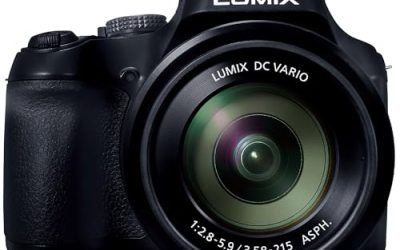
This is the outlier in the group because it is built around reach. The listing shows a one-inch sensor, 15x zoom spanning 24-360mm, and 4K video. For vacations, safari-style outings, and city trips where you cannot walk closer to your subject, one lens that does wide and tele is a real convenience. It is a travel camera first.
- Strength: the 24-360mm range replaces a second lens for most trips.
- Strength: 4K video is listed alongside the one-inch sensor.
- Trade-off: a lens this long is typically less bright at full zoom, so low-light telephoto shots will lean on higher sensitivity.
Skip it if you shoot mostly indoors in dim rooms or want the smallest possible body.
Sony ZV-1F
The ZV-1F is the creator-focused choice. The title states a one-inch sensor, 4K video, and a 20mm lens aimed at vlogging, streaming, and social media. A 20mm focal length is wide on purpose, so you can hold the camera at arm’s length and still fit yourself and the background. It is built for people who talk to the lens.
- Strength: the 20mm lens is a wide, arm’s-length framing aid for self-recording.
- Strength: 4K video and a one-inch sensor are both listed.
- Trade-off: it has no zoom range in the listing, so it behaves like a fixed wide camera.
Skip it if you want to photograph distant subjects or need a general-purpose travel zoom.
Which One Fits Your Situation
You vlog or stream on a regular schedule
Pick the Sony ZV-1F. The wide 20mm lens and 4K listing are designed for talking to a camera, and nothing else in the group is labeled for creators in the same way.
You travel and want one lens for everything
Pick the Panasonic LUMIX ZS300S. The 24-360mm range means a single camera can capture a street scene and a faraway rooftop detail without changing anything.
You shoot indoors, at dinners, or at night
Pick the Sony RX100 III. Its F1.8-2.8 aperture is the strongest low-light argument in this lineup, and the 24-70mm range suits interiors and tables.
You want the sensor upgrade for the least complexity
Pick the Sony RX100 or the RX100 II. The first is the simplest entry; the second adds a tilt screen and an accessory shoe for a small step up. If you want 4K as well, move to the RX100 IV.
Common Mistakes
- Assuming every compact with a big zoom number has a large sensor; check that the title explicitly states a one-inch sensor.
- Chasing megapixels when the lens range and aperture decide how useful the camera is.
- Ignoring generation differences and paying more for features, such as 4K, that you will never use.
- Forgetting accessories: a spare battery and a fast memory card matter more on small bodies.
- Buying a long-zoom camera for low-light indoor shooting, where a bright lens would serve better.
Related guides
- Gaming Laptop Battery Draining While Plugged In Fix
- Graphics Cards For Low Wattage Power Supplies
- How To Stop Laptop Thermal Throttling In Software
Frequently Asked Questions
Is a one-inch sensor noticeably better than a phone?
It has a considerably larger surface than the sensors in most phones, which helps in dim scenes and when zooming optically. Phones close the gap with software, so the biggest advantages show up in lens range and optical zoom quality.
Do I need 4K video?
Only if you plan to edit, crop, or archive video at that resolution. For casual clips, standard HD is enough, and stills-focused buyers can save money with an older generation.
Which camera is best for travel?
The Panasonic LUMIX ZS300S offers the longest zoom listed here, while the Sony RX100 III offers the brightest lens. Choose reach if you shoot outdoors and brightness if you shoot evenings and interiors.
Are the older models still worth considering?
Yes, if you care mainly about image quality from the one-inch sensor and not video features. The older bodies share the same sensor class, and the main trade-off is fewer modern conveniences.