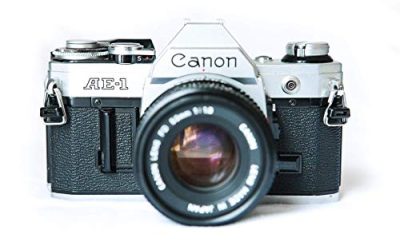
Landscape photography rewards patience more than speed. You stand on a ridge before sunrise, wait for the light to break across a valley, and want every leaf and cloud edge to hold detail when the file is printed large. That changes what matters in a camera. Autofocus tracking and burst rate fade into the background, while sensor size, lens sharpness, wide-angle reach, and the ability to mount on a tripod become the deciding factors. This list is for buyers who want to shoot scenery, from weekend hikers to travelers building a first portfolio.
The seven cameras below span a wide range, and that is the honest part of the story. Two are interchangeable-lens Canon bodies with APS-C sensors, one is a long-zoom bridge camera with a listed wide-angle lens, and four are inexpensive compact-style cameras sold on big headline numbers like 88MP and 8K. Based on the listed specs, the sections below explain which claims carry weight for landscape work in 2026 and which ones deserve a skeptical look before you commit.
Our Top Picks
Top 3 picks at a glance
Quick Picks
As an Amazon Associate we earn from qualifying purchases at no extra cost to you.



| Product | Best for | Key spec from the title |
|---|---|---|
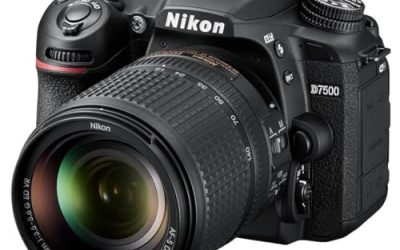
| Canon EOS Rebel T7 bundle | Learning landscapes on a real DSLR | 24.1MP APS-C, 18-55mm lens, Wi-Fi and NFC |
| Canon EOS R10 bundle | Growing into a mirrorless landscape kit | 24.2MP APS-C, 18-150mm and 75-300mm lenses |
| KODAK PIXPRO AZ255 | Wide scenes plus distant details in one body | 16MP, 25x optical zoom, 24mm wide angle, OIS |
| G-Anica 5K dual-lens | Casual travel snapshots on a tight budget | 5K, 64MP, wide-angle and macro lens |
| G-Anica 8K dual-lens kit | Beginners wanting a flip screen and WiFi | 8K, 64MP, 180-degree flip screen |
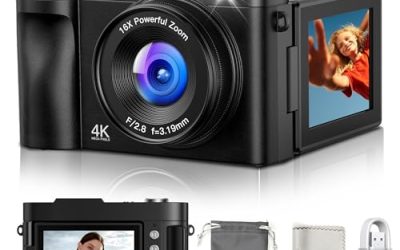
| Generic 8K 88MP dual-lens camera | Point-and-shoot trips with a big touchscreen | 88MP, 3.2-inch touchscreen, anti-shake |
| Generic 4K 56MP vlogging camera | Teens and first-time shooters | 4K, 56MP, lens hood included |
How to Choose
Landscape shooters can ignore half of what camera listings emphasize. These four checks separate cameras that suit scenery from those built mainly for casual video.
Sensor size beats megapixel claims
An APS-C sensor, as listed on both Canon bodies, is physically much larger than the tiny sensors inside typical compact cameras. Larger sensors hold more tonal range in skies and shadows. Be wary of huge megapixel numbers on small-sensor cameras, since 88MP or 64MP figures often come from software interpolation rather than real resolving power. For prints and cropping, 24MP on APS-C usually looks cleaner than an inflated number on a compact.
Lens reach at the wide end
Expansive vistas need a wide view. A 24mm equivalent, as the Kodak title lists, is a useful wide angle. A kit lens starting at 18mm on an APS-C body is similar in practice. If the listing only says 16X zoom with no wide-end figure, you cannot tell whether the lens covers a mountain range or crops tight.
Tripod, controls, and file flexibility
Serious landscape work uses a tripod, low ISO, and manual control of aperture and shutter speed. Interchangeable-lens bodies tend to offer manual modes and the option to record uncompressed raw files, which preserve more data for editing. Budget cameras may limit you to automatic scene modes and heavily processed JPEG output, so check for manual exposure controls in the specs.
Stabilization, weather, and battery
Optical image stabilization, listed on the Kodak, helps handheld shots but is unnecessary on a tripod. None of these titles mention weather sealing, so plan for rain covers. Cameras that use AA batteries, as the Kodak does, are easy to refuel on remote hikes, while rechargeable packs need a charger. Ignore marketing for 8K video; landscape stills depend on optics, not video resolution. Also look at memory card inclusion, since a bundled card saves a first-day errand but is no reason to choose a weaker camera.
The 7 Best Options
Canon EOS Rebel T7 Bundle
The Rebel T7 is the most traditional route into landscape work. The title lists a 24.1MP APS-C DSLR, an 18-55mm lens, built-in Wi-Fi and NFC, and a 64GB memory card, all aimed at beginners.
- Strength: the APS-C sensor and interchangeable lens give real room to grow.
- Strength: the 18-55mm starting range offers a useful wide view for scenery.
- Trade-off: it is a DSLR body, so it is bulkier on long hikes.
Skip it if you want the most advanced autofocus system or a compact travel kit. It suits students and new hobbyists who plan to shoot from a tripod and want to learn aperture, shutter speed, and ISO on a camera that rewards careful setup. Landscape work is slow and deliberate anyway, so an older-style body is rarely a handicap.
Canon EOS R10 Bundle
The EOS R10 is the mirrorless option, packaged with both an 18-150mm lens and a 75-300mm lens. The title describes a 24.2MP APS-C mirrorless camera positioned as a travel compact for photography and video.
- Strength: two lenses cover wide scenery and distant peaks without further purchases.
- Strength: a mirrorless body is lighter than a comparable DSLR for carrying uphill.
- Trade-off: carrying two lenses adds weight and means more lens changes in the field.
Skip it if you want the simplest, lowest-cost starter, because the two-lens bundle assumes you will actually use both focal ranges. It is the stronger choice for buyers planning a long-term landscape system who want a lens to cover foreground drama and a longer one to isolate far ridgelines.
KODAK PIXPRO AZ255
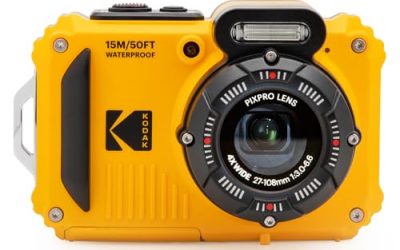
The Kodak is a bridge camera with a fixed lens. Its title lists a 16MP sensor, 25x optical zoom, a 24mm wide angle, optical image stabilization, a 3-inch LCD, 1080p video, and AA battery power.
- Strength: a 24mm wide angle and 25x optical zoom span sweeping views and distant subjects.
- Strength: AA batteries make it easy to power on remote trips.
- Trade-off: a 16MP fixed-lens camera will not match the larger APS-C sensors for detail.
Skip it if you plan large prints or heavy cropping. It suits casual travelers and wildlife-and-scenery walkers who prefer one camera, one lens, and no gear changes. The listed optical image stabilization also helps on windy overlooks when a tripod is not practical.
G-Anica 5K Dual-Lens Camera
This G-Anica pitches itself as an all-in-one for beginners. The title lists 5K video, 64MP stills, dual lenses, WiFi, a 180-degree flip screen, plus wide-angle and macro lenses with 16X zoom.
- Strength: the included wide-angle lens points the camera in the right direction for scenery.
- Strength: the flip screen and WiFi make framing and sharing easy.
- Trade-off: the 64MP figure is a headline number, and the title does not state sensor size.
Skip it if image quality for prints matters, or if you want to control exposure by hand. Choose it for casual snapshots on a limited budget, where the goal is a pleasant memory of a trail or beach rather than a framed enlargement.
G-Anica 8K Dual-Lens Kit
The second G-Anica leans on even bigger numbers: 8K, 64MP, dual lenses, WiFi, a 180-degree flip screen, 16X zoom, and a point-and-shoot layout for beginners.
- Strength: it is a simple point-and-shoot, so beginners can start immediately.
- Strength: the flip screen helps with low-angle compositions.
- Trade-off: the title does not list a wide-angle lens, a sensor size, or manual controls.
Skip it if you want control over exposure or a lens you can swap later. It fits first-time buyers who want something easy to hand to a family member, and who understand that the headline resolution is a selling point rather than a measure of landscape quality.
Generic 8K 88MP Dual-Lens Camera
This unbranded camera advertises 88MP, WiFi, a 3.2-inch touchscreen, autofocus, 16X zoom, anti-shake, and a 64GB card. It is aimed at vlogging and general photography.
- Strength: the large 3.2-inch touchscreen makes composing shots easier.
- Strength: a bundled 64GB card means you can start shooting right away.
- Trade-off: an 88MP figure on a compact is a marketing number, and no sensor size appears in the title.
Skip it if you plan to print or edit heavily, or if you want to know exactly what sensor sits behind the lens. It suits casual shooters who value convenience and a big screen for checking composition at the end of a walk.
Generic 4K 56MP Vlogging Camera
This 4K camera lists 56MP stills, autofocus, a 3-inch 180-degree flip screen, a lens hood, 16X zoom, and a 32GB SD card, with teens and travel vloggers as the stated audience.
- Strength: a lens hood is included, which helps reduce flare when shooting toward the sun.
- Strength: the flip screen supports self-portraits alongside scenery.
- Trade-off: no wide-angle figure, sensor size, or manual mode appears in the title.
Skip it if landscape quality is the goal and prints are in the plan. It makes more sense as a fun starter for younger photographers who want to experiment with framing, sunsets, and travel snapshots before spending more.
Which One Fits Your Situation
You want to learn exposure and grow into a serious kit
The Canon EOS Rebel T7 bundle is the straightforward starting point, with an APS-C sensor and a familiar kit lens. If you can afford to step up, the Canon EOS R10 adds a lighter body and a second lens.
You hike far and want light, long-reach convenience
The Canon EOS R10 bundle covers wide and telephoto in one package, while the KODAK PIXPRO AZ255 packs a 24mm wide angle and 25x optical zoom into one body with no lens changes.
You need something very simple for family trips
The KODAK PIXPRO AZ255 and its AA batteries are forgiving on the road. The G-Anica 5K is a cheaper option if you accept the limits of a compact sensor.
You are buying for a teen on a small budget
The generic 4K 56MP camera, with its lens hood and flip screen, is an inexpensive way to try photography before investing in a larger system.
Common Mistakes
- Chasing megapixel and 8K claims instead of sensor size and lens quality.
- Skipping a tripod and then blaming the camera for soft, shaky dawn shots.
- Buying a camera whose listing never states the wide-end focal length.
- Assuming 16X zoom is optical when the title does not say so.
- Forgetting extra batteries, memory, and rain protection for remote locations.
Related guides
- Gaming Laptop Battery Draining While Plugged In Fix
- How To Stop Laptop Thermal Throttling In Software
- Gaming Laptop For High School Students
Frequently Asked Questions
Do I need a large sensor for landscape photography?
A larger sensor helps with tonal range and detail, especially in skies and shadows at sunrise and sunset. APS-C bodies like the two Canon options provide that, while compact cameras trade it for portability and a lower price. If you mostly share images on a phone, the gap matters less than it would in a large print.
Is a wide-angle lens essential?
For sweeping scenes, a wide view makes composition easier. Look for 24mm equivalent or wider, such as the Kodak lists, or an 18mm kit lens on an APS-C body.
Are the 8K and 88MP claims meaningful?
Treat them cautiously. Without a stated sensor size, these numbers do not tell you how much real detail the camera captures.
Can I use these cameras on a tripod?
Interchangeable-lens bodies and most bridge cameras have a standard tripod socket, but the listings here do not state it. Verify the mount before you buy any compact model, and consider a small tripod rated for the weight of the Canon bundles if you pick one of those, since a longer lens adds leverage and vibration at slow shutter speeds.