The best salon floor mats balance pressure relief, stable footing, easy sweeping, and edges that will not catch wheeled stools or salon carts; for most stylists, that means a 3/8- to 1/2-inch commercial PVC or polyurethane mat with a textured, low-profile surface and beveled edges.
As an Amazon Associate we earn from qualifying purchases at no extra cost to you.


Our Top Picks
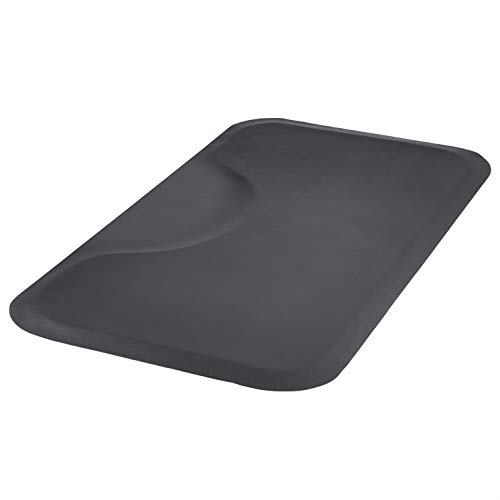 Amazon Basics Rectangular Anti-Fatigue Salon & Barber Shop3ft x 5ft x 1/2inch60 x 36 x 0.5 inches12.1 PoundsCheck on Amazon


Top 3 picks at a glance
Best Salon Floor Mats at a Glance
| Salon situation | Recommended thickness | Best surface | Edge design | Why it fits |
|---|---|---|---|---|
| Hard vinyl or concrete floor, long cutting shifts | 3/8–1/2 inch | Fine raised texture | Beveled on all sides | Reduces leg fatigue without creating a tall trip edge |
| Low-pile carpet | 1/4–3/8 inch | Flat or lightly textured | Thin tapered edge | Improves chair movement and avoids a bulky transition |
| Shampoo area or frequent water exposure | 3/8–1/2 inch | Closed, slip-resistant texture | Beveled, not open-grid | Stops splashes while remaining simple to disinfect |
| Rolling styling chair or trolley | 1/4–3/8 inch | Low-friction smooth texture | Flush or shallow bevel | Allows casters to move without snagging |
| Uneven tile or grout lines | 1/2 inch or more | Firm textured surface | Wide bevel | Bridges minor surface changes and feels more stable |
How Thickness Changes Comfort and Control
Thickness is not simply a “more is better” feature. A thicker mat can reduce the hard impact transmitted through the feet, knees, and lower back, but excessive cushioning may make the surface feel unstable and can interfere with chair wheels.
1/4 inch: best for mobility
A 1/4-inch mat is suitable when a stylist frequently rolls a chair, moves between stations, or works over carpet. It provides modest insulation from hard flooring while keeping the transition low. Choose this thickness when smooth movement matters more than maximum cushioning.
3/8 inch: the practical middle ground
For many cutting and styling stations, 3/8 inch offers the most useful compromise. It provides noticeably more support than a thin utility mat without producing a large step at the perimeter. This is the default thickness for a stylist who stands for several hours but still needs to reposition a chair or trolley.
1/2 inch and thicker: comfort for fixed stations
A 1/2-inch mat is better for a fixed workstation on concrete, stone, or hard commercial vinyl. It can make a long shift more comfortable, particularly when the stylist rarely moves the chair. Confirm that the mat has a firm core or dense construction; soft, spongy material can increase ankle fatigue and allow chair casters to sink.
As a practical rule, every additional 1/8 inch of height increases the importance of a properly tapered perimeter. A thick mat with square edges can be less safe than a thinner mat with a broad bevel.
Surface Texture: Grip Without Trapping Hair
The surface needs enough texture to resist slipping when water, conditioner, or hair spray reaches the mat. However, deep grooves, aggressive ribs, and open holes collect hair clippings and product residue. They also make sweeping less effective.
- Fine raised texture: a strong all-purpose choice for cutting stations because it adds traction while allowing hair to be swept away.
- Embossed pebble texture: useful around wet areas, provided the pattern is shallow enough to wipe clean.
- Deep channels: appropriate only where drainage is a priority. They require more detailed scrubbing and can trap color products.
- Open-grid construction: helps drain liquid but is usually inconvenient in a cutting area because small hair clippings fall below the surface.
- Very smooth vinyl: easiest to wipe, but potentially slippery when wet unless the material has a tested slip-resistant finish.
Look for a mat described as closed-cell, non-porous, or non-absorbent. These terms matter more for salon hygiene than a decorative pattern. Porous foam may feel comfortable initially but can retain moisture, odors, and chemical residue.
Edge Design Is a Safety Feature
The edge is where comfort and usability often succeed or fail. A square edge creates a small vertical step that can catch a shoe, stool base, or chair caster. A tapered edge spreads the height over a wider distance and makes the transition easier to cross.
Choose the edge for the equipment around it
- Wide bevel: best for thick mats on hard floors and stations where people walk in from multiple directions.
- Shallow bevel: a good choice where a rolling chair crosses the perimeter several times per appointment.
- Flush edge: useful for thin mats or recessed work areas, but it depends on a very flat floor.
- Raised lip: can contain small spills, but it may impede chair movement and should generally be reserved for areas where liquid control outweighs mobility.
Measure the mat’s usable flat area separately from its overall dimensions. Some mats lose several inches of comfortable standing space because the perimeter slopes sharply. A stylist should be able to stand with both feet fully supported while still reaching the chair, trolley, and product shelf.
Cleanability: Compare the Whole Cleaning Routine
The easiest salon mat to clean is not necessarily the one with the smoothest appearance. Hair, bleach powder, color cream, and oil reveal different weaknesses.
| Contamination | Surface that handles it best | Recommended cleaning method | Design to avoid |
|---|---|---|---|
| Dry hair clippings | Shallow texture or smooth closed surface | Sweep or vacuum first, then damp mop | Deep grooves and open mesh |
| Water and shampoo | Slip-resistant closed surface | Rinse or wipe, then dry completely | Absorbent foam |
| Hair color and developer | Non-porous PVC or polyurethane | Remove immediately using the manufacturer-approved cleaner | Unsealed fabric and porous rubber |
| Hair spray and styling product | Low-porosity, lightly textured surface | Warm water with a mild neutral cleaner | Highly ridged patterns that retain sticky residue |
Do not assume that every rubber mat tolerates bleach, peroxide, acetone, or strong salon disinfectants. Check the care instructions before using chemicals, and remove spills quickly. A cleaner that is safe for the floor may still discolor or soften the mat.
Match the Mat to the Floor
Hard vinyl, laminate, or sealed concrete
Use a firm 3/8- to 1/2-inch mat with a beveled edge. These floors transmit impact and provide little cushioning, so thickness matters. Check that the underside is flat and stable; a textured underside can mark some resilient flooring or allow grit to create scratches.
Ceramic or porcelain tile
A thicker mat can bridge minor grout irregularities, but it should not rock. Place it on a clean, dry section of tile and test it by shifting weight from heel to toe. If it flexes over a grout line, choose a denser construction or reposition the mat so its main standing area rests on the tile rather than across multiple joints.
Low-pile carpet
Choose a thinner, firm mat designed for carpet compatibility. A heavily cushioned mat may compress unevenly, while a smooth underside can creep during use. If the carpet has a thick pad, verify that the mat does not tilt or create a rolling hazard.
Wood or luxury vinyl plank
Prioritize a non-staining underside and follow the flooring manufacturer’s guidance. Moisture trapped beneath the mat can affect some floors, so lift and dry both surfaces regularly rather than leaving the mat permanently in place.
A Simple Selection Method
- Measure the working footprint. Include the area where the stylist actually stands, not just the chair base. Leave enough clearance for a trolley and foot movement.
- Count crossings. If the chair or stylist crosses the edge more than several times per appointment, select a shallow bevel and avoid excessive thickness.
- Identify the main contaminant. Hair favors a shallow texture; water favors a slip-resistant closed surface; color chemicals favor non-porous material.
- Check the underside. Confirm that it is compatible with the floor and does not slide, stain, or trap grit.
- Test chair movement. Roll the chair across every edge at normal speed. If a caster catches, the mat is too thick, too soft, or poorly beveled for that station.
- Plan maintenance. Make sure the mat can be lifted by one person and cleaned without special equipment. A theoretically durable mat is a poor choice if staff will avoid moving it.
Best Overall Specification for Most Styling Stations
For a typical cutting or styling station, choose a 3/8-inch commercial-grade PVC or polyurethane mat, a shallow non-slip texture, a sealed non-porous surface, and beveled edges on every side. Increase to 1/2 inch for a fixed station on concrete or tile when cushioning is the priority. Drop to 1/4 inch when chair movement, low transitions, or carpet compatibility is more important.
The best salon floor mats are therefore selected by workflow rather than appearance. Match thickness to standing time, texture to the mess, and edge design to the number of times people and casters cross the perimeter. That combination will usually deliver better comfort and easier cleaning than simply choosing the thickest or most heavily patterned mat available.
Frequently asked questions
How large should a salon floor mat be?
Choose a mat large enough to support your actual standing area while leaving room to reach the chair, trolley, and product shelf. Measure the working footprint rather than relying only on the chair base, and account for foot movement and equipment clearance. Check how much of the mat is usable because a sharply sloped perimeter can reduce the flat standing area.
Can a salon mat be used near a shampoo area?
Yes, if it has a closed, slip-resistant surface that is easy to rinse or wipe and dry completely. For water exposure, the article recommends a 3/8- to 1/2-inch mat with a beveled edge, rather than open-grid construction. Avoid absorbent materials that can retain moisture, odors, or chemical residue.
What should I check before placing a mat on wood or luxury vinyl plank?
Check that the underside is non-staining and follow the flooring manufacturer’s guidance. Moisture trapped beneath a mat can affect some floors, so lift and dry both the mat and the floor regularly instead of leaving the mat permanently in place. Also confirm that the mat stays stable and does not slide.
How can I tell whether a mat will work with my rolling chair?
Roll the chair across every edge at normal speed and check whether a caster catches. If it does, the mat may be too thick, too soft, or poorly beveled for that station. For frequent chair movement, the article favors a 1/4- to 3/8-inch mat with a low-friction surface and a flush or shallow-bevel edge.
What cleaners are safe for salon floor mats?
Use the mat manufacturer’s care instructions, because rubber mats do not necessarily tolerate bleach, peroxide, acetone, or strong salon disinfectants. Remove spills quickly; a cleaner that is safe for the floor may still discolor or soften the mat. For routine cleaning, the article suggests warm water with a mild neutral cleaner for styling-product residue.