
The real choice is not simply between a bigger laptop screen and a separate display. It is between a flexible, all-in-one gaming station that can move from room to room and a more permanent desk setup designed around comfort, screen size, and easy upgrades. An 18-inch gaming laptop can replace a desktop for many households, while an external monitor setup can make even a smaller laptop feel more spacious and ergonomic.
For a buyer comparing an 18 inch gaming laptop vs external monitor setup, think about where you play, who shares the space, how often you move your equipment, and whether your desk is meant to stay in place for years. The right answer for a studio apartment is often different from the right answer for a dedicated home office.
As an Amazon Associate we earn from qualifying purchases at no extra cost to you.



Top 3 picks at a glance
Quick Verdict
Choose an 18-inch gaming laptop if you want one powerful device that can serve as a gaming computer, work machine, media screen, and occasional portable setup. Its 18-inch display is substantially roomier than a typical 15.6-inch laptop panel, yet the entire system folds away when company comes over or when you need the dining table back.
Choose an external monitor setup if gaming is primarily a desk-based activity and you value a larger viewing area, better monitor placement, and lower-cost screen upgrades. A 24- to 32-inch monitor usually provides a more comfortable long-session experience than an 18-inch laptop display positioned on a desk.
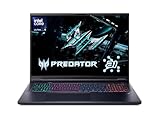
The practical middle ground is an 18-inch laptop plus a monitor later. For example, a large-screen system such as the MSI Crosshair 18 HX AI, listed at $1,899.99, can work independently at first and become the computer behind a permanent monitor setup when your space and budget grow. Buyers looking at higher-priced configurations, including the Acer Predator Helios Neo 18 AI at $2,710.43, should especially consider whether they will use the built-in screen enough to justify paying for both a premium laptop panel and a separate desktop display.
Side by Side
| Factor | 18-Inch Gaming Laptop | External Monitor Setup |
|---|---|---|
| Comfort | Good for short sessions; benefits from a stand, keyboard, and mouse for longer use. | Usually better for long sessions because the screen can sit at eye level and farther away. |
| Durability | One device carries the screen, keyboard, battery, and core computer hardware. | Separate components isolate risk; a damaged monitor can be replaced without replacing the computer. |
| Price range | About $1,600 to $3,200+ for current 18-inch gaming models, depending on graphics and storage. | About $180 to $900+ for a main monitor, plus a laptop or desktop if you do not already own one. |
| Maintenance | One charger, one device, and fewer cables; internal upgrades can be limited. | More cables and surfaces to dust, but individual pieces are easier to swap. |
| Space needed | Typically needs a desk area roughly 20 by 14 inches while open. | A 27-inch monitor is about 24 inches wide; allow a desk at least 48 inches wide for a comfortable setup. |
| Look | Clean and compact when closed; can disappear into a cabinet or drawer. | Creates a more intentional office or gaming-room look, especially with cable management. |
| Resale | Resale value is tied to aging internal hardware and battery condition. | Monitors may remain useful through several computer upgrades, though display standards change over time. |
| Best for | Small homes, shared rooms, frequent travel, and buyers needing one computer for everything. | Dedicated desks, long gaming sessions, multitasking, and households that expect to upgrade in stages. |
| Power use | Often uses a 200- to 330-watt power adapter under a gaming-oriented design. | A typical 24- to 32-inch monitor often adds roughly 20 to 80 watts, depending on brightness and features. |
Where 18 Inch Gaming Laptop Wins
An 18-inch gaming laptop wins on simplicity. You open it, plug in one power adapter, and have a complete computer with a large high-refresh display, keyboard, trackpad, speakers, webcam, and battery backup. That simplicity matters in homes where the gaming area is not permanent.
It is also the more practical choice when a computer must move between rooms. You might play at a desk during the evening, bring the laptop to the living room for a family movie, use it for school or work at the kitchen counter, then store it safely overnight. Most 18-inch gaming laptops are not ultralight—many weigh roughly 7 to 9 pounds before their sizable charger—but they are still far easier to relocate than a monitor, desktop tower, peripherals, and cable bundle.
Built-in display quality is another advantage. Current 18-inch gaming laptops often use 16:10 panels at 2560 by 1600 resolution with refresh rates up to 240Hz. The MSI model referenced above has an 18-inch 2560 by 1600 240Hz display, while the Acer configuration includes an 18-inch WQXGA 240Hz G-SYNC display. That gives buyers a capable screen without having to shop for a separate panel immediately.
Finally, a laptop is easier to protect in a household where spaces change constantly. Close the lid, place it on a shelf, and the screen and keyboard are less exposed to spills, pet hair, and curious children than an always-on desk station.
Where External Monitor Setup Wins
An external monitor setup wins on ergonomics. An 18-inch laptop screen is large for a laptop, but it is still relatively small compared with a 27-inch or 32-inch monitor. A 27-inch 1440p display gives more room for game interfaces, browser windows, Discord, maps, and creative work without forcing everything into a compact panel.
Screen position matters as much as screen size. A monitor on an adjustable stand or arm can place the top of the display near eye level. With a laptop sitting flat on a desk, users tend to look downward and hunch forward. You can solve much of that problem with a $25 to $80 laptop stand plus an external keyboard and mouse, but that begins to resemble a monitor-based desk arrangement anyway.
External monitors also support gradual upgrades. You can keep the same computer and replace only the display when you want a larger size, higher refresh rate, better contrast, or a different resolution. If a monitor fails outside its warranty period, replacing it is usually less expensive and less disruptive than repairing a laptop screen.
Not every second screen has to be a large desktop monitor. Low-cost portable displays can be useful for flexible homes: the 15.6-inch MNN FHD portable monitor is listed at $49.99, and the Anyuse 15.6-inch FHD IPS portable monitor is listed at $43.99. These are sensible companions for chat windows, homework, spreadsheets, or travel, but their 60Hz refresh rate means they are better viewed as utility screens than as the main display for fast-paced gaming.
Cost Over 5 Years
The five-year cost depends on whether you are starting from scratch. An 18-inch gaming laptop is the more expensive upfront purchase but includes nearly everything needed to begin. A realistic all-in budget might be $1,700 to $3,400 once you include tax, a mouse, a headset, and perhaps a stand or protective sleeve. Over five years, plan for possible battery wear, charger replacement, cleaning, and warranty-related decisions. A battery replacement or out-of-warranty repair can add meaningful cost, particularly if the issue involves the display, cooling system, or motherboard.
An external monitor setup can be economical if you already own a capable laptop or desktop. A 27-inch gaming monitor, monitor arm, keyboard, mouse, cables, and surge protector may total roughly $350 to $1,200 beyond the computer itself. Add a computer, and the total can easily exceed a laptop-only purchase.
The long-term advantage of the external-monitor route is component replacement. After four or five years, you may upgrade the computer while keeping the monitor, desk accessories, and cable-management hardware. Conversely, an 18-inch laptop bundles its display and computer together: when the graphics hardware no longer suits your needs, the excellent built-in screen goes with the old machine.
Electricity costs are usually secondary to purchase price, but they are worth noting. A gaming laptop can draw substantial power while playing, and adding an external display adds its own consumption. Turn off equipment rather than leaving it running, use a quality surge protector, and do not block laptop vents with bedding, rugs, or enclosed cabinets.
Which One for Your Home
Small apartment
An 18-inch gaming laptop is usually the better fit. It offers a generous screen without claiming permanent desk real estate, and it can be stored in a closet, cabinet, or locking drawer. Add a compact mouse and a folding laptop stand if you regularly play at a table. A portable 15.6-inch monitor can be a space-conscious second screen when needed.
Family with kids or pets
Choose based on supervision and storage. A laptop is easier to put away from juice spills, wagging tails, and small hands. A fixed monitor setup, however, can be safer if it is mounted securely, cables are contained, and the desk is in a room with controlled access. Avoid placing either option at the edge of a desk, and use a stable monitor arm only if the desk can support it.
Rental
An 18-inch laptop is ideal for renters who may move annually or cannot drill into walls. If you prefer a monitor, use a freestanding stand or clamp-on arm rather than a wall mount, and keep the setup modular. A removable cable tray and a desk mat can make a temporary workstation feel finished without altering the property.
Long-term home
A dedicated external monitor setup is often the stronger long-term investment in a permanent office, den, or game room. Start with a quality 27-inch monitor and an adjustable arm, then build around it with a comfortable chair, proper desk depth, and concealed cables. If you want both mobility and a polished home station, buy the 18-inch laptop first and dock it at the desk. That hybrid approach is especially compelling in 2026 for households that need one machine to serve work, entertainment, and gaming.
FAQ
Is an 18-inch gaming laptop big enough to replace a monitor?
For many people, yes. An 18-inch screen is spacious for a laptop and works well for gaming, streaming, and everyday productivity. For frequent multitasking or long desk sessions, a 27-inch monitor is usually more comfortable because it provides a larger image and can be positioned higher.
Should I buy a monitor for an 18-inch gaming laptop?
Buy one if you primarily game or work at a desk, want better posture, or need more screen space. Skip it initially if portability, limited room, or a simpler setup matters more. You can always add a monitor later after living with the laptop in your home.
What desk size do I need for an external monitor setup?
For one 24- or 27-inch monitor, a desk at least 48 inches wide and 24 inches deep is a comfortable starting point. A 55- to 60-inch-wide desk is better if you want speakers, a larger keyboard, a desktop tower, or dual displays. Depth is important: it keeps the screen at a comfortable viewing distance.
Will a portable monitor work as a second display for gaming?
Yes, provided your computer supports the required USB-C or HDMI connection. A portable 15.6-inch 1080p 60Hz screen is useful for guides, communication apps, streaming controls, and productivity. For your primary gaming image, an 18-inch laptop panel or dedicated high-refresh desktop monitor is generally the better choice.


