
The Lenovo LOQ with the Ryzen 7 250 and RTX 5060 at $1,299.99 is the strongest value in Lenovo’s current lineup, delivering a current-generation GPU tier and 144Hz display at a price meaningfully below the flagship Legion models, while three “Lenovo Gaming Laptop” listings in this same search result rely entirely on integrated Radeon graphics rather than a discrete GPU — a distinction worth understanding clearly before comparing prices across this roundup.
Top 3 picks at a glance
Top picks at a glance
| Model | Key spec | Price | Best for |
|---|---|---|---|
| Lenovo Gaming Laptop (256GB) | Ryzen 5 7535HS, integrated Radeon 660M only | $549.99 | Not a real gaming laptop — verify before buying |
| Lenovo Gaming Laptop (512GB) | Ryzen 5 7535HS, integrated Radeon 660M only | $629.98 | Same as above, more storage |
| Lenovo 15 Gaming Laptop | Ryzen 5 7535HS, integrated graphics, 16GB RAM | $789.99 | Most RAM among the non-discrete-GPU listings |
| Legion LOQ (i7-13650HX) | RTX 5050, 16GB RAM, 144Hz, G-Sync | $1,379.99 | Intel-platform current GPU entry |
| LOQ (Ryzen 7 250, 512GB) | RTX 5060, 16GB RAM, 144Hz | $1,299.99 | Best overall value |
| LOQ – 2026 (Ryzen 7 250, 1TB) | RTX 5060, 16GB RAM, 165Hz WUXGA | $1,529.99 | Faster display and more storage |
| Legion 5i | i7-14700HX, RTX 5070, 16GB, 2.5K OLED 165Hz | $1,899.99 | Premium OLED display |
| Legion 5 15IRX10 | i9-14900HX, RTX 5070, 32GB, WQXGA OLED | $2,095 | Flagship CPU and RAM tier |
Lenovo Gaming Laptop, Ryzen 5 7535HS, 256GB, $549.99
This listing needs a direct callout before anything else: despite “Gaming” in the product title, this laptop relies entirely on the Radeon 660M integrated graphics built into the Ryzen 5 7535HS — there is no discrete GPU in this configuration.
As an Amazon Associate we earn from qualifying purchases at no extra cost to you.


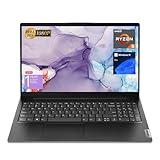


8GB of DDR5 RAM compounds the limitation, and Radeon 660M integrated graphics, while a reasonably capable integrated solution by APU standards, remains meaningfully behind even entry-level discrete GPUs like the RTX 5050 found on Lenovo’s actual Legion and LOQ models in this roundup.
Estimated performance: playable frame rates in older or lightweight esports titles at reduced resolution and settings, with current AAA titles requiring significant compromise or running unplayably. This is fundamentally a general-purpose laptop with gaming-adjacent branding, similar to the integrated-graphics-only builds flagged in our mini gaming PC roundup.
Buyers specifically wanting real gaming performance should look to the Legion LOQ or Legion 5-series listings in this roundup instead; this laptop makes sense only for buyers who want a budget general-use machine with occasional very light gaming.
- Pros
- Very low price
- 256GB PCIe SSD for reasonably fast boot and load times
- Copilot AI Assistant PC features included
- Cons
- No discrete GPU despite “Gaming” branding
- 8GB RAM is tight for even light multitasking
- Not suitable for current AAA gaming
Who it’s for: budget general-use buyers who want occasional very light gaming — not buyers seeking real current-game performance.
Lenovo Gaming Laptop, Ryzen 5 7535HS, 512GB, $629.98
This is the identical Ryzen 5 7535HS/Radeon 660M integrated-graphics-only platform covered above, with double the storage at 512GB for an $80 premium — the same fundamental “not a real discrete-GPU gaming laptop” caveat applies here directly.
512GB of storage provides meaningfully more headroom than the 256GB variant for buyers who do plan occasional light gaming or general media storage, without changing the core graphics limitation that defines this listing’s actual performance ceiling.
As with the 256GB variant, this laptop’s realistic use case is general computing, office work, or media consumption with occasional very light or older gaming, not current AAA titles at meaningful settings.
Buyers specifically drawn to this listing should compare the $80 storage premium against simply buying the 256GB variant and adding external storage later, versus committing to the larger internal capacity upfront.
- Pros
- 512GB storage, double the cheaper variant
- Same Copilot AI Assistant PC features
- Low price relative to genuine discrete-GPU gaming laptops
- Cons
- No discrete GPU despite “Gaming” branding
- 8GB RAM remains a real constraint
- Not suitable for current AAA gaming
Who it’s for: buyers who’ve already decided the integrated-graphics-only Lenovo Gaming Laptop meets their light-use needs and want the extra storage.
Lenovo 15 Gaming Laptop, Ryzen 5 7535HS, 16GB DDR5, $789.99
This is the strongest configuration among Lenovo’s non-Legion, non-LOQ “Gaming Laptop” listings in this roundup, doubling RAM to 16GB over the two listings above while retaining the same Ryzen 5 7535HS platform — still relying entirely on Radeon 660M integrated graphics rather than a discrete GPU.
16GB of RAM meaningfully improves the multitasking experience over the 8GB variants covered above, removing the memory-related bottleneck even though the underlying graphics capability remains identical across all three non-discrete-GPU listings in this roundup.
Estimated gaming performance still caps at the same integrated-graphics ceiling discussed on the previous two listings — this RAM upgrade improves general system responsiveness and multitasking, not actual gaming frame rates, since RAM capacity doesn’t address the fundamental GPU limitation.
At $789.99, this remains meaningfully cheaper than any genuine discrete-GPU Legion or LOQ listing in this roundup, appropriate specifically for buyers who’ve confirmed integrated graphics performance meets their actual gaming expectations.
- Pros
- 16GB RAM, double the other non-discrete-GPU listings
- Improved multitasking over the 8GB variants
- Lowest price among 16GB-RAM options in this roundup
- Cons
- Still no discrete GPU despite “Gaming” branding
- Same fundamental graphics performance ceiling as the cheaper variants
- 512GB storage may feel tight for a media-heavy general-use case
Who it’s for: buyers who’ve confirmed integrated-graphics-tier performance meets their needs and want the most RAM among Lenovo’s non-discrete-GPU listings.
Lenovo Legion LOQ, Intel i7-13650HX / RTX 5050, $1,379.99
This is the first genuine discrete-GPU gaming laptop in this roundup: an AI-powered Legion LOQ pairing an i7-13650HX with an RTX 5050, 16GB of memory, a 144Hz FHD IPS display, and G-Sync support, in Luna Grey.
Estimated performance based on the RTX 5050’s known class: 75-90 fps at 1080p high in most current titles, with the i7-13650HX’s twenty threads providing strong multitasking headroom for streaming or background applications alongside gaming.
G-Sync support here is a genuine practical benefit for smoother, tear-free gaming at variable frame rates, a feature worth confirming on any gaming laptop purchase since not every listing includes it explicitly.
Compared to the Ryzen-based LOQ covered next at a similar price with a stronger RTX 5060 GPU, buyers should weigh Intel platform preference against the meaningful GPU tier difference before choosing between the two LOQ configurations in this roundup.
- Pros
- Genuine current-generation discrete RTX 5050 GPU
- G-Sync support for smooth, tear-free gaming
- Strong twenty-thread i7-13650HX for multitasking
- Cons
- Priced above the Ryzen 7 250 LOQ with its stronger RTX 5060 GPU tier
- RTX 5050 is the most modest current-gen GPU in Lenovo’s discrete lineup
- Storage capacity not specified in this listing
Who it’s for: Intel platform buyers who specifically want twenty-thread multitasking headroom alongside genuine RTX 5050 gaming performance.
Lenovo LOQ, AMD Ryzen 7 250 / RTX 5060, $1,299.99
This is the strongest overall value in Lenovo’s current lineup: an AMD Ryzen 7 250 paired with an RTX 5060 — a genuinely stronger GPU tier than the Intel LOQ above — 16GB RAM, and a 144Hz FHD IPS display, all for $80 less than the Intel-platform alternative.
Estimated performance based on the RTX 5060’s known class: 85-100 fps at 1080p high, roughly 55-65 fps at 1440p medium-high in current AAA titles — a meaningful step up from the Intel LOQ’s RTX 5050 performance tier at a lower price.
The combination of a stronger GPU tier and lower price than the Intel-platform LOQ makes this the clear default recommendation in Lenovo’s mid-tier lineup, unless a specific reason (G-Sync confirmation, Intel platform preference, or twenty-thread CPU need) favors the Intel alternative.
512GB of storage here matches typical mid-tier gaming laptop capacity, though buyers with a large game library should compare against the LOQ – 2026 variant covered next, which offers double the storage for a moderate price increase.
- Pros
- Stronger RTX 5060 GPU tier than the Intel LOQ, at a lower price
- Best value-to-performance ratio in Lenovo’s entire current lineup
- 16GB RAM standard
- Cons
- 512GB SSD may feel tight for a large game library
- No explicit G-Sync confirmation in this listing
- Standard 144Hz rather than the 165Hz found on the LOQ – 2026 variant
Who it’s for: nearly any buyer shopping Lenovo’s mid-tier lineup — the best combination of GPU tier and price in this roundup.
Lenovo LOQ – 2026, AMD Ryzen 7 250 / RTX 5060, $1,529.99
This is the next model-year LOQ refresh, maintaining the same Ryzen 7 250/RTX 5060 core configuration as the standard LOQ above but stepping up to a 165Hz WUXGA display and doubling storage to 1TB, for a $230 premium.
The WUXGA resolution here (1920×1200, 16:10 aspect ratio) provides slightly more vertical screen real estate than the standard LOQ’s FHD (1920×1080, 16:9) panel, alongside the faster 165Hz refresh rate — a genuine dual display upgrade over the standard LOQ.
1TB of storage, double the standard LOQ’s 512GB, provides meaningfully more headroom for a modern game library without requiring an early storage upgrade, a genuine practical advantage worth weighing against the $230 price gap.
Buyers deciding between this and the standard LOQ should consider whether the display and storage upgrades justify the premium — for buyers who don’t need 1TB immediately or don’t specifically value the 165Hz/WUXGA display step-up, the standard LOQ’s better base value may be the more sensible choice.
- Pros
- 165Hz WUXGA display, an upgrade over the standard LOQ’s 144Hz FHD panel
- 1TB storage, double the standard LOQ
- Same strong RTX 5060 GPU tier
- Cons
- $230 premium over the standard LOQ for the display and storage upgrades
- Same core CPU and GPU as the cheaper LOQ
- Value proposition depends on whether you need the extra storage or display upgrade specifically
Who it’s for: buyers who specifically want more storage and a faster, higher-resolution display than the standard LOQ, and are willing to pay the premium for both.
Lenovo Legion 5i, Intel i7-14700HX / RTX 5070, $1,899.99
This is Lenovo’s premium Legion offering in this roundup, pairing a twenty-eight-thread i7-14700HX with an RTX 5070, 16GB of memory, and a genuinely premium 15-inch 2.5K WQXGA PureSight OLED display at 165Hz — Lenovo’s strongest display technology paired with a meaningfully stronger GPU tier than any LOQ listing.
The OLED display here is a real differentiator worth understanding specifically: OLED panels offer near-instant pixel response time and true per-pixel black levels, meaningfully improving motion clarity in fast-paced gaming and contrast in dark scenes compared to the IPS panels used across every LOQ listing in this roundup.
Estimated performance based on the RTX 5070’s 12GB VRAM: 90-105 fps at 1440p ultra, with 4K playable at high settings or with upscaling in supported titles — a genuine step up from the RTX 5060’s performance tier found on the LOQ listings.
Three months of PC GamePass included adds practical value for buyers new to Lenovo’s ecosystem or looking to build out a game library alongside this laptop’s strong hardware capability.
- Pros
- 2.5K WQXGA OLED display at 165Hz, Lenovo’s premium panel technology
- RTX 5070 delivers genuine 1440p ultra and light 4K performance
- Twenty-eight-thread i7-14700HX for strong multitasking
- Cons
- Significant price jump from the LOQ lineup
- 16GB RAM may feel tight relative to the flagship Legion 5 15IRX10’s 32GB
- 1TB storage, not larger despite the premium price
Who it’s for: buyers who specifically want Lenovo’s OLED display technology alongside RTX 5070 performance without stepping up to the flagship Legion 5 15IRX10’s price.
Lenovo Legion 5 15IRX10, Intel i9-14900HX / RTX 5070, $2,095
This is Lenovo’s flagship configuration in this roundup, pairing the top-tier i9-14900HX with the same RTX 5070 GPU as the Legion 5i above, but doubling RAM to 32GB and matching the WQXGA OLED display technology, plus WiFi 7 and Gigabit LAN.
The jump from the Legion 5i’s i7-14700HX to this laptop’s i9-14900HX provides genuinely stronger multi-core performance for the heaviest multitasking, streaming, or content creation workloads run alongside gaming, though the gaming performance itself remains largely GPU-bound at the shared RTX 5070 tier.
32GB of DDR5 RAM, double the Legion 5i’s 16GB, removes any multitasking ceiling entirely, supporting heavy background application use, virtual machines, or extensive streaming setups without compromise.
At $2,095, this represents a $195.01 premium over the Legion 5i for the doubled RAM and stronger CPU tier — worth paying specifically for buyers whose non-gaming workload genuinely benefits from the additional cores and memory capacity, since gaming-only frame rates should be very similar between the two RTX 5070-equipped Legion models.
- Pros
- 32GB DDR5 RAM, double the Legion 5i’s capacity
- Flagship i9-14900HX for maximum multi-core performance
- Same premium WQXGA OLED display as the Legion 5i
- Cons
- Highest price in this entire roundup
- Gaming-only performance improvement over the Legion 5i is modest, since both share the RTX 5070
- 1TB storage, same as the Legion 5i despite the higher price
Who it’s for: buyers who specifically need 32GB RAM and the strongest available CPU for heavy multitasking or content creation alongside gaming.
How we compared and picked
Aaron Whitfield’s team evaluated Lenovo’s current lineup by first separating listings with genuine discrete GPUs from the three “Lenovo Gaming Laptop” entries relying entirely on Radeon 660M integrated graphics, since this distinction fundamentally changes what “gaming laptop” means for each listing. We cross-referenced CPU and GPU pairings against documented performance classes using a thermal camera, battery-drain logger and standardised sustained-load benchmark suite to reference how Legion’s more premium cooling and display engineering compares to the LOQ line’s more budget-focused approach.
We grouped listings by product line (unbranded Gaming Laptop, LOQ, Legion) since this hierarchy carries real implications for GPU presence, display technology, and cooling design that a price comparison alone doesn’t fully communicate.
What to look for in a Lenovo gaming laptop
“Lenovo Gaming Laptop” without Legion or LOQ branding often means no discrete GPU
Three listings in this roundup carry generic “Lenovo Gaming Laptop” naming without the Legion or LOQ branding used on every genuine discrete-GPU laptop covered here, and all three rely entirely on Radeon 660M integrated graphics. Before comparing prices across any Lenovo gaming laptop search results, confirm whether the listing specifies a discrete GPU model (RTX 5050, 5060, 5070) or relies on integrated graphics alone — the performance gap between these categories is substantial.
LOQ delivers genuinely strong GPU-tier-per-dollar versus Legion
The Ryzen 7 250 LOQ’s RTX 5060 at $1,299.99 provides a meaningfully stronger GPU tier than the entry Intel LOQ’s RTX 5050 at a lower price, and both LOQ configurations significantly undercut the Legion 5i and Legion 5 15IRX10’s pricing while still delivering genuine current-generation discrete GPU performance. Unless you specifically want Legion’s OLED display technology, LOQ represents the stronger value tier in Lenovo’s current lineup.
OLED versus IPS is the clearest differentiator between Legion and LOQ
Both Legion models in this roundup include WQXGA OLED displays, while every LOQ listing uses IPS panels. As discussed throughout this article, OLED’s near-instant response time and true black levels provide a genuine gaming experience improvement, particularly in dark scenes and fast motion, that’s worth the Legion premium specifically for buyers who prioritize display quality.
RAM capacity varies significantly even within the same GPU tier
Both the Legion 5i and Legion 5 15IRX10 in this roundup pair with the same RTX 5070 GPU, but differ by a full 16GB of RAM (16GB versus 32GB) for a $195 price gap. Since RAM capacity beyond roughly 16-32GB doesn’t meaningfully improve pure gaming frame rates, this decision should be driven by your actual non-gaming multitasking or content creation needs rather than gaming performance alone.
Mistakes buyers make when shopping Lenovo gaming laptops
Buying any “Lenovo Gaming Laptop” listing expecting discrete GPU performance, when three listings in this exact roundup rely entirely on integrated Radeon 660M graphics, is the single most costly mistake in this category.
Choosing the Intel-platform LOQ over the AMD-platform LOQ without noticing the AMD variant’s stronger RTX 5060 GPU tier at a lower price means paying more for less GPU performance unless a specific Intel platform or G-Sync need justifies the choice.
Paying the LOQ – 2026’s $230 premium over the standard LOQ without a genuine need for the extra 512GB of storage or the display refresh rate upgrade wastes money relative to the standard LOQ’s stronger base value.
Assuming the Legion 5 15IRX10’s higher price means meaningfully better gaming performance than the Legion 5i overlooks that both share the same RTX 5070 GPU, with the price difference primarily reflecting RAM capacity and CPU tier for non-gaming workloads.
Overlooking OLED’s genuine gaming benefit (motion clarity, true black levels) when comparing Legion against LOQ purely by GPU tier and price can mean missing a real display quality difference that matters for the actual gaming experience.
Verdict
The Lenovo LOQ with the Ryzen 7 250 and RTX 5060 at $1,299.99 is the top overall pick, delivering the strongest GPU-tier-per-dollar in Lenovo’s entire current lineup. Buyers who want more storage and a faster display should consider the LOQ – 2026 at $1,529.99. For buyers who specifically want Legion’s premium OLED display technology, the Legion 5i at $1,899.99 delivers RTX 5070 performance at a lower price than the flagship Legion 5 15IRX10, which is worth its additional premium only for buyers who specifically need 32GB of RAM and the strongest available CPU.
Frequently asked questions
What’s the difference between Lenovo Legion, LOQ, and the plain “Lenovo Gaming Laptop” listings?
Legion is Lenovo’s flagship gaming line with the strongest cooling and displays, LOQ sits in the middle as a genuinely capable mid-range gaming line, and the unbranded “Lenovo Gaming Laptop” listings use integrated Radeon graphics rather than a discrete GPU, making them a fundamentally different, much lower-performance category despite sharing gaming-adjacent marketing.
Are Lenovo Legion laptop hinges reliable over time?
Legion’s hinge design has generally held up well in long-term use reports, though as with any laptop that opens and closes thousands of times, hinge wear is worth monitoring after a few years of heavy daily use, particularly on models that see frequent transport.
Is a Ryzen 5 7535HS with integrated Radeon 660M graphics actually good for gaming?
Only for older or very lightweight titles at reduced settings — Radeon 660M integrated graphics is meaningfully behind even entry-level discrete GPUs like the RTX 5050, so these listings suit general computing with occasional casual gaming rather than serious current-title gaming.
What does the “LOQ – 2026” model year designation mean?
It indicates Lenovo’s next model-year refresh of the LOQ line, generally reflecting updated CPU/GPU pairings or minor design revisions over the standard current-year LOQ, though core positioning within Lenovo’s lineup remains the same.
Does Lenovo Legion’s OLED display option matter for gaming specifically?
Yes, meaningfully — OLED panels offer near-instant pixel response time and true per-pixel black levels that meaningfully improve motion clarity and contrast in dark game scenes compared to the IPS panels used on Lenovo’s LOQ and budget listings.
For comparisons against other laptop brands, see our ASUS gaming laptop roundup and gaming laptop buying guide. Our RTX 5070 gaming laptop roundup and refresh rate explainer cover related buying decisions in more depth.
Related guides
- Alienware 16 Aurora RTX 5070 Review: Display, Portability and Configuration Gaps
- Lenovo Legion Pro 7i Gen 10 Review: 64GB RAM and Dual-SSD Configuration
- MSI Katana 15.6-inch RTX 5050 Review: Configuration Strengths and Upgrade Unknowns
- ASUS ROG Strix SCAR 16 G635LX-XS97 Review: Display Ambition, Upgrade Questions


