Shopping for a cheap camera sounds simple until the listings arrive: one promises 4K and 50MP, the next carries a name you recognize and a spec sheet that looks modest by comparison. The real decision is whether you want a camera that is inexpensive the way a trusted brand can be inexpensive, or one that stacks impressive numbers onto a small plastic body and leaves the quality question open. That choice shapes everything else, from zoom to battery planning to what you can reasonably expect from a photo taken indoors at night.
This guide is for first-time buyers, parents shopping for a teen or a child, travelers who want a pocket camera that is not their phone, and anyone building a low-stakes vlogging setup. It sticks to what the listing titles actually state, so you can compare optical zoom, video resolution, screen design, and bundled extras without guessing. Seven of the eight products supplied are true photo cameras and are covered below; one indoor security camera was left out because it does a different job entirely.
Our Top Picks
Top 3 picks at a glance
Quick Picks
As an Amazon Associate we earn from qualifying purchases at no extra cost to you.





| Product | Best for | Key spec from the title |
|---|---|---|
| Kodak Pixpro FZ55 | Real optical zoom on a budget | 16MP, 5X optical zoom, 28mm wide angle |
| 48MP Kids Camera (anti-shake) | Younger beginners | 48MP, 1080P, 16X zoom |
| 4K 50MP Teens Camera | Gift for ages 8 to 16 | 4K, 50MP, 180-degree flip screen |
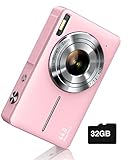
| Camkory 1080P Pink | Ready out of the box | 32G card, 2 batteries and charger |
| 4K 50MP Vlogging Camera | Starter YouTube channel | 2.8 inch 180-degree flip screen |
| Duluvulu 4K 48MP | Autofocus plus a bigger screen | 4K, autofocus, 3 inch flip screen |
| EJXHKNF Pink 50MP | Compact color-first pick | 1080P, 16X digital zoom, anti-shake |
How to Choose
Optical zoom beats digital zoom
The most important number on a cheap camera is not megapixels. It is whether the zoom is optical or digital. Optical zoom moves real glass and keeps detail; digital zoom crops the frame and enlarges it. Of the cameras here, only the Kodak lists optical zoom, at 5X. The rest advertise 16X digital zoom, which behaves more like a crop than a lens. If you plan to photograph distant subjects, such as a school game or birds at a park, weigh that difference heavily and treat any 16X claim with caution.
Video resolution versus usable video
A listing that says 4K is not automatically better than one that says 1080P. Look for a stabilization feature, which these titles usually describe as anti-shake, and for a flip screen if you will be filming yourself. For shared clips and social posts, 1080P is plenty. Resolution at 4K matters mainly if you plan to crop footage later, and on a small sensor the extra pixels will not rescue poor lighting. Built-in microphones on compact cameras also pick up handling noise, so keep expectations modest on audio.
Screen and body design
A screen that flips 180 degrees turns a camera into a selfie and vlogging tool, and a panel between 2.7 and 3 inches is comfortable to frame on. Smaller screens save space but make it harder to confirm focus. If the camera will live in a bag or a pocket, prefer a body you can hold with one hand. Fixed lenses that stay flush with the body are easier to carry and less likely to jam in a bag than ones that extend outward.
Batteries, cards, and what budget models skimp on
Budget bundles often include a memory card and a second battery, which is useful because small batteries drain quickly with the screen on. Confirm the card capacity in the title and keep a spare in the bag. Where inexpensive models cut corners is the sensor and lens: big megapixel claims often come from software interpolation, and low-light performance is typically the first thing to suffer. Ignore the headline megapixel figure and prioritize lens type, stabilization, screen design, and included accessories.
The 7 Best Options
Kodak Pixpro FZ55
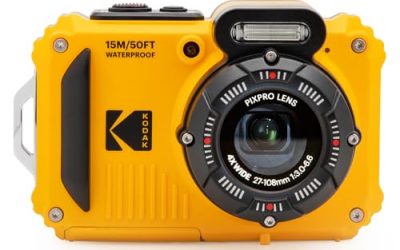
The FZ55 is the one model here with a recognizable camera brand and a listed optical zoom, which is why it anchors the list. The title cites 16MP, 5X optical zoom, a 28mm wide-angle lens, 1080p Full HD video, and a 2.7 inch LCD. That reads like a traditional compact, built for vacation photos, birthday parties, and family events rather than for social video.
- Strength: 5X optical zoom keeps detail when you frame distant subjects.
- Strength: A 28mm wide angle suits group shots and travel scenes.
- Trade-off: Video tops out at 1080p, so it is not the pick for 4K enthusiasts.
Skip it if you want a flip screen for vlogging or a bundle with a card and extra batteries already named in the listing.
48MP Kids Camera (Anti-Shake)
This listing leads with 48MP, FHD 1080P video, and 16X zoom, packaged as a compact point-and-shoot for boys and girls. It targets parents who want a simple first camera that a child can use without borrowing a phone, and the anti-shake mention is aimed at the blurry results small hands tend to produce.
- Strength: Anti-shake is listed, which helps with unsteady hands.
- Strength: Compact and portable, so it fits a small backpack or a coat pocket.
- Trade-off: The 16X figure is digital zoom, so far-off subjects will look soft.
Skip it if you want photos worth printing large or a camera a teenager will not outgrow quickly. Anyone who expects the 48MP label to translate into sharp enlargements should look at the Kodak instead, since that headline figure says little about lens quality.
4K 50MP Teens Camera
Pitched as a gift for ages 8 to 16, this model promises 4K video, 50MP photos, 16X zoom, and a 180-degree flip screen. It aims at the early-vlogger crowd who want to frame themselves while recording, and the compact body suggests it is meant to ride along in a school bag.
- Strength: A 180-degree flip screen makes self-recording straightforward.
- Strength: 4K resolution gives room to crop clips later.
- Trade-off: The zoom is digital, and the title leaves battery and card details out.
Skip it if you need a clearly defined accessory bundle in the listing, or if optical zoom matters to you. Because the title is silent on batteries and storage, a buyer would need to budget separately for a card and a spare power source before the first outing.
Camkory 1080P (Pink, 32G Card)
Camkory is built around convenience: FHD 1080P, 16X zoom, anti-shake, a 32G card, two batteries, and a charger are all named in the title. The pink finish and the compact camera framing point toward a younger user, or a first camera that needs to work the moment it is unboxed and charged.
- Strength: Two batteries and a charger mean longer shooting days.
- Strength: The included 32G card removes a separate purchase.
- Trade-off: It is a 1080P camera, with no 4K or flip screen listed.
Skip it if you want a vlogging screen, 4K clips, or a more grown-up look. It is also a weaker fit for a teen who already films on a phone, since the headline features here are convenience and protection rather than resolution.
4K 50MP Vlogging Camera
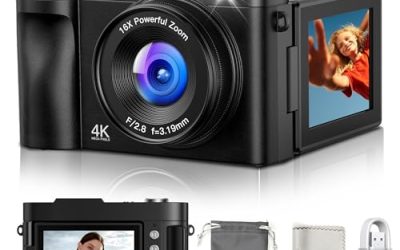
This is a straightforward vlogging pitch: 4K, 50MP, a 2.8 inch 180-degree flip screen, 16X digital zoom, and a compact point-and-shoot body. It is aimed at someone starting a YouTube channel who wants to learn framing and editing before spending more on gear.
- Strength: The flip screen lets you monitor framing while talking to the lens.
- Strength: 4K video gives flexibility when editing.
- Trade-off: Zoom is digital only, and no battery details appear in the title.
Skip it if low-light quality is a top concern or you want a bundle with named extras. It also pairs best with a realistic plan: buy a card and a spare battery separately, and treat 4K as a bonus rather than a promise of phone-level detail.
Duluvulu 4K 48MP
Duluvulu stands out for autofocus, a 3 inch 180-degree flip screen, 4K video, and a bundle that includes an SD card and two batteries. It has the roomiest screen among the vlogging-oriented models, and the title marks it as a latest-generation release for 2026 buyers.
- Strength: Autofocus is called out, which helps when you move between subjects.
- Strength: Two batteries and an SD card arrive together.
- Trade-off: The title leans on marketing language, so confirm real specs before buying.
Skip it if you want a name-brand body or a lens with true optical zoom. Buyers who care about long-term support or a familiar menu system will find the Kodak a more conventional choice, even though it gives up the flip screen and 4K.
EJXHKNF Pink 50MP
EJXHKNF is a small pink point-and-shoot with 50MP, FHD 1080P video, 16X digital zoom, and anti-shake, packaged for casual photography and vlogging. It targets style-minded buyers who want a camera that doubles as a gift and is easy to toss into a purse, a jacket pocket, or a gym bag without a second thought.
- Strength: Anti-shake is listed alongside a compact body.
- Strength: The color and size make it easy to carry everywhere.
- Trade-off: No flip screen or 4K video appears in the title.
Skip it if you want spare batteries or a memory card named in the bundle. It is also not the right camera for anyone planning to film themselves, because the listing does not describe a screen that turns toward the lens.
Which One Fits Your Situation
You want real photos of family events
Choose the Kodak Pixpro FZ55. Optical zoom and a wide-angle lens match how most people use a compact camera: group shots, a graduation, a weekend trip. It is the one model whose zoom claim is not just a software crop.
You are setting up a first vlogging rig
The Duluvulu 4K 48MP pairs a 3 inch flip screen with autofocus and two batteries, so you can start recording quickly. If you would rather save a little and accept a smaller screen, the 4K 50MP Vlogging Camera covers the same basic idea.
You are buying for a younger child
The Camkory 1080P bundle gives a card, two batteries, and a charger, so the camera works right out of the box. That matters for a gift, where a missing card can spoil the first day.
You want the smallest and simplest option
The EJXHKNF Pink 50MP is a compact, uncomplicated 1080P device that suits a casual snapshot habit and fits easily in a small bag.
Common Mistakes
- Treating digital zoom figures like optical zoom, then being disappointed by soft far-off shots.
- Choosing by megapixel count instead of lens type and stabilization.
- Forgetting a spare battery and card, which small cameras drain and fill quickly.
- Expecting 4K on a budget model to look like 4K from a phone or a larger camera.
- Ignoring the flip screen when the camera is meant for vlogging.
Related guides
- Gaming Laptop Battery Draining While Plugged In Fix
- How To Stop Laptop Thermal Throttling In Software
- Gaming Laptop For High School Students
Frequently Asked Questions
Is a cheap camera better than a phone?
Not for most everyday photos, since phones handle processing and low light well. A dedicated camera makes sense when you want optical zoom, a distraction-free device for a child, or a separate unit for vlogging.
Does 16X zoom mean the same as 16X optical?
No. When the title says digital zoom, the camera is cropping and enlarging, which lowers detail. Real optical zoom is a lens feature and is listed separately, as on the Kodak.
Do these include memory cards?
Some do. The Camkory lists a 32G card and the Duluvulu lists an SD card, while others leave it unspecified. Read the title and the box contents list before you commit, and plan to buy a card if none is named.
Which is best for a teenager?
A 4K model with a flip screen, such as the Duluvulu or the 4K 50MP Teens Camera, suits a teen who records video. Choose the Kodak if photos matter more than clips.