Choosing a Nikon is really choosing a mount, and the mount decides everything that follows: which lenses you can buy for years to come, how much of your kit survives an upgrade, and whether you are investing in a system the company is still actively building. Nikon sells two families side by side, the long-running F-mount DSLRs with an optical viewfinder and the newer Z-mount mirrorless bodies with electronic viewfinders and stronger video features. A good Nikon buying decision starts with that split rather than with a model number, because a beginner who picks the wrong family can end up with a lens collection that does not carry over.
This guide covers seven Nikon bodies, from older entry-level DSLRs that are listed as renewed to professional full-frame mirrorless cameras, and it is written for three groups: first-time buyers who want a forgiving camera with a kit lens, enthusiasts moving up to better autofocus and video, and working creators who need a hybrid stills and video body. One competing-brand DSLR that showed up in the same results was left out, since this guide is about Nikon. Think of the 2026 market as a ladder: the oldest DSLRs offer the lowest cost of entry, the Z50 II is the compact mirrorless middle step, and the full-frame Z cameras sit at the top.
Our Top Picks
Top 3 picks at a glance
Quick Picks
As an Amazon Associate we earn from qualifying purchases at no extra cost to you.




| Product | Best for | Key spec from the title |
|---|---|---|
| Nikon D7500 with 18-140mm | Enthusiast DSLR with a long zoom | 20.9MP, AF-S DX 18-140mm f/3.5-5.6G ED VR |
| Nikon Z50 II (two lenses) | Compact mirrorless for stills and video | Two lenses, color presets, wireless sharing |
| Nikon D3400 with 18-55mm (Renewed) | Beginner DSLR on a small budget | 18-55mm VR DX AF-P zoom lens |
| Nikon D3100 with 18-55mm (Renewed) | Lowest cost of entry to DSLR | 14.2MP, 18-55mm f/3.5-5.6 VR |
| Nikon Z 6II | Full-frame versatility | Full-frame mirrorless stills/video hybrid |
| Nikon Z6 III | Serious video work | 6K/60p internal RAW recording |
| Nikon Z 8 | Professional hybrid shooters | Professional full-frame mirrorless hybrid |
How to Choose
DSLR or mirrorless
The DSLR bodies here, the D7500, D3400, and D3100, use the F mount and an optical viewfinder, and they are sold with kit lenses ready to shoot. The Z-series bodies use the Z mount, a wider throat that allows newer lens designs and stronger video features. If you are starting fresh, mirrorless is the direction the manufacturer is investing in. If you are buying used or renewed to save money, DSLR bodies and F-mount lenses are plentiful and affordable, but you should know the platform is the older one.
Sensor size and what it means
The D7500, D3400, D3100, and Z50 II use the smaller DX or APS-C format, while the Z 6II, Z6III, and Z 8 are full-frame. A full-frame sensor gathers more light, which helps in dim rooms and produces shallower depth of field, but full-frame bodies and lenses weigh more and cost more. For travel, family, and everyday use, a DX body with a kit zoom is usually enough. Step up to full-frame when low-light work, wedding coverage, or professional output is the goal.
Video features worth checking
If video matters, read the recording spec on the title. The Z6 III lists 6K/60p internal RAW recording, which is a professional-level headline, while the older DSLRs are mainly stills cameras with basic video. Look for internal recording formats, frame rate options, and whether the body has a flip or tilting screen for self-shooting. A camera that records beautiful video but lacks a useful monitor is awkward for solo creators.
Kit lenses and condition
A kit lens is the fastest way to start, and the 18-55mm and 18-140mm zooms here cover everyday focal lengths. Several bodies are marked renewed, and one carries a discontinued note, which means refurbished stock and limited manufacturer support. Ask about shutter count where possible, check the seller return policy, and budget for a spare battery and a fast memory card, which help more than most upgrades.
The 7 Best Options
Nikon D7500 with AF-S DX 18-140mm
The D7500 is the enthusiast DSLR of the group. The title lists a 20.9MP sensor and an AF-S DX NIKKOR 18-140mm f/3.5-5.6G ED VR lens, a long zoom that handles portraits, travel, and distant subjects without a lens swap. For buyers who like an optical viewfinder and a body that feels substantial, it offers a more capable step up from entry-level cameras while staying in the familiar F-mount world. The included long zoom also means you can shoot a school sports day or a hiking trip with a single lens, which is a real advantage for people who dislike carrying extras.
- Strength: A 20.9MP sensor with a versatile 18-140mm lens included.
- Strength: Vibration-reduction lens helps with handheld zoom shots.
- Trade-off: DSLR platform is the older system, so future lens choices lean on F mount.
Skip it if you want strong video features or the smallest possible body for travel.
Nikon Z50 II with Two Lenses
The Z50 II is the compact mirrorless pick, listed as a stills and video camera with easy color presets and wireless photo sharing, bundled with two lenses. It is aimed at creators who want social-ready photos straight from the camera and a body small enough to carry daily. As a Z-mount camera, it opens the door to Nikon’s growing mirrorless lens lineup, and the two-lens bundle gives you range from the start. Buyers who currently shoot on a phone and want a clear jump in image quality, without learning a full manual workflow, are the natural audience for this body.
- Strength: Two lenses included, so you can start shooting immediately.
- Strength: Color presets and wireless sharing suit content creators.
- Trade-off: Smaller sensor than the full-frame Z cameras.
Skip it if you need full-frame low-light performance or professional-grade video.
Nikon D3400 with 18-55mm VR DX AF-P (Renewed)
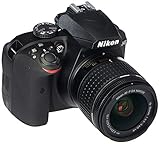
The D3400 is a beginner DSLR sold with an 18-55mm VR DX AF-P zoom lens and listed as renewed. It is a simple, forgiving camera for people learning exposure, aperture, and composition, and the kit lens covers general-purpose shooting from wide to short telephoto. Its renewed status helps keep the cost of entry low, though it means checking the seller warranty carefully. It makes a sensible gift for a teenager or a family member who wants to learn, since the menu structure is simple and the lens is easy to live with.
- Strength: A straightforward beginner DSLR with a capable kit lens.
- Strength: Renewed stock lowers the cost of getting into photography.
- Trade-off: Entry-level body with limited advanced features.
Skip it if you plan to shoot a lot of video or want the newest autofocus system.
Nikon D3100 with AF-S DX 18-55mm VR (Renewed)
The D3100 is the oldest camera in the group, listed with a 14.2MP sensor, an 18-55mm f/3.5-5.6 VR lens, a discontinued note, and renewed condition. It is a lowest-cost route into DSLR shooting for students and hobbyists who want to learn manual controls without a large outlay. Because it is discontinued, accessories and support may be harder to find over time. Treat it as a learning tool rather than a long-term investment, and be ready to move to a newer body once your skills outgrow it.
- Strength: Very low cost of entry for learning real camera controls.
- Strength: Includes a vibration-reduction zoom lens.
- Trade-off: Oldest design here, with a 14.2MP sensor and a discontinued status.
Skip it if you want modern autofocus, strong video, or long-term support.
Nikon Z 6II
The Z 6II is billed as a versatile full-frame mirrorless stills and video hybrid in the Nikon USA model. It suits buyers who want full-frame image quality for portraits, events, and low-light shooting, along with solid video features, without moving to a professional flagship. It is sold as a body, so factor in a lens. For someone upgrading from a DX DSLR, it is a natural step. Pairing it with a single quality lens usually beats buying several cheaper ones, so plan the lens budget alongside the body.
- Strength: Full-frame sensor for low-light and shallow depth of field.
- Strength: Hybrid design works for both photos and video.
- Trade-off: Body-only listing means lens costs are separate.
Skip it if you want a small, light travel camera or the newest video formats.
Nikon Z6 III
The Z6 III is the video-forward full-frame option, with the title listing 6K/60p internal RAW recording. That headline makes it the strongest choice here for filmmakers and hybrid shooters who need high-quality footage in a single body. It is also a capable stills camera, but its appeal rests on the video specification. Expect to invest in fast memory cards and a lens that suits your style of shooting. Anyone upgrading from a hybrid camera of an older generation should confirm that their workflow software can handle RAW video files before committing to the format.
- Strength: 6K/60p internal RAW recording is a professional-level capability.
- Strength: Full-frame mirrorless platform with room to grow.
- Trade-off: Demanding video formats need fast cards and storage.
Skip it if you shoot only casual stills and do not need advanced video.
Nikon Z 8
The Z 8 is the flagship-class hybrid, described as a professional full-frame mirrorless stills and video camera. It is aimed at working photographers and videographers who need a body that can handle demanding assignments and reward investment in high-end lenses. For most casual buyers it is more camera than they need, but for professionals it forms a core of a long-term kit. If you already own Z-mount lenses and need a faster, tougher body to pair with them, this is the upgrade path that makes the most sense.
- Strength: Professional-class build and capability in a mirrorless body.
- Strength: Strong hybrid design for photo and video work.
- Trade-off: The highest cost tier and more complexity than beginners need.
Skip it if you are new to photography or shoot mostly casual snapshots.
Which One Fits Your Situation
You are learning photography on a limited budget
Start with the Nikon D3400 with its 18-55mm kit lens. It teaches the basics, the lens covers everyday shots, and the renewed condition keeps costs down.
You want a compact camera for content creation
The Nikon Z50 II is built for this. Two lenses, color presets, and wireless sharing mean you can shoot and post quickly without a laptop in the loop.
You are shooting events or weddings
Choose the Nikon Z 6II for full-frame low-light ability, or step up to the Z 8 if you work professionally and want a flagship body.
You mostly shoot video
The Nikon Z6 III, with 6K/60p internal RAW recording, is the strongest video pick in this list.
Common Mistakes
- Choosing a body before deciding between F mount and Z mount, then discovering lenses do not transfer.
- Buying a body-only camera and forgetting that a lens is a separate purchase.
- Paying for full-frame when a DX camera with a good lens would cover the need.
- Ignoring the renewed or discontinued label and skipping the seller return policy.
- Forgetting a spare battery and a fast memory card, which matter most for video.
Related guides
- Gaming Laptop Battery Draining While Plugged In Fix
- How To Stop Laptop Thermal Throttling In Software
- Gaming Laptop For High School Students
Frequently Asked Questions
Is a DSLR still worth buying?
For learning and for tight budgets, yes. Lenses are plentiful and affordable. If you want the newest autofocus and video, a Z-series mirrorless body is the better long-term choice.
What does DX mean on a Nikon?
DX is Nikon’s smaller APS-C sensor format. It makes bodies and lenses lighter and less expensive than full-frame, at some cost in low-light performance.
Do I need a kit lens?
A kit lens is the easiest way to start because it works out of the box. You can add a faster prime lens later when you know what you like to shoot.
Why leave out a Canon camera?
The Canon DSLR in the same results belongs to a different system, and this guide is focused on Nikon bodies.