A waterproof camera earns its place in a bag the moment you do not want to think about the weather, the pool, or the sand. The challenge is that the label covers very different products: a rugged compact with a proper lens, a small floatable camera with two screens for snorkeling, an action camera with remote control, and a kid-friendly shooter in bright plastic. The depth rating on the box tells you how far down the camera can go, but it says little about whether the photos will look good once you are there, and several of the cheapest listings lean on huge megapixel figures that deserve a careful read.
This guide is for beach and pool vacationers, snorkelers, families with young children, kayakers and anglers, and anyone who wants a camera they can rinse under a tap. Eight listings are compared by what their titles state: rated depth, resolution, screen layout, battery or card inclusions, and extras like a fill light or tilt screen. Two of them are the same Kodak model in different colors. Because many compact waterproof cameras still sell in 2026 on older designs, the focus is on the practical details that determine whether a camera survives a week at sea level and returns usable footage.
Our Top Picks
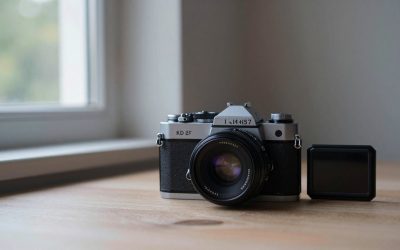
 OM SYSTEM Olympus Tough TG-7 Red Underwater CameraCompact4.48 x 2.59 x 1.28 inches0.6 poundsCheck on Amazon
Top 3 picks at a glance
Quick Picks
As an Amazon Associate we earn from qualifying purchases at no extra cost to you.




| Product | Best for | Key spec from the title |
|---|---|---|
| KODAK PIXPRO WPZ2 (Yellow) | Family trips and kids | 16MP, 15m waterproof, 4X zoom, 1080p video |
| 8K Underwater Camera, 33FT | Snorkeling and diving enthusiasts | 33FT waterproof, 70MP, dual screen, WiFi |
| KODAK PIXPRO WPZ2 (Blue) | Same camera, different color | 16MP, 15m, 27mm wide angle, 2.7-inch LCD |
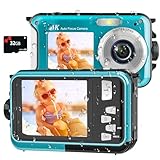
| 4K Underwater Camera, 16FT, 64MP | Floatable pool camera with a card included | 16FT, dual screen, 32GB card, Type-C |
| KODAK PIXPRO P1 | Selfies and vlogging near water | 13MP, 180-degree tilt screen, 3-color ring |
| OM SYSTEM Olympus Tough TG-7 | Serious underwater and macro shooters | 4K video, 44x macro shooting, freeze proof |
| AKASO EK7000 | Action sports with remote | 4K30FPS, 20MP, 131FT, EIS, remote control |
| 4K Underwater Camera, 16FT, 16GB | Budget floatable option | 64MP, 16X digital zoom, fill light, 650mAh |
How to Choose
Depth rating and what it covers
Depth ratings come in feet or meters, and they range here from 16 feet up to 131 feet. Sixteen feet covers swimming pools, shallow snorkeling, and splashes. Fifteen meters, roughly 49 feet, suits casual diving and deeper snorkeling. Anything beyond that is for action-sport use. Look for matching dustproof and shockproof ratings, and confirm whether the depth applies to the camera alone or needs a case. Rinse with fresh water after saltwater use, and check that the battery door seal is clean before every dip.
Sensor, lens, and resolution claims
Treat inflated numbers like 64MP, 70MP, or 8K with caution on a compact, low-cost camera, since they usually describe upscaled output. A modest 16MP or 20MP sensor behind a decent lens often produces cleaner pictures. The OM System Tough TG-7 stands apart by listing a bright lens and macro shooting, and the Kodak WPZ2 lists a 27mm wide-angle lens, which suits group photos and underwater scenes where you cannot step back.
Screens and framing
A dual-screen design puts a small display on the front, so you can frame a selfie or confirm that the subject is in view. A tilt screen, like the one on the Kodak P1, does the same job at an angle. For underwater use, a large rear screen is easier to read through a mask or while floating. A 2.7-inch LCD is standard for rugged compacts, and a bright screen helps more than a high-resolution one in glare on a boat deck.
Battery, storage, and extras
Waterproof compacts often have small batteries, such as 650mAh or 1250mAh cells in two listings here, so a spare matters on a full day out. Memory cards are bundled with some models, including 16GB and 32GB options, which helps if you want to begin shooting immediately. A Type-C port simplifies charging from a power bank. A fill light, remote control, or external microphone support are useful extras, but they should not outweigh the camera’s core image quality.
The 8 Best Options
KODAK PIXPRO WPZ2 (Yellow)
The WPZ2 is a family-friendly rugged compact. The title lists a 16MP sensor, 15m waterproof rating, 4X zoom, 1080p Full HD video, Wi-Fi sharing, a 27mm wide-angle lens, a 2.7-inch LCD, and shockproof construction. The yellow body is easy to spot if it floats away or ends up in sand. Parents can hand it to a child at the pool without worrying about a drop onto a tile floor, and the Wi-Fi sharing helps send photos to a phone. It also gives parents a way to share holiday snaps while still on the trip.
- Strength: 15m waterproof rating and shockproof body for family use.
- Strength: Real zoom lens and wide angle for group photos.
- Trade-off: Video tops out at 1080p, so no 4K.
Skip it if you want 4K video or advanced macro features.
8K Underwater Camera, 33FT Waterproof, 70MP
This unbranded camera pushes the biggest numbers: 8K, a 70MP figure, WiFi, a dual-screen layout, and a rugged, dustproof, shockproof build rated to 33FT. The title also mentions autofocus and use cases like snorkeling, diving, and selfies. It appeals to travelers who want maximum features in a small body. The huge resolution claims are a reason for caution, as they likely rely on software upscaling. Think of it as a feature-rich novelty for holidays, where convenience matters more than image purity, and read the return policy before relying on it for an expensive trip.
- Strength: Deeper 33FT rating than the 16FT floatable models.
- Strength: Dual-screen design helps with selfies and framing.
- Trade-off: Headline resolution numbers are probably inflated on a small sensor.
Skip it if you want a known brand with established support.
KODAK PIXPRO WPZ2 (Blue)
This is the same WPZ2 in blue, with an identical 16MP sensor, 15m rating, 4X zoom, 1080p video, Wi-Fi sharing, 27mm wide-angle lens, and 2.7-inch LCD. The only real decision is color. Blue blends into water and sky, which looks clean but makes the camera harder to spot if dropped in a pool or at the beach. Choose the yellow one for visibility and this one for a more subdued look. A bright wrist strap or a colored case can offset the visibility issue if you prefer the blue finish.
- Strength: Same feature set as the yellow WPZ2, with a calmer color.
- Strength: Shockproof construction suits kids and travelers.
- Trade-off: Blue is harder to find underwater or on a beach towel.
Skip it if you want a high-visibility body or a 4K recording mode.
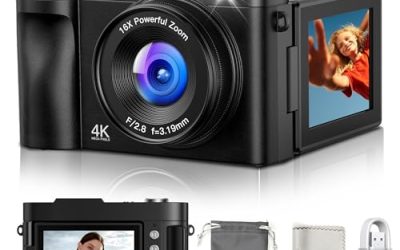
4K Underwater Camera, 16FT, 64MP Dual-Screen
This compact camera lists 4K video, a 16FT waterproof rating, a 64MP figure, a dual screen, autofocus, a floatable design, a 32GB card, a 1250mAh battery, and a Type-C port. The inclusion of a card and the larger battery rating make it a convenient package for a first waterproof camera. It suits pool days and shallow snorkeling better than deeper dives. A floatable body reduces the fear of losing it overboard.
- Strength: Floatable body with a 32GB card included.
- Strength: Type-C charging and a 1250mAh battery are convenient on trips.
- Trade-off: Only 16FT depth rating, so not for deeper dives.
Skip it if you plan to go below shallow water or want a known brand.
KODAK PIXPRO P1
The P1 is a 13MP waterproof, shockproof, and dustproof camera with a 180-degree tilt screen and a three-color ring light, pitched at selfies and vlogging. The tilt screen helps you see yourself while recording near the pool or beach, and the ring light adds a little fill for close-ups. It is aimed at casual creators more than technical underwater photographers. Teens and social-media users who want a rugged camera that survives a summer at the lake are the natural audience, while divers should look at a model with a stated depth rating.
- Strength: Tilt screen and ring light suit selfies and vlogs.
- Strength: Waterproof, shockproof, and dustproof body.
- Trade-off: 13MP is modest and the listing offers no depth figure in the title.
Skip it if you want to dive deeper or need a longer zoom.
OM SYSTEM Olympus Tough TG-7 (Red)
The Tough TG-7 is the enthusiast option, listed as waterproof, freeze proof, with a bright high-resolution lens, 4K video, and 44x macro shooting. It is the successor to an earlier Tough model, and it targets people who want sharper detail on close-up subjects like coral, insects, or small fish. A recognized brand and a bright lens make it the most dependable choice for photographers. It also suits hikers and skiers, since freeze proof construction extends its use beyond the water into cold mountain weather.
- Strength: Bright lens and macro shooting for close-up detail.
- Strength: Waterproof and freeze proof build, with 4K video.
- Trade-off: Sits at the premium tier and costs more than novelty cameras.
Skip it if you only need a simple snapshot camera for the pool.
AKASO EK7000
The EK7000 is an action camera listing 4K at 30fps, a 20MP sensor, WiFi, electronic image stabilization, 131FT waterproof capability, remote control, 4X zoom, and support for an external microphone. It is the choice for sports and moving subjects, since stabilization smooths handheld shots. The external microphone support is rare at this level and helps with vlogs. It is less natural for casual photography than a compact. Kayakers, cyclists, and surfers who want to clip a camera to gear and forget about it will see the most benefit from the remote and stabilization.
- Strength: EIS and remote control suit action sports.
- Strength: External microphone support and a 131FT rating.
- Trade-off: Action camera ergonomics are less friendly for casual still photography.
Skip it if you want a point-and-shoot with an optical zoom lens.
4K Underwater Camera, 16FT, 16GB Card
This budget floatable camera lists 4K video, a 64MP figure, a 16FT waterproof rating, a 16GB card, 16X digital zoom, autofocus, a fill light, and a 650mAh battery. The fill light helps with close subjects, and the floatable body adds peace of mind around water. The small battery means a spare is worth buying, and digital zoom reduces quality as you magnify. It makes sense as an inexpensive camera to bring along on a family beach trip where a loss or a scratch would not be a disaster, which is a different job from a primary camera.
- Strength: Fill light and floatable body at a budget tier.
- Strength: Card included, so you can start recording straight away.
- Trade-off: A small 650mAh battery limits time away from a charger.
Skip it if you plan a full day of filming without access to power.
Which One Fits Your Situation
You are taking young children to a pool or beach
Pick the KODAK PIXPRO WPZ2 in yellow. The shockproof body and 15m rating handle splashes and drops, and the bright color is easy to find in a bag or the sand.
You want serious close-up detail while snorkeling
The OM SYSTEM Olympus Tough TG-7 is the strongest choice, with its bright lens and 44x macro shooting for coral and small marine life.
You film sports and moving subjects
Choose the AKASO EK7000, which adds image stabilization, remote control, and a 131FT rating.
You record selfies and travel clips
The KODAK PIXPRO P1, with its tilt screen and ring light, is built for framing yourself near water.
Common Mistakes
- Believing 8K or 70MP claims on a small camera instead of checking the sensor and lens.
- Skipping the seal check on the battery door before each dive.
- Forgetting to rinse the camera after saltwater and letting salt build up.
- Choosing a 16FT camera for deeper snorkeling where it is not rated.
- Not buying a spare battery when the listing shows a small cell.
Related guides
- Gaming Laptop Battery Draining While Plugged In Fix
- How To Stop Laptop Thermal Throttling In Software
- Gaming Laptop For High School Students
Frequently Asked Questions
Is 16FT waterproof deep enough?
For pools and shallow snorkeling, yes. For deeper dives, look for a 33FT, 15m, or 131FT rating.
Do waterproof cameras float?
Some do. The floatable models in this list say so in their titles. Others may sink, so use a wrist strap.
Why are there two identical Kodak listings?
They are the same WPZ2 model sold in yellow and blue, so the choice is purely about color and visibility.
Can I use a waterproof camera in cold weather?
Only models marked freeze proof, such as the Olympus Tough TG-7, are designed for cold conditions. Check the listing before taking one to a ski slope.